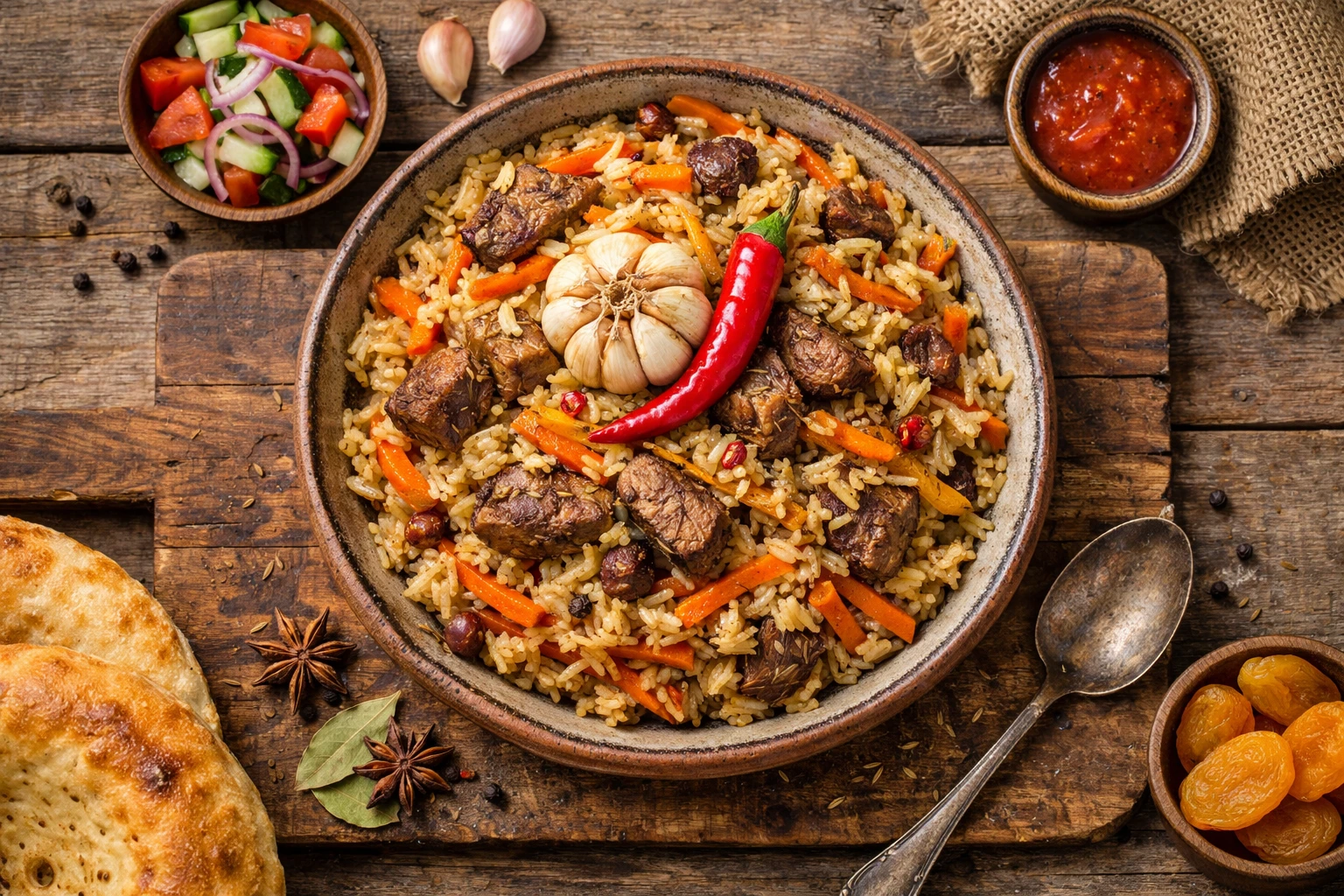
Plov (Uzbek Rice Pilaf): Calories, Nutrition and Health Benefits
UNESCO-recognized Central Asian masterpiece combining aromatic rice, tender lamb, sweet carrots, and warming spices for a complete, satisfying meal.
Quick Nutrition Facts
Per 1 Serving (250g)
| Nutrient | Amount |
|---|---|
| Calories | 350 kcal |
| Protein | 18g |
| Carbohydrates | 45g |
| Fiber | 2g |
| Sugars | 3g |
| Fat | 12g |
| Saturated Fat | 3.5g |
| Sodium | 450mg |
| Iron | 3.2mg |
| Zinc | 4.5mg |
Macronutrient Breakdown
 ChatGPT
  Claude
  AI Mode
  Perplexity
NUTRITIONIST INSIGHT
Plov delivers complete protein with all essential amino acids from lamb, making it ideal for post-workout recovery. The carrots provide beta-carotene, while cumin and other spices offer anti-inflammatory benefits.
Myth Busters
MYTH #1: Plov Is Too Fatty to Be Healthy
TRUTH: While plov contains fat from lamb and oil, a traditional serving has only 12g fat (18% DV). The monounsaturated fats in lamb support heart health when consumed in moderation. Balance with vegetables.
MYTH #2: Rice Dishes Always Spike Blood Sugar
TRUTH: Plov's protein and fat content slows glucose absorption, resulting in a more gradual blood sugar rise compared to plain rice. The combined macros create a balanced glycemic response.
MYTH #3: Plov Has No Nutritional Value
TRUTH: Plov provides 18g protein, 3.2mg iron (18% DV), 4.5mg zinc (41% DV), and B vitamins. The carrots add beta-carotene and fiber. It's a nutritionally complete meal when portion-controlled.
MYTH #4: You Should Avoid Lamb for Heart Health
TRUTH: Lean lamb in moderation is nutritious. It provides high-quality protein, iron, zinc, and B12. Choose leaner cuts and trim visible fat to reduce saturated fat intake.
MYTH #5: Plov Is Only for Special Occasions
TRUTH: While traditionally served at celebrations, plov can be part of regular meals. Make healthier versions with more vegetables, less oil, and brown rice. A 200g portion fits most daily calorie budgets.
NutriScore by Health Goals
| Health Goal | NutriScore | Why This Score? |
|---|---|---|
| Weight Loss |  | 350 calories per serving is moderate. High protein promotes fullness. Limit to 200g portions and add extra vegetables. |
| Muscle Gain |  | Excellent 18g complete protein from lamb, plus 45g carbs for glycogen. 4.5mg zinc supports testosterone and recovery. |
| Diabetes Management | | White rice has high glycemic index. Protein/fat buffer helps. Choose 150g portions, monitor glucose. |
| PCOS Management | | Moderate carbs affect insulin. Zinc supports hormone balance. Limit portions and pair with fiber-rich sides. |
| Pregnancy Nutrition |  | Good iron (3.2mg) and zinc for fetal development. Complete protein supports growth. Ensure lamb is fully cooked. |
| Viral/Flu Recovery | | Zinc boosts immune function, protein supports tissue repair, carbs provide energy. Warming spices aid digestion. |
PERSONALIZED NUTRITION
Track your meals with NutriScan for personalized NutriScores based on your specific health goals!
Blood Sugar Response to Plov
Understanding how plov affects your blood glucose helps you make informed decisions about portions and pairings.
Typical Glucose Response Curve
This chart shows typical blood glucose response for general healthy individuals. Individual responses may vary. Not medical advice.
How to Flatten the Spike
Pairing carb-rich foods with protein, fat, and fiber slows glucose absorption and reduces the peak blood sugar level:
- 🥗 Fresh vegetable salad - Adds fiber to slow absorption
- 🥒 Pickled vegetables (achuchuk) - Traditional accompaniment, adds fiber
- 🍵 Green tea - May help with glucose metabolism
- 🥬 Extra carrots and onions - Increase fiber content of the dish
The lamb protein and fat already help moderate the glucose response compared to plain rice.
Cultural Significance
Plov is one of the world's most significant rice dishes, recognized by UNESCO as part of Uzbekistan's Intangible Cultural Heritage.
In Central Asia:
- National dish of Uzbekistan, served at weddings, holidays, and gatherings
- Traditionally prepared by men (oshpaz) in large kazans over open fire
- Symbol of hospitality - refusing plov is considered rude
- Each region has distinct variations: Samarkand, Bukhara, Fergana styles
Global Impact:
- Influenced rice dishes across the Silk Road from China to the Mediterranean
- Related to Indian biryani, Turkish pilav, and Persian polow
- Served as a complete meal providing protein, carbs, and vegetables
- Nutritionally designed for the demanding climate and labor of Central Asia
Compare & Substitute
Plov vs Similar Rice Dishes (Per 250g Serving)
| Nutrient | 🍚 Plov | 🍛 Biryani | 🍚 Fried Rice | 🥘 Paella |
|---|---|---|---|---|
| Calories | 350 kcal | 380 kcal | 330 kcal | 360 kcal |
| Carbs | 45g | 48g | 42g | 44g |
| Fiber | 2g | 1.5g | 1g | 2g |
| Protein | 18g | 16g | 12g | 20g |
| Fat | 12g | 14g | 12g | 14g |
| Sodium | 450mg | 600mg | 800mg | 550mg |
| Iron | 3.2mg | 2.5mg | 1.8mg | 2.8mg |
| Best For | Complete meal, muscle gain | Flavor variety, festive occasions | Quick meal, leftovers | Seafood lovers, variety |
Frequently Asked Questions
Is plov healthy?
Plov can be part of a healthy diet when eaten in moderation. It provides 18g complete protein from lamb, 3.2mg iron (18% DV), and 4.5mg zinc (41% DV). The carrots add beta-carotene.
Best practices: Limit portions to 200-250g, add extra vegetables, use leaner lamb cuts, and reduce cooking oil for a healthier version.
How many calories are in plov?
A typical serving of plov (250g) contains approximately 350 calories. This breaks down to:
- 45g carbohydrates (180 cal) from rice
- 18g protein (72 cal) from lamb
- 12g fat (108 cal) from lamb and cooking oil
Calorie content varies based on the lamb-to-rice ratio and amount of oil used. Restaurant versions may have 400-500 calories per serving.
Can diabetics eat plov?
Diabetics should eat plov in moderation. The white rice has a high glycemic index, but the protein and fat from lamb help slow glucose absorption.
Tips for diabetics:
- Choose smaller portions (150-200g)
- Add extra vegetables to increase fiber
- Pair with a fresh salad
- Monitor blood sugar 2 hours after eating
- Consider versions made with brown rice or bulgur
Is plov good for muscle building?
Yes, plov is excellent for muscle building. It provides:
- 18g complete protein from lamb with all essential amino acids
- 45g carbohydrates for glycogen replenishment
- 4.5mg zinc (41% DV) supporting testosterone and recovery
- 3.2mg iron for oxygen transport to muscles
Ideal as a post-workout meal or for bulking phases.
What makes plov different from other pilafs?
Plov is the Uzbek version of pilaf with distinctive features:
- Uses lamb or beef (never chicken traditionally)
- Carrots are cut into long strips, not diced
- Cooked in a kazan (cast-iron pot) over open fire
- Cumin, coriander, and barberries for flavor
- Garlic heads cooked whole in the rice
Other pilafs (Turkish, Persian, Indian) use different spices, proteins, and cooking methods.
Is plov high in sodium?
Traditional plov contains moderate sodium (400-600mg per serving, 17-26% DV). Most sodium comes from added salt during cooking.
To reduce sodium:
- Use less salt during preparation
- Add more herbs and spices for flavor
- Choose low-sodium broth if using
- Serve with fresh vegetables instead of pickles
Those on sodium-restricted diets should limit portions to 150g.
Can I make plov healthier?
Yes! Healthier plov modifications:
- Use brown rice or a rice-quinoa blend for more fiber
- Choose lean lamb or substitute with chicken breast
- Increase carrots and add other vegetables (bell peppers, chickpeas)
- Reduce cooking oil by half
- Cook in an Instant Pot with less oil
These changes can reduce calories by 20-30% while boosting fiber and nutrients.


Similar Nutritious Foods
4505 Chicharrones Classic Chili Salt
7 Eleven Japan Crispy Corn Cheese
Explore More Nutrition Tools & Resources
AI Calorie Counter App - Snap a Photo, Get Macros
AI Nutritionist App That Reads Your Logged Meals
Best Protein Supplements for Women
Bulking Meal Plan App That Sets Your Surplus
ChatGPT Calorie Counter Alternative That Keeps the Total
ChatGPT Diet Plan Alternative That Tracks What You Eat
ChatGPT Weight Loss Coach Alternative With a Food Log
Fast Food Calorie Counter App That Reads the Tray
Free Calorie Tracker App with AI Photo Scans | NutriScan
Indian Diet Plan App With Veg and Non Veg Meals
Indian Food Calorie Calculator - Get Instant Nutrition Facts for Desi Meals — 2026
Intermittent Fasting for Women, Timer and Meal Log App
Intermittent Fasting Tracker App - Free Fasting Timer
Macro Tracker App That Fills the Numbers From a Photo
Mediterranean Diet Meal Plan App That Counts the Oil
Micronutrient Tracker App for Vitamins and Minerals
MyFitnessPal Alternative That Stays Free | NutriScan
NutriScore App: A Free Grade on Every Meal | NutriScan
Nutrition Label Scanner App for the Amount You Ate
Second Trimester Protein Guide
Vegetarian Meal Plan App With a Protein Target
Voice Calorie Counter - Speak to Track Meals Hands-Free
Water and Calorie Tracker App - Free Water Log