Sweet Pongal: Calories, Nutrition and Health Benefits
A beloved South Indian festival dessert made with rice, moong dal, jaggery, and ghee, sweet pongal delivers quick energy and traditional warmth in every spoonful.
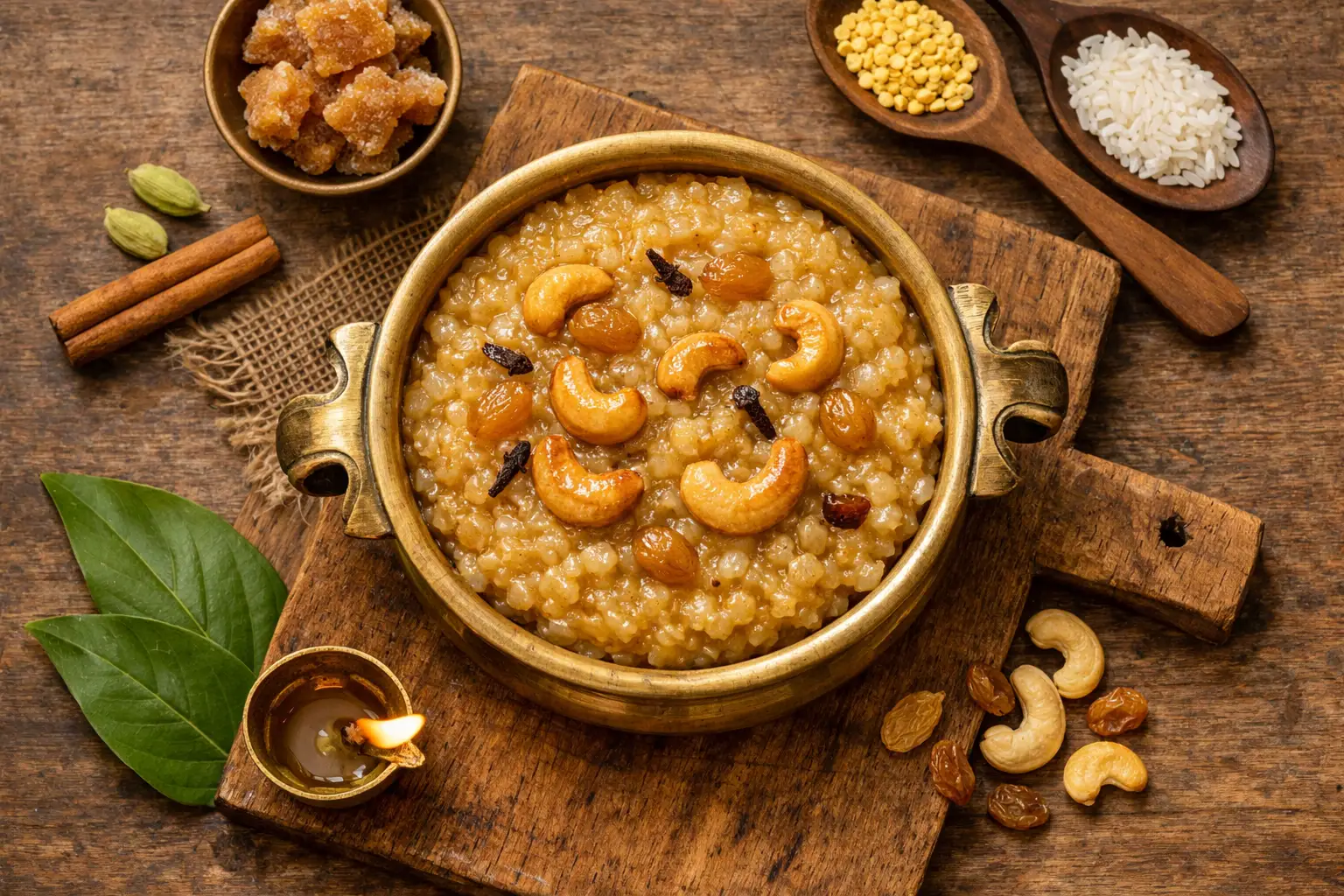
Quick Nutrition Facts
Per 1 Serving (150g)
| Nutrient | Amount |
|---|---|
| Calories | 340 kcal |
| Protein | 6g |
| Carbohydrates | 52g |
| Fiber | 1.5g |
| Sugars | 28g |
| Fat | 12g |
| Iron | 3.2mg |
| Calcium | 45mg |
| Potassium | 180mg |
| Magnesium | 38mg |
Macronutrient Breakdown
 ChatGPT
  Claude
  AI Mode
  Perplexity
NUTRITIONIST INSIGHT
Sweet pongal combines fast-digesting rice carbs with slow-digesting moong dal protein, creating a moderate energy release. The jaggery provides 11mg iron per 100g, making this a surprisingly mineral-rich dessert compared to refined sugar sweets.
Myth Busters
MYTH #1: Sweet Pongal Is Just Empty Calories
TRUTH: Unlike refined sugar desserts, sweet pongal provides protein from moong dal (20-32% protein content), iron from jaggery, and healthy fats from ghee and cashews. It is a whole-food dessert with meaningful micronutrients.
MYTH #2: Jaggery Makes Sweet Pongal Healthy for Diabetics
TRUTH: Despite common belief, jaggery has a glycemic index of 84, which is classified as high GI. Combined with white rice, sweet pongal causes rapid blood sugar spikes. Diabetics should strictly limit portions.
MYTH #3: Sweet Pongal Is Too Fattening to Eat
TRUTH: At 340 calories per serving, sweet pongal is comparable to many breakfast options. The ghee provides fat-soluble vitamin absorption, and moong dal protein promotes satiety, helping control further food intake when eaten mindfully.
MYTH #4: All Sweet Pongal Recipes Are the Same Nutritionally
TRUTH: Nutrition varies significantly based on jaggery-to-rice ratio, ghee amount, and garnishes. Traditional recipes use equal parts jaggery and rice, but reducing jaggery by 20-30% or using millet instead of rice can lower glycemic impact substantially.
MYTH #5: You Cannot Eat Sweet Pongal During Weight Loss
TRUTH: A small portion (75-100g, about 170-227 cal) can fit into a calorie-controlled diet, especially post-workout when your body needs quick glycogen replenishment. The key is portion control and timing, not complete avoidance.
NutriScore by Health Goals
| Health Goal | NutriScore | Why This Score? |
|---|---|---|
| Weight Loss |  | 340 calories per serving with 28g sugar. High calorie density limits use. Restrict to 75g portions on occasion. |
| Muscle Gain |  | Good post-workout carb source (52g) with 6g protein from moong dal. Add nuts for extra protein. Quick glycogen replenishment. |
| Diabetes Management | | High GI from rice + jaggery (GI ~84). Causes rapid blood sugar spikes. Limit to 2-3 tablespoons, always pair with protein. |
| PCOS Management | | High sugar and refined carbs worsen insulin resistance. Avoid or limit to festivals only. Choose millet-based alternatives. |
| Pregnancy Nutrition | | Iron from jaggery supports pregnancy iron needs (27mg/day). Moong dal provides folate. Moderate portions recommended. |
| Viral/Flu Recovery | | Easy to digest, quick energy, warm and soothing. Ghee soothes throat. Good recovery food in small portions. |
PERSONALIZED NUTRITION
Track your meals with NutriScan for personalized NutriScores based on your specific health goals!
Blood Sugar Response to Sweet Pongal
Understanding how sweet pongal affects your blood glucose helps you make informed decisions about portion size and timing.
Typical Glucose Response Curve
*This chart shows typical blood glucose response for general healthy individuals. Individual responses may vary. Not medical advice.*
How to Flatten the Spike
Pairing carb-rich foods with protein or healthy fat slows glucose absorption and reduces the peak blood sugar level:
- 🥛 Curd (dahi) or buttermilk - Adds protein and probiotics, a traditional South Indian pairing
- 🌰 Extra cashews and almonds - Increases healthy fat and protein content
- 🫘 Increase moong dal ratio - More lentils means slower digestion and lower glycemic response
- 🌾 Use millet instead of rice - Significantly lowers the glycemic impact of the dish
This combination not only reduces the glucose spike but also extends energy release, keeping you fuller for longer.
Cultural Significance
Sweet pongal (also called Sakkarai Pongal or Chakkarai Pongal) is one of South India's most sacred festival foods, deeply tied to harvest celebrations and temple traditions.
In India:
- Central dish of the Pongal/Thai Pongal festival (January), celebrating the rice harvest and the Sun God
- Offered as prasadam (sacred food) in major temples across Tamil Nadu, Karnataka, and Andhra Pradesh
- Traditional Naivedyam (offering to deities) during festivals, weddings, and auspicious occasions
- Each region has its own variation: Tamil Nadu uses raw rice, Karnataka prefers Bisi Bele style, Andhra adds coconut
Global Impact:
- Pongal festival is celebrated by the Tamil diaspora worldwide (Malaysia, Singapore, Sri Lanka, Canada, UK)
- Sweet pongal represents gratitude for abundance and the harvest season
- Increasingly featured in international food festivals celebrating Indian cuisine
- The dish symbolizes community, with large batches prepared and shared among neighbors
Compare & Substitute
Sweet Pongal vs Similar Indian Sweets (Per 100g)
| Nutrient | Sweet Pongal | Kheer (Rice Pudding) | Halwa (Suji) | Payasam (Vermicelli) |
|---|---|---|---|---|
| Calories | 227 kcal | 190 kcal | 280 kcal | 210 kcal |
| Carbs | 35g | 28g | 38g | 32g |
| Fiber | 1g | 0.3g | 0.5g | 0.4g |
| Protein | 4g | 4.5g | 3g | 3.5g |
| Fat | 8g | 6g | 12g | 7g |
| Iron | 2.1mg | 0.5mg | 1.2mg | 0.8mg |
| Sugar | 19g | 18g | 24g | 20g |
| Best For | Festival energy, iron intake | Lighter dessert, calcium source | Quick energy, celebrations | Festive occasions, variety |
Frequently Asked Questions
How many calories are in sweet pongal?
One serving (150g) of sweet pongal contains approximately 340 calories, with 52g carbohydrates, 6g protein, and 12g fat. Per 100g, it provides about 227 calories. Calorie content varies based on the amount of jaggery and ghee used in the recipe.
Is sweet pongal good for weight loss?
Sweet pongal is calorie-dense at 340 calories per serving with 28g sugar. For weight loss, limit portions to 75-100g (about 170-227 calories) and eat it occasionally rather than daily.
Best practices: Eat as a post-workout recovery food, reduce jaggery by 20-30%, use millet instead of white rice, and increase the moong dal proportion for more protein and fiber.
Can diabetics eat sweet pongal?
Diabetics should be cautious due to the high glycemic index of both rice and jaggery. The combined GI can cause rapid blood sugar spikes.
Tips for diabetics:
- Limit to 2-3 tablespoons (30-50g) at a time
- Always pair with protein-rich foods like curd or nuts
- Choose millet-based sweet pongal for lower glycemic impact
- Monitor blood sugar 2 hours after eating
Consult your healthcare provider for personalized guidance.
What are the health benefits of sweet pongal?
Key Benefits:
- Quick Energy: 52g carbohydrates per serving provide rapid fuel for physical activity
- Iron from Jaggery: Jaggery contains 11mg iron per 100g, supporting hemoglobin production
- Plant Protein: Moong dal contributes 6g protein per serving with essential amino acids
- Digestive Comfort: Ghee lubricates the digestive tract and aids nutrient absorption
- Mineral Rich: Provides calcium, potassium, and magnesium from natural ingredients
- Cultural Wellness: Warm, comforting food that supports emotional well-being during festivals
Is jaggery healthier than refined sugar?
Jaggery retains more minerals than refined sugar, including iron (11mg per 100g), calcium (40-100mg), and potassium (300-600mg). However, it still contains 65-85% sucrose and has a high glycemic index of 84. Use in moderation as a slightly better alternative, not a health food.
What is the best time to eat sweet pongal?
Depends on your goal:
- Energy Needs: Morning or mid-morning when metabolism is active
- Post-Workout: Within 30-60 minutes after exercise for glycogen replenishment
- Festivals: Enjoy traditional portions during celebrations without guilt
- Avoid: Late night or on empty stomach if you have diabetes or acid reflux
IMPORTANT NOTE
Sweet pongal is a traditional festival food best enjoyed in moderation. If you have diabetes or PCOS, consult your healthcare provider before including it regularly in your diet.




Similar Nutritious Foods
4505 Chicharrones Classic Chili Salt
7 Eleven Japan Crispy Corn Cheese
Explore More Nutrition Tools & Resources
AI Calorie Counter App - Snap a Photo, Get Macros
AI Nutritionist App That Reads Your Logged Meals
Best Protein Supplements for Women
Bulking Meal Plan App That Sets Your Surplus
ChatGPT Calorie Counter Alternative That Keeps the Total
ChatGPT Diet Plan Alternative That Tracks What You Eat
ChatGPT Weight Loss Coach Alternative With a Food Log
Fast Food Calorie Counter App That Reads the Tray
Free Calorie Tracker App with AI Photo Scans | NutriScan
Indian Diet Plan App With Veg and Non Veg Meals
Indian Food Calorie Calculator - Get Instant Nutrition Facts for Desi Meals — 2026
Intermittent Fasting for Women, Timer and Meal Log App
Intermittent Fasting Tracker App - Free Fasting Timer
Macro Tracker App That Fills the Numbers From a Photo
Mediterranean Diet Meal Plan App That Counts the Oil
Micronutrient Tracker App for Vitamins and Minerals
MyFitnessPal Alternative That Stays Free | NutriScan
NutriScore App: A Free Grade on Every Meal | NutriScan
Nutrition Label Scanner App for the Amount You Ate
Second Trimester Protein Guide
Vegetarian Meal Plan App With a Protein Target
Voice Calorie Counter - Speak to Track Meals Hands-Free
Water and Calorie Tracker App - Free Water Log