Pop'ums Snacks: Calories, Nutrition and Health Benefits
Snack Factory's pretzel-popcorn hybrid launched in 2025—lighter and crunchier than traditional pretzels, but with refined-grain nutrition challenges.
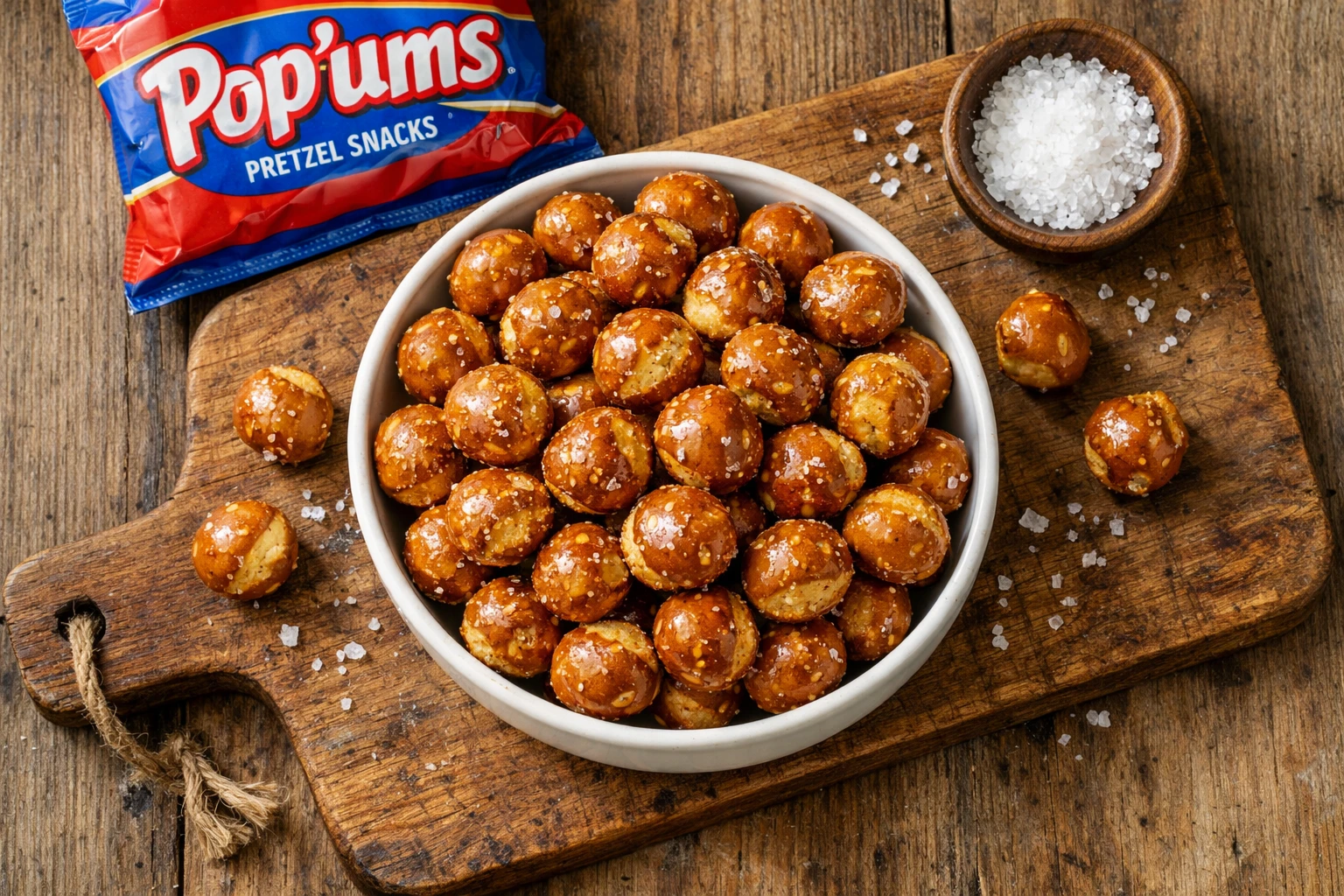
Quick Nutrition Facts
Per 1 Serving (28g / 1 oz / ½ cup)
| Nutrient | Amount |
|---|---|
| Calories | 130 kcal |
| Protein | 2g |
| Carbohydrates | 20g |
| Fiber | 1g |
| Sugars | 1g |
| Fat | 4.5g |
| Sodium | 300mg |
| Saturated Fat | 0.5g |
Macronutrient Breakdown
 ChatGPT
  Claude
  AI Mode
  Perplexity
NUTRITIONIST INSIGHT
Pop'ums are baked (not fried) with no artificial colors, but they're made with refined wheat flour and provide minimal fiber (1g) and protein (2g). The 300mg sodium per serving (13% DV) makes them less ideal for individuals with hypertension.
Myth Busters
MYTH #1: Pop'ums Are a Healthy Whole Grain Snack
TRUTH: Pop'ums are made with enriched wheat flour (refined grain), not whole wheat. They provide only 1g fiber per serving and lack the nutritional benefits of true whole grain snacks. Most pretzels are not nutrient-dense unless made with whole grain flour.
MYTH #2: Baked Snacks Are Always Healthier
TRUTH: While Pop'ums are baked (not fried), this doesn't automatically make them healthy. They remain energy-dense with 130 calories per small serving and minimal satiety due to low fiber and protein. Research shows that low-fiber, refined-grain snacks cause blood sugar spikes.
MYTH #3: Light and Crispy Means Low Calorie
TRUTH: Pop'ums are lighter and softer than traditional pretzels, but they provide the same calories per ounce (130 kcal). The airy texture can trick people into eating larger portions. Portion size powerfully affects energy intake, especially with energy-dense foods.
MYTH #4: Sodium Only Matters for People with High Blood Pressure
TRUTH: Approximately 25% of healthy people have salt sensitivity, meaning their bodies cannot eliminate excess salt efficiently, which can lead to hypertension. One serving of Pop'ums (300mg sodium) represents 20% of the ideal daily limit.
MYTH #5: Snacking Always Causes Weight Gain
TRUTH: Snacking itself doesn't cause weight gain—the type and amount of snacks consumed determine outcomes. Research shows that snacks higher in protein, fiber, and whole grains promote satiety, while refined-carb snacks like Pop'ums provide poor satiety per calorie.
NutriScore by Health Goals
| Health Goal | NutriScore | Why This Score? |
|---|---|---|
| Weight Loss |  | 130 calories per small serving with minimal protein (2g) and fiber (1g) provides poor satiety. Easy to overconsume. Limit strictly or choose higher-fiber alternatives. |
| Muscle Gain | | Only 2g protein per serving offers minimal muscle-building benefit. Choose protein-rich snacks (nuts, Greek yogurt, protein bars) for better muscle support. |
| Diabetes Management | | Refined wheat flour and low fiber (1g) likely produce high glycemic response. Treat as occasional snack; pair with protein to minimize blood sugar spikes. |
| PCOS Management | | Refined carbs affect insulin sensitivity. Choose whole grain snacks with higher fiber and protein for better hormone balance. |
| Pregnancy Nutrition |  | Moderate calories but minimal nutrients. Pregnant women benefit more from nutrient-dense snacks (nuts, fruits, whole grains). |
| Viral/Flu Recovery | | Provides quick energy but lacks immune-supporting nutrients (vitamin C, zinc, protein). Pair with nutrient-rich foods. |
PERSONALIZED NUTRITION
Track your meals with NutriScan for personalized NutriScores based on your specific health goals!
Blood Sugar Response to Pop'ums
Understanding how Pop'ums affect blood glucose helps you make informed snacking decisions, especially for diabetes or weight management.
Typical Glucose Response Curve
This chart shows typical blood glucose response for general healthy individuals. Individual responses may vary. Not medical advice.
How to Flatten the Spike
Pairing refined-carb snacks with protein or healthy fat slows glucose absorption and improves satiety:
- 🧀 String cheese or cheddar cubes - Adds protein and fat
- 🥜 Almond or peanut butter - Provides healthy fats and protein
- 🥛 Greek yogurt - Complete protein source with probiotics
- 🥚 Hard-boiled eggs - Protein-rich pairing
This combination reduces the glucose spike and extends energy release, keeping you fuller longer.
Cultural Significance
Pop'ums represent a 2025 innovation in American snack culture, combining two beloved formats—pretzels and popcorn—into a hybrid format.
In American Snacking:
- Launched January 2025 by Snack Factory (makers of Pretzel Crisps)
- Described as lighter and softer than traditional pretzels with satisfying crunch
- Part of the pretzel-popcorn hybrid trend capturing consumer interest in novel textures
- Available in Sea Salt and White Cheddar flavors at major retailers
Snacking Trends:
- Americans increasingly seek convenient, shelf-stable snacks with clean ingredient labels
- Baked (not fried) snacks perceived as healthier despite similar calorie density
- Pretzel market valued at billions, with innovation driving category growth
- Portion control remains a challenge with highly palatable, energy-dense snacks
Compare & Substitute
Pop'ums vs Similar Snacks (Per 100g)
| Nutrient | 🥨 Pop'ums | 🍿 Air-Popped Popcorn | 🥨 Hard Pretzels | 🥜 Roasted Almonds |
|---|---|---|---|---|
| Calories | 464 kcal | 387 kcal | 381 kcal | 579 kcal |
| Carbs | 71g | 78g | 80g | 22g |
| Fiber | 3.6g | 14.5g | 2.4g | 12.5g |
| Protein | 7g | 13g | 9g | 21g |
| Fat | 16g | 4.5g | 2.4g | 50g |
| Sodium | 1,071mg | 8mg | 1,230mg | 1mg |
| Best For | Occasional treat, portion-controlled | Weight loss, high-fiber snacking | Similar to Pop'ums | Weight loss, protein, satiety |
Frequently Asked Questions
Are Pop'ums healthy for weight loss?
Pop'ums are energy-dense with 130 calories per small serving (28g or ½ cup) and provide minimal protein (2g) and fiber (1g), resulting in poor satiety. They fit into calorie-controlled diets only with strict portion control.
Best practices: Limit to ½ serving (65 calories); pair with protein (cheese, nuts); avoid eating directly from large bags; choose whole grain snacks (air-popped popcorn, nuts) for better satiety per calorie.
Can diabetics eat Pop'ums?
Diabetics can eat Pop'ums in moderation but should count them as a "treat food." Made with refined wheat flour and low fiber (1g), they likely have a high glycemic index and raise blood sugar quickly.
Tips for diabetics:
- Eat small portions (½ serving or 14g); always pair with protein or healthy fat; best timing: mid-afternoon paired with cheese or nuts, not on empty stomach; monitor blood sugar 2 hours after eating.
Refined carbohydrates tend to cause blood sugar spikes, which can trigger hunger and food cravings. Always consult your healthcare provider.
How much sodium is in Pop'ums?
A single serving (28g) contains 300mg sodium, representing 13% of the daily value. The American Heart Association recommends no more than 2,300mg sodium daily, with an ideal limit of 1,500mg for most adults, especially those with high blood pressure.
For individuals with salt sensitivity (25% of healthy people), this sodium level can contribute to elevated blood pressure. Choose unsalted or lower-sodium snacks if managing hypertension.
What are the main ingredients in Pop'ums?
Key ingredients (White Cheddar Pop'ums):
- Base: Enriched wheat flour, canola oil, potato starch, cornstarch, tapioca malt syrup
- Cheese & dairy: Cheddar cheese, whey, buttermilk, sour cream, cultured nonfat milk
- Seasoning: Sea salt, sugar, yeast, sodium bicarbonate, yeast extract, natural flavors
They are baked (not fried) with no high fructose corn syrup and no artificial colors. However, they remain a refined-grain product lacking whole grain benefits.
Are Pop'ums whole grain?
No, Pop'ums are made with enriched wheat flour (refined grain), not whole wheat or whole grain flour. They provide minimal fiber (1g per serving) and lack the nutritional benefits of true whole grain snacks.
Most people eat more refined grains than whole grains, but eating more whole grains has been linked with lower risk of chronic diseases such as cancer, heart disease, and diabetes.
Recommendation: Choose whole grain pretzels or air-popped popcorn for better fiber and nutrient density.
How do Pop'ums compare to regular pretzels?
Pop'ums are lighter and softer than traditional hard pretzels due to their pretzel-popcorn hybrid format. Nutritionally, they are similar:
- Calories: 130 per oz (same as hard pretzels)
- Carbs: 20-21g (similar)
- Sodium: ~300mg (similar to salted pretzels)
- Texture: Lighter, airier, crunchier than traditional pretzels
Both Pop'ums and regular pretzels are typically made with refined wheat flour and provide minimal fiber and protein. For better nutrition, choose whole grain or sourdough pretzels.
When is the best time to eat Pop'ums?
Depends on your goal:
- Weight Loss: Avoid or limit strictly; if consumed, eat mid-afternoon paired with protein (cheese, nuts) to prevent overeating at dinner.
- Muscle Gain: Not ideal due to low protein (2g); choose protein-rich snacks (Greek yogurt, protein bars, nuts) instead.
- Diabetes: Treat as occasional snack; mid-afternoon paired with protein to minimize blood sugar spike.
- Energy: Not ideal; refined carbs cause quick energy spike followed by crash.
IMPORTANT NOTE
Avoid eating Pop'ums alone on empty stomach to prevent rapid blood sugar spike and subsequent hunger.
How many Pop'ums should I eat per day?
General Guidelines:
- ½ to 1 serving daily - Occasional treat (65-130 calories)
- Avoid daily consumption - Refined-grain snack lacking essential nutrients
- Better alternatives - Air-popped popcorn, nuts, whole grain crackers
Avoid excess: More than 1 serving can provide too much sodium (600mg+), refined carbs, and calories without adequate satiety.
Track your meals with NutriScan app to see how Pop'ums fit your personal nutrition goals.


Similar Nutritious Snacks
4505 Chicharrones Classic Chili Salt
7 Eleven Japan Crispy Corn Cheese
Explore More Nutrition Tools & Resources
AI Calorie Counter App - Snap a Photo, Get Macros
AI Nutritionist App That Reads Your Logged Meals
Best Protein Supplements for Women
Bulking Meal Plan App That Sets Your Surplus
ChatGPT Calorie Counter Alternative That Keeps the Total
ChatGPT Diet Plan Alternative That Tracks What You Eat
ChatGPT Weight Loss Coach Alternative With a Food Log
Fast Food Calorie Counter App That Reads the Tray
Free Calorie Tracker App with AI Photo Scans | NutriScan
Indian Diet Plan App With Veg and Non Veg Meals
Indian Food Calorie Calculator - Get Instant Nutrition Facts for Desi Meals — 2026
Intermittent Fasting for Women, Timer and Meal Log App
Intermittent Fasting Tracker App - Free Fasting Timer
Macro Tracker App That Fills the Numbers From a Photo
Mediterranean Diet Meal Plan App That Counts the Oil
Micronutrient Tracker App for Vitamins and Minerals
MyFitnessPal Alternative That Stays Free | NutriScan
NutriScore App: A Free Grade on Every Meal | NutriScan
Nutrition Label Scanner App for the Amount You Ate
Second Trimester Protein Guide
Vegetarian Meal Plan App With a Protein Target
Voice Calorie Counter - Speak to Track Meals Hands-Free
Water and Calorie Tracker App - Free Water Log