Pork Adobo: Calories, Nutrition and Health Benefits
The Philippines' iconic comfort food featuring tender pork braised in a tangy soy-vinegar sauce with garlic and bay leaves, delivering high protein and bold umami flavor.
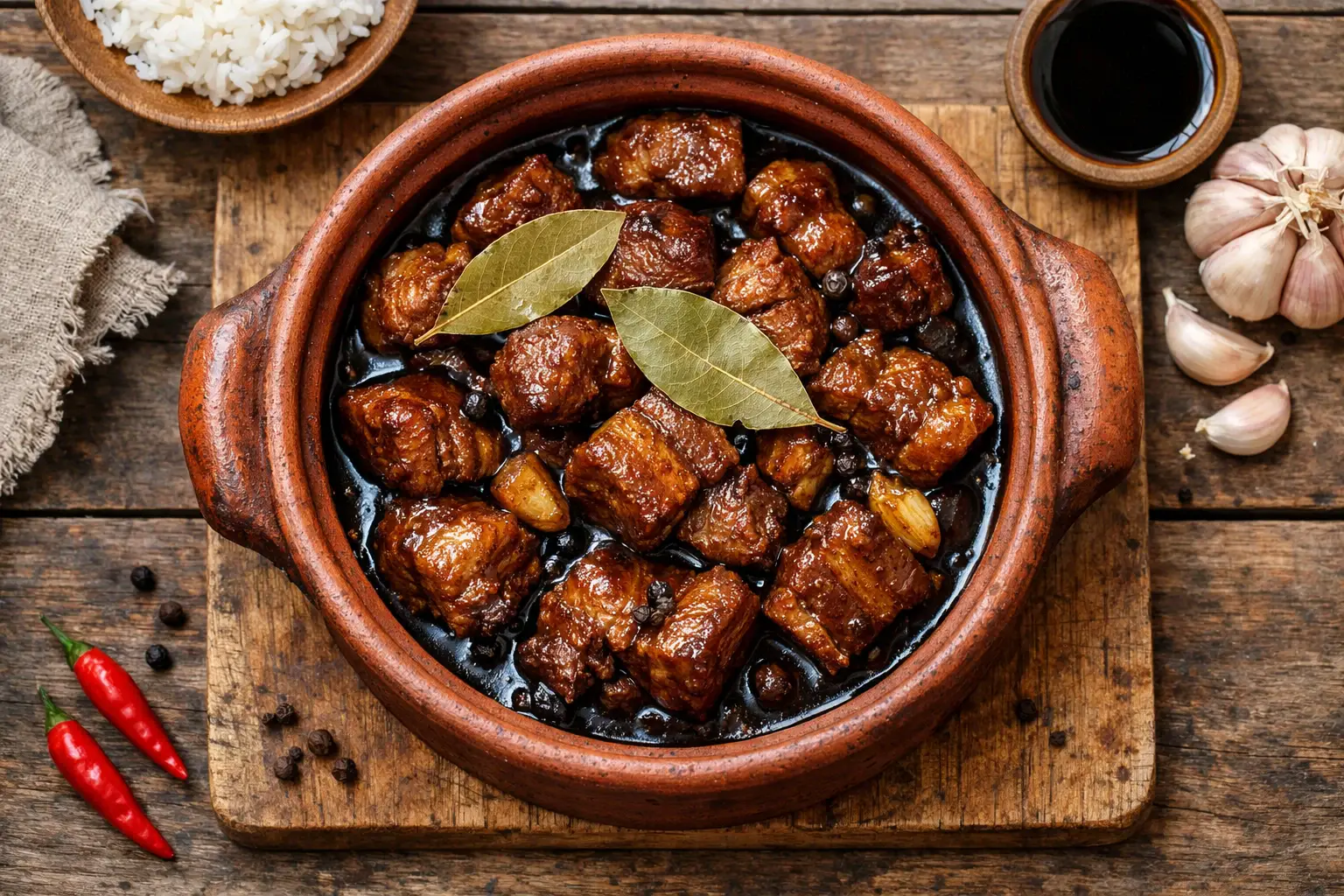
Quick Nutrition Facts
Per 1 Serving (150g)
| Nutrient | Amount |
|---|---|
| Calories | 300 kcal |
| Protein | 25g |
| Carbohydrates | 5g |
| Fiber | 0.3g |
| Sugars | 2g |
| Fat | 20g |
| Saturated Fat | 7g |
| Sodium | 900mg |
| Iron | 1.8mg |
| Zinc | 3.5mg |
Macronutrient Breakdown
 ChatGPT
  Claude
  AI Mode
  Perplexity
NUTRITIONIST INSIGHT
Pork adobo provides 25g of complete protein with all essential amino acids for muscle repair. The vinegar in adobo may help slow gastric emptying, potentially moderating blood sugar response when eaten with rice.
Myth Busters
MYTH #1: Pork Adobo Is Unhealthy Junk Food
TRUTH: When made with lean pork cuts, adobo is a protein-rich dish (25g per serving) with beneficial fermented ingredients. The key is portion control and choosing leaner cuts over pork belly.
MYTH #2: The Vinegar Makes Adobo Too Acidic for Digestion
TRUTH: Vinegar actually aids digestion by stimulating digestive enzymes. Fermented foods like vinegar support gut health and may improve nutrient absorption. The acidity also acts as a natural preservative.
MYTH #3: Diabetics Must Completely Avoid Adobo
TRUTH: Pork adobo is low in carbohydrates (5g per serving), making it suitable for diabetics in moderation. The concern is sodium content. Lean pork can be part of a DASH-style diet when portions are controlled.
MYTH #4: All Adobo Has the Same Nutrition
TRUTH: Nutrition varies significantly based on the cut used. Pork belly adobo has 450-500 calories and 35g fat per serving, while lean pork shoulder adobo has 250-300 calories and 15-20g fat. Always check which cut is used.
MYTH #5: Soy Sauce in Adobo Is Bad for You
TRUTH: While soy sauce is high in sodium, fermented soy products offer antioxidant and cardiovascular benefits. Use low-sodium soy sauce to get the flavor with 40% less salt.
NutriScore by Health Goals
| Health Goal | NutriScore | Why This Score? |
|---|---|---|
| Weight Loss |  | High protein (25g) promotes satiety, but 300 calories and 20g fat require portion control. Skip the fatty sauce. |
| Muscle Gain |  | Excellent complete protein source with all essential amino acids. 25g protein per serving supports muscle synthesis post-workout. |
| Diabetes Management |  | Low carbs (5g) is favorable. Lean pork fits DASH-style diets. Watch sodium; use low-sodium soy sauce. |
| PCOS Management | | High protein, low carb profile helps manage insulin. Choose lean cuts to limit saturated fat intake. |
| Pregnancy Nutrition | | Good iron (1.8mg) and zinc (3.5mg) for fetal development. Ensure pork is thoroughly cooked; limit due to sodium. |
| Viral/Flu Recovery | | Protein supports immune function, zinc aids recovery. The warm broth provides comfort and hydration. |
PERSONALIZED NUTRITION
Track your meals with NutriScan for personalized NutriScores based on your specific health goals!
Blood Sugar Response to Pork Adobo
Understanding how pork adobo affects your blood glucose can help you make informed decisions about when and how to eat it.
Typical Glucose Response Curve
This chart shows typical blood glucose response for general healthy individuals. Individual responses may vary. Not medical advice.
How to Flatten the Spike
Pairing protein with fiber slows glucose absorption and reduces blood sugar impact:
- Eat adobo with vegetables first - Fiber slows glucose absorption
- Choose brown rice over white - Lower glycemic index option
- Add sauteed greens (kangkong/spinach) - Adds fiber without carbs
- Limit rice portion to 1/2 cup - Reduces total carb load
This combination reduces glucose spikes while maintaining the satisfying flavor of the traditional dish.
Cultural Significance
Adobo is considered the unofficial national dish of the Philippines, with roots tracing back to pre-colonial preservation techniques using vinegar.
In the Philippines:
- Every region has unique variations (Visayan uses coconut milk, Bicolano adds chili)
- The name comes from Spanish "adobar" (to marinate), but the cooking method predates colonization
- Traditionally cooked in clay pots (palayok) for deeper flavor
- Often prepared for fiestas, family gatherings, and everyday meals alike
Global Recognition:
- Featured in international culinary competitions and food documentaries
- Growing presence in Filipino restaurants worldwide
- Recognized by food historians as one of Asia's most influential braising techniques
- The soy-vinegar base has inspired fusion dishes globally
Compare & Substitute
Pork Adobo vs Similar Dishes (Per 150g Serving)
| Nutrient | 🐷 Pork Adobo | 🐔 Chicken Adobo | 🥢 Pork Sinigang | 🍖 Lechon Kawali |
|---|---|---|---|---|
| Calories | 300 kcal | 220 kcal | 180 kcal | 450 kcal |
| Protein | 25g | 28g | 20g | 22g |
| Carbs | 5g | 4g | 8g | 2g |
| Fat | 20g | 10g | 8g | 38g |
| Sodium | 900mg | 850mg | 600mg | 400mg |
| Best For | Muscle gain, keto-friendly | Weight loss, lean protein | Low-calorie, vitamin C | Occasional indulgence |
Frequently Asked Questions
How many calories are in pork adobo?
A typical 150g serving of pork adobo contains 300 calories. This varies based on the pork cut used - pork belly versions can reach 450-500 calories due to higher fat content, while lean pork shoulder keeps it at 250-300 calories.
Is pork adobo good for weight loss?
Pork adobo can support weight loss when portion-controlled. The 25g protein promotes satiety and muscle preservation during calorie deficit. Best practices: use lean cuts, skip the fatty sauce, limit to 150g serving, and pair with vegetables instead of large rice portions.
Can diabetics eat pork adobo?
Yes, diabetics can enjoy pork adobo in moderation. With only 5g carbs per serving, it has minimal blood sugar impact. Tips for diabetics:
- Use low-sodium soy sauce (40% less salt)
- Pair with fiber-rich vegetables
- Limit rice to 1/2 cup brown rice
- Choose lean pork cuts to reduce saturated fat
How much protein is in pork adobo?
A 150g serving provides 25g of complete protein, containing all essential amino acids. This represents about 50% of the daily protein requirement for sedentary adults. For muscle building, pork adobo is comparable to a protein shake.
Is pork adobo high in sodium?
Yes, traditional pork adobo contains 800-1000mg sodium per serving (35-45% of daily limit), primarily from soy sauce. To reduce sodium:
- Use low-sodium soy sauce
- Substitute with coconut aminos
- Reduce soy sauce and increase vinegar
- Rinse the pork before serving
What's the healthiest way to make pork adobo?
For the healthiest version:
- Use lean pork shoulder or tenderloin instead of belly
- Trim visible fat before cooking
- Use low-sodium soy sauce
- Increase garlic (antioxidants) and black pepper
- Refrigerate overnight and skim solidified fat
- Serve with brown rice and steamed vegetables
Track your meals with NutriScan app to see how pork adobo fits your personal nutrition goals.
How long does pork adobo last?
Properly stored pork adobo lasts 4-5 days refrigerated or 2-3 months frozen. The vinegar acts as a natural preservative. Always reheat to 165°F (74°C) before serving. The flavor actually improves after a day as the sauce penetrates the meat.


Similar Nutritious Foods
4505 Chicharrones Classic Chili Salt
7 Eleven Japan Crispy Corn Cheese
Explore More Nutrition Tools & Resources
AI Calorie Counter App - Snap a Photo, Get Macros
AI Nutritionist App That Reads Your Logged Meals
Best Protein Supplements for Women
Bulking Meal Plan App That Sets Your Surplus
ChatGPT Calorie Counter Alternative That Keeps the Total
ChatGPT Diet Plan Alternative That Tracks What You Eat
ChatGPT Weight Loss Coach Alternative With a Food Log
Fast Food Calorie Counter App That Reads the Tray
Free Calorie Tracker App with AI Photo Scans | NutriScan
Indian Diet Plan App With Veg and Non Veg Meals
Indian Food Calorie Calculator - Get Instant Nutrition Facts for Desi Meals — 2026
Intermittent Fasting for Women, Timer and Meal Log App
Intermittent Fasting Tracker App - Free Fasting Timer
Macro Tracker App That Fills the Numbers From a Photo
Mediterranean Diet Meal Plan App That Counts the Oil
Micronutrient Tracker App for Vitamins and Minerals
MyFitnessPal Alternative That Stays Free | NutriScan
NutriScore App: A Free Grade on Every Meal | NutriScan
Nutrition Label Scanner App for the Amount You Ate
Second Trimester Protein Guide
Vegetarian Meal Plan App With a Protein Target
Voice Calorie Counter - Speak to Track Meals Hands-Free
Water and Calorie Tracker App - Free Water Log