Postbiotics: Benefits, Safety and How They Work
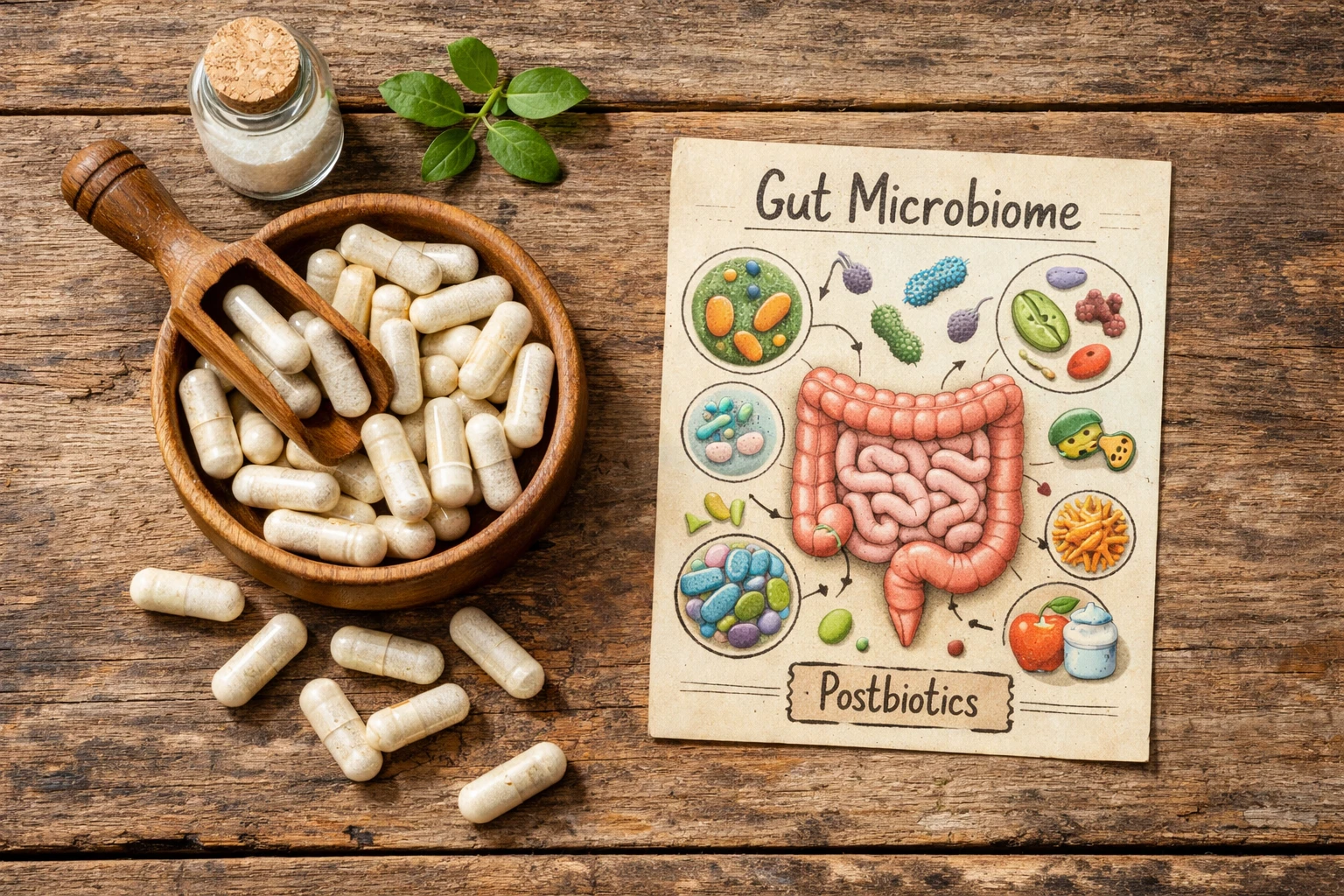
Next-generation gut health supplements with heat-killed bacteria and metabolites that support immunity without live organism risks.
Quick Nutrition Facts
Per 1 Gummy (Typical)
| Nutrient | Amount |
|---|---|
| Calories | 10-30 kcal |
| Protein | 0g |
| Carbohydrates | 3-7g |
| Fiber | 0-1g |
| Sugars | 3-5g |
| Fat | 0g |
| Active Compounds | SCFAs, bacteriocins, exopolysaccharides |
| CFU Equivalent | 1-2 × 10¹⁰ units |
Macronutrient Breakdown
 ChatGPT
  Claude
  AI Mode
  Perplexity
NUTRITIONIST INSIGHT
Postbiotics deliver probiotic benefits without live organisms, making them safer for immunocompromised individuals. The heat-killed bacteria and SCFAs (butyrate, propionate) support gut-brain axis and immune function without fermentation side effects.
Myth Busters
MYTH #1: Postbiotics Are Just Dead Probiotics with No Value
TRUTH: Postbiotics contain bioactive metabolites (SCFAs, bacteriocins, exopolysaccharides) that actively support immune function and reduce fatigue. Research shows significant improvements in immune markers and athletic readiness even without live organisms.
MYTH #2: You Need Live Bacteria for Gut Health Benefits
TRUTH: Postbiotics modulate microbiome diversity through fermentation byproducts without requiring bacterial survival through digestion. Heat-killed Lactococcus lactis demonstrated higher immune cell maturation and fewer fatigue days versus placebo.
MYTH #3: Postbiotics Are Unsafe During Pregnancy
TRUTH: Postbiotics are generally safer than probiotics during pregnancy because they contain no live organisms, eliminating pathogenic translocation risks. No documented cases of antimicrobial resistance gene transfer exist. Consult healthcare providers for personalized guidance.
MYTH #4: Probiotics Are Always Better Than Postbiotics
TRUTH: Postbiotics offer advantages for immunocompromised individuals, those with probiotic sensitivities, and anyone needing shelf-stable supplements. They provide uniform responses without survival variability that plagues live probiotics.
MYTH #5: All Postbiotic Supplements Are the Same
TRUTH: Quality varies by bacterial strains, fermentation conditions, and metabolite profiles. Look for products using Lactobacillus strains with documented CFU equivalent units (1-2 × 10¹⁰) and third-party testing for consistency.
MYTH #6: Postbiotics Cause Bloating Like Probiotics
TRUTH: Postbiotics typically cause less bloating because they're already processed metabolites. Unlike live probiotics that ferment in your gut, postbiotics don't create additional gas production or fermentation reactions.
NutriScore by Health Goals
| Health Goal | NutriScore | Why This Score? |
|---|---|---|
| Weight Loss |  | Minimal calories (10-30) but contains added sugars in gummy form. Choose capsules for zero-calorie option. |
| Muscle Gain |  | SCFAs support recovery and reduce fatigue during training. Immune support prevents illness-related training disruptions. |
| Diabetes Management | | Gummy forms contain 3-7g carbs and 3-5g sugar. Choose capsule formulations for diabetes-friendly zero-sugar option. |
| PCOS Management | | Gut-brain axis support may help with PCOS-related inflammation and hormone regulation. Choose low-sugar formulations. |
| Pregnancy Nutrition |  | Safer than probiotics during pregnancy—no live organism risks of pathogenic translocation. Supports immune function and digestive comfort without fermentation side effects. |
| Viral/Flu Recovery | | Enhanced immune markers and reduced fatigue support recovery. Safer than probiotics when immune system is compromised. |
PERSONALIZED NUTRITION
Track your supplement intake with NutriScan for personalized recommendations based on your gut health goals!
How Postbiotics Work
Understanding the mechanism helps explain why postbiotics offer unique advantages over traditional probiotics.
Postbiotic Mechanism Timeline
This chart shows typical absorption and immune activation timeline. Individual responses may vary. Not medical advice.
Active Compound Functions
Postbiotics deliver multiple bioactive compounds that work synergistically:
- 🧪 SCFAs (Butyrate, Propionate, Acetate) - Modulate gut microbiome, support epigenetic pathways, enhance metabolic health
- 🛡️ Bacteriocins - Antimicrobial peptides that support healthy microbial balance
- 🔗 Exopolysaccharides - Complex sugars that enhance microbiota diversity
- ⚙️ Heat-Killed Bacterial Cells - Retain structural components (peptidoglycan, lipoteichoic acid) for immune modulation
These compounds bypass digestion challenges and deliver benefits without requiring bacterial colonization.
Cultural Significance
Postbiotics represent a 2025 evolution of ancient fermentation wisdom combined with modern food science.
Historical Context:
- Fermented foods (kimchi, kefir, sauerkraut) have provided postbiotic benefits for millennia
- Traditional cultures consumed bacterial metabolites through preserved foods
- Modern science identified specific compounds responsible for health effects
Modern Innovation:
- Over 100 postbiotic products now available globally
- Safer alternative for immunocompromised populations
- Standardized dosing impossible with traditional fermented foods
- Shelf-stable formulations enable consistent daily intake
Compare & Substitute
Postbiotics vs Gut Health Alternatives (Per Serving)
| Supplement Type | 🦠 Postbiotics | 🧫 Probiotics | 🌾 Prebiotics | 🥬 Fermented Foods |
|---|---|---|---|---|
| Calories | 10-30 kcal | 5-20 kcal | 15-50 kcal | 20-100 kcal |
| Live Organisms | No (heat-killed) | Yes (10⁹-10¹¹ CFU) | No | Yes (variable) |
| Shelf Stability | Excellent | Poor (refrigeration needed) | Excellent | Poor (refrigeration) |
| Immunocompromised Safety | High | Lower risk | High | Lower risk |
| Digestive Side Effects | Minimal | Gas/bloating common | Gas common | Variable |
| Onset | Potentially faster | Delayed (requires colonization) | Delayed | Variable |
| Best For | Immune support, sensitive guts, athletes | Active colonization, general health | Feeding existing microbiota | Traditional wellness, variety |
Frequently Asked Questions
What are postbiotics and how do they differ from probiotics?
Postbiotics are heat-killed probiotic bacteria plus their metabolic byproducts including SCFAs (butyrate, propionate), bacteriocins, and exopolysaccharides. Unlike probiotics with live organisms requiring survival through digestion, postbiotics are inactive and shelf-stable.
Key differences: No live bacteria; no survival challenges; safer for immunocompromised individuals; more consistent effects; better shelf stability without refrigeration.
Are postbiotics safe for everyone?
Yes, postbiotics are generally safer than probiotics because they contain no live organisms. This eliminates risks of pathogenic translocation or antimicrobial resistance gene transfer.
Particularly safe for: Immunocompromised individuals; pregnant women; those with digestive sensitivities; people experiencing probiotic side effects. Always consult healthcare providers with existing medical conditions or during pregnancy.
What health benefits do postbiotics provide?
Research shows postbiotics support immune function, reduce fatigue, enhance athletic performance, and improve gut-brain axis communication.
Documented benefits: Significant improvements in CD86 immune markers; fewer cumulative fatigue days during exercise; enhanced athletic readiness; improved mood parameters; microbiome diversity modulation. Most research focuses on athletic populations; broader population studies are emerging.
How much postbiotics should I take daily?
Typical dosages are 1-2 gummies or 1 scoop powder daily. Research studies used 1-2 × 10¹⁰ CFU equivalent units per day.
Dosing guidelines: Gummies: 1-2 per day (10-60 calories); Capsules: 2 per day; Powder: 1 scoop (~26.5g). Start with manufacturer recommendations and adjust based on response. Consult healthcare providers for personalized guidance especially with existing conditions.
When should I choose postbiotics over probiotics?
Choose postbiotics if you're immunocompromised, have probiotic sensitivity, experience bloating from fermentation, need shelf-stable supplements, or want more uniform response.
Choose postbiotics when: Immune system is compromised; history of adverse probiotic reactions; fermentation causes bloating/gas; shelf stability matters; traveling without refrigeration; seeking consistent effects. Choose probiotics when establishing new bacterial colonization and tolerance is confirmed.
Do postbiotics have side effects?
Postbiotics have minimal side effects due to lack of live organisms. Some may experience mild digestive adjustment initially when starting supplementation.
Potential mild effects: Temporary digestive adaptation (first 3-5 days); rare allergic reactions to bacterial strains. Unlike probiotics, postbiotics don't cause excessive fermentation, gas, or bloating in most individuals. Start with recommended doses and monitor response.


Similar Gut Health Supplements
4505 Chicharrones Classic Chili Salt
7 Eleven Japan Crispy Corn Cheese
Explore More Nutrition Tools & Resources
AI Calorie Counter App - Snap a Photo, Get Macros
AI Nutritionist App That Reads Your Logged Meals
Best Protein Supplements for Women
Bulking Meal Plan App That Sets Your Surplus
ChatGPT Calorie Counter Alternative That Keeps the Total
ChatGPT Diet Plan Alternative That Tracks What You Eat
ChatGPT Weight Loss Coach Alternative With a Food Log
Fast Food Calorie Counter App That Reads the Tray
Free Calorie Tracker App with AI Photo Scans | NutriScan
Indian Diet Plan App With Veg and Non Veg Meals
Indian Food Calorie Calculator - Get Instant Nutrition Facts for Desi Meals — 2026
Intermittent Fasting for Women, Timer and Meal Log App
Intermittent Fasting Tracker App - Free Fasting Timer
Macro Tracker App That Fills the Numbers From a Photo
Mediterranean Diet Meal Plan App That Counts the Oil
Micronutrient Tracker App for Vitamins and Minerals
MyFitnessPal Alternative That Stays Free | NutriScan
NutriScore App: A Free Grade on Every Meal | NutriScan
Nutrition Label Scanner App for the Amount You Ate
Second Trimester Protein Guide
Vegetarian Meal Plan App With a Protein Target
Voice Calorie Counter - Speak to Track Meals Hands-Free
Water and Calorie Tracker App - Free Water Log