Potato Chips: Calories, Nutrition and Health Facts
A popular crispy snack high in calories, fat, and sodium—understanding the nutrition helps make informed choices about portion control and healthier alternatives.
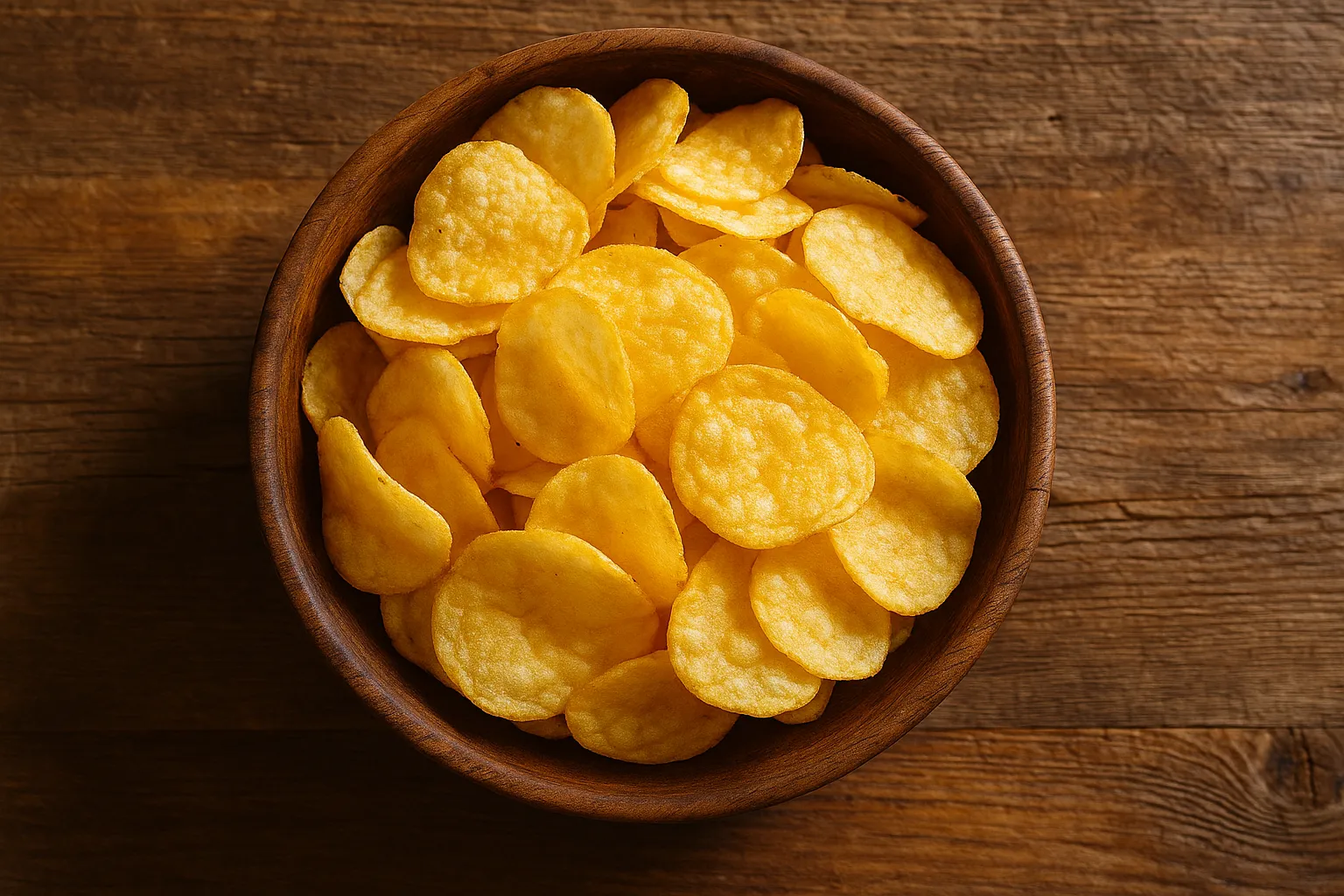
Quick Nutrition Facts
Per 100g (1 Small Bag)
| Nutrient | Amount |
|---|---|
| Calories | 547 kcal |
| Protein | 6.6g |
| Carbohydrates | 50g |
| Fiber | 4.5g |
| Sugars | 0.5g |
| Fat | 37.5g |
| Saturated Fat | 12g |
| Sodium | 550mg |
| Potassium | 1200mg |
| Vitamin C | 20mg |
Macronutrient Breakdown
 ChatGPT
  Claude
  AI Mode
  Perplexity
NUTRITIONIST INSIGHT
Potato chips are calorie-dense with high fat content (37.5g/100g). The high sodium (550mg) can affect blood pressure. Practice strict portion control—pre-portion 30g servings to avoid overconsumption.
Myth Busters
MYTH #1: All Chips Are Equally Unhealthy
TRUTH: Baked chips have 40% fewer calories and 80% less fat than fried chips. Air-fried or baked alternatives significantly reduce calorie and fat content while maintaining crunch.
MYTH #2: Chips Provide No Nutritional Value
TRUTH: Potato chips do provide potassium (1200mg/100g) and vitamin C (20mg), though the high calorie and sodium content outweigh these benefits. Better to get these nutrients from whole potatoes or vegetables.
MYTH #3: Chips Are Fine as Long as You Exercise
TRUTH: A 30-minute jog burns ~300 calories—one small bag of chips (547 kcal) requires nearly 2 hours of jogging. Exercise alone cannot offset regular chip consumption; portion control is essential.
MYTH #4: Chips Don't Spike Blood Sugar
TRUTH: Potato chips have a glycemic index of 60 (medium-high), causing rapid blood sugar spikes. Diabetics should limit consumption and pair with protein if eating.
MYTH #5: Low-Fat Chips Are Healthy
TRUTH: Low-fat chips often compensate with higher sodium and refined carbs. They still pack 400+ calories per 100g. "Low-fat" doesn't mean low-calorie or healthy—check total nutritional profile.
MYTH #6: Chips Satisfy Hunger
TRUTH: High-calorie but low in protein and fiber, chips provide poor satiety. Most people consume entire bags without feeling full, leading to overconsumption of 800+ calories in one sitting.
NutriScore by Health Goals
| Health Goal | NutriScore | Why This Score? |
|---|---|---|
| Weight Loss |  | 547 calories per 100g with low satiety promotes overconsumption. High fat content hinders weight loss. Limit to 30g portions once weekly. |
| Muscle Gain | | Only 6.6g protein per 100g with 37.5g fat. Poor protein-to-calorie ratio. Choose protein-rich snacks like nuts or Greek yogurt instead. |
| Diabetes Management | | GI of 60 causes blood sugar spikes; high sodium affects cardiovascular health. Diabetics should avoid or limit to rare 30g portions with protein. |
| PCOS Management | | High GI and refined carbs worsen insulin resistance. Excess sodium increases inflammation. Not recommended for PCOS management. |
| Pregnancy Nutrition | | High sodium can worsen pregnancy-related hypertension. Lacks essential pregnancy nutrients like folate, iron. Choose whole foods. |
| Viral/Flu Recovery | | High sodium promotes dehydration during illness. Lacks immune-supporting nutrients. Choose vitamin C-rich whole foods instead. |
PERSONALIZED NUTRITION
Track your snacks with NutriScan for personalized NutriScores based on your specific health goals!
Blood Sugar Response to Potato Chips
Understanding how potato chips affect your blood glucose can help you make informed snacking decisions.
Typical Glucose Response Curve
*This chart shows typical blood glucose response for general healthy individuals. Individual responses may vary. Not medical advice.*
How to Minimize the Spike
Pairing high-GI snacks with protein or fiber slows glucose absorption:
- 🥛 Greek yogurt dip - Adds protein and probiotics
- 🥑 Guacamole - Provides healthy fats and fiber
- 🧀 Cheese slices - Complete protein source
- 🥜 Handful of almonds - Healthy fats slow digestion
Better approach: Replace chips with air-popped popcorn, roasted chickpeas, or veggie sticks with hummus for better blood sugar control.
Cultural Significance
Potato chips were invented in 1853 in Saratoga Springs, New York, becoming America's favorite snack by the 20th century.
Global Impact:
- $27 billion global market annually
- Americans consume 1.85 billion pounds of chips yearly
- Available in 200+ flavor variations worldwide
- Integrated into cultural celebrations and sporting events
In India:
- Introduced in the 1990s with localized masala flavors
- Popular variants: masala, pudina, chaat, and international flavors
- Packaged snack industry worth $6 billion
- Increasingly replaced traditional snacks like namkeen and bhujia
Compare & Substitute
Potato Chips vs Healthier Alternatives (Per 100g)
| Nutrient | 🥔 Potato Chips (Fried) | 🥔 Baked Chips | 🍿 Air-Popped Popcorn | 🌿 Kale Chips |
|---|---|---|---|---|
| Calories | 547 kcal | 438 kcal | 387 kcal | 433 kcal |
| Carbs | 50g | 67g | 78g | 51g |
| Fiber | 4.5g | 4.2g | 14.5g | 8.5g |
| Protein | 6.6g | 5.5g | 13g | 17g |
| Fat | 37.5g | 15.5g | 4.5g | 27g |
| Sodium | 550mg | 480mg | 8mg | 314mg |
| Potassium | 1200mg | 1081mg | 329mg | 2360mg |
| Vitamin C | 20mg | 17mg | 0mg | 120mg |
| Best For | Occasional treat | Moderate indulgence | Weight loss, fiber | Nutrient-dense snacking |
Frequently Asked Questions
Are potato chips unhealthy?
Yes, potato chips are calorie-dense (547 kcal/100g) with high fat (37.5g) and sodium (550mg). Regular consumption contributes to weight gain, cardiovascular issues, and poor nutrition.
Why they're problematic: Low satiety leads to overconsumption; high sodium affects blood pressure; trans fats (in some brands) harm heart health; low nutritional value despite high calories.
Smart approach: Limit to once weekly; pre-portion 30g servings; choose baked over fried; pair with protein; track calories with NutriScan app.
Can diabetics eat potato chips?
Diabetics should limit or avoid potato chips. High glycemic index (60) causes rapid blood sugar spikes; refined carbs (50g/100g) stress insulin response; high sodium increases cardiovascular risk.
If consuming:
- Choose baked varieties (lower GI)
- Limit to 30g portions maximum
- Always pair with protein source
- Monitor blood sugar 2 hours post-consumption
- Make it rare (once monthly maximum)
Consult your healthcare provider before including chips in your diabetes meal plan.
How many calories are in potato chips?
100g (1 small bag): ~547 calories 30g serving (handful): ~160 calories 50g (medium snack): ~275 calories
Calorie breakdown: 69% from fat (37.5g), 37% from carbs (50g), 5% from protein (6.6g). One bag requires nearly 2 hours of jogging to burn off.
Portion control tip: Use small bowls; avoid eating from the bag; pre-portion servings; track with NutriScan app.
What are the main health risks of eating potato chips?
Primary risks:
- Weight Gain: 547 calories/100g with poor satiety leads to overconsumption
- Heart Disease: High saturated fat (12g) and sodium (550mg) increase cardiovascular risk
- Blood Sugar Issues: GI of 60 causes insulin spikes; worsens diabetes control
- Acrylamide Exposure: High-temperature frying creates potentially carcinogenic compounds
- Nutrient Displacement: Replaces nutrient-dense foods in diet
- Hypertension: High sodium contributes to elevated blood pressure
Do potato chips contain acrylamide?
Yes, potato chips contain acrylamide, a compound formed when starchy foods are cooked above 120°C. Acrylamide is classified as "probably carcinogenic" by IARC.
How to reduce exposure:
- Choose baked chips (lower temperatures = less acrylamide)
- Make homemade chips at lower temperatures
- Select golden chips over dark brown (less acrylamide)
- Avoid extremely crispy/burnt chips
- Limit overall chip consumption
Better alternatives: Fresh vegetables, fruits, nuts, or air-fried alternatives with minimal acrylamide formation.
Can I eat potato chips for weight loss?
Potato chips are not conducive to weight loss. High calorie density (547 kcal/100g), low satiety, easy overconsumption, and poor nutritional value make them incompatible with weight loss goals.
If you must have chips:
- Limit to 30g once weekly (160 calories)
- Choose baked varieties (40% fewer calories)
- Log every serving in NutriScan app
- Pair with protein to increase satiety
- Never eat directly from bag
- Choose air-popped popcorn instead (387 kcal/100g with more fiber)
Better snacks for weight loss: Roasted chickpeas, apple slices with almond butter, carrot sticks with hummus, air-popped popcorn.
What are the healthiest chip alternatives?
Best alternatives ranked:
- Air-popped popcorn - 387 kcal, 14.5g fiber, low fat
- Roasted chickpeas - High protein, crunchy, 164 kcal per 100g
- Baked vegetable chips (beets, sweet potato) - More vitamins, 40% fewer calories
- Homemade kale chips - 433 kcal, 17g protein, nutrient-dense
- Rice cakes - 387 kcal, very low fat
- Seaweed snacks - 30 kcal per serving, minerals
Tip: Make homemade chips by baking thin-sliced potatoes at 180°C with minimal oil spray for better control over ingredients.




Similar Nutritious Foods
4505 Chicharrones Classic Chili Salt
7 Eleven Japan Crispy Corn Cheese
Explore More Nutrition Tools & Resources
AI Calorie Counter App - Snap a Photo, Get Macros
AI Nutritionist App That Reads Your Logged Meals
Best Protein Supplements for Women
Bulking Meal Plan App That Sets Your Surplus
ChatGPT Calorie Counter Alternative That Keeps the Total
ChatGPT Diet Plan Alternative That Tracks What You Eat
ChatGPT Weight Loss Coach Alternative With a Food Log
Fast Food Calorie Counter App That Reads the Tray
Free Calorie Tracker App with AI Photo Scans | NutriScan
Indian Diet Plan App With Veg and Non Veg Meals
Indian Food Calorie Calculator - Get Instant Nutrition Facts for Desi Meals — 2026
Intermittent Fasting for Women, Timer and Meal Log App
Intermittent Fasting Tracker App - Free Fasting Timer
Macro Tracker App That Fills the Numbers From a Photo
Mediterranean Diet Meal Plan App That Counts the Oil
Micronutrient Tracker App for Vitamins and Minerals
MyFitnessPal Alternative That Stays Free | NutriScan
NutriScore App: A Free Grade on Every Meal | NutriScan
Nutrition Label Scanner App for the Amount You Ate
Second Trimester Protein Guide
Vegetarian Meal Plan App With a Protein Target
Voice Calorie Counter - Speak to Track Meals Hands-Free
Water and Calorie Tracker App - Free Water Log