Poutine: Calories, Nutrition and Health Benefits
Canada's beloved comfort food featuring crispy fries, fresh cheese curds, and savory brown gravy - rich in protein and calcium but best enjoyed mindfully.
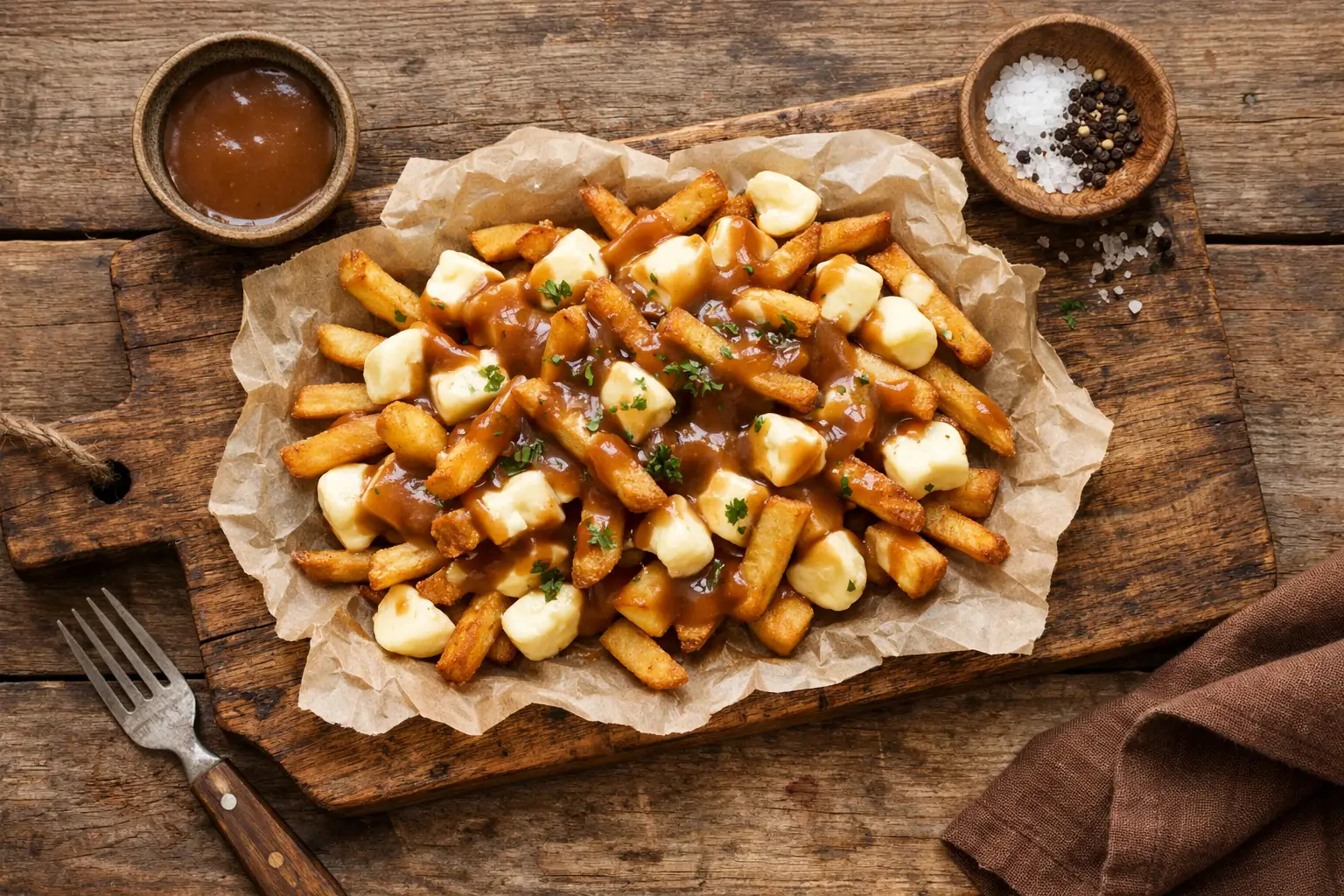
Quick Nutrition Facts
Per 1 Serving (425g)
| Nutrient | Amount |
|---|---|
| Calories | 740 kcal |
| Protein | 18g |
| Carbohydrates | 72g |
| Fiber | 5g |
| Sugars | 3g |
| Fat | 42g |
| Saturated Fat | 15g |
| Sodium | 1200mg |
| Calcium | 200mg |
| Potassium | 890mg |
Macronutrient Breakdown
 ChatGPT
  Claude
  AI Mode
  Perplexity
NUTRITIONIST INSIGHT
Poutine delivers 18g of complete protein and 200mg calcium from cheese curds. The potatoes provide potassium (890mg) for electrolyte balance. Enjoy as an occasional treat, sharing a portion to manage calories and sodium intake.
Myth Busters
MYTH #1: Poutine Has No Nutritional Value
TRUTH: While calorie-dense, poutine provides 18g protein, 200mg calcium, and 890mg potassium. Cheese curds offer high-quality dairy protein and calcium beneficial for bone health. It's about portion control, not complete avoidance.
MYTH #2: All Poutine Is Equally Unhealthy
TRUTH: Nutritional content varies significantly. Restaurant poutines can range from 700-1500 calories. Homemade versions using baked potatoes and low-sodium gravy can reduce calories by 30-40% and sodium by half.
MYTH #3: You Should Never Eat Poutine If You Have High Blood Pressure
TRUTH: While traditional poutine is high in sodium (1200mg+), occasional consumption with portion control is manageable. Choose smaller portions, request gravy on the side, and balance with low-sodium meals throughout the day.
MYTH #4: Poutine Causes Immediate Weight Gain
TRUTH: Weight gain results from consistent caloric surplus, not single meals. One serving of poutine (740 cal) fits within most daily calorie budgets. The key is frequency and portion size, not complete elimination.
MYTH #5: Cheese Curds Are Just Empty Calories
TRUTH: Fresh cheese curds provide complete protein, calcium, phosphorus, and vitamin A. Dairy proteins support muscle maintenance and bone health. The squeaky curds in authentic poutine indicate freshness and quality.
NutriScore by Health Goals
| Health Goal | NutriScore | Why This Score? |
|---|---|---|
| Weight Loss |  | 740 calories per serving is significant. Share a portion or choose small size. High fat content (42g) slows digestion. |
| Muscle Gain |  | 18g protein supports muscle synthesis. Post-workout carbs (72g) aid glycogen replenishment. Pair with additional lean protein. |
| Diabetes Management | | Fried potatoes have high glycemic impact. Choose small portions, monitor blood sugar closely. |
| PCOS Management | | High glycemic load and saturated fat may affect insulin sensitivity. Limit to occasional small portions. |
| Pregnancy Nutrition | | Calcium and protein support fetal development. Watch sodium intake; limit to occasional treat due to high saturated fat. |
| Viral/Flu Recovery | | Comfort food provides calories and protein for recovery. Sodium in gravy supports electrolyte balance. Easy to eat when appetite is low. |
PERSONALIZED NUTRITION
Track your meals with NutriScan for personalized NutriScores based on your specific health goals!
Blood Sugar Response to Poutine
Understanding how poutine affects your blood glucose can help you make informed decisions about when and how to eat it.
Typical Glucose Response Curve
This chart shows typical blood glucose response for general healthy individuals. Individual responses may vary. Not medical advice.
How to Flatten the Spike
Pairing high-glycemic foods with protein, fat, and fiber slows glucose absorption and reduces blood sugar peaks:
- 🥗 Start with a side salad - Fiber from vegetables slows carb absorption
- 🍗 Add grilled chicken or steak - Extra protein moderates glucose response
- 🥒 Include pickled vegetables - Vinegar compounds help stabilize blood sugar
- 🚶 Take a 15-minute walk after eating - Light activity helps muscles use glucose
The fat in poutine already slows digestion somewhat, but adding fiber and movement provides additional blood sugar management.
Cultural Significance
Poutine is Canada's most iconic comfort food, originating in rural Quebec in the late 1950s.
Origins:
- First created in Warwick, Quebec around 1957
- Name comes from Québécois slang meaning "a mess"
- Originally a working-class diner food
- Fresh cheese curds must "squeak" when bitten for authenticity
Canadian Culture:
- National comfort food served at hockey arenas, festivals, and pubs
- Poutine Week celebrated annually across Canada
- Featured at high-end restaurants with gourmet variations
- Symbol of Québécois culinary identity
Global Spread:
- Now found in restaurants across North America, Europe, and beyond
- Creative variations include pulled pork, lobster, butter chicken, and vegetarian versions
- Fast-food chains like McDonald's Canada offer it as a menu staple
Compare & Substitute
Poutine vs Similar Comfort Foods (Per Serving)
| Nutrient | 🍟 Poutine (425g) | 🍔 Loaded Fries (350g) | 🧀 Mac & Cheese (300g) | 🥔 Baked Potato w/ Toppings (400g) |
|---|---|---|---|---|
| Calories | 740 kcal | 680 kcal | 550 kcal | 450 kcal |
| Carbs | 72g | 65g | 48g | 58g |
| Fiber | 5g | 4g | 2g | 6g |
| Protein | 18g | 15g | 20g | 12g |
| Fat | 42g | 40g | 28g | 18g |
| Sodium | 1200mg | 1400mg | 950mg | 600mg |
| Calcium | 200mg | 150mg | 300mg | 80mg |
| Best For | Protein + comfort indulgence | Shareable appetizer | Quick comfort meal | Lower-calorie comfort option |
Frequently Asked Questions
How many calories are in poutine?
A typical restaurant serving of poutine contains 740-850 calories. Small orders range from 500-600 calories, while large portions can exceed 1200 calories.
Calorie breakdown by size:
- Small (300g): ~500 calories
- Regular (425g): ~740 calories
- Large (550g): ~1000 calories
- Loaded/gourmet versions: 900-1500 calories
Is poutine bad for you?
Poutine is a high-calorie comfort food best enjoyed occasionally rather than regularly. It provides protein (18g) and calcium (200mg) but is high in saturated fat, sodium, and calories.
Considerations:
- High sodium (1200mg) - 50%+ of daily limit
- High saturated fat (15g) - 75% of daily limit
- Significant calorie density
- Limited fiber and micronutrients
Enjoy as an occasional treat, share portions, and balance with nutrient-dense meals.
Can diabetics eat poutine?
Diabetics should approach poutine with caution due to its high carbohydrate content (72g) and the high glycemic index of fried potatoes.
Tips for diabetics:
- Choose the smallest available portion
- Share with others to reduce carb intake
- Pair with a side salad or vegetables
- Monitor blood sugar 2 hours after eating
- Consider homemade versions with baked potatoes
Always consult your healthcare provider about fitting poutine into your meal plan.
What makes authentic poutine?
Authentic Quebec poutine requires three specific components: hand-cut fries (crispy outside, fluffy inside), fresh cheese curds (must squeak when bitten), and hot brown gravy poured over top.
Key elements:
- Fresh cheese curds less than 24 hours old
- Beef or chicken-based brown gravy
- Fries cooked twice for proper texture
- Gravy must partially melt the curds
How can I make poutine healthier?
Several modifications can reduce calories and improve the nutritional profile while maintaining flavor.
Healthier alternatives:
- Bake or air-fry potatoes instead of deep-frying (saves 150+ calories)
- Use low-sodium gravy or make your own
- Add grilled vegetables or mushrooms
- Use reduced-fat cheese curds
- Control portion size (aim for small)
- Share with a friend
These changes can reduce calories by 30-40% and cut sodium significantly.
How often can I eat poutine?
For most healthy adults, enjoying poutine 1-2 times per month as part of a balanced diet is reasonable. Those with heart disease, diabetes, or weight management goals may want to limit to special occasions only.
Track your meals with NutriScan app to see how poutine fits your personal nutrition goals.


Similar Nutritious Foods
4505 Chicharrones Classic Chili Salt
7 Eleven Japan Crispy Corn Cheese
Explore More Nutrition Tools & Resources
AI Calorie Counter App - Snap a Photo, Get Macros
AI Nutritionist App That Reads Your Logged Meals
Best Protein Supplements for Women
Bulking Meal Plan App That Sets Your Surplus
ChatGPT Calorie Counter Alternative That Keeps the Total
ChatGPT Diet Plan Alternative That Tracks What You Eat
ChatGPT Weight Loss Coach Alternative With a Food Log
Fast Food Calorie Counter App That Reads the Tray
Free Calorie Tracker App with AI Photo Scans | NutriScan
Indian Diet Plan App With Veg and Non Veg Meals
Indian Food Calorie Calculator - Get Instant Nutrition Facts for Desi Meals — 2026
Intermittent Fasting for Women, Timer and Meal Log App
Intermittent Fasting Tracker App - Free Fasting Timer
Macro Tracker App That Fills the Numbers From a Photo
Mediterranean Diet Meal Plan App That Counts the Oil
Micronutrient Tracker App for Vitamins and Minerals
MyFitnessPal Alternative That Stays Free | NutriScan
NutriScore App: A Free Grade on Every Meal | NutriScan
Nutrition Label Scanner App for the Amount You Ate
Second Trimester Protein Guide
Vegetarian Meal Plan App With a Protein Target
Voice Calorie Counter - Speak to Track Meals Hands-Free
Water and Calorie Tracker App - Free Water Log