Protein Coffee Powder: Calories, Nutrition and Health Benefits
The ultimate high-protein, low-calorie coffee booster delivering 15g protein per scoop with just 60 calories and zero fat.
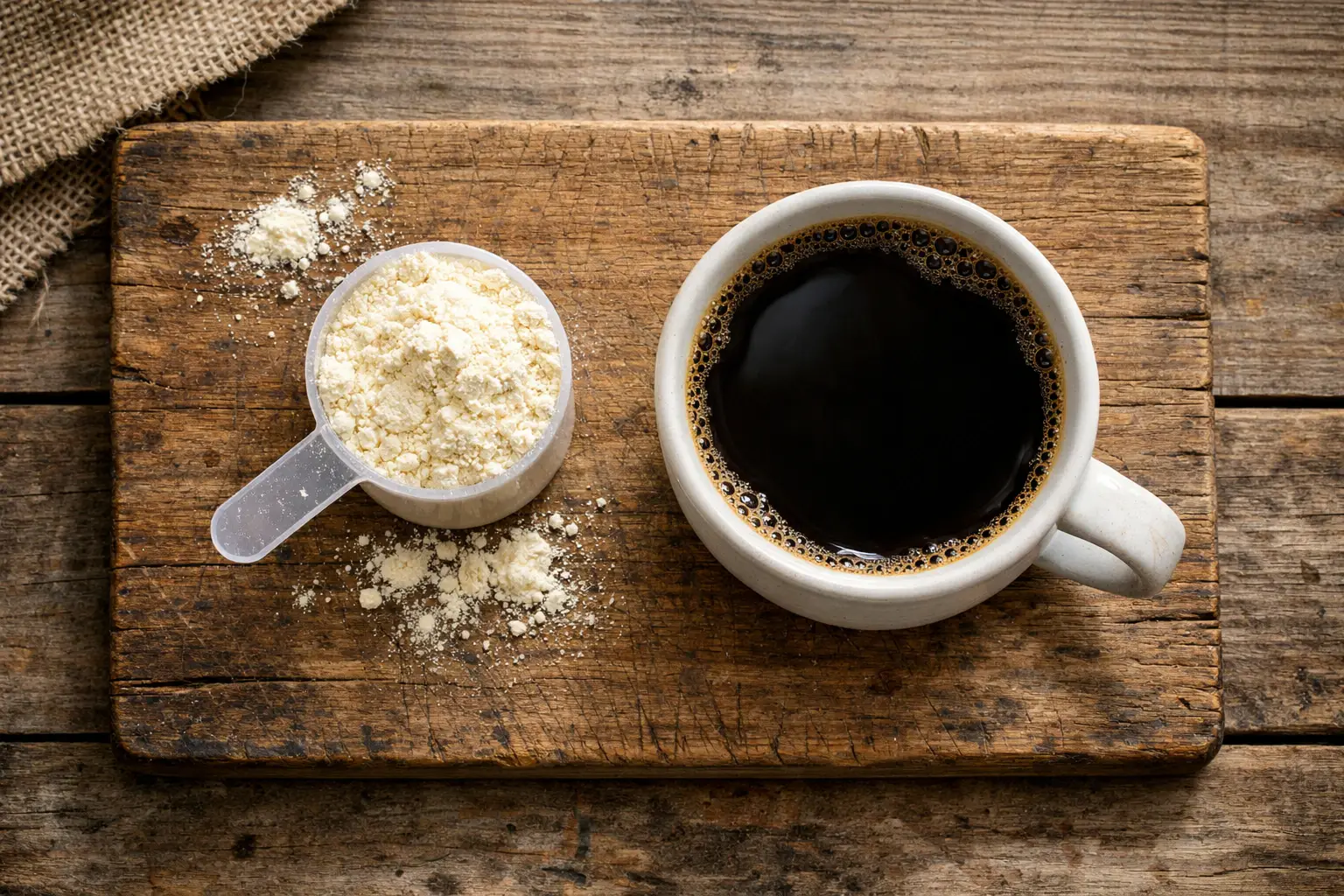
Quick Nutrition Facts
Per 1 Scoop (20g) - Whey Protein Coffee Add-On
| Nutrient | Amount |
|---|---|
| Calories | 60 kcal |
| Protein | 15g |
| Carbohydrates | 1g |
| Fiber | 0g |
| Sugars | 0g |
| Fat | 0g |
| Sodium | 50mg |
| Calcium | 80mg |
| Iron | 0.5mg |
| Potassium | 120mg |
Macronutrient Breakdown
 ChatGPT
  Claude
  AI Mode
  Perplexity
NUTRITIONIST INSIGHT
Protein coffee powder turns your morning cup into a functional meal component. The whey protein stimulates muscle protein synthesis while caffeine boosts metabolism by 3-11%. Together, they create a synergistic effect for both energy and satiety that neither delivers alone.
Myth Busters
MYTH #1: Protein Powder in Coffee Destroys the Protein
TRUTH: Heat does not destroy protein's nutritional value. While hot liquids can cause whey to denature (change shape), denatured protein is still fully digestible and nutritionally equivalent. Let coffee cool to 60-70 degrees Celsius for smoother texture.
MYTH #2: Protein Coffee Causes Kidney Damage
TRUTH: Research shows no kidney damage from protein supplementation in healthy adults. The concern applies only to those with pre-existing kidney disease. 1-2 scoops daily is well within safe limits for healthy kidneys.
MYTH #3: You Don't Need Extra Protein if You Eat Well
TRUTH: Many adults fall short of optimal protein intake, especially at breakfast. Protein supplementation improves metabolic markers and overall wellbeing even in those with adequate diets. A coffee protein scoop fills the morning protein gap conveniently.
MYTH #4: Protein Coffee is Just a Marketing Gimmick
TRUTH: Protein coffee combines two evidence-backed ingredients. Caffeine enhances exercise performance and metabolism, while whey protein is the most bioavailable protein source (PDCAAS score: 1.0). The combination is practical, not gimmicky.
MYTH #5: Protein Coffee Powder Has Too Many Additives
TRUTH: Quality protein coffee add-ons contain just whey protein isolate and natural flavoring. Check labels for short ingredient lists. Avoid products with added sugars, artificial colors, or fillers. Pure whey isolate is 90%+ protein by weight.
NutriScore by Health Goals
| Health Goal | NutriScore | Why This Score? |
|---|---|---|
| Weight Loss |  | Only 60 calories with 15g protein. High satiety, zero fat. Replaces 300+ calorie sugary coffee drinks. |
| Muscle Gain | | 15g fast-absorbing whey protein per scoop. Caffeine enhances workout performance and protein synthesis. |
| Diabetes Management | | Near-zero carbs, whey protein reduces post-meal blood sugar by up to 21%. Excellent glucose control support. |
| PCOS Management |  | High protein supports insulin sensitivity. Monitor caffeine intake as excess may affect cortisol levels. |
| Pregnancy Nutrition |  | Protein powder supplements are generally not recommended during pregnancy; prefer whole food protein sources. Limit caffeine to 200mg/day. |
| Viral/Flu Recovery | | Whey protein provides immunoglobulins and lactoferrin for immune support. Easy to consume when appetite is low. |
PERSONALIZED NUTRITION
Track your meals with NutriScan for personalized NutriScores based on your specific health goals!
Blood Sugar Response to Protein Coffee Powder
Understanding how protein coffee affects your blood glucose helps optimize timing and pairings for your health goals.
Typical Glucose Response Curve
This chart shows typical blood glucose response for general healthy individuals. Individual responses may vary. Not medical advice.
How to Flatten the Spike
Whey protein consumed before or with carbohydrates slows glucose absorption and reduces peak blood sugar levels:
- 🥜 Add to oatmeal - Protein slows carb digestion from oats
- 🥛 Blend with milk and ice - Creates a balanced protein shake with additional calcium
- 🥚 Pair with whole grain toast - Protein + fiber combination for sustained energy
- 🌰 Mix with nut butter smoothie - Healthy fats further flatten the glucose curve
This combination not only keeps blood sugar stable but also extends energy release, keeping you fuller for longer.
Cultural Significance
Protein coffee emerged from the fitness culture of the 2010s, blending the global coffee ritual with sports nutrition science.
Modern Fitness Culture:
- Popularized by bodybuilders and CrossFit athletes as a pre-workout staple
- "Proffee" (protein + coffee) trend went viral on social media in 2021
- Now a mainstream product category with dedicated brands worldwide
- Reflects the shift toward functional foods that serve multiple purposes
Global Coffee Meets Protein:
- Americans consume 400 million cups of coffee daily; protein adds function to ritual
- India's growing fitness market embraces protein coffee alongside traditional chai culture
- European cafes now offer protein add-on options alongside plant-based alternatives
- Part of the broader "performance nutrition" movement spanning all age groups
Compare & Substitute
Protein Coffee Powder vs Other Protein Sources (Per Serving)
| Nutrient | Protein Coffee Powder (20g scoop) | Whey Concentrate (30g scoop) | Casein Powder (33g scoop) | Collagen Peptides (20g scoop) |
|---|---|---|---|---|
| Calories | 60 kcal | 120 kcal | 120 kcal | 70 kcal |
| Protein | 15g | 24g | 24g | 18g |
| Carbs | 1g | 3g | 3g | 0g |
| Fat | 0g | 2g | 1g | 0g |
| Fiber | 0g | 0g | 0g | 0g |
| Sugar | 0g | 2g | 1g | 0g |
| Key Micro | Calcium 80mg | Calcium 120mg | Calcium 500mg | Glycine 3.5g |
| Best For | Quick coffee protein boost | Post-workout recovery | Slow-release overnight | Skin, joint, gut health |
Frequently Asked Questions
How many calories are in protein coffee powder?
A typical scoop (20g) of protein coffee add-on powder contains about 60 calories with 15g protein, 0g fat, and 1g carbs. Added to black coffee (2 calories), the total drink is roughly 62 calories, making it one of the lowest-calorie high-protein beverages available.
Is protein coffee good for weight loss?
Yes. Protein coffee combines caffeine's metabolism-boosting effect (3-11% increase) with protein's satiety benefits. At 60 calories per scoop with 15g protein, it replaces sugary lattes (300-500 calories) while keeping you full for 3-4 hours.
Best practices: Use as morning meal supplement, choose unsweetened varieties, limit to 1-2 scoops daily, pair with a balanced breakfast.
Can you put protein powder in hot coffee?
Yes, but let coffee cool to 60-70 degrees Celsius first. Very hot liquid causes whey to clump and form lumps.
Tips for smooth mixing:
- Use a blender or shaker bottle, not a spoon
- Add powder to coffee (not coffee to powder)
- Whey isolate dissolves better than concentrate in hot liquids
- Consider cold brew or iced coffee for easiest mixing
Is protein coffee safe for diabetics?
Protein coffee can be beneficial for blood sugar management. Research shows whey protein reduces post-meal blood glucose by up to 21% when consumed before meals.
Tips for diabetics:
- Choose zero-sugar, zero-carb varieties
- Consume 15-30 minutes before meals for best glucose-lowering effect
- Monitor blood sugar response individually
- Limit total caffeine to 400mg daily
Whey protein stimulates insulin release and slows gastric emptying, both beneficial for glycemic control. Always consult your healthcare provider.
When is the best time to drink protein coffee?
Depends on your goal:
- Weight Loss: Morning (as breakfast supplement) or mid-morning to prevent snacking
- Muscle Gain: 30-60 minutes pre-workout or immediately post-workout
- Energy: Mid-morning (9-11 AM) when cortisol naturally dips
- Blood Sugar: 15-30 minutes before a carb-heavy meal
IMPORTANT NOTE
Avoid protein coffee after 2 PM if caffeine affects your sleep. Switch to decaf protein coffee for afternoon use.
How much protein coffee can you drink per day?
General Guidelines:
- 1-2 scoops daily - Most adults (15-30g protein, within safe caffeine limits)
- 1 scoop daily - Beginners, caffeine-sensitive individuals, those over 65
- 2-3 scoops daily - Athletes with high protein needs (monitor total caffeine)
Safety limits: Stay under 400mg caffeine daily (about 4 cups of coffee). Total protein from all sources should not exceed 2g per kg of body weight for most adults.
Track your protein intake with NutriScan app to ensure you hit your daily targets without overconsumption.


Similar Nutritious Foods
4505 Chicharrones Classic Chili Salt
7 Eleven Japan Crispy Corn Cheese
Explore More Nutrition Tools & Resources
AI Calorie Counter App - Snap a Photo, Get Macros
AI Nutritionist App That Reads Your Logged Meals
Best Protein Supplements for Women
Bulking Meal Plan App That Sets Your Surplus
ChatGPT Calorie Counter Alternative That Keeps the Total
ChatGPT Diet Plan Alternative That Tracks What You Eat
ChatGPT Weight Loss Coach Alternative With a Food Log
Fast Food Calorie Counter App That Reads the Tray
Free Calorie Tracker App with AI Photo Scans | NutriScan
Indian Diet Plan App With Veg and Non Veg Meals
Indian Food Calorie Calculator - Get Instant Nutrition Facts for Desi Meals — 2026
Intermittent Fasting for Women, Timer and Meal Log App
Intermittent Fasting Tracker App - Free Fasting Timer
Macro Tracker App That Fills the Numbers From a Photo
Mediterranean Diet Meal Plan App That Counts the Oil
Micronutrient Tracker App for Vitamins and Minerals
MyFitnessPal Alternative That Stays Free | NutriScan
NutriScore App: A Free Grade on Every Meal | NutriScan
Nutrition Label Scanner App for the Amount You Ate
Second Trimester Protein Guide
Vegetarian Meal Plan App With a Protein Target
Voice Calorie Counter - Speak to Track Meals Hands-Free
Water and Calorie Tracker App - Free Water Log