Pumpernickel Bread: Calories, Nutrition and Health Benefits
A traditional German dense rye bread with remarkably low glycemic impact, rich fiber, and essential minerals for steady energy and digestive health.
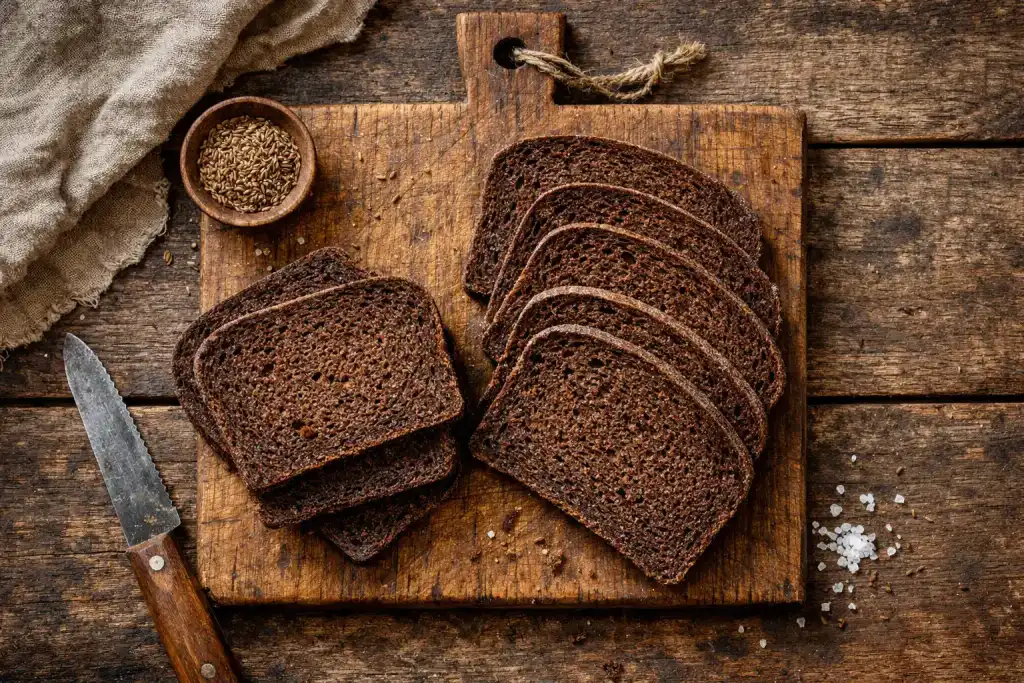
Quick Nutrition Facts
Per 1 Slice (26g)
| Nutrient | Amount |
|---|---|
| Calories | 65 kcal |
| Protein | 2.3g |
| Carbohydrates | 12.4g |
| Fiber | 1.6g |
| Sugars | 1.7g |
| Fat | 0.8g |
| Manganese | 0.3mg |
| Selenium | 7.5mcg |
| Iron | 0.7mg |
| Folate | 24mcg |
Macronutrient Breakdown
 ChatGPT
  Claude
  AI Mode
  Perplexity
NUTRITIONIST INSIGHT
Pumpernickel bread is one of the lowest glycemic breads available, with studies showing it produces significantly lower blood sugar spikes than white or whole wheat bread. Its dense, coarsely ground rye structure slows digestion and provides sustained energy for hours.
Is Pumpernickel Bread Healthy?
Yes, for most people pumpernickel is one of the better breads on the shelf. A glycemic index of 46 to 55 and 6.5 g of fiber per 100 g put it well ahead of white bread.
Three points in its favor:
- Flat blood sugar. GI 46 to 55, against 69 to 72 for whole wheat bread. The long slow bake, up to 24 hours, leaves the starch harder to digest.
- Real staying power. One 26 g slice carries 1.6 g of fiber for 65 calories, so two slices cost 130 calories and hold hunger off for hours.
- Micronutrients from whole rye. 28.9 mcg of selenium per 100 g, plus manganese, iron and folate.
Two points against:
- Carb load. 47.5 g of carbs per 100 g. Pumpernickel does not fit keto or strict low-carb eating.
- Not gluten-free. Rye contains gluten, so pumpernickel is off the table with celiac disease.
Portion guidance: two slices, 130 calories, make a solid meal base. Add cottage cheese, an egg or smoked fish and the meal holds for three to four hours. Going past four slices a day rarely pays off, since 100 g of pumpernickel is 250 calories, close to the 259 calories in rye bread.
Myth Busters
MYTH #1: Pumpernickel Is High in Calories Because It's Dense
TRUTH: Despite its dense texture, one slice of pumpernickel has only 65 calories. The density comes from whole rye kernels and long baking, not added fats or sugars. It's actually lower in calories than many light-looking white breads.
MYTH #2: Pumpernickel Bread Spikes Blood Sugar Like Other Bread
TRUTH: Research shows pumpernickel produces significantly lower peak glucose than white, whole wheat, or sourdough bread in both healthy individuals and those with type 2 diabetes. Its coarse grain structure slows starch digestion.
MYTH #3: Dark Bread Color Means More Nutrients
TRUTH: Pumpernickel's dark color comes from the Maillard reaction during slow baking at low temperatures (12-24 hours), not from added molasses or caramel. Authentic pumpernickel gets its color and nutrients from whole rye grain, but some commercial versions use coloring agents.
MYTH #4: Pumpernickel Is Gluten-Free Because It's Rye
TRUTH: Rye contains gluten proteins (secalins). Pumpernickel is NOT safe for celiac disease or gluten sensitivity. However, some people who are mildly sensitive to wheat find rye bread easier to digest due to its different gluten structure.
MYTH #5: All Pumpernickel Bread Is the Same
TRUTH: Traditional German pumpernickel uses only whole rye kernels, water, and sometimes salt, baked for 16-24 hours. Many commercial versions use refined rye flour, added sugars, and caramel coloring. Check the ingredient list for "whole rye" as the first ingredient.
NutriScore by Health Goals
| Health Goal | NutriScore | Why This Score? |
|---|---|---|
| Weight Loss |  | Only 65 calories per slice with 1.6g fiber. Low GI keeps you full longer, reducing snacking urges. |
| Muscle Gain |  | Slow-release carbs (12.4g per slice) for sustained energy. Pair with eggs or cheese for complete post-workout recovery. |
| Diabetes Management | | Produces significantly lower blood sugar spikes than other breads. GI of 46-55 vs 75+ for white bread. |
| PCOS Management | | Low glycemic response helps manage insulin resistance. Choose authentic whole-rye versions for maximum benefit. |
| Pregnancy Nutrition | | Provides folate (24mcg per slice) and whole grains recommended during pregnancy for fiber and B vitamins. Supports steady energy. |
| Viral/Flu Recovery | | Easy to digest dense bread, provides B vitamins for immune support, and selenium (12% DV per slice) for antioxidant defense. |
PERSONALIZED NUTRITION
Track your meals with NutriScan for personalized NutriScores based on your specific health goals!
Blood Sugar Response to Pumpernickel Bread
Understanding how pumpernickel bread affects your blood glucose can help you make informed decisions about when and how to eat it.
Typical Glucose Response Curve
This chart shows typical blood glucose response for general healthy individuals. Individual responses may vary. Not medical advice.
How to Flatten the Spike
Pairing pumpernickel with protein or healthy fat slows glucose absorption and reduces the peak blood sugar level:
- 🧀 Cheese or cottage cheese - Adds protein and healthy fats for slower absorption
- 🥚 Smoked salmon or boiled eggs - Classic pairing with complete protein
- 🥑 Avocado spread - Healthy monounsaturated fats slow digestion
- 🥜 Nut butter (almond or peanut) - Adds fiber, fat, and protein
This combination not only reduces the glucose spike but also extends energy release, keeping you fuller for longer.
Cultural Significance
Pumpernickel bread has been a staple in German cuisine for over 600 years, originating in the Westphalia region of northwestern Germany.
In Germany:
- Traditional Westphalian pumpernickel bakes in steam ovens for 16-24 hours at low temperature
- Name possibly derived from "pumpern" (to break wind) and "Nickel" (a common name or the devil), referencing its high fiber content
- Protected regional specialty in parts of Germany
- Served as a symbol of German baking craftsmanship
Global Influence:
- German and Eastern European immigrants brought pumpernickel to America in the 19th century
- Scandinavian countries developed similar dense rye breads (rugbrod, knackebrod)
- Russian borodinsky bread shares the slow-baked dark rye tradition
- Growing worldwide interest as a low-glycemic alternative to refined breads
Compare & Substitute
Pumpernickel vs Similar Breads (Per 100g)
| Nutrient | Pumpernickel | Whole Wheat | Sourdough | Rye Bread |
|---|---|---|---|---|
| Calories | 250 kcal | 254 kcal | 274 kcal | 259 kcal |
| Carbs | 47.5g | 43g | 51g | 48g |
| Fiber | 6.5g | 6.8g | 2.4g | 5.8g |
| Protein | 8.7g | 12.6g | 8.8g | 8.5g |
| Fat | 3.1g | 3.4g | 3.0g | 3.3g |
| GI | 46-55 | 69-72 | 54-68 | 56-65 |
| Sugar | 3.2g | 4.4g | 4.0g | 3.9g |
| Selenium | 28.9mcg | 25.7mcg | 22.1mcg | 30.9mcg |
| Best For | Blood sugar control, steady energy | Protein needs, general nutrition | Gut health, digestibility | Traditional flavor, moderate GI |
Frequently Asked Questions
Is pumpernickel bread healthy?
Yes for most people. Pumpernickel has a glycemic index of 46 to 55, 6.5 g of fiber per 100 g and 65 calories per 26 g slice, which beats white bread on both blood sugar and satiety. The trade-offs: 47.5 g of carbs per 100 g makes it a poor fit for keto, and rye contains gluten, so it is unsafe with celiac disease. Two slices a day with a protein topping is a sensible portion.
Is pumpernickel bread good for weight loss?
Yes, one 26g slice is 65 calories with 1.6g of fiber, so two slices cost 130 calories. The low glycemic index of 46 to 55 slows digestion and keeps hunger down between meals. Per 100g pumpernickel is 250 calories with 6.5g fiber.
Best practices: Limit to 2-3 slices per day, top with lean protein, choose authentic whole-rye versions, and eat as part of balanced meals rather than alone.
Can diabetics eat pumpernickel bread?
Yes, one 26g slice is 12.4g carbs with a glycemic index of 46 to 55, which is low for a bread. Studies show pumpernickel produces significantly lower peak glucose than white, whole wheat, or sourdough bread. Per 100g that is 47.5g carbs and 6.5g fiber, so portion size still matters.
Tips for diabetics:
- Choose authentic whole-rye pumpernickel (not colored versions)
- Limit to 1-2 slices per meal (12-25g carbs)
- Pair with protein or healthy fat for even flatter glucose response
- Monitor blood sugar 2 hours after eating
Always consult your healthcare provider about incorporating pumpernickel into your diabetes meal plan.
How many calories are in pumpernickel bread?
One regular slice of pumpernickel bread (26g) contains 65 calories. Per 100g, pumpernickel provides 250 calories with 8.7g protein, 47.5g carbs, 6.5g fiber, and 3.1g fat. The calorie count is comparable to other whole grain breads.
What makes pumpernickel healthier than white bread?
Key Advantages:
- Lower Glycemic Index: GI of 46-55 vs 75+ for white bread
- More Fiber: 6.5g vs 2.7g per 100g
- Whole Grain Benefits: Retains bran, germ, and endosperm with all nutrients
- Better Blood Sugar Control: Produces flatter glucose curves
- More Minerals: Higher in manganese, selenium, and iron
- Greater Satiety: Dense texture and fiber keep you full longer
Is pumpernickel bread gluten-free?
No, pumpernickel bread is NOT gluten-free. Rye contains gluten proteins called secalins. People with celiac disease or gluten sensitivity must avoid pumpernickel bread entirely. If you need a low-glycemic, gluten-free alternative, consider sourdough made from certified gluten-free grains.
How should I store pumpernickel bread?
Storage Guidelines:
- Room temperature: 4-5 days in an airtight container or bread box
- Refrigerator: Up to 2 weeks, tightly wrapped
- Freezer: 2-3 months, sliced and wrapped individually for easy portioning
Traditional authentic pumpernickel with no preservatives lasts longer than white bread due to its low moisture content and acidic pH from rye fermentation.
Track your bread intake with NutriScan app to see how pumpernickel fits your daily nutrition goals.


Similar Nutritious Foods
4505 Chicharrones Classic Chili Salt
7 Eleven Japan Crispy Corn Cheese
Explore More Nutrition Tools & Resources
AI Calorie Counter App - Snap a Photo, Get Macros
AI Nutritionist App That Reads Your Logged Meals
Best Protein Supplements for Women
Bulking Meal Plan App That Sets Your Surplus
ChatGPT Calorie Counter Alternative That Keeps the Total
ChatGPT Diet Plan Alternative That Tracks What You Eat
ChatGPT Weight Loss Coach Alternative With a Food Log
Fast Food Calorie Counter App That Reads the Tray
Free Calorie Tracker App with AI Photo Scans | NutriScan
Indian Diet Plan App With Veg and Non Veg Meals
Indian Food Calorie Calculator - Get Instant Nutrition Facts for Desi Meals — 2026
Intermittent Fasting for Women, Timer and Meal Log App
Intermittent Fasting Tracker App - Free Fasting Timer
Macro Tracker App That Fills the Numbers From a Photo
Mediterranean Diet Meal Plan App That Counts the Oil
Micronutrient Tracker App for Vitamins and Minerals
MyFitnessPal Alternative That Stays Free | NutriScan
NutriScore App: A Free Grade on Every Meal | NutriScan
Nutrition Label Scanner App for the Amount You Ate
Second Trimester Protein Guide
Vegetarian Meal Plan App With a Protein Target
Voice Calorie Counter - Speak to Track Meals Hands-Free
Water and Calorie Tracker App - Free Water Log