Pumpernickel (German Dark Rye Bread): Calories, Nutrition and Health Benefits
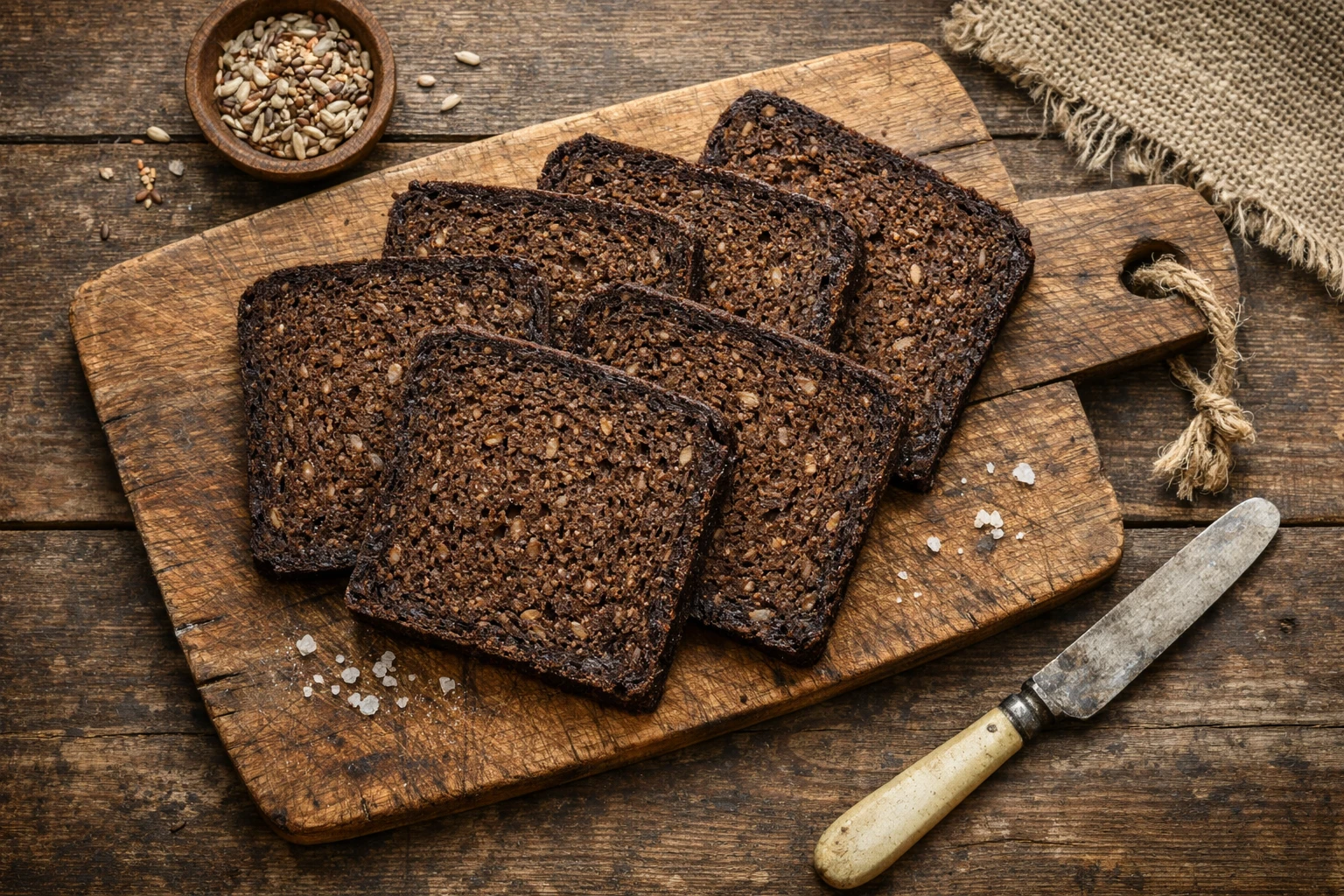
Traditional German dark rye bread baked for 16-24 hours, delivering dense texture, naturally sweet flavor, and exceptional nutritional value.
Quick Nutrition Facts
Per 100g (2 Slices)
| Nutrient | Amount |
|---|---|
| Calories | 250 kcal |
| Protein | 8g |
| Carbohydrates | 47g |
| Fiber | 7g |
| Sugars | 0.5g |
| Fat | 3g |
| Sodium | 460mg |
| Iron | 2.5mg |
| Magnesium | 60mg |
| Selenium | 28mcg |
Macronutrient Breakdown
 ChatGPT
  Claude
  AI Mode
  Perplexity
NUTRITIONIST INSIGHT
Pumpernickel's 16-24 hour slow baking creates resistant starch that acts like fiber, supporting gut health and improving insulin sensitivity. With 7g fiber per 100g and low GI (41-46), it's one of the best bread choices for blood sugar management.
Myth Busters
MYTH #1: Pumpernickel Is High in Sugar
TRUTH: Authentic pumpernickel contains only 0.5g natural sugars per 100g. The slightly sweet taste comes from caramelized natural sugars during the 16-24 hour baking process, not added sugars. American "pumpernickel" often uses molasses and has higher sugar content.
MYTH #2: All Dark Breads Are Pumpernickel
TRUTH: True pumpernickel requires 100% whole rye grain and 16-24 hour slow baking at low temperature. Many commercial dark breads use wheat flour with added molasses or coffee for color, lacking pumpernickel's nutritional benefits and resistant starch content.
MYTH #3: Pumpernickel Causes Bloating Like Other Breads
TRUTH: Pumpernickel contains resistant starch that acts as a prebiotic, feeding beneficial gut bacteria. While it may cause initial gas in sensitive individuals, regular consumption typically improves digestive health. Start with small portions if new to rye bread.
MYTH #4: Pumpernickel Is Too Heavy for Daily Eating
TRUTH: At 250 calories per 100g (2 slices), pumpernickel provides excellent nutrition density. The high fiber (7g) and low GI (41-46) make it more satisfying than white bread, often resulting in eating less overall. Ideal for daily consumption in 2-3 slice portions.
MYTH #5: You Need Butter to Make Pumpernickel Taste Good
TRUTH: Traditional German pumpernickel has naturally complex flavor from the Maillard reaction during long baking. It pairs excellently with lean proteins (smoked salmon, turkey), vegetables, and low-fat spreads. Butter is optional, not necessary.
MYTH #6: Pumpernickel Has Too Many Carbs for Low-Carb Diets
TRUTH: With 47g total carbs but 7g fiber per 100g, pumpernickel provides 40g net carbs. The low glycemic index (41-46) means minimal blood sugar impact compared to white bread (GI 75). Diabetics and low-carb dieters can include 50-75g portions safely.
NutriScore by Health Goals
| Health Goal | NutriScore | Why This Score? |
|---|---|---|
| Weight Loss |  | 7g fiber promotes fullness, low GI (41-46) stabilizes blood sugar, resistant starch improves fat metabolism. Limit to 2-3 slices daily. |
| Muscle Gain |  | 47g complex carbs for sustained energy, 8g protein per 100g. Excellent pre-workout carb source. Pair with protein-rich foods. |
| Diabetes Management | | Low GI (41-46) causes minimal blood sugar spikes, 7g fiber slows glucose absorption. Top bread choice. |
| PCOS Management | | Low GI improves insulin sensitivity, high fiber aids hormone regulation. Better than white bread for managing PCOS symptoms. |
| Pregnancy Nutrition | | Iron (2.5mg) prevents anemia, fiber prevents constipation, complex carbs provide energy. |
| Viral/Flu Recovery | | Easy to digest, provides sustained energy, selenium (28mcg) supports immune function. Dense texture may require more chewing when throat is sore. |
PERSONALIZED NUTRITION
Track your meals with NutriScan for personalized NutriScores based on your specific health goals!
Blood Sugar Response to Pumpernickel
Understanding how pumpernickel affects your blood glucose demonstrates why it's superior to white bread for blood sugar management.
Typical Glucose Response Curve
This chart shows typical blood glucose response for general healthy individuals. Individual responses may vary. Not medical advice.
How to Flatten the Spike
Pairing pumpernickel with protein or healthy fat further stabilizes blood sugar and enhances satiety:
- 🧀 German cheese (Tilsiter, Havarti) - Traditional German pairing with protein and calcium
- 🐟 Smoked salmon or mackerel - Omega-3 fats and complete protein
- 🥚 Boiled eggs or egg salad - High-quality protein and healthy fats
- 🥜 Almond butter or tahini - Healthy fats and additional fiber
This combination creates an optimal meal for sustained energy and blood sugar control.
Cultural Significance
Pumpernickel originated in Westphalia, Germany, during the 15th century as a dense, long-lasting bread for peasants and soldiers.
In Germany:
- Traditional bread of Westphalia region since the 1400s
- Name origin debated: "Nickel the devil" or "pumping Nickel" (passing gas)
- Authentic recipes require 16-24 hour baking at 120°C (248°F)
- Sold in vacuum-sealed packages for shelf-stable transport
- Essential for traditional German open-faced sandwiches
Global Impact:
- Inspired Scandinavian dark breads and Danish rugbrød
- Traditional food for European long-distance travelers (shelf-stable for months)
- Low glycemic index recognized by diabetes associations worldwide
- American pumpernickel differs significantly (uses molasses, wheat flour, shorter baking)
Compare & Substitute
Pumpernickel vs Similar Breads (Per 100g)
| Nutrient | 🍞 Pumpernickel | 🍞 Whole Wheat Bread | 🍞 Rye Bread | 🍞 White Bread |
|---|---|---|---|---|
| Calories | 250 kcal | 247 kcal | 259 kcal | 266 kcal |
| Carbs | 47g | 41g | 48g | 49g |
| Fiber | 7g | 7g | 5.8g | 2.4g |
| Protein | 8g | 13g | 8.5g | 7.6g |
| Fat | 3g | 3.4g | 3.3g | 3.3g |
| Iron | 2.5mg | 2.5mg | 2.8mg | 3.6mg |
| GI Index | 41-46 | 69-74 | 50-58 | 75 |
| Best For | Diabetes, weight loss, gut health | High protein needs | Lower GI than white bread | Quick energy |
Frequently Asked Questions
Is pumpernickel bread healthy?
Yes, pumpernickel is one of the healthiest breads available. It contains 7g fiber per 100g (28% of daily needs), has a low glycemic index (41-46), and provides sustained energy without blood sugar spikes.
Key benefits: Supports digestive health with resistant starch; improves insulin sensitivity; rich in selenium (28mcg) for immune function; contains magnesium (60mg) for heart health.
Best practices: Choose authentic German pumpernickel over American versions; eat 2-3 slices daily; pair with lean proteins and vegetables.
Can diabetics eat pumpernickel bread?
Yes, pumpernickel is excellent for diabetics. The low glycemic index (41-46) causes minimal blood sugar spikes compared to white bread (GI 75). High fiber (7g per 100g) slows glucose absorption and improves insulin sensitivity.
Tips for diabetics: Eat 50-75g portions (1-1.5 slices); pair with protein or healthy fat; choose authentic German pumpernickel; monitor blood sugar 2 hours after eating; avoid American pumpernickel with added molasses.
How many calories are in pumpernickel bread?
Pumpernickel contains approximately 250 calories per 100g (2 slices, 50g each). One slice (50g) provides 125 calories.
This is comparable to whole wheat bread but with significantly more fiber (7g vs 3-4g) and better blood sugar control (GI 41-46 vs 69-74).
What makes pumpernickel bread dark?
Traditional pumpernickel's dark color comes from 16-24 hour slow baking at low temperature (120°C/248°F). This extended baking caramelizes natural sugars in whole rye grain through the Maillard reaction, creating the characteristic dark brown color and slightly sweet flavor.
American pumpernickel often uses molasses, coffee, or cocoa for color instead of long baking, resulting in different nutritional profile and taste.
Is pumpernickel good for weight loss?
Yes, pumpernickel supports weight loss with 7g fiber per 100g that promotes fullness and reduces overall calorie intake. The low glycemic index (41-46) stabilizes blood sugar, preventing energy crashes and cravings.
Optimal approach: Eat 2-3 slices daily (100-150g total); combine with lean protein (turkey, chicken, eggs); use as sandwich base or toast; track portions with NutriScan app; choose authentic German pumpernickel without added sugars.
What is the difference between pumpernickel and rye bread?
Pumpernickel: 100% whole rye grain; 16-24 hour slow baking at 120°C; dense, moist texture; dark brown color; slightly sweet flavor; GI 41-46; higher resistant starch content.
Regular Rye Bread: Often mixes rye and wheat flour; standard 45-60 minute baking; lighter texture; medium brown color; tangy sourdough flavor; GI 50-58; less resistant starch.
Bottom line: Pumpernickel offers superior blood sugar control and gut health benefits due to longer baking process and whole grain composition.
How long does pumpernickel bread last?
Authentic pumpernickel lasts 3-5 days at room temperature wrapped in clean cloth; 7-10 days refrigerated in airtight container; 3-6 months frozen in freezer-safe bag.
Storage tips: Store in cool, dry place away from sunlight; avoid plastic bags at room temperature (causes moisture buildup and mold); slice before freezing for easier portioning; refresh stale pumpernickel by toasting or steaming briefly.
Commercial vacuum-sealed pumpernickel can last 6-12 months unopened due to packaging and preservatives.


Similar Nutritious Fruits
4505 Chicharrones Classic Chili Salt
7 Eleven Japan Crispy Corn Cheese
Explore More Nutrition Tools & Resources
AI Calorie Counter App - Snap a Photo, Get Macros
AI Nutritionist App That Reads Your Logged Meals
Best Protein Supplements for Women
Bulking Meal Plan App That Sets Your Surplus
ChatGPT Calorie Counter Alternative That Keeps the Total
ChatGPT Diet Plan Alternative That Tracks What You Eat
ChatGPT Weight Loss Coach Alternative With a Food Log
Fast Food Calorie Counter App That Reads the Tray
Free Calorie Tracker App with AI Photo Scans | NutriScan
Indian Diet Plan App With Veg and Non Veg Meals
Indian Food Calorie Calculator - Get Instant Nutrition Facts for Desi Meals — 2026
Intermittent Fasting for Women, Timer and Meal Log App
Intermittent Fasting Tracker App - Free Fasting Timer
Macro Tracker App That Fills the Numbers From a Photo
Mediterranean Diet Meal Plan App That Counts the Oil
Micronutrient Tracker App for Vitamins and Minerals
MyFitnessPal Alternative That Stays Free | NutriScan
NutriScore App: A Free Grade on Every Meal | NutriScan
Nutrition Label Scanner App for the Amount You Ate
Second Trimester Protein Guide
Vegetarian Meal Plan App With a Protein Target
Voice Calorie Counter - Speak to Track Meals Hands-Free
Water and Calorie Tracker App - Free Water Log