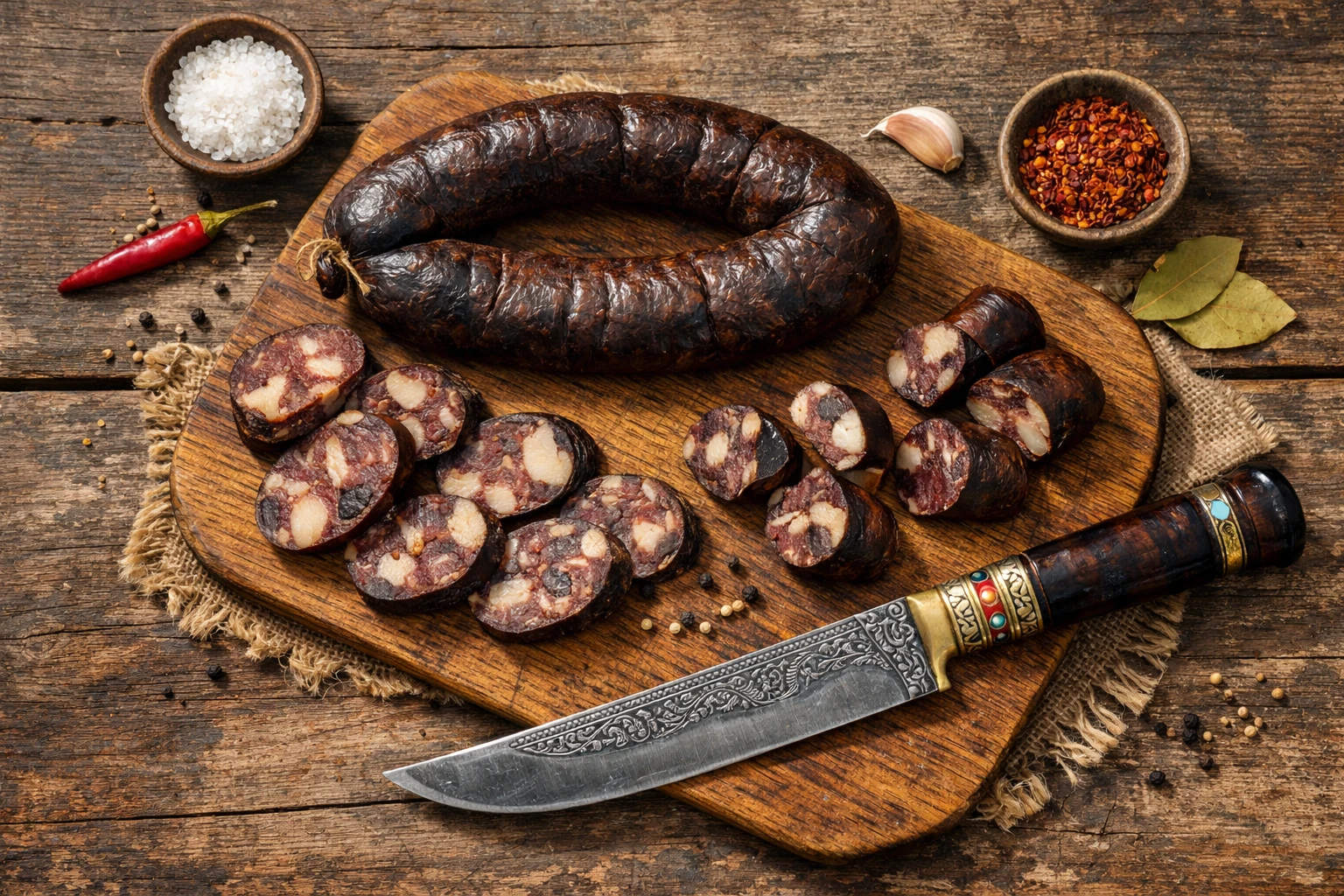
Qazy (Kazakh Horse Sausage): Calories, Nutrition and Health Benefits
A treasured Central Asian delicacy made from smoked horse rib meat, rich in protein, iron, and omega-3 fatty acids.
Quick Nutrition Facts
Per 100g Serving
| Nutrient | Amount |
|---|---|
| Calories | 380 kcal |
| Protein | 22g |
| Carbohydrates | 0g |
| Fiber | 0g |
| Sugars | 0g |
| Fat | 32g |
| Saturated Fat | 12g |
| Iron | 5mg |
| Vitamin B12 | 3.2mcg |
| Potassium | 379mg |
| Zinc | 3.8mg |
Macronutrient Breakdown
 ChatGPT
  Claude
  AI Mode
  Perplexity
NUTRITIONIST INSIGHT
Qazy provides 132% of your daily vitamin B12 needs in just 100g, essential for nerve function and red blood cell formation. The omega-3 fatty acids in horse meat may help reduce cholesterol levels.
Myth Busters
MYTH #1: Horse Meat Is Unhealthy
TRUTH: Horse meat is actually leaner than beef and pork with superior nutritional characteristics. It contains more iron, less saturated fat, and a better omega-6 to omega-3 ratio than other red meats.
MYTH #2: Qazy Is Too Fatty to Be Nutritious
TRUTH: While qazy is high in fat (32g per 100g), it contains beneficial unsaturated fatty acids. Studies show horse meat consumption can actually reduce LDL cholesterol by 9.1% and improve overall lipid profiles.
MYTH #3: Horse Meat Causes Health Problems
TRUTH: Horse meat is safe when properly prepared. It's a good source of palmitoleic acid, which has antitumor activity, cholesterol-lowering effects, and protective benefits against heart arrhythmias.
MYTH #4: All Sausages Have Similar Nutrition
TRUTH: Qazy differs significantly from pork or beef sausages. Horse meat has 63% more iron than beef, higher vitamin B12 content, and contains omega-3 fatty acids rarely found in other sausages.
MYTH #5: Qazy Is Only for Special Occasions
TRUTH: While traditionally served at celebrations, moderate qazy consumption (50-75g, 2-3 times weekly) can be part of a balanced diet. Its zero carbohydrate content makes it suitable for low-carb and keto diets.
NutriScore by Health Goals
| Health Goal | NutriScore | Why This Score? |
|---|---|---|
| Weight Loss |  | High in calories (380 kcal) and fat (32g). Limit to 50g portions, 1-2x weekly. The protein helps satiety. |
| Muscle Gain |  | Excellent protein source (22g), rich in iron for oxygen transport, zinc for muscle recovery. Ideal post-workout. |
| Diabetes Management |  | Zero carbs, GI of 0. Horse meat won't spike blood sugar. Watch sodium and pair with vegetables. |
| PCOS Management |  | Zero carbs supports insulin sensitivity, but high saturated fat may affect hormones. Limit to 50g, 2x weekly. |
| Pregnancy Nutrition | | Excellent iron source (5mg, 63% DV) for preventing anemia, B12 for neural development. Ensure fully cooked. Limit due to fat content. |
| Viral/Flu Recovery | | High protein for immune function, zinc supports healing, iron prevents fatigue. Easy to digest when sliced thin. |
PERSONALIZED NUTRITION
Track your meals with NutriScan for personalized NutriScores based on your specific health goals!
Blood Sugar Response to Qazy
Qazy is an excellent choice for blood sugar management due to its zero carbohydrate content.
Typical Glucose Response Curve
This chart shows typical blood glucose response for general healthy individuals. Individual responses may vary. Not medical advice.
How to Optimize Digestion
Since qazy is a protein and fat-rich food with zero carbs, pairing with fiber-rich vegetables enhances digestion:
- 🥒 Fresh vegetables - Cucumbers, tomatoes, radishes aid digestion
- 🥬 Fermented cabbage - Traditional pairing supports gut health
- 🧅 Raw onions - Enhance iron absorption with vitamin C
- 🥖 Whole grain bread - If carbs are desired, choose high-fiber options
This combination provides balanced nutrition and prevents digestive discomfort from high-fat intake.
Cultural Significance
Qazy is one of the most prized foods in Central Asian Turkic cultures, with traditions spanning over 1,000 years.
In Kazakhstan:
- Essential part of Nauryz (New Year) celebrations and weddings
- Served with beshbarmak (national dish of boiled meat and noodles)
- Symbol of hospitality - served to honored guests
- Traditionally prepared in autumn when horses are fattened
Preparation Method:
- Made from fatty rib meat (kaburga) of horses
- Seasoned with salt, black pepper, and generous garlic
- Stuffed into natural horse intestine casings
- Smoked over apple wood or dried in cold, dry conditions
Regional Variations:
- Kazy (Kyrgyzstan) - Similar preparation, sometimes with cumin
- Qazi (Uzbekistan) - Often boiled rather than smoked
- Tatar Qazılıq - May include beef alongside horse meat
Compare & Substitute
Qazy vs Other Cured Meats (Per 100g)
| Nutrient | 🐴 Qazy | 🐷 Salami | 🐄 Beef Jerky | 🦌 Venison Sausage |
|---|---|---|---|---|
| Calories | 380 kcal | 425 kcal | 410 kcal | 305 kcal |
| Protein | 22g | 21g | 33g | 24g |
| Fat | 32g | 38g | 25g | 23g |
| Carbs | 0g | 2g | 11g | 2g |
| Iron | 5mg | 1.5mg | 6.5mg | 3.4mg |
| Vitamin B12 | 3.2mcg | 1.3mcg | 1.5mcg | 2.8mcg |
| Sodium | 800mg | 1890mg | 2081mg | 1200mg |
| Best For | Iron boost, low-carb, keto | Quick protein, flavor | High protein, travel snack | Lean protein, lower fat |
Frequently Asked Questions
What is qazy made from?
Qazy is a traditional Central Asian sausage made from horse meat, specifically the fatty rib section (kaburga). The meat is seasoned with salt, black pepper, and garlic, stuffed into horse intestine casing, then smoked or air-dried. It's considered a delicacy in Kazakh, Kyrgyz, Uzbek, and Tatar cuisines.
Is horse meat safe to eat?
Yes, horse meat is safe when properly prepared and cooked. It's consumed regularly in Kazakhstan, France, Italy, Japan, and Belgium. Ensure the meat is from reputable sources and fully cooked to internal temperature of 160°F (71°C) to eliminate any pathogens.
How does qazy compare to beef nutritionally?
Horse meat in qazy has superior nutritional characteristics compared to beef: 63% more iron, higher vitamin B12, more omega-3 fatty acids, and a better unsaturated to saturated fat ratio. However, qazy is higher in total fat than lean beef due to the rib cut used.
Can I eat qazy on a keto diet?
Yes, qazy is excellent for keto diets. It contains zero carbohydrates, high fat (32g), and adequate protein (22g) per 100g. The macronutrient profile supports ketosis while providing essential nutrients like iron and B vitamins.
How much qazy should I eat per day?
A recommended serving is 50-75g (2-3 thin slices), providing 190-285 calories. Due to high fat content, limit consumption to 2-3 times per week. Athletes or those with higher caloric needs may consume up to 100g per serving.
What does qazy taste like?
Qazy has a distinctive smoky, earthy flavor with rich, slightly gamey notes from the horse meat. The texture is firm yet tender with visible fat marbling throughout. It's traditionally served thinly sliced, either cold or briefly warmed.
Can pregnant women eat qazy?
Qazy can provide valuable iron (5mg, 63% DV) and B12 important during pregnancy. However, ensure it's fully cooked, limit portions to 50g due to high fat content, and consult your healthcare provider about consuming cured meats during pregnancy.
How should I store qazy?
Store unopened qazy in the refrigerator for up to 3 weeks or freeze for up to 6 months. Once sliced, consume within 5-7 days. Traditional dried qazy can last longer in cool, dry conditions (4-6 weeks refrigerated).


Similar Nutritious Foods
4505 Chicharrones Classic Chili Salt
7 Eleven Japan Crispy Corn Cheese
Explore More Nutrition Tools & Resources
AI Calorie Counter App - Snap a Photo, Get Macros
AI Nutritionist App That Reads Your Logged Meals
Best Protein Supplements for Women
Bulking Meal Plan App That Sets Your Surplus
ChatGPT Calorie Counter Alternative That Keeps the Total
ChatGPT Diet Plan Alternative That Tracks What You Eat
ChatGPT Weight Loss Coach Alternative With a Food Log
Fast Food Calorie Counter App That Reads the Tray
Free Calorie Tracker App with AI Photo Scans | NutriScan
Indian Diet Plan App With Veg and Non Veg Meals
Indian Food Calorie Calculator - Get Instant Nutrition Facts for Desi Meals — 2026
Intermittent Fasting for Women, Timer and Meal Log App
Intermittent Fasting Tracker App - Free Fasting Timer
Macro Tracker App That Fills the Numbers From a Photo
Mediterranean Diet Meal Plan App That Counts the Oil
Micronutrient Tracker App for Vitamins and Minerals
MyFitnessPal Alternative That Stays Free | NutriScan
NutriScore App: A Free Grade on Every Meal | NutriScan
Nutrition Label Scanner App for the Amount You Ate
Second Trimester Protein Guide
Vegetarian Meal Plan App With a Protein Target
Voice Calorie Counter - Speak to Track Meals Hands-Free
Water and Calorie Tracker App - Free Water Log