Quinoa Puffs Snack: Calories, Nutrition and Health Benefits
A crunchy ancient grain snack packed with complete plant protein, all nine essential amino acids, and key minerals for every health goal.
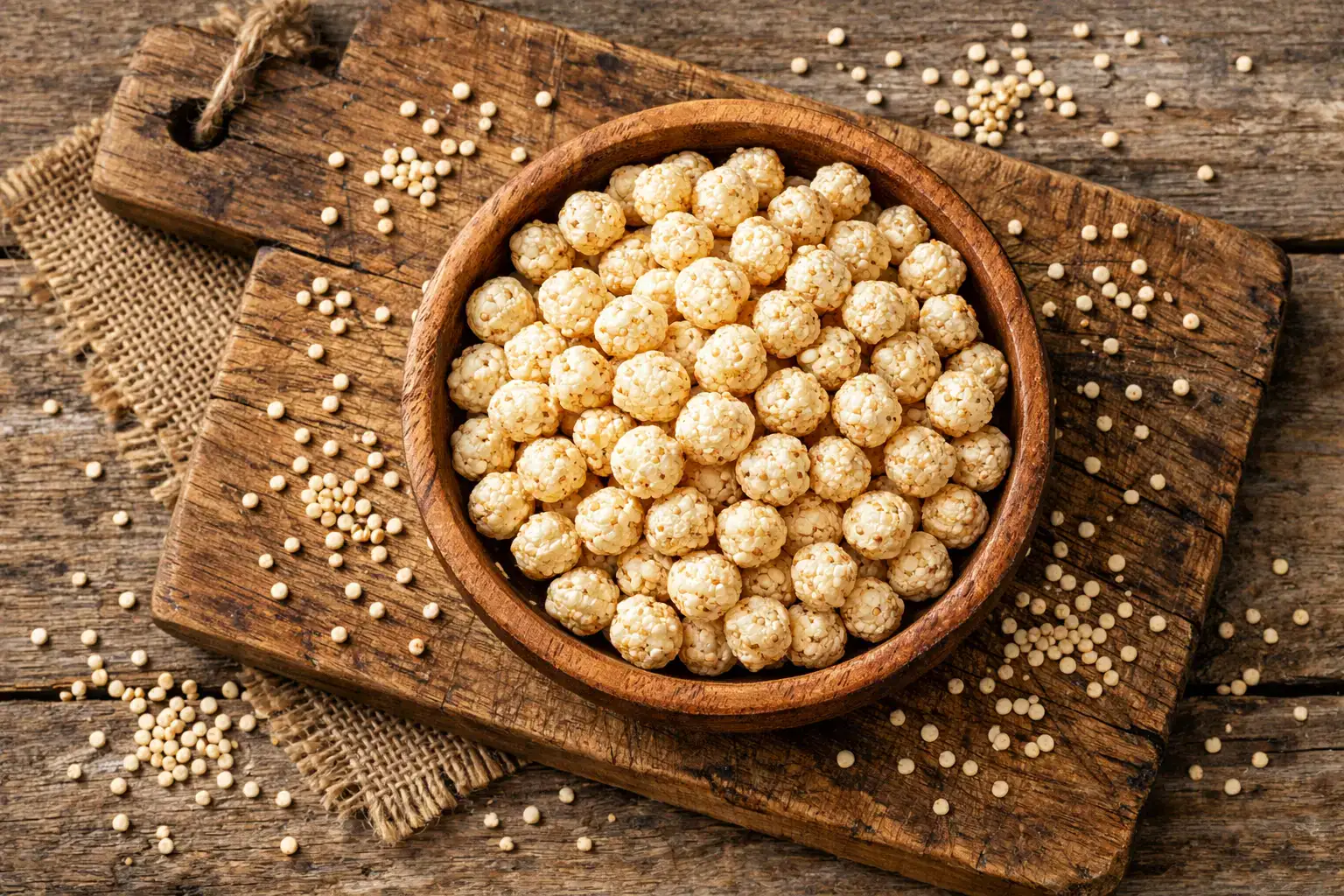
Quick Nutrition Facts
Per 1 Serving (28g) | Per 100g in brackets
| Nutrient | Amount |
|---|---|
| Calories | 110 kcal (393/100g) |
| Protein | 4g (14g/100g) |
| Carbohydrates | 20g (71g/100g) |
| Fiber | 2g (7g/100g) |
| Sugars | 0.5g (1.8g/100g) |
| Fat | 2g (7g/100g) |
| Iron | 2.8mg (10mg/100g) |
| Magnesium | 56mg (200mg/100g) |
| Phosphorus | 130mg (464mg/100g) |
| Folate | 52mcg (184mcg/100g) |
Macronutrient Breakdown
 ChatGPT
  Claude
  AI Mode
  Perplexity
NUTRITIONIST INSIGHT
Quinoa puffs deliver complete plant protein with all 9 essential amino acids in a light, crunchy format. With 14g protein per 100g and just 7g fat, they outperform most grain-based snacks for satiety and muscle recovery.
Myth Busters
MYTH #1: Quinoa Puffs Are Just Empty Carbs Like Regular Chips
TRUTH: Unlike potato chips, quinoa puffs provide 14g complete protein per 100g with all essential amino acids. Quinoa is one of few plant foods containing complete protein, plus 7g fiber and significant iron and magnesium.
MYTH #2: Puffed Grains Lose All Nutritional Value
TRUTH: While puffing increases volume and alters texture, quinoa retains its protein profile and mineral content. Studies show quinoa maintains its beneficial effects on blood glucose even in processed forms.
MYTH #3: Quinoa Snacks Are Too High in Calories for Dieting
TRUTH: A single 28g serving has only 110 calories with 4g protein and 2g fiber. That is comparable to rice cakes but with significantly more protein and fiber to keep you full longer.
MYTH #4: Quinoa Puffs Spike Blood Sugar Like White Bread
TRUTH: Quinoa has a glycemic index of 53, much lower than white bread (75). Research shows quinoa-based foods improve postprandial glucose response and reduce second-meal blood sugar compared to wheat-based alternatives.
MYTH #5: All Quinoa Snacks Are Gluten-Free
TRUTH: Pure quinoa is naturally gluten-free, but some quinoa puffs may be processed in facilities that handle wheat. Always check labels for cross-contamination warnings if you have celiac disease or severe gluten sensitivity.
NutriScore by Health Goals
| Health Goal | NutriScore | Why This Score? |
|---|---|---|
| Weight Loss |  | 110 cal per serving, 4g protein and 2g fiber promote fullness. Low fat (2g). Stick to single servings. |
| Muscle Gain | | Complete protein with all 9 essential amino acids. Good post-workout carb source (20g) for glycogen replenishment. |
| Diabetes Management | | Moderate GI (53). Quinoa improves glycaemia in prediabetic subjects. Pair with protein for better blood sugar control. |
| PCOS Management | | Complete protein helps with insulin sensitivity. High magnesium (200mg/100g) supports hormonal balance. Limit to 1 serving. |
| Pregnancy Nutrition |  | Rich in folate (184mcg/100g), iron (10mg/100g) and complete protein recommended as whole grain during pregnancy. Gluten-free option. |
| Viral/Flu Recovery | | Easy to digest, light on the stomach. Iron and B vitamins support immune function. Good energy source during recovery. |
PERSONALIZED NUTRITION
Track your meals with NutriScan for personalized NutriScores based on your specific health goals!
Blood Sugar Response to Quinoa Puffs
Understanding how quinoa puffs affect your blood glucose can help you make informed snacking decisions.
Typical Glucose Response Curve
This chart shows typical blood glucose response for general healthy individuals. Individual responses may vary. Not medical advice.
How to Flatten the Spike
Pairing quinoa puffs with protein or healthy fat slows glucose absorption and reduces the peak blood sugar level:
- 🥑 Avocado or guacamole - Adds healthy monounsaturated fats
- 🧀 Cheese or cottage cheese - Provides protein and calcium
- 🥜 Nut butter dip (almond, peanut) - Healthy fats and extra protein
- 🫘 Hummus - Plant protein and fiber combination
This combination not only reduces the glucose spike but also extends energy release, keeping you fuller for longer.
Cultural Significance
Quinoa (Chenopodium quinoa) originated in the Andean region of South America over 5,000 years ago and was considered sacred by the Inca civilization, who called it the "mother of all grains."
Ancient Origins:
- Domesticated in Peru and Bolivia around 3,000-5,000 BCE
- Inca warriors consumed quinoa balls called "war balls" for sustained energy during long marches
- Spanish colonizers suppressed quinoa cultivation, replacing it with European crops
- The crop survived in remote highland communities
Modern Global Adoption:
- 2013 was declared "International Year of Quinoa" by the United Nations
- Now grown in over 70 countries including India, Canada, and across Europe
- Quinoa puffs emerged as a convenient snack format making ancient grain nutrition accessible
- India has adopted quinoa cultivation in Rajasthan, Uttarakhand, and Karnataka
Compare & Substitute
Quinoa Puffs vs Similar Snacks (Per 100g)
| Nutrient | Quinoa Puffs | Rice Cakes | Potato Chips | Popcorn (Air-Popped) |
|---|---|---|---|---|
| Calories | 393 kcal | 387 kcal | 536 kcal | 387 kcal |
| Carbs | 71g | 82g | 50g | 78g |
| Fiber | 7g | 1.6g | 4.4g | 15g |
| Protein | 14g | 8g | 7g | 13g |
| Fat | 7g | 2.8g | 35g | 4.5g |
| Iron | 10mg | 0.7mg | 1.6mg | 3.2mg |
| GI | 53 (Medium) | 82 (High) | 56 (Medium) | 72 (High) |
| Best For | Complete protein snack | Low-calorie base | Indulgent treat | High-fiber low-fat snack |
Frequently Asked Questions
Are quinoa puffs good for weight loss?
Yes, quinoa puffs can support weight loss when eaten in moderation. A 28g serving has only 110 calories with 4g protein and 2g fiber that promote satiety. The complete protein profile helps maintain muscle mass during calorie deficit.
Best practices: Stick to single 28g servings, choose plain or lightly seasoned varieties, pair with vegetables or hummus for added volume.
Can diabetics eat quinoa puffs?
Quinoa puffs can be part of a diabetic diet. Quinoa has a moderate glycemic index of 53, and research shows quinoa consumption improves blood glucose markers.
Tips for diabetics:
- Limit to 1 serving (28g, 20g carbs) at a time
- Always pair with protein or healthy fat
- Monitor blood sugar 2 hours after eating
- Choose plain varieties without added sugars
The American Diabetes Association lists quinoa as a diabetes superstar food.
How much protein is in quinoa puffs?
Quinoa puffs contain 14g protein per 100g or about 4g per 28g serving. What makes this protein exceptional is that quinoa provides all nine essential amino acids, making it a complete protein source unlike most grain-based snacks.
For muscle gain or high-protein diets, pair quinoa puffs with nut butter, cheese, or Greek yogurt for a protein-boosted snack.
Are quinoa puffs gluten-free?
Yes, quinoa is naturally gluten-free and safe for people with celiac disease or gluten intolerance. However, always check product labels for cross-contamination warnings, as some brands process quinoa puffs in facilities that also handle wheat.
What are the main health benefits of quinoa puffs?
Key Benefits:
- Complete Plant Protein: All 9 essential amino acids for muscle repair
- Iron-Rich: 10mg per 100g supports oxygen transport and energy
- High Magnesium: 200mg per 100g for muscle and nerve function
- Folate Source: 184mcg per 100g supports cell growth and is crucial during pregnancy
- Moderate GI: Gentler blood sugar response than rice-based snacks
- Gluten-Free: Safe for celiac disease and gluten sensitivity
How do quinoa puffs compare to regular chips?
Quinoa puffs have 2x the protein, significantly less fat (7g vs 35g per 100g), and more fiber (7g vs 4.4g). They also provide iron, magnesium, and complete amino acids that regular chips lack. The trade-off is a milder flavor, which is why many brands add seasoning.
Track your snack intake with NutriScan app to see how quinoa puffs fit your personal nutrition goals.


Similar Nutritious Foods
4505 Chicharrones Classic Chili Salt
7 Eleven Japan Crispy Corn Cheese
Explore More Nutrition Tools & Resources
AI Calorie Counter App - Snap a Photo, Get Macros
AI Nutritionist App That Reads Your Logged Meals
Best Protein Supplements for Women
Bulking Meal Plan App That Sets Your Surplus
ChatGPT Calorie Counter Alternative That Keeps the Total
ChatGPT Diet Plan Alternative That Tracks What You Eat
ChatGPT Weight Loss Coach Alternative With a Food Log
Fast Food Calorie Counter App That Reads the Tray
Free Calorie Tracker App with AI Photo Scans | NutriScan
Indian Diet Plan App With Veg and Non Veg Meals
Indian Food Calorie Calculator - Get Instant Nutrition Facts for Desi Meals — 2026
Intermittent Fasting for Women, Timer and Meal Log App
Intermittent Fasting Tracker App - Free Fasting Timer
Macro Tracker App That Fills the Numbers From a Photo
Mediterranean Diet Meal Plan App That Counts the Oil
Micronutrient Tracker App for Vitamins and Minerals
MyFitnessPal Alternative That Stays Free | NutriScan
NutriScore App: A Free Grade on Every Meal | NutriScan
Nutrition Label Scanner App for the Amount You Ate
Second Trimester Protein Guide
Vegetarian Meal Plan App With a Protein Target
Voice Calorie Counter - Speak to Track Meals Hands-Free
Water and Calorie Tracker App - Free Water Log