Raj Kachori: Calories, Nutrition and Health Benefits
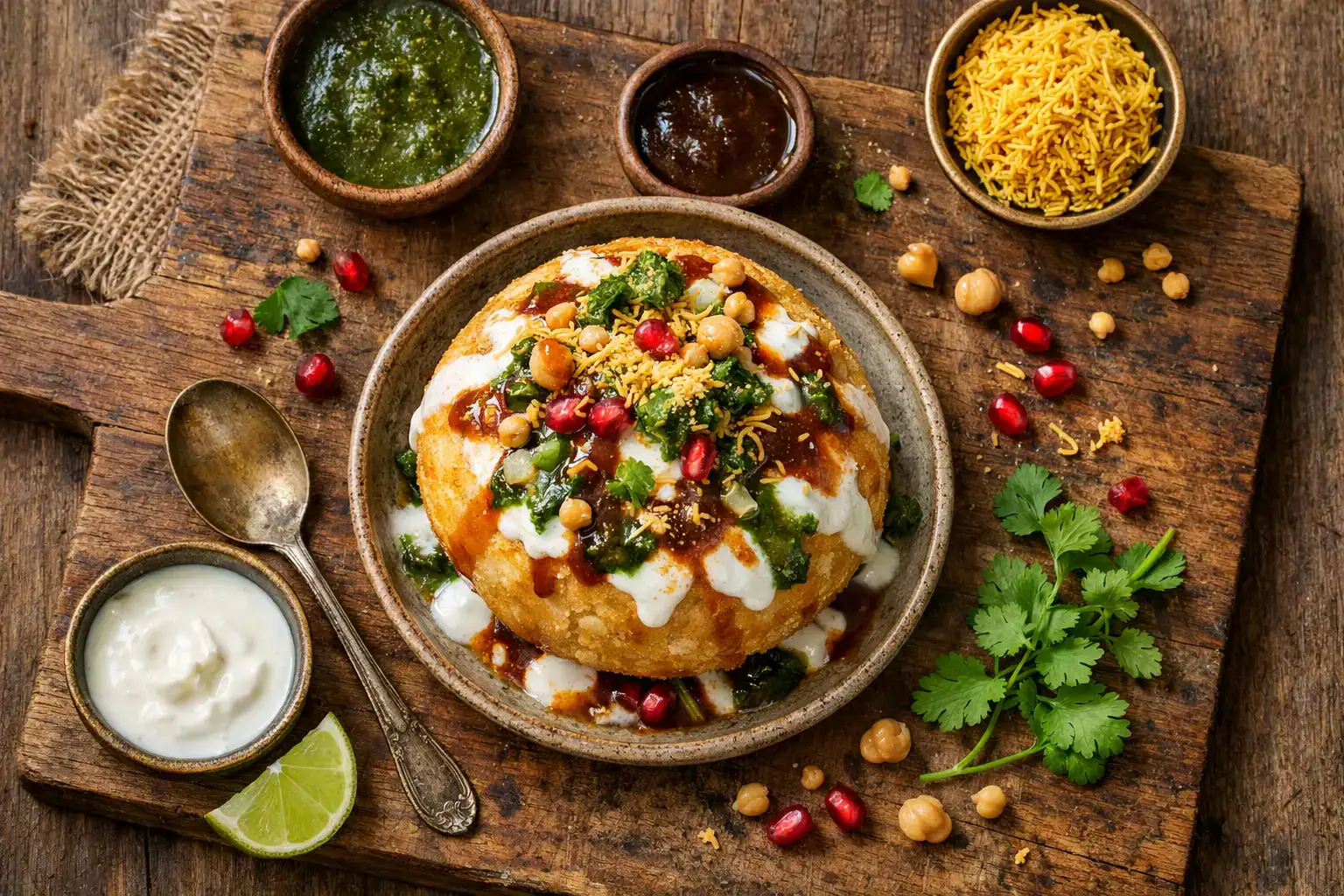
India's royal street food chaat packed with crispy shell, sprouts, yogurt, and chutneys delivering 190 calories of bold flavor per piece.
Quick Nutrition Facts
Per 1 Piece (~100g)
| Nutrient | Amount |
|---|---|
| Calories | 190 kcal |
| Protein | 6g |
| Carbohydrates | 25g |
| Fiber | 4g |
| Sugars | 5g |
| Fat | 7g |
| Saturated Fat | 2g |
| Sodium | 380mg |
| Potassium | 120mg |
| Iron | 1.5mg |
Macronutrient Breakdown
 ChatGPT
  Claude
  AI Mode
  Perplexity
NUTRITIONIST INSIGHT
Raj kachori is a calorie-dense chaat best enjoyed occasionally. The yogurt topping adds probiotics and the sprouted moong dal provides plant-based protein and fiber, but the deep-fried shell contributes significant fat. Stick to 1 piece and load up on yogurt and sprouts over sweet chutney.
Myth Busters
MYTH #1: Raj Kachori Is Just Empty Calories
TRUTH: While deep-fried, raj kachori contains 6g protein and 4g fiber from moong sprouts and chickpeas. The yogurt topping provides probiotics that support gut health. It is calorie-dense, but not nutritionally empty.
MYTH #2: You Can Never Eat Raj Kachori on a Diet
TRUTH: One piece at 190 calories fits into most diet plans when accounted for. Skip the sweet chutney (saves 40-50 calories), add extra sprouts and yogurt, and track your intake to stay within daily limits.
MYTH #3: All Chaats Are Equally Unhealthy
TRUTH: Raj kachori at 190 calories per piece is moderate compared to samosa chaat (300+ calories) or chole bhature (450+ calories). The protein from sprouts and legumes makes it one of the more balanced chaat options.
MYTH #4: Street Food Raj Kachori Is Always Unsafe
TRUTH: The deep-frying process kills most bacteria. The real concern is the acrylamide formation during high-temperature frying, which applies to all deep-fried foods. Choose freshly prepared kachori from trusted vendors.
MYTH #5: Air-Fried Raj Kachori Tastes the Same
TRUTH: Air-frying reduces fat by 40-50% but changes the texture significantly. The shell is less crispy and puffs differently. However, it is a healthier alternative that significantly reduces trans fat intake.
NutriScore by Health Goals
| Health Goal | NutriScore | Why This Score? |
|---|---|---|
| Weight Loss |  | 190 calories per piece with 7g fat from deep-frying. Limit to 1 piece per week, skip sweet chutney, load extra yogurt. |
| Muscle Gain |  | 6g protein from sprouts and legumes is decent but not high enough for a muscle-building meal. Pair with a protein shake or paneer. |
| Diabetes Management | | 25g carbs plus deep-fried preparation causes rapid blood sugar spikes. Have half a piece, skip sweet chutney, eat with salad. |
| PCOS Management | | Deep-fried foods worsen insulin resistance. Limit to rare occasions, choose air-fried version when possible, and pair with fiber-rich sides. |
| Pregnancy Nutrition | | Moong sprouts provide folate and iron, yogurt adds calcium. Limit fried food intake during pregnancy but occasional consumption is safe. |
| Viral/Flu Recovery | | Yogurt probiotics support immunity. The spices (cumin, chaat masala) aid digestion. Avoid if experiencing nausea or upset stomach. |
PERSONALIZED NUTRITION
Track your meals with NutriScan for personalized NutriScores based on your specific health goals!
Blood Sugar Response to Raj Kachori
Understanding how raj kachori affects your blood glucose can help you decide when and how to enjoy this chaat responsibly.
Typical Glucose Response Curve
This chart shows typical blood glucose response for general healthy individuals. Individual responses may vary. Not medical advice.
How to Flatten the Spike
Pairing carb-heavy foods with protein and fiber slows glucose absorption and reduces the peak blood sugar level:
- 🥗 Extra sprouts and chickpeas - Adds fiber and plant protein to slow absorption
- 🥛 Extra yogurt (dahi) topping - Protein and probiotics help moderate glucose response
- 🥒 Cucumber and onion salad - Raw vegetables add fiber and volume without calories
- 🍋 Lemon juice instead of sweet chutney - Eliminates added sugar while adding vitamin C
Skip the sweet tamarind chutney and load up on green chutney (mint-coriander) to cut sugar intake by 40-50%.
Cultural Significance
Raj Kachori originated in Bikaner, Rajasthan, and the name literally means "royal kachori" reflecting its grand size and rich filling compared to regular kachori.
In India:
- Staple of North Indian street food culture, especially in Delhi, Jaipur, and Mumbai
- Served at festivals, weddings, and celebrations as a premium chaat item
- Haldiram's popularized the packaged version, making it accessible across India
- Each region adds its own twist: Delhi uses more yogurt, Mumbai adds sev, Jaipur favors spicier chutneys
Global Reach:
- Available in Indian grocery stores worldwide through Haldiram's export network
- Featured in international food documentaries showcasing Indian street food
- Growing presence in Indian restaurants abroad as a signature appetizer
Compare & Substitute
Raj Kachori vs Similar Chaats (Per Serving)
| Nutrient | Raj Kachori | Samosa Chaat | Pani Puri (6 pcs) | Dahi Bhalla (2 pcs) |
|---|---|---|---|---|
| Calories | 190 kcal | 310 kcal | 180 kcal | 220 kcal |
| Carbs | 25g | 35g | 28g | 30g |
| Fiber | 4g | 3g | 2g | 3g |
| Protein | 6g | 5g | 3g | 7g |
| Fat | 7g | 16g | 5g | 8g |
| Sodium | 380mg | 450mg | 320mg | 400mg |
| Best For | Balanced chaat fix | High-energy snack | Low-calorie craving | Protein-rich chaat |
Frequently Asked Questions
How many calories are in Haldiram's Raj Kachori?
1 piece of Haldiram's Raj Kachori contains 190 calories, with 25g carbohydrates (53%), 7g fat (34%), and 6g protein (13%). The fiber content is 4g, primarily from the moong sprout and chickpea filling.
Calorie-saving tips: Skip sweet chutney (-50 cal), add extra yogurt (+20 cal but more protein), choose air-fried shell (-60 cal).
Is raj kachori healthy?
Raj kachori is a deep-fried indulgence best enjoyed occasionally. The filling provides genuine nutrition: moong sprouts offer plant protein, yogurt adds probiotics, and spices like cumin aid digestion.
Healthier version: Use whole wheat dough, air-fry the shell, increase sprouts and yogurt, reduce chutneys. This cuts calories by 30-40%.
Can diabetics eat raj kachori?
Diabetics should eat raj kachori sparingly. The 25g carbs and deep-fried shell cause rapid glucose spikes.
Tips for diabetics:
- Eat only half a piece (12g carbs)
- Skip sweet tamarind chutney entirely
- Add extra yogurt and sprouts
- Best timing: afternoon, never on empty stomach
- Monitor blood sugar 2 hours after eating
Consult your healthcare provider for personalized advice.
What is the best time to eat raj kachori?
Depends on your goal:
- Weight Loss: Afternoon snack (not as a meal replacement). Never late night.
- Muscle Gain: Post-workout with additional protein source.
- Diabetes: Mid-afternoon, never on empty stomach, always with fiber-rich sides.
- General: As an occasional snack, not daily. Best enjoyed fresh and hot.
How to make raj kachori at home healthier?
5 practical modifications to reduce calories while keeping the taste:
- Air-fry the shell instead of deep-frying (saves 60+ calories)
- Use whole wheat or multigrain flour for the shell (adds fiber)
- Double the sprouts and chickpeas filling (more protein and fiber)
- Use hung curd instead of regular yogurt (thicker, more protein)
- Replace sweet chutney with date-jaggery chutney in small amounts (lower glycemic impact)
Can I eat raj kachori during pregnancy?
Occasional consumption is safe during pregnancy. The moong sprouts provide folate and iron, and yogurt adds calcium. However, limit deep-fried foods as recommended by ACOG.
Pregnancy tips: Ensure the kachori is freshly prepared, avoid street food (hygiene risk), make at home with air-fryer, and load up on yogurt topping for extra calcium.
Track your pregnancy nutrition with NutriScan app to ensure you meet daily nutrient targets.


Similar Nutritious Foods
4505 Chicharrones Classic Chili Salt
7 Eleven Japan Crispy Corn Cheese
Explore More Nutrition Tools & Resources
AI Calorie Counter App - Snap a Photo, Get Macros
AI Nutritionist App That Reads Your Logged Meals
Best Protein Supplements for Women
Bulking Meal Plan App That Sets Your Surplus
ChatGPT Calorie Counter Alternative That Keeps the Total
ChatGPT Diet Plan Alternative That Tracks What You Eat
ChatGPT Weight Loss Coach Alternative With a Food Log
Fast Food Calorie Counter App That Reads the Tray
Free Calorie Tracker App with AI Photo Scans | NutriScan
Indian Diet Plan App With Veg and Non Veg Meals
Indian Food Calorie Calculator - Get Instant Nutrition Facts for Desi Meals — 2026
Intermittent Fasting for Women, Timer and Meal Log App
Intermittent Fasting Tracker App - Free Fasting Timer
Macro Tracker App That Fills the Numbers From a Photo
Mediterranean Diet Meal Plan App That Counts the Oil
Micronutrient Tracker App for Vitamins and Minerals
MyFitnessPal Alternative That Stays Free | NutriScan
NutriScore App: A Free Grade on Every Meal | NutriScan
Nutrition Label Scanner App for the Amount You Ate
Second Trimester Protein Guide
Vegetarian Meal Plan App With a Protein Target
Voice Calorie Counter - Speak to Track Meals Hands-Free
Water and Calorie Tracker App - Free Water Log