Rajma Chawal: Calories, Nutrition and Health Benefits
India's beloved comfort food that delivers complete plant protein, high fiber, and sustained energy in every plate.
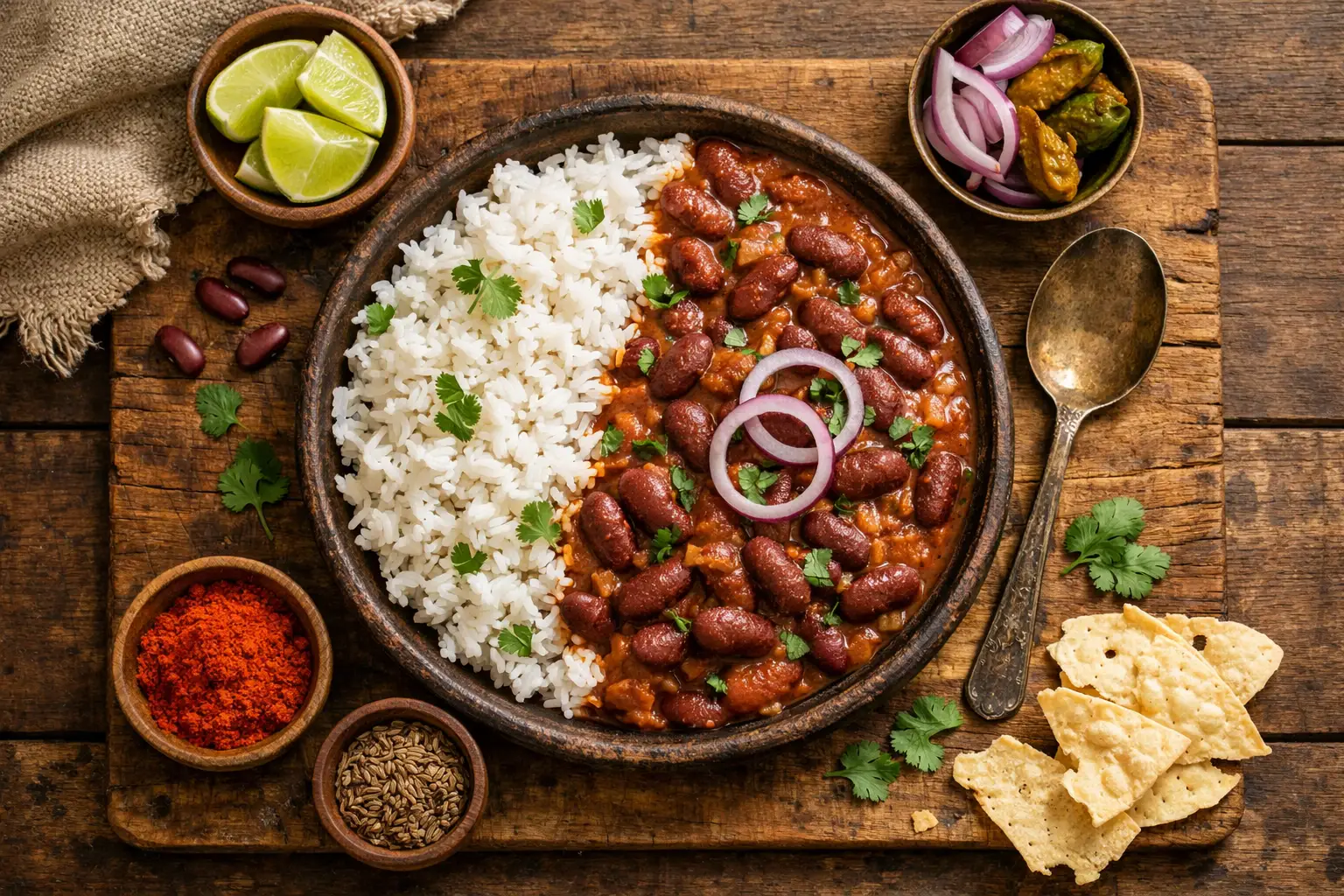
Quick Nutrition Facts
Per 1 Plate Rajma Chawal (300g)
| Nutrient | Amount |
|---|---|
| Calories | 350 kcal |
| Protein | 12g |
| Carbohydrates | 55g |
| Fiber | 7g |
| Sugars | 3g |
| Fat | 8g |
| Iron | 3.5mg |
| Potassium | 480mg |
| Folate | 65mcg |
| Magnesium | 45mg |
Macronutrient Breakdown
 ChatGPT
  Claude
  AI Mode
  Perplexity
NUTRITIONIST INSIGHT
Rajma chawal is one of the most nutritionally complete vegetarian meals. The kidney bean-rice combination provides all essential amino acids, while the 7g fiber per serving keeps you full for hours. The slow-digesting complex carbs make it ideal for sustained energy throughout the day.
Myth Busters
MYTH #1: Rajma Chawal Makes You Fat
TRUTH: One plate has only 350 calories with 12g protein and 7g fiber. Weight gain comes from excess portions and heavy tempering (tadka), not the dish itself. High-fiber meals actually promote satiety and reduce overall calorie intake.
MYTH #2: Diabetics Should Avoid Rajma Chawal
TRUTH: Research shows that adding beans to rice reduces postprandial blood sugar by up to 30% compared to rice alone. The fiber and protein in rajma slow glucose absorption. Use more rajma, less rice, and choose brown rice for better control.
MYTH #3: Rajma Chawal Is Not a Complete Protein
TRUTH: Rice and kidney beans together form a complete protein with all essential amino acids. Rice provides methionine while rajma provides lysine, making this traditional pairing nutritionally intelligent.
MYTH #4: Eating Rajma at Night Causes Bloating
TRUTH: Soaking rajma for 8+ hours and pressure cooking reduces the oligosaccharides (raffinose, stachyose) that cause gas. If properly cooked, rajma is well-tolerated at any time. Start with smaller portions if you're not used to legumes.
MYTH #5: Canned Rajma Has No Nutrition
TRUTH: Canned kidney beans retain most nutrients including protein, fiber, iron, and folate. Kidney beans maintain their functional components and low glycemic properties regardless of preparation method. Just rinse to reduce sodium.
NutriScore by Health Goals
| Health Goal | NutriScore | Why This Score? |
|---|---|---|
| Weight Loss |  | 350 calories with 7g fiber and 12g protein keeps you full. Use brown rice and reduce oil for best results. |
| Muscle Gain | | 12g complete plant protein per serving. Add paneer or egg for 20g+ protein. Great post-workout carb reload (55g). |
| Diabetes Management | | Beans with rice reduce glycemic response vs rice alone. Increase rajma ratio, use brown rice, add salad. |
| PCOS Management | | High fiber (7g) helps insulin sensitivity. Moderate glycemic load with the bean-rice combo. Limit to one plate. |
| Pregnancy Nutrition |  | Rich in folate for neural tube development, iron to prevent anemia, and complete protein for fetal growth. |
| Viral/Flu Recovery | | Easy to digest comfort food, provides sustained energy, iron for immunity, and electrolytes for hydration. |
PERSONALIZED NUTRITION
Track your meals with NutriScan for personalized NutriScores based on your specific health goals!
Blood Sugar Response to Rajma Chawal
Understanding how rajma chawal affects your blood glucose helps you optimize portions and pairings for better metabolic health.
Typical Glucose Response Curve
*This chart shows typical blood glucose response for general healthy individuals. Individual responses may vary. Not medical advice.*
How to Flatten the Spike
Adding beans to rice significantly reduces blood sugar spikes compared to eating rice alone. Here are more ways to optimize:
- 🥒 Cucumber raita or salad - Fiber and water content slow absorption
- 🥬 Add spinach or methi (fenugreek) to rajma - Extra fiber and blood sugar lowering compounds
- 🚶 Walk for 10 minutes after eating - Physical activity reduces postprandial glucose
- 🍚 Swap white rice for brown rice or millets - Lower glycemic index base
This combination leverages the natural alpha-amylase inhibitors in kidney beans to slow starch digestion and extend energy release.
Cultural Significance
Rajma chawal is the undisputed comfort food of North India, particularly Punjab, where it's a Sunday lunch tradition in millions of households.
In India:
- Sunday family staple across North India, especially Punjab, Delhi, and Himachal Pradesh
- Langar (community kitchen) essential in Sikh gurdwaras, feeding thousands daily
- Street food culture: served at dhabas (roadside eateries) across the Grand Trunk Road
- Regional variations: Kashmiri rajma (smaller beans), Punjabi rajma (kidney-shaped), Himachali red rajma
Global Impact:
- Part of the global plant-protein movement as a sustainable complete protein source
- Kidney beans are cultivated in over 150 countries, making rajma chawal universally accessible
- Recognized by nutritionists worldwide as one of the most balanced vegetarian meals
- Growing popularity in Western meal-prep and vegan communities
Compare & Substitute
Rajma Chawal vs Similar Meals (Per 100g)
| Nutrient | Rajma Chawal | Chole Chawal (Chickpea) | Dal Chawal (Lentil) | Khichdi (Rice + Moong) |
|---|---|---|---|---|
| Calories | 150 kcal | 155 kcal | 140 kcal | 130 kcal |
| Carbs | 24g | 23g | 22g | 21g |
| Fiber | 3g | 3.5g | 2g | 1.5g |
| Protein | 5.2g | 5.5g | 4.8g | 4g |
| Fat | 3.5g | 4g | 3g | 2.5g |
| Iron | 1.5mg | 1.8mg | 1.2mg | 1mg |
| Potassium | 180mg | 165mg | 150mg | 120mg |
| Best For | Complete protein, iron | Fiber, muscle gain | Light meals, recovery | Digestion, illness |
Frequently Asked Questions
How many calories are in rajma chawal?
One plate of rajma chawal (300g) contains approximately 350 calories with 12g protein, 55g carbs, 8g fat, and 7g fiber. Per 100g, it provides about 150 calories. Calorie count varies with oil, ghee, and rice-to-rajma ratio.
Is rajma chawal good for weight loss?
Yes, rajma chawal supports weight loss when portion-controlled. The 7g fiber and 12g protein promote satiety, keeping you full for 4-5 hours.
Best practices: Limit to one plate per meal, use brown rice, reduce oil and ghee, increase rajma-to-rice ratio (60:40), and pair with a side salad.
Can diabetics eat rajma chawal?
Diabetics can eat rajma chawal in moderation. Research shows kidney beans contain alpha-amylase inhibitors that slow starch digestion, reducing blood sugar spikes by up to 30% compared to plain rice.
Tips for diabetics:
- Increase rajma, reduce rice (aim for 60:40 ratio)
- Use brown rice or millets as the base
- Add a side of cucumber raita or salad
- Monitor blood sugar 2 hours after eating
Always consult your healthcare provider for personalized advice.
Is rajma chawal a complete protein?
Yes. Kidney beans provide lysine (which rice lacks) while rice provides methionine (which beans lack). Together, they deliver all 9 essential amino acids, making rajma chawal one of the best plant-based complete protein meals. One plate provides 12g of complete protein.
Is rajma chawal good during pregnancy?
Rajma chawal is an excellent pregnancy food. It provides folate for neural tube development, iron to prevent anemia, complete plant protein for fetal growth, and fiber for digestive comfort common during pregnancy.
Important: Ensure kidney beans are fully cooked (pressure-cooked or boiled for 30+ minutes) to eliminate lectins. Undercooked beans can cause gastrointestinal distress.
How to make rajma chawal healthier?
5 Simple Upgrades:
- Swap white rice for brown rice, quinoa, or millets (lower GI, more fiber)
- Reduce oil/ghee to 1 teaspoon per serving
- Add vegetables like spinach, tomatoes, or bell peppers to the curry
- Increase rajma ratio (60% rajma, 40% rice) for more protein
- Serve with raita or salad for added nutrients and slower digestion
Track your meals with NutriScan app to see how rajma chawal fits your personal nutrition goals.




Similar Nutritious Foods
4505 Chicharrones Classic Chili Salt
7 Eleven Japan Crispy Corn Cheese
Explore More Nutrition Tools & Resources
AI Calorie Counter App - Snap a Photo, Get Macros
AI Nutritionist App That Reads Your Logged Meals
Best Protein Supplements for Women
Bulking Meal Plan App That Sets Your Surplus
ChatGPT Calorie Counter Alternative That Keeps the Total
ChatGPT Diet Plan Alternative That Tracks What You Eat
ChatGPT Weight Loss Coach Alternative With a Food Log
Fast Food Calorie Counter App That Reads the Tray
Free Calorie Tracker App with AI Photo Scans | NutriScan
Indian Diet Plan App With Veg and Non Veg Meals
Indian Food Calorie Calculator - Get Instant Nutrition Facts for Desi Meals — 2026
Intermittent Fasting for Women, Timer and Meal Log App
Intermittent Fasting Tracker App - Free Fasting Timer
Macro Tracker App That Fills the Numbers From a Photo
Mediterranean Diet Meal Plan App That Counts the Oil
Micronutrient Tracker App for Vitamins and Minerals
MyFitnessPal Alternative That Stays Free | NutriScan
NutriScore App: A Free Grade on Every Meal | NutriScan
Nutrition Label Scanner App for the Amount You Ate
Second Trimester Protein Guide
Vegetarian Meal Plan App With a Protein Target
Voice Calorie Counter - Speak to Track Meals Hands-Free
Water and Calorie Tracker App - Free Water Log