Red Velvet Cake Truffle Ball: Calories, Nutrition and Health Benefits
A bite-sized indulgence combining moist red velvet cake with tangy cream cheese frosting, compressed into a rich truffle ball at just 95 calories per piece.
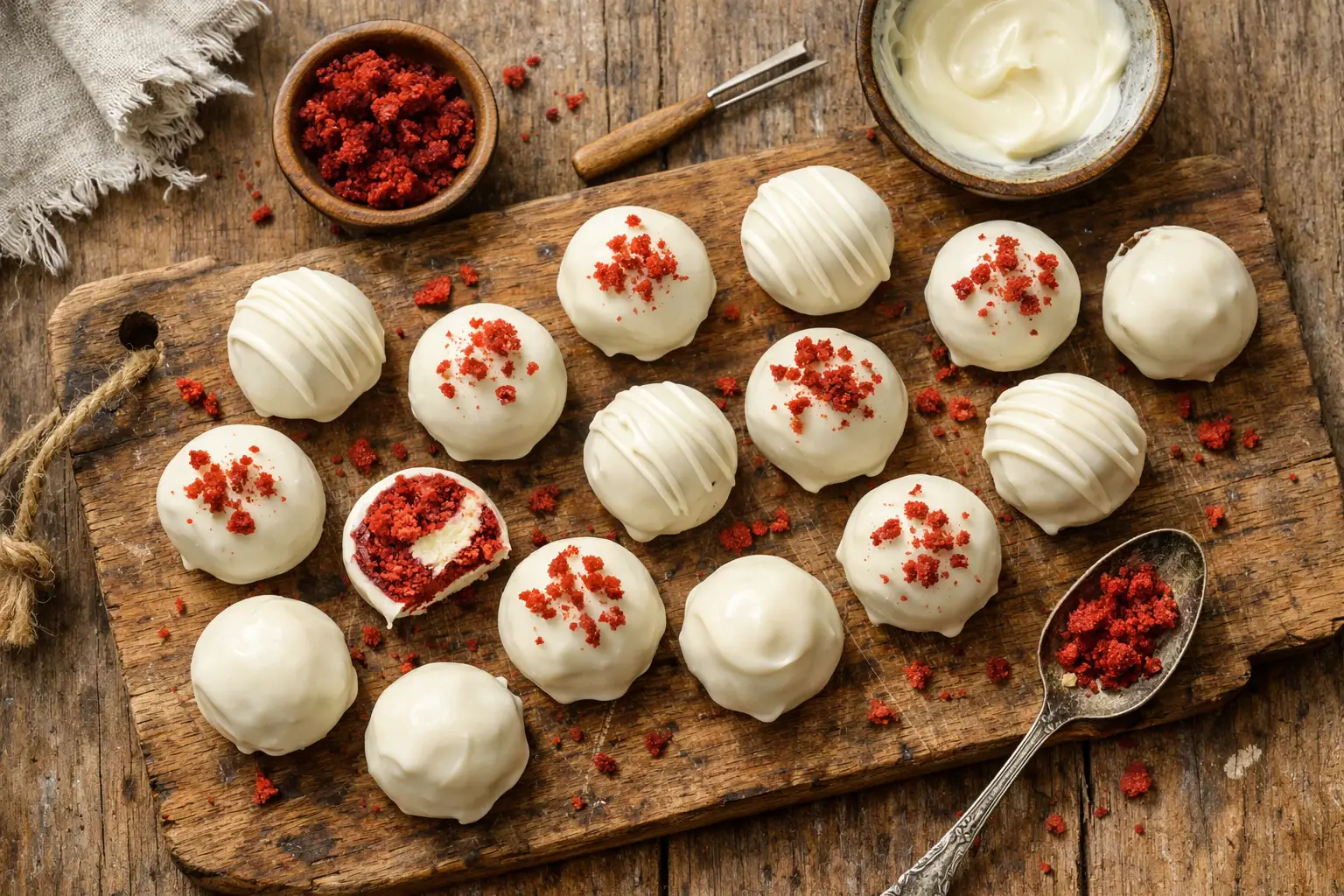
Quick Nutrition Facts
Per 1 Truffle Ball (28g)
| Nutrient | Amount |
|---|---|
| Calories | 95 kcal |
| Protein | 1g |
| Carbohydrates | 12g |
| Fiber | 0.3g |
| Sugars | 9g |
| Fat | 5g |
| Saturated Fat | 2.5g |
| Sodium | 110mg |
| Iron | 0.5mg |
| Calcium | 15mg |
Macronutrient Breakdown
 ChatGPT
  Claude
  AI Mode
  Perplexity
NUTRITIONIST INSIGHT
Red velvet cake truffle balls are calorie-dense at 340 kcal per 100g, with most energy coming from sugar and fat. The small serving size (28g) makes portion control easier, but the hyper-palatable sugar-fat combination can trigger overconsumption. Pair with a protein-rich meal if indulging.
Myth Busters
MYTH #1: Red Velvet Is Healthier Because It Contains Cocoa
TRUTH: While red velvet does contain cocoa powder, the amount per truffle is tiny (less than 1g). The health benefits of cocoa flavanols require much larger quantities than what a cake truffle provides. The sugar and fat content far outweigh any cocoa benefit.
MYTH #2: Cream Cheese Filling Makes Truffles a Good Calcium Source
TRUTH: A truffle ball contains only 15mg calcium (1.5% DV). Real calcium sources provide 200-300mg per serving. The cream cheese adds mostly saturated fat and calories, not meaningful nutrition.
MYTH #3: One Small Truffle Ball Won't Affect Blood Sugar
TRUTH: Each 28g truffle contains 9g of sugar from refined sources. For diabetics or those with insulin resistance, even small amounts of refined sugar trigger a glucose response. Pairing with protein or fiber can help blunt the spike.
MYTH #4: Red Velvet Truffles Are Better Than Regular Chocolate
TRUTH: Red velvet truffles (340 kcal/100g) are comparable in calories to milk chocolate truffles (350-400 kcal/100g). The red food coloring provides zero nutritional benefit. Dark chocolate actually offers more antioxidants per gram.
MYTH #5: Homemade Cake Truffles Are Much Healthier
TRUTH: Homemade truffles use the same core ingredients: cake, frosting, sugar. While you can control quality of ingredients, the calorie and sugar content remains similar (90-113 kcal per piece). The real benefit is avoiding preservatives and artificial additives.
NutriScore by Health Goals
| Health Goal | NutriScore | Why This Score? |
|---|---|---|
| Weight Loss |  | 340 kcal/100g with minimal fiber. High sugar-fat combo promotes overconsumption. Limit to rare treats. |
| Muscle Gain | | Only 1g protein per piece. Poor protein-to-calorie ratio. Not useful for muscle recovery. |
| Diabetes Management |  | 9g sugar per piece with medium-high GI (55-70). Refined sugar directly impacts blood glucose control. Avoid regular consumption. |
| PCOS Management | | High-GI refined sugar worsens insulin resistance, a core PCOS mechanism. Avoid as regular snack. |
| Pregnancy Nutrition | | Safe occasionally but high added sugar increases gestational diabetes risk. Max 1 piece, monitor total sugar intake. |
| Viral/Flu Recovery |  | Quick energy from sugar when appetite is low. No significant vitamins or immune-supporting nutrients. |
PERSONALIZED NUTRITION
Track your meals with NutriScan for personalized NutriScores based on your specific health goals!
Blood Sugar Response to Red Velvet Cake Truffle Ball
Understanding how cake truffles affect your blood glucose helps you decide when and how to enjoy them responsibly.
Typical Glucose Response Curve
*This chart shows typical blood glucose response for general healthy individuals. Individual responses may vary. Not medical advice.*
How to Flatten the Spike
Pairing high-sugar treats with protein or healthy fat slows glucose absorption and reduces the peak blood sugar level:
- 🥛 Glass of milk or lassi - Protein and fat slow sugar absorption
- 🌰 Handful of almonds or walnuts - Healthy fats and fiber buffer the spike
- 🥜 Peanut butter on the side - Protein and monounsaturated fats help
- 🍵 Green tea - Catechins may improve post-meal glucose response
Eating the truffle after a protein-rich meal rather than on an empty stomach significantly reduces the glucose spike.
Cultural Significance
Red velvet cake originated in the American South during the Victorian era, with the distinctive color originally coming from a reaction between cocoa and acidic buttermilk.
In India:
- Red velvet gained massive popularity through urban bakeries and cafe culture in the 2010s
- Cake truffles became a popular mithai alternative at modern Indian weddings and festivals
- Often gifted during Diwali and Christmas as a fusion dessert option
- Indian versions sometimes incorporate cardamom, rose water, or gulkand
Global Impact:
- Red velvet cake truffles became a viral dessert through social media and specialty bakeries
- Popularized by bakeries like Milk Bar and Cake Boss in the US
- The truffle ball format originated as a way to repurpose cake scraps, reducing food waste
- Now a multi-billion dollar segment in the global confectionery market
Compare & Substitute
Red Velvet Truffle vs Similar Desserts (Per 100g)
| Nutrient | 🔴 Red Velvet Truffle | 🍫 Chocolate Truffle | 🧁 Cupcake (Frosted) | 🍰 Plain Sponge Cake |
|---|---|---|---|---|
| Calories | 340 kcal | 380 kcal | 305 kcal | 260 kcal |
| Carbs | 42g | 38g | 45g | 40g |
| Fiber | 0.3g | 1.5g | 0.5g | 0.4g |
| Protein | 3.6g | 4.2g | 3.8g | 5g |
| Fat | 18g | 22g | 14g | 8g |
| Sugar | 32g | 35g | 30g | 24g |
| Sodium | 410mg | 120mg | 380mg | 290mg |
| Best For | Portion-controlled treat | Rich chocolate craving | Celebration dessert | Lower-fat cake option |
Frequently Asked Questions
How many calories are in a red velvet cake truffle ball?
One red velvet cake truffle ball (28g) contains approximately 95 calories, with 5g fat, 12g carbohydrates, and 1g protein. Per 100g, they provide about 340 kcal, making them calorie-dense but manageable in single-piece portions.
Are red velvet cake truffles bad for diabetes?
Red velvet truffles have a medium-high glycemic index (55-70) and contain about 9g sugar per piece. Diabetics should limit to 1 piece occasionally, always paired with protein or after a balanced meal to slow glucose absorption.
Tips for diabetics: Eat after a protein-rich meal, never on empty stomach, monitor blood sugar 2 hours after eating, and choose dark chocolate-coated versions when possible for slightly lower sugar.
Can I eat red velvet cake truffles during pregnancy?
Red velvet truffles are safe as an occasional treat during pregnancy. However, excess added sugar contributes to gestational diabetes risk. Limit to 1 piece per sitting and keep total daily added sugar under 25g.
What is a red velvet cake truffle ball made of?
A red velvet cake truffle combines crumbled red velvet cake (refined flour, cocoa powder, butter, eggs, buttermilk, red food coloring) with cream cheese frosting, shaped into balls, and often coated with chocolate or candy melts.
Key nutritional implications: Refined flour + sugar = high glycemic impact. Cream cheese + butter = high saturated fat. Small size = built-in portion control.
How do red velvet truffles compare to regular cake?
Red velvet truffles are more calorie-dense per 100g (340 kcal) than plain sponge cake (260 kcal) because the cake is compressed with frosting. However, one truffle ball (95 kcal) has fewer total calories than a typical cake slice (250-350 kcal) due to smaller serving size.
How many red velvet cake truffles can I eat per day?
Guidelines by health goal:
- Weight loss: 1 piece occasionally, not daily
- Maintenance: 1-2 pieces as a treat, accounting for 95-190 kcal
- Diabetes/PCOS: Avoid regular consumption; 1 piece rarely with a protein-rich meal
- Pregnancy: 1 piece occasionally, monitor total sugar intake
Each truffle has 9g sugar. The AHA recommends max 25g added sugar daily for women and 36g for men, so 3 truffles already hits the limit.
Track your dessert intake with NutriScan app to stay within your personalized nutrition goals.




Similar Nutritious Foods
4505 Chicharrones Classic Chili Salt
7 Eleven Japan Crispy Corn Cheese
Explore More Nutrition Tools & Resources
AI Calorie Counter App - Snap a Photo, Get Macros
AI Nutritionist App That Reads Your Logged Meals
Best Protein Supplements for Women
Bulking Meal Plan App That Sets Your Surplus
ChatGPT Calorie Counter Alternative That Keeps the Total
ChatGPT Diet Plan Alternative That Tracks What You Eat
ChatGPT Weight Loss Coach Alternative With a Food Log
Fast Food Calorie Counter App That Reads the Tray
Free Calorie Tracker App with AI Photo Scans | NutriScan
Indian Diet Plan App With Veg and Non Veg Meals
Indian Food Calorie Calculator - Get Instant Nutrition Facts for Desi Meals — 2026
Intermittent Fasting for Women, Timer and Meal Log App
Intermittent Fasting Tracker App - Free Fasting Timer
Macro Tracker App That Fills the Numbers From a Photo
Mediterranean Diet Meal Plan App That Counts the Oil
Micronutrient Tracker App for Vitamins and Minerals
MyFitnessPal Alternative That Stays Free | NutriScan
NutriScore App: A Free Grade on Every Meal | NutriScan
Nutrition Label Scanner App for the Amount You Ate
Second Trimester Protein Guide
Vegetarian Meal Plan App With a Protein Target
Voice Calorie Counter - Speak to Track Meals Hands-Free
Water and Calorie Tracker App - Free Water Log