Rendang: Calories, Nutrition and Health Benefits
The world's most delicious food—slow-cooked beef infused with turmeric, ginger, and coconut, rich in anti-inflammatory compounds and muscle-building protein from centuries of Minangkabau tradition.
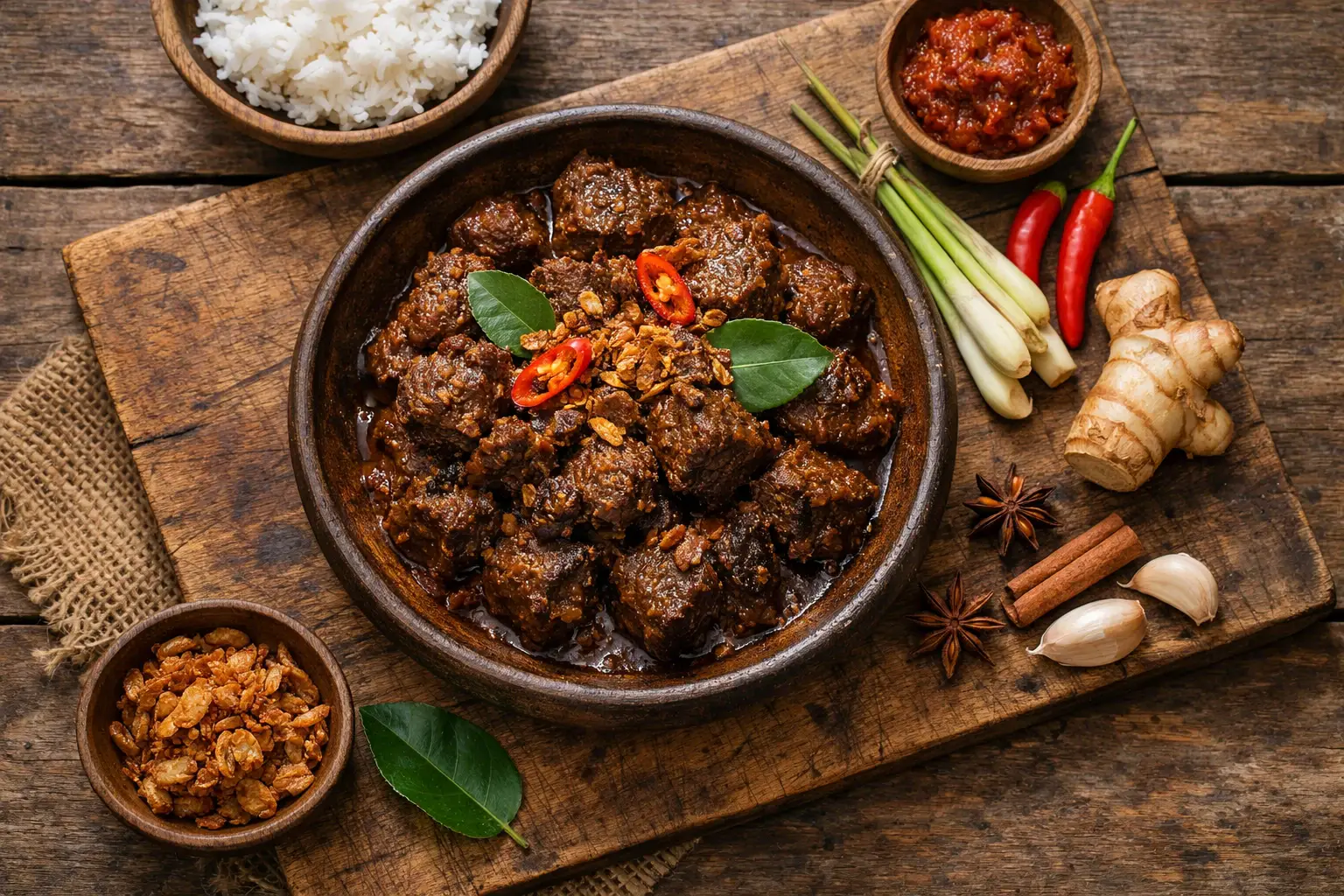
Quick Nutrition Facts
Per 100g Beef Rendang
| Nutrient | Amount |
|---|---|
| Calories | 193 kcal |
| Protein | 22.6g |
| Carbohydrates | 7.8g |
| Fiber | 1.2g |
| Sugars | 2g |
| Fat | 7.9g |
| Saturated Fat | 4.2g |
| Iron | 14.9mg |
| Calcium | 474mg |
| Sodium | 470mg |
Macronutrient Breakdown
 ChatGPT
  Claude
  AI Mode
  Perplexity
NUTRITIONIST INSIGHT
Rendang is exceptional protein per calorie—22.6g protein in just 193 calories. The slow-cooking process concentrates turmeric's curcumin (anti-inflammatory), ginger's gingerols (digestive support), and creates a deeply caramelized exterior providing resistant starches. CNN named rendang the world's most delicious food in 2011, and nutritionally, it deserves equal acclaim.
Myth Busters
MYTH #1: Rendang is Too High in Calories for Healthy Eating
TRUTH: A 100g serving provides only 193 calories with 22.6g protein—an exceptional macronutrient ratio. A cup (235g) contains 588 calories but provides 83g protein, making it protein-efficient. The issue isn't calories; it's portion size and pairing. Limit to 75-100g portions with leafy greens instead of rice, and rendang becomes a nutritional asset.
MYTH #2: Rendang's Saturated Fat is Unhealthy
TRUTH: Rendang's coconut fat comprises medium-chain triglycerides, which metabolize differently than longer-chain saturated fats, potentially supporting satiety and thermogenesis. While saturated fat requires moderation, small portions (75-100g) limit total intake to 3-4g saturated fat per serving. Pair with anti-inflammatory vegetables to create nutritional balance.
MYTH #3: Rendang's Sodium Makes it Unhealthy
TRUTH: While a cup contains 941mg sodium (40% DV), a 75-100g portion provides 350-470mg (15-20% DV), fitting easily within healthy daily limits. Homemade rendang prepared with reduced salt maintains authentic flavor through extended cooking time while reducing sodium to 300-400mg per serving.
MYTH #4: Rendang Carbs Cause Blood Sugar Spikes
TRUTH: Rendang contains only 7.8g carbs per 100g, far lower than rice dishes (17g per 100g cooked rice). Turmeric improves insulin sensitivity; ginger improves glucose control. The combination of protein (22.6g), fat (7.9g), and low carbs slows absorption and moderates blood sugar response.
MYTH #5: Rendang Takes Too Long to Cook for Healthy Eating
TRUTH: While traditional rendang requires 1-2 hours of slow-cooking, this extended cooking concentrates nutrients, creates bioavailable spice compounds, and develops resistant starches through the caramelization process. Slow-cooking also allows for tenderization without tough meat requiring marinating. Instant Pot and slow cooker adaptations reduce active cooking time while maintaining nutritional benefits.
MYTH #6: All Rendang is Beef-Based
TRUTH: Contemporary adaptations include chicken rendang (faster cooking, leaner), goat rendang, duck rendang, jackfruit rendang (vegetarian), and tempeh/tofu rendang, each maintaining authentic slow-cooked methodology while addressing dietary preferences. Jackfruit rendang provides meat-like texture; tofu rendang provides complete plant protein.
NutriScore by Health Goals
| Health Goal | NutriScore | Why This Score? |
|---|---|---|
| Muscle Gain |  | 22.6g bioavailable beef protein per 100g; heme iron (14.9mg, 19-26% DV) supports oxygen transport; B12 supports energy. Post-workout with carbs (brown rice, sweet potato) for recovery. |
| Weight Loss |  | 193 calories per 100g but 7.9g fat limits large portions. Use 75g portions with non-starchy vegetables (spinach, cassava leaves). The satiety from protein helps reduce appetite. |
| Inflammation | | Turmeric's curcumin reduces inflammatory markers; ginger supports joint health; lemongrass provides quercetin. Excellent for arthritis. |
| Diabetes Management |  | Only 7.8g carbs per 100g; turmeric improves insulin sensitivity. Pair with leafy greens (not rice) to maintain blood sugar control. Limit to 75-100g portions. |
| Iron Deficiency | | 14.9mg iron per 100g (19-26% DV)—heme iron highly bioavailable; better absorbed than plant iron. Consume with vitamin C foods (tomato, pepper) to enhance absorption. |
| Heart Health | | 7.9g fat per 100g and 470mg sodium per 100g require portion control. Use 75g portions, reduced-salt homemade versions (300mg sodium), and pair with leafy greens. |
PERSONALIZED NUTRITION
Track your rendang meals with NutriScan for personalized NutriScores based on your specific health goals and portion selections!
Blood Sugar Response to Rendang
Rendang demonstrates favorable blood glucose characteristics due to its low carbohydrate content and anti-inflammatory spice compounds that support metabolic health.
Typical Glucose Response Curve (Beef Rendang with Rice)
This chart shows typical blood glucose response when beef rendang (100g) is consumed with white rice (100g cooked). The modest glucose elevation reflects rendang's low carbohydrate content; the rice contributes most of the glucose spike. Individual responses vary. Not medical advice.
How to Minimize Blood Sugar Impact
Protein and fat in rendang slow carbohydrate absorption, naturally moderating glucose response. Strategic meal composition further flattens the curve:
- 🥬 Leafy greens instead of rice - Replaces 45g refined carbs with 3g carbs while adding vitamins K, C, folate, and fiber
- 🌱 Brown rice instead of white rice - The fiber (3g per cup) moderates glucose spike by 20-30% compared to white rice
- 🥒 Vegetable sides (spinach, cassava leaves, broccoli) - Adds fiber, minerals, phytonutrients; cassava leaves traditional in Indonesian cuisine
- ⏲️ Timing - Consume protein (rendang) before rice to maximize the first-bite effect and blood glucose moderation
This approach transforms rendang from a moderate-impact meal into a blood-glucose-friendly option suitable for diabetes management.
Cultural Significance and Global Recognition
Rendang represents the pinnacle of Minangkabau culinary tradition from West Sumatra, Indonesia, originating centuries ago as a practical preservation method and evolving into a profound expression of cultural identity, philosophical values, and culinary artistry. The Minangkabau people developed rendang as slow-cooked meat preserved for weeks without refrigeration, perfect for the merantau tradition of young men traveling for extended periods seeking knowledge and experience. The dish's name derives from "marandang"—the Minangkabau term for slow-cooking until moisture evaporates—reflecting the patience and precision valued in Minangkabau culture.
CNN's 2011 international poll ranked rendang the world's most delicious food among fifty contenders, providing unprecedented global recognition. Indonesia formally declared rendang a national dish in 2018, and has proposed it for UNESCO's Intangible Cultural Heritage list, recognizing the dish's profound cultural significance with twenty-four documented regional variations across Indonesia. Malaysia officially recognized rendang as a National Heritage food in 2009, acknowledging its status as a cornerstone of Malaysian culinary identity.
In Minangkabau and Indonesian Culture:
- Originated as preservation method for long-distance travel; the concentrated cooking process extended shelf life for weeks
- Classified as "samba adat" (ceremonial dishes) essential for wedding celebrations, religious festivals (Eid al-Fitr, Eid al-Adha), and community gatherings
- Symbolic ingredients: coconut milk (wisdom), meat (tradition and spirituality), chilies (patience), spices (harmony and unity)
- Twenty-four regional variations including beef (original), chicken, duck, goat, jackfruit, and seafood rendang reflecting diverse ingredient availability across Indonesian regions
- Payakumbuh and Bukittinggi regions showcase exceptional rendang traditions recognized throughout Indonesia
In Malaysian Culture:
- Integrated into royal culinary traditions and state-level identity (Perak, Negeri Sembilan, Malacca, Johor each claim distinctive versions)
- Rendang tok (Perak specialty), rendang kuning (yellow rendang), and rendang hitam (black rendang) reflect regional preferences
- Historical preparations incorporated liver, pigeon, eel, shellfish, and potato additions showing cultural adaptation
- Status as national heritage food reflects its centrality to Malaysian identity and global culinary recognition
Compare & Substitute
Rendang vs Similar Slow-Cooked Proteins (Per 100g)
| Nutrient | 🍖 Beef Rendang | 🍗 Beef Stew | 🍗 Chicken Breast | 🥩 Braised Pork | 🌱 Jackfruit Rendang |
|---|---|---|---|---|---|
| Calories | 193 kcal | 150 kcal | 165 kcal | 200 kcal | 95 kcal |
| Protein | 22.6g | 20g | 31g | 25g | 1.5g |
| Carbs | 7.8g | 8g | 0g | 2g | 23g |
| Fiber | 1.2g | 1g | 0g | 0g | 2.5g |
| Fat | 7.9g | 4g | 3.6g | 8g | 0.2g |
| Iron | 14.9mg | 3mg | 1.3mg | 1.3mg | 1.4mg |
| Sodium | 470mg | 600mg | 75mg | 50mg | 350mg |
| Anti-Inflamm. | High (turmeric, ginger) | Moderate | Minimal | Minimal | Moderate (fewer spices) |
| Best For | Muscle gain, iron, inflammation | Comfort food | Leanness, simplicity | Flavor variety | Vegetarians, lower-carb |
Frequently Asked Questions
Is rendang good for muscle gain and fitness?
Absolutely. Rendang provides 22.6g of high-quality beef protein per 100g, containing all nine essential amino acids necessary for muscle protein synthesis. The 14.9mg of heme iron (19-26% of daily value) supports oxygen transport crucial for athletic performance. For optimal muscle gain, consume 100-150g rendang within 30 minutes post-workout paired with carbohydrate sources including brown rice, sweet potatoes, or oatmeal to replenish glycogen stores and maximize muscle protein synthesis. The slow-cooked tenderness eliminates the need for tough meat, making it excellent for recovery meals.
Can diabetics eat rendang?
Yes, with careful portion control and side dish selection. Rendang contains only 7.8g carbohydrates per 100g—far lower than grain-based dishes. Research demonstrates that turmeric's curcumin improves insulin sensitivity, and ginger supports glucose control. Limit portions to 75-100g and pair with non-starchy vegetables (spinach, cassava leaves, bok choy) rather than white rice. The combination of protein (22.6g), fat (7.9g), and low carbs creates favorable blood glucose response. Monitor individual blood glucose response and consume 1-2 times weekly initially.
How much protein is in rendang?
A 100g serving provides 22.6g protein, representing 45% of the daily recommended intake for an average adult. This bioavailable beef protein contains all essential amino acids, with heme iron (14.9mg) supporting oxygen binding to hemoglobin. A larger 150g portion provides 34g protein—sufficient for post-workout recovery in most individuals. The protein-to-calorie ratio (11.7% protein density) exceeds many conventional meat sources, making rendang particularly efficient for muscle-building objectives.
What are the main health benefits of rendang?
Rendang delivers multiple anti-inflammatory compounds: turmeric's curcumin reduces inflammatory markers including C-reactive protein and TNF-α; ginger's gingerols support digestive health and joint function; lemongrass's citral lowers blood glucose; chili's capsaicin boosts metabolism and supports cardiovascular health. The beef provides exceptional micronutrients: iron (19-26% DV) supports oxygen transport and energy metabolism; calcium (474mg per 100g) supports bone health; zinc supports immunity. Combined, these compounds create one of the world's most therapeutic slow-cooked preparations.
Is rendang too high in sodium?
Traditional rendang contains 470mg sodium per 100g (20% DV) and 941mg per cup (40% DV), requiring portion control for individuals with hypertension. Choose 75-100g portions to limit sodium to 350-470mg per serving. Prepare homemade rendang with reduced salt, relying on the extended slow-cooking process to develop full spice flavor without excessive salt additions. Consuming rendang 1-2 times weekly with other low-sodium meals maintains healthy overall sodium intake.
Can rendang be made with other proteins?
Absolutely. Chicken rendang cooks faster (30-45 minutes) than beef (90-120 minutes) while providing lean protein with less fat. Duck rendang offers rich flavor; goat rendang provides traditional regional authenticity. Jackfruit rendang represents an innovative plant-based adaptation providing meat-like texture with carbohydrates rather than protein. Tofu rendang and tempeh rendang offer plant-based complete proteins. Seafood rendang (shrimp, fish) provides omega-3 fatty acids and faster cooking time. Each variant maintains the essential slow-cooked methodology and spice profile while accommodating dietary preferences.
When is the best time to eat rendang?
For muscle gain: consume within 30 minutes post-workout with carbohydrates (brown rice, sweet potato, oatmeal) to maximize protein synthesis and glycogen replenishment. For general health: lunch or dinner with vegetable sides (cassava leaves, spinach, bok choy) rather than rice to balance macronutrients and support metabolic health. Avoid late evening due to sodium potentially disrupting sleep patterns. For optimal health management, limit rendang consumption to 1-2 times weekly, allowing other meals to provide dietary diversity while maintaining sodium intake within recommended ranges.


Similar Nutritious Asian Foods
4505 Chicharrones Classic Chili Salt
7 Eleven Japan Crispy Corn Cheese
Explore More Nutrition Tools & Resources
AI Calorie Counter App - Snap a Photo, Get Macros
AI Nutritionist App That Reads Your Logged Meals
Best Protein Supplements for Women
Bulking Meal Plan App That Sets Your Surplus
ChatGPT Calorie Counter Alternative That Keeps the Total
ChatGPT Diet Plan Alternative That Tracks What You Eat
ChatGPT Weight Loss Coach Alternative With a Food Log
Fast Food Calorie Counter App That Reads the Tray
Free Calorie Tracker App with AI Photo Scans | NutriScan
Indian Diet Plan App With Veg and Non Veg Meals
Indian Food Calorie Calculator - Get Instant Nutrition Facts for Desi Meals — 2026
Intermittent Fasting for Women, Timer and Meal Log App
Intermittent Fasting Tracker App - Free Fasting Timer
Macro Tracker App That Fills the Numbers From a Photo
Mediterranean Diet Meal Plan App That Counts the Oil
Micronutrient Tracker App for Vitamins and Minerals
MyFitnessPal Alternative That Stays Free | NutriScan
NutriScore App: A Free Grade on Every Meal | NutriScan
Nutrition Label Scanner App for the Amount You Ate
Second Trimester Protein Guide
Vegetarian Meal Plan App With a Protein Target
Voice Calorie Counter - Speak to Track Meals Hands-Free
Water and Calorie Tracker App - Free Water Log