Rice Pudding: Calories, Nutrition and Health Benefits
A nostalgic British comfort dessert that combines creamy milk, tender rice, and gentle sweetness - providing calcium, protein, and soothing energy.
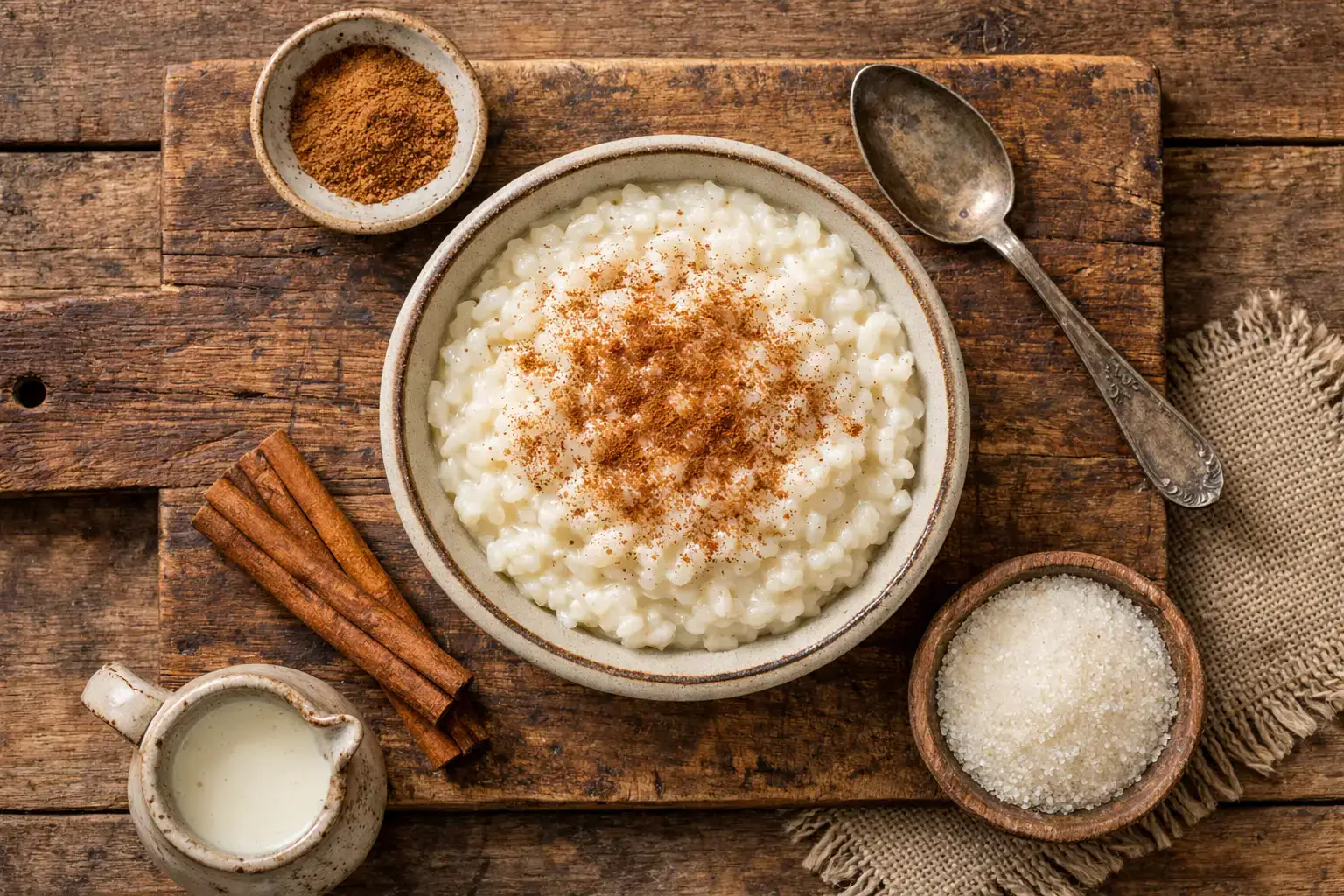
Quick Nutrition Facts
Per 1/2 Cup Serving (128g)
| Nutrient | Amount |
|---|---|
| Calories | 142 kcal |
| Protein | 4.2g |
| Carbohydrates | 27g |
| Fiber | 0.1g |
| Sugars | 12g |
| Fat | 2g |
| Calcium | 134mg |
| Vitamin B12 | 0.3mcg |
| Phosphorus | 111mg |
| Potassium | 166mg |
Macronutrient Breakdown
 ChatGPT
  Claude
  AI Mode
  Perplexity
NUTRITIONIST INSIGHT
Rice pudding provides 11% of your daily calcium from milk, supporting bone health. For a healthier version, use low-fat milk and reduce added sugar - you'll still get the comforting texture with fewer calories.
Myth Busters
MYTH #1: Rice Pudding Is Always Unhealthy
TRUTH: Traditional rice pudding made with milk provides valuable calcium (134mg per serving) and protein. The nutritional value depends on preparation - dairy products can actually help modulate blood glucose response. Opt for less sugar and low-fat milk for a healthier version.
MYTH #2: Rice Pudding Causes Massive Blood Sugar Spikes
TRUTH: While rice pudding has a medium glycemic index (GI 59), research shows rice pudding can be modified to have lower GI values (41-51) by using certain rice varieties. The milk protein and fat also help slow glucose absorption compared to plain rice.
MYTH #3: Rice Pudding Has No Nutritional Value
TRUTH: Rice pudding provides 11% daily calcium, 10% vitamin B12, and quality protein from milk. It's also a source of phosphorus for bone health and easily digestible carbohydrates that are gentle on the stomach during illness recovery.
MYTH #4: You Should Never Eat Rice Pudding If Watching Weight
TRUTH: At 142 calories per 1/2 cup serving, rice pudding can fit into a balanced diet. The protein content (4.2g) provides satiety. Choose smaller portions, skip added cream or toppings, and enjoy as an occasional treat rather than daily dessert.
MYTH #5: Store-Bought Is Just as Good as Homemade
TRUTH: Store-bought rice pudding typically contains more sugar, preservatives, and additives. Homemade versions allow you to control ingredients - use less sugar, whole milk or plant-based alternatives, and add nutritious toppings like cinnamon or fresh fruit.
MYTH #6: Rice Pudding Is Unsafe During Pregnancy
TRUTH: Rice pudding made with pasteurized milk is safe during pregnancy and provides beneficial calcium and energy. Ensure proper storage and avoid leaving at room temperature for extended periods to prevent bacterial growth.
NutriScore by Health Goals
| Health Goal | NutriScore | Why This Score? |
|---|---|---|
| Weight Loss |  | 142 calories per serving with moderate sugar. Limit to 1/4 cup portions, choose low-fat milk versions. |
| Muscle Gain |  | Provides 4.2g protein and 27g carbs for post-workout recovery. Good calcium content supports muscle function. |
| Diabetes Management |  | Medium GI (59) and high carbs require caution. Research shows milk-based desserts may help moderate glycemic response, but limit portions to 1/4 cup. |
| PCOS Management | | Sugar and refined carbs affect insulin. Limit to occasional small portions and pair with protein. |
| Pregnancy Nutrition | | Safe when made with pasteurized milk. Provides calcium for fetal bone development and easy-to-digest energy. |
| Viral/Flu Recovery |  | Gentle on stomach, easy to digest, provides comforting energy and hydration when sick. |
PERSONALIZED NUTRITION
Track your meals with NutriScan for personalized NutriScores based on your specific health goals!
Blood Sugar Response to Rice Pudding
Understanding how rice pudding affects your blood glucose helps you make informed choices about portions and pairings.
Typical Glucose Response Curve
*This chart shows typical blood glucose response for general healthy individuals. Individual responses may vary. Not medical advice.*
How to Flatten the Spike
Pairing carbohydrate-rich foods with protein helps slow glucose absorption:
- 🥜 Add chopped almonds or walnuts - Adds healthy fats and protein
- 🫐 Top with fresh berries - Adds fiber and antioxidants
- 🍎 Serve with apple slices - Extra fiber slows absorption
- 🥛 Use higher-protein milk - More protein moderates glucose response
This combination reduces the glucose spike and provides more sustained energy release.
Cultural Significance
Rice pudding is one of the world's most beloved comfort desserts, with variations across nearly every culture.
In Britain:
- Traditional nursery food dating back centuries
- Often served warm with a sprinkle of nutmeg or cinnamon
- Comfort food associated with home cooking and nostalgia
- Popular in school canteens and hospital menus
Global Variations:
- India (Kheer): Flavored with cardamom, saffron, and nuts - served at festivals
- Spain (Arroz con Leche): Cinnamon-scented, often served cold
- Scandinavia (Risgrynsgröt): Christmas tradition with hidden almond for good luck
- Middle East: Rose water and pistachio variations
Why It Endures:
- Economical - uses basic pantry staples
- Gentle on digestion - suitable for illness recovery
- Versatile - can be served warm or cold, plain or dressed up
- Nostalgic comfort - connects generations through shared recipes
Compare & Substitute
Rice Pudding vs Similar Desserts (Per 100g)
| Nutrient | 🍚 Rice Pudding | 🍮 Custard | 🧁 Tapioca Pudding | 🍨 Ice Cream |
|---|---|---|---|---|
| Calories | 111 kcal | 122 kcal | 134 kcal | 207 kcal |
| Carbs | 21g | 16g | 22g | 24g |
| Fiber | 0.1g | 0g | 0g | 0.7g |
| Protein | 3.3g | 4.5g | 0.1g | 3.5g |
| Fat | 1.6g | 4.5g | 4g | 11g |
| Calcium | 105mg | 113mg | 74mg | 128mg |
| Sugar | 10g | 13g | 14g | 21g |
| GI | 59 (medium) | 45 (low) | 70 (high) | 62 (medium) |
| Best For | Comfort food, illness recovery | Higher protein dessert | Quick energy | Occasional treat |
Frequently Asked Questions
Is rice pudding good for weight loss?
Rice pudding can fit into a weight loss plan with mindful portions. At 142 calories per 1/2 cup, it's relatively moderate for a dessert.
Tips for weight loss:
- Limit portions to 1/4 cup (71 calories)
- Choose versions made with skim or low-fat milk
- Skip added cream, butter, or sugary toppings
- Make homemade to control sugar content
The protein and calcium content provides some satiety, making it more satisfying than many low-nutrient desserts.
Can diabetics eat rice pudding?
Diabetics should approach rice pudding with caution due to its medium glycemic index (GI 59) and carbohydrate content.
Tips for diabetics:
- Keep portions very small (1/4 cup or less)
- Pair with protein like nuts to slow glucose absorption
- Monitor blood sugar 2 hours after eating
- Choose versions with less added sugar
- Consider rice pudding made with higher-fiber rice varieties
Some research shows rice pudding can be made with lower GI by using specific rice types. Always consult your healthcare provider about including desserts in your meal plan.
How many calories are in rice pudding?
Standard portions:
- Per 100g: 111 calories
- Per 1/2 cup (128g): 142 calories
- Per 1 cup (256g): 284 calories
Calories vary based on preparation - whole milk versions have more calories than skim milk, and added sugar, raisins, or cream increase the total significantly.
What are the main health benefits of rice pudding?
Key Benefits:
- Calcium Source: 11% daily value supports bone health
- Vitamin B12: Supports nerve function and red blood cell production
- Easy Digestion: Gentle on stomach, good for illness recovery
- Quick Energy: Easily digestible carbohydrates
- Comfort Factor: Warm, soothing food during illness or stress
- Protein: 4.2g from milk supports muscle maintenance
Is rice pudding safe during pregnancy?
Yes, rice pudding is safe during pregnancy when:
- Made with pasteurized milk (avoid raw milk products)
- Stored properly and not left at room temperature
- Consumed while fresh
It provides beneficial calcium for fetal bone development and easy-to-digest calories. Avoid excessive portions due to sugar content, and consider making homemade versions with less added sugar.
Is homemade or store-bought rice pudding healthier?
Homemade advantages:
- Control sugar content (often half that of store-bought)
- Choose milk type (skim, low-fat, plant-based)
- No preservatives or additives
- Add nutritious ingredients (cinnamon, fresh fruit)
Store-bought considerations:
- Check nutrition labels for sugar content
- Look for versions with shorter ingredient lists
- Single-serve cups help portion control
- Some brands offer reduced-sugar options
Overall, homemade allows more control over nutrition and is generally the healthier choice.




Similar Nutritious Foods
4505 Chicharrones Classic Chili Salt
7 Eleven Japan Crispy Corn Cheese
Explore More Nutrition Tools & Resources
AI Calorie Counter App - Snap a Photo, Get Macros
AI Nutritionist App That Reads Your Logged Meals
Best Protein Supplements for Women
Bulking Meal Plan App That Sets Your Surplus
ChatGPT Calorie Counter Alternative That Keeps the Total
ChatGPT Diet Plan Alternative That Tracks What You Eat
ChatGPT Weight Loss Coach Alternative With a Food Log
Fast Food Calorie Counter App That Reads the Tray
Free Calorie Tracker App with AI Photo Scans | NutriScan
Indian Diet Plan App With Veg and Non Veg Meals
Indian Food Calorie Calculator - Get Instant Nutrition Facts for Desi Meals — 2026
Intermittent Fasting for Women, Timer and Meal Log App
Intermittent Fasting Tracker App - Free Fasting Timer
Macro Tracker App That Fills the Numbers From a Photo
Mediterranean Diet Meal Plan App That Counts the Oil
Micronutrient Tracker App for Vitamins and Minerals
MyFitnessPal Alternative That Stays Free | NutriScan
NutriScore App: A Free Grade on Every Meal | NutriScan
Nutrition Label Scanner App for the Amount You Ate
Second Trimester Protein Guide
Vegetarian Meal Plan App With a Protein Target
Voice Calorie Counter - Speak to Track Meals Hands-Free
Water and Calorie Tracker App - Free Water Log