Rye Bread: Calories, Nutrition and Health Benefits
A fiber-rich whole grain bread with lower glycemic impact than wheat, packed with B vitamins and minerals for sustained energy and gut health.
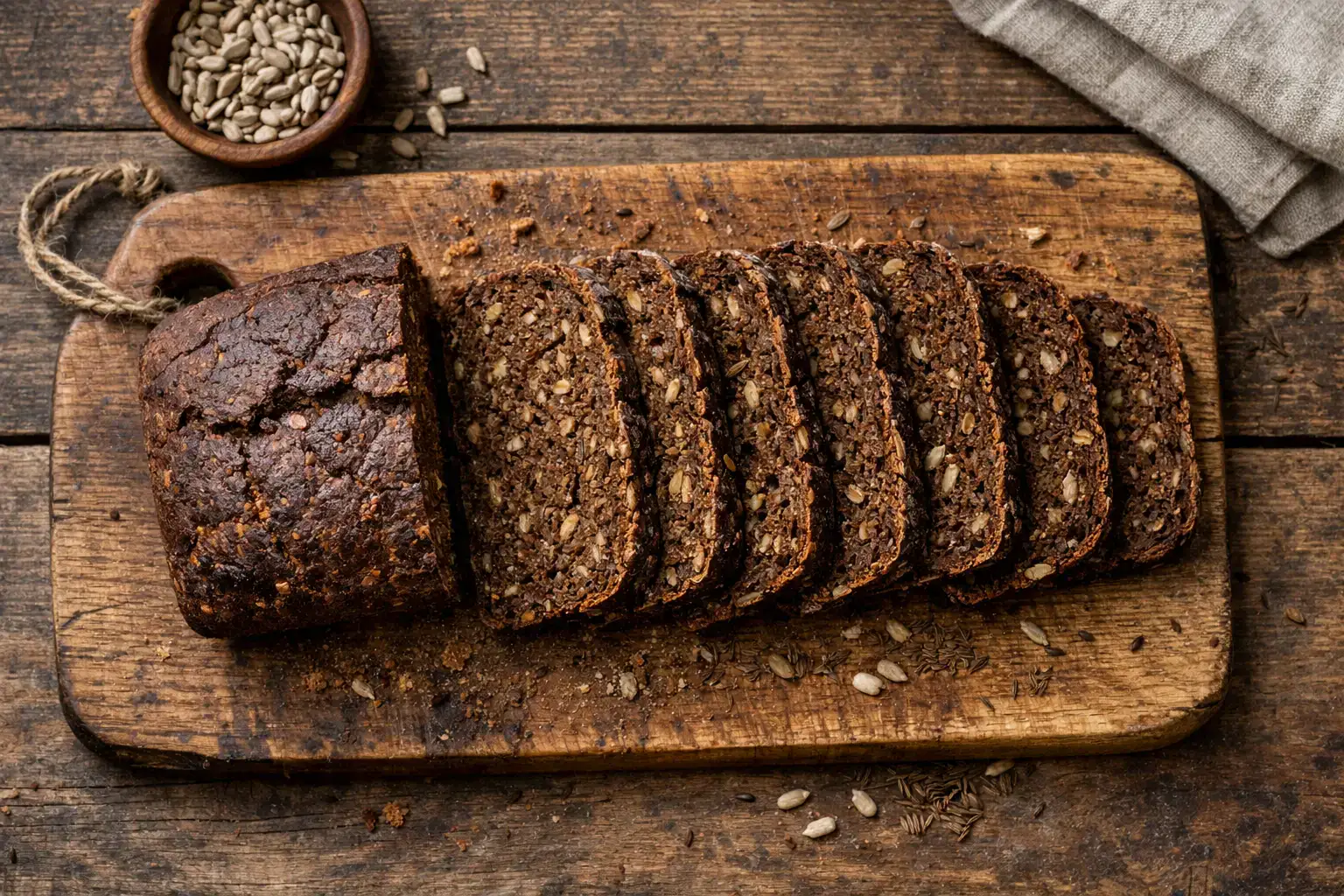
Quick Nutrition Facts
Per 1 Slice (32g) | Per 100g in parentheses
| Nutrient | Amount |
|---|---|
| Calories | 83 kcal (259) |
| Protein | 2.7g (8.5g) |
| Carbohydrates | 15.5g (48.3g) |
| Fiber | 1.9g (5.8g) |
| Sugars | 1.2g (3.9g) |
| Fat | 1.1g (3.3g) |
| Iron | 0.9mg (2.8mg) |
| Manganese | 0.3mg (0.8mg) |
| Phosphorus | 40mg (125mg) |
| Magnesium | 13mg (40mg) |
Macronutrient Breakdown
 ChatGPT
  Claude
  AI Mode
  Perplexity
NUTRITIONIST INSIGHT
Rye bread delivers nearly twice the fiber of white bread per slice, making it one of the best bread choices for blood sugar control and digestive health. The "rye factor" - a unique property of rye grain - triggers lower insulin response than wheat bread even at similar carbohydrate loads.
Myth Busters
MYTH #1: Rye Bread Is Gluten-Free
TRUTH: Rye contains gluten (secalin), though less than wheat. People with celiac disease or gluten sensitivity must avoid rye bread. It is not a safe substitute for those on a gluten-free diet.
MYTH #2: All Rye Bread Is the Same
TRUTH: Light rye bread (GI 65-76) uses mostly refined flour, while dense whole grain rye (GI 56-65) retains fiber and nutrients. Always check labels for "whole rye" or "rye meal" as the first ingredient to get the full health benefits.
MYTH #3: Rye Bread Makes You Gain Weight
TRUTH: At 83 calories per slice with 1.9g fiber, rye bread actually promotes fullness better than white bread. Research shows rye bread leads to greater satiety and reduced hunger compared to refined wheat bread, supporting weight management.
MYTH #4: Rye Bread Spikes Blood Sugar Like White Bread
TRUTH: Dense rye bread has a significantly lower glycemic response than white bread. The intact rye kernel structure slows starch digestion, and the "rye factor" reduces postprandial insulin peaks without affecting glucose clearance.
MYTH #5: Rye Bread Has No Nutritional Advantage Over Wheat
TRUTH: Rye bread provides more fiber (5.8g vs 2.7g per 100g), more manganese, more phenolic compounds, and unique arabinoxylan fibers that support beneficial gut bacteria. The fermentation of these fibers produces short-chain fatty acids linked to reduced inflammation.
NutriScore by Health Goals
| Health Goal | NutriScore | Why This Score? |
|---|---|---|
| Weight Loss |  | 83 calories per slice with 1.9g fiber promotes lasting fullness. Limit to 2 slices per day. |
| Muscle Gain | | 8.5g protein per 100g with complex carbs for sustained energy. Pair with eggs or lean protein. |
| Diabetes Management | | Lower GI (56-65) than white bread. The rye factor reduces insulin response without affecting glucose clearance. Stick to 1-2 slices. |
| PCOS Management | | High fiber helps regulate insulin sensitivity. Choose dense varieties, limit to 1-2 slices daily. |
| Pregnancy Nutrition |  | Good source of folate, iron, and B vitamins for fetal development. Fiber helps prevent pregnancy constipation. |
| Viral/Flu Recovery | | Complex carbs for sustained energy, B vitamins for immune support. Easy to digest when toasted. |
PERSONALIZED NUTRITION
Track your meals with NutriScan for personalized NutriScores based on your specific health goals!
Blood Sugar Response to Rye Bread
Understanding how rye bread affects your blood glucose helps you choose the right variety and pair it with complementary foods.
Typical Glucose Response Curve
This chart shows typical blood glucose response for general healthy individuals. Individual responses may vary. Not medical advice.
How to Flatten the Spike
Pairing rye bread with protein or healthy fat slows glucose absorption and reduces the peak blood sugar level:
- 🥑 Avocado slices - Adds healthy monounsaturated fats and fiber
- 🧀 Cottage cheese or quark - Provides casein protein for slow digestion
- 🥚 Smoked salmon or boiled eggs - Complete protein with omega-3s
- 🥜 Nut butter spread (almond, peanut) - Healthy fats and extra protein
This combination not only reduces the glucose spike but also extends energy release, keeping you fuller for longer.
Cultural Significance
Rye bread is deeply rooted in Northern and Eastern European food traditions, where rye was the primary grain for centuries due to its ability to thrive in cold, poor soils.
In Germany:
- "Roggenbrot" (rye bread) has over 300 registered varieties
- Dense rye loaves like Vollkornbrot and Pumpernickel are UNESCO-recognized cultural heritage foods
- German Bread Culture (Brotkultur) was added to the German Intangible Cultural Heritage list
- Traditional sourdough fermentation used for centuries before commercial yeast
Global Traditions:
- Scandinavian "rugbrod" (Danish rye) and "ruisleipa" (Finnish rye) are dietary staples
- Eastern European dark breads in Poland, Russia, and Baltic states
- Professor Tim Spector highlighted dense German rye as one of 2026's healthiest bread picks for gut microbiome support
- Growing global interest as part of the whole grain and sourdough food movements
Compare & Substitute
Rye Bread vs Other Breads (Per 100g)
| Nutrient | 🍞 Rye Bread | 🍞 Whole Wheat | 🍞 White Bread | 🍞 Sourdough |
|---|---|---|---|---|
| Calories | 259 kcal | 247 kcal | 265 kcal | 274 kcal |
| Carbs | 48.3g | 43.1g | 49.2g | 51.9g |
| Fiber | 5.8g | 6.8g | 2.7g | 2.4g |
| Protein | 8.5g | 12.3g | 7.6g | 8.8g |
| Fat | 3.3g | 3.4g | 3.2g | 3.0g |
| GI | 56-65 | 69-74 | 71-77 | 54-64 |
| Sugar | 3.9g | 4.4g | 5.3g | 3.6g |
| Iron | 2.8mg | 2.5mg | 3.6mg | 2.4mg |
| Best For | Blood sugar control, fiber | High protein, athletes | Quick energy, sandwiches | Gut health, digestibility |
Frequently Asked Questions
Is rye bread good for weight loss?
Yes, rye bread supports weight loss effectively. 1 slice provides 83 calories with 1.9g fiber that promotes lasting fullness. Research shows rye bread reduces hunger hormones better than white bread, keeping appetite in check for hours.
Best practices: Stick to 1-2 slices per day, choose dense whole grain varieties, top with protein (eggs, smoked fish, cottage cheese), and avoid heavily buttered preparations.
Can diabetics eat rye bread?
Rye bread is among the best bread choices for diabetics. Dense German rye has a GI of 56-65, significantly lower than white bread (71-77).
Tips for diabetics:
- Choose dense whole grain or pumpernickel rye (lowest GI)
- Limit to 1-2 slices per meal (15-31g carbs)
- Always pair with protein or healthy fat
- Monitor blood sugar 2 hours after eating
The "rye factor" means rye triggers lower insulin response than wheat at equal carb loads. Always consult your healthcare provider for personalized guidance.
How many calories are in a slice of rye bread?
1 standard slice (32g) contains 83 calories. Dense German-style slices (40-50g) contain 104-130 calories. Per 100g, rye bread provides 259 calories with 8.5g protein, 48.3g carbohydrates, and 5.8g fiber.
For accurate tracking of your daily intake, use the NutriScan app to scan and log your meals instantly.
Is rye bread healthier than white bread?
Significantly healthier. Key advantages:
- More fiber: 5.8g vs 2.7g per 100g supports digestion and blood sugar control
- Lower GI: 56-65 vs 71-77 means less blood sugar spike
- Lower insulin response: The unique rye factor reduces postprandial insulin
- Better satiety: Keeps you fuller longer, aiding weight management
- More micronutrients: Higher manganese, phosphorus, and phenolic compounds
What is the glycemic index of rye bread?
GI varies by type:
- Pumpernickel rye: 46-55 (low GI)
- Dense whole grain rye: 56-65 (moderate GI)
- Light/refined rye: 65-76 (moderate-high GI)
For the best blood sugar response, choose dense, dark varieties where whole rye kernels are visible. Sourdough fermentation further lowers GI.
Is rye bread safe during pregnancy?
Yes, rye bread is safe and nutritious during pregnancy. It provides folate for neural tube development, iron for increased blood volume, B vitamins for energy metabolism, and fiber that helps prevent pregnancy-related constipation.
Recommendations: Choose whole grain rye for maximum nutrition. 2-3 slices daily fits well within pregnancy whole grain guidelines. Pair with folate-rich foods like leafy greens for added benefit.


Similar Nutritious Foods
4505 Chicharrones Classic Chili Salt
7 Eleven Japan Crispy Corn Cheese
Explore More Nutrition Tools & Resources
AI Calorie Counter App - Snap a Photo, Get Macros
AI Nutritionist App That Reads Your Logged Meals
Best Protein Supplements for Women
Bulking Meal Plan App That Sets Your Surplus
ChatGPT Calorie Counter Alternative That Keeps the Total
ChatGPT Diet Plan Alternative That Tracks What You Eat
ChatGPT Weight Loss Coach Alternative With a Food Log
Fast Food Calorie Counter App That Reads the Tray
Free Calorie Tracker App with AI Photo Scans | NutriScan
Indian Diet Plan App With Veg and Non Veg Meals
Indian Food Calorie Calculator - Get Instant Nutrition Facts for Desi Meals — 2026
Intermittent Fasting for Women, Timer and Meal Log App
Intermittent Fasting Tracker App - Free Fasting Timer
Macro Tracker App That Fills the Numbers From a Photo
Mediterranean Diet Meal Plan App That Counts the Oil
Micronutrient Tracker App for Vitamins and Minerals
MyFitnessPal Alternative That Stays Free | NutriScan
NutriScore App: A Free Grade on Every Meal | NutriScan
Nutrition Label Scanner App for the Amount You Ate
Second Trimester Protein Guide
Vegetarian Meal Plan App With a Protein Target
Voice Calorie Counter - Speak to Track Meals Hands-Free
Water and Calorie Tracker App - Free Water Log