Sabja Seeds (Basil Seeds): Calories, Nutrition and Health Benefits
Tiny black seeds that swell 30x in water, packed with fiber, omega-3, and ancient Ayurvedic wisdom for cooling, hydration, and digestive wellness.
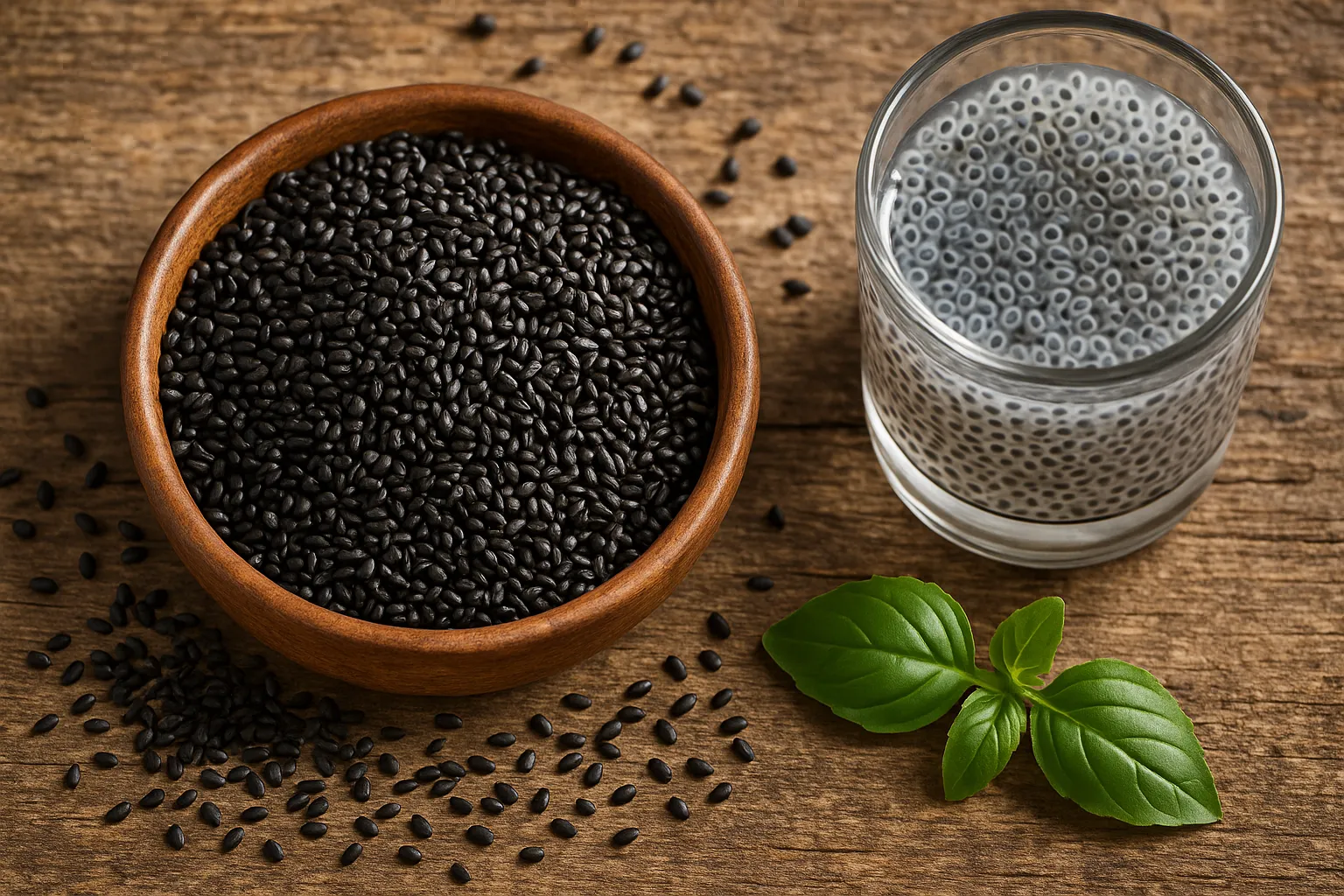
Quick Nutrition Facts
Per 1 Tablespoon (13g, dry)
| Nutrient | Amount |
|---|---|
| Calories | 60 kcal |
| Protein | 2.5g |
| Carbohydrates | 7g |
| Fiber | 7g |
| Sugars | 0g |
| Fat | 2.5g |
| Omega-3 (ALA) | 1,240mg |
| Calcium | 176mg |
| Iron | 3.1mg |
| Magnesium | 90mg |
Macronutrient Breakdown
 ChatGPT
  Claude
  AI Mode
  Perplexity
NUTRITIONIST INSIGHT
Sabja seeds provide an impressive 7g fiber per tablespoon—nearly 30% of your daily needs. Soak them for 5 minutes to unlock their gel-forming properties that slow digestion and promote sustained fullness.
Myth Busters
MYTH #1: Sabja Seeds Cause Choking
TRUTH: When properly soaked, sabja seeds are safe. The gel coating formed when soaked prevents choking. Never consume dry sabja seeds; always soak for at least 5 minutes before eating.
MYTH #2: Sabja Seeds and Chia Seeds Are the Same
TRUTH: Different plants, different properties. Sabja seeds (Ocimum basilicum) swell instantly in cold water forming gel, while chia seeds (Salvia hispanica) take 10-15 minutes. Sabja has higher iron; chia has higher calcium.
MYTH #3: Sabja Seeds Directly Burn Fat
TRUTH: Sabja seeds support weight loss through fiber-induced satiety, not fat burning. Studies show body weight reduction may be partly water weight. They work best combined with calorie control and exercise.
MYTH #4: You Can Eat Unlimited Sabja Seeds for Health
TRUTH: Limit to 1-2 tablespoons daily. Excessive fiber intake can cause bloating, gas, and digestive discomfort. More isn't better—moderation optimizes benefits while minimizing side effects.
MYTH #5: Sabja Seeds Cure Diabetes
TRUTH: They help regulate blood sugar, not cure diabetes. Research shows anti-hyperglycemic potential through fiber slowing glucose absorption. Always combine with medical treatment and proper diet.
MYTH #6: Sabja Seeds Are a Complete Protein
TRUTH: With 2.5g protein per tablespoon, sabja seeds contain protein but lack adequate amounts of all essential amino acids. Pair with legumes, nuts, or dairy for complete protein profiles.
NutriScore by Health Goals
| Health Goal | NutriScore | Why This Score? |
|---|---|---|
| Weight Loss |  | 7g fiber promotes fullness, swells 30x to curb appetite, minimal calories (60 per tbsp). |
| Muscle Gain |  | Low protein (2.5g), better as fiber source than muscle builder. Combine with protein-rich foods. |
| Diabetes Management | | High fiber slows glucose absorption, studies show anti-hyperglycemic effects. Soak before consuming. |
| PCOS Management |  | Omega-3 ALA reduces inflammation, fiber helps insulin sensitivity. Limit to 1 tbsp daily. |
| Pregnancy Nutrition | | Iron (3.1mg) and omega-3 support fetal development. Consult healthcare provider before consuming due to limited research. |
| Viral/Flu Recovery | | Hydrating when soaked, easy to digest, Ayurvedic cooling properties support recovery. Natural electrolytes aid rehydration. |
PERSONALIZED NUTRITION
Track your meals with NutriScan for personalized NutriScores based on your specific health goals!
Blood Sugar Response to Sabja Seeds
Understanding how sabja seeds affect blood glucose helps optimize their use for diabetes management and sustained energy.
Typical Glucose Response Curve
*This chart shows typical blood glucose response for general healthy individuals. Individual responses may vary. Not medical advice.*
How to Optimize Blood Sugar Control
Combining sabja seeds with balanced meals maximizes their fiber benefits and minimizes glucose spikes:
- 🥛 Soaked in milk or yogurt - Protein slows digestion further
- 🥤 Mixed in smoothies with protein powder - Complete nutrition
- 🍵 Added to herbal teas with lemon - Hydration plus vitamin C
- 🥗 Sprinkled on salads with nuts - Healthy fats enhance satiety
This combination creates sustained energy release and extended fullness for 3-4 hours.
Cultural Significance
Sabja seeds, also known as tukmaria or sweet basil seeds, have been cultivated for over 3,000 years in India and Southeast Asia.
In India:
- Essential ingredient in falooda, kulfi, and summer cooling drinks
- Ayurveda uses sabja for digestive health, fever reduction, and heat ailments
- Offered in temples during festivals as prasad
- Traditional remedy for acidity, constipation, and bloating
- Known as "tukmaria" in Hindi, "kama kasturi" in Tamil
Global Impact:
- Grown primarily in India, Thailand, and Southeast Asia
- Rising Western popularity as superfood alternative to chia seeds
- Used in traditional Chinese medicine for detoxification
- Sustainable crop requiring minimal water despite swelling properties
Compare & Substitute
Sabja Seeds vs Similar Seeds (Per 100g)
| Nutrient | 🌱 Sabja Seeds | 🌰 Chia Seeds | 🌾 Flaxseeds | 🌿 Psyllium Husk |
|---|---|---|---|---|
| Calories | 442 kcal | 486 kcal | 534 kcal | 200 kcal |
| Carbs | 54g | 42g | 29g | 88g |
| Fiber | 54g | 34g | 27g | 80g |
| Protein | 19g | 17g | 18g | 2g |
| Fat | 19g | 31g | 42g | 0.6g |
| Omega-3 ALA | 9,540mg | 17,830mg | 22,813mg | 0mg |
| Iron | 23.8mg | 7.7mg | 5.7mg | 1mg |
| Calcium | 1,354mg | 631mg | 255mg | 45mg |
| Best For | Hydration, instant gel | Higher omega-3, nutrition | Ground for absorption | Pure fiber, constipation |
Frequently Asked Questions
Are sabja seeds good for weight loss?
Yes, sabja seeds can support weight loss when used strategically. One tablespoon provides 7g fiber that absorbs water and swells 30x its size, promoting fullness and reducing appetite.
Best practices: Soak 1 tablespoon in 200ml water for 5 minutes, drink 30 minutes before meals; limit to 1-2 tablespoons daily; combine with calorie deficit diet and exercise; expect gradual results over 8-12 weeks.
Can diabetics eat sabja seeds?
Diabetics can safely eat sabja seeds in moderation. High fiber content slows glucose absorption and may improve insulin sensitivity.
Tips for diabetics: Limit to 1 tablespoon daily; always soak before consuming; mix with protein or healthy fat; best timing: with breakfast or mid-afternoon snack; monitor blood sugar 2 hours after eating; consult your healthcare provider before adding to routine.
How much protein is in sabja seeds?
One tablespoon of sabja seeds contains 2.5g of protein, or about 19g per 100g. While not a primary protein source, sabja seeds complement plant-based diets with their omega-3, fiber, and mineral content.
For muscle gain or high-protein diets, combine sabja seeds with protein-rich foods like Greek yogurt, protein shakes, or nut butter.
What are the main health benefits of sabja seeds?
Key Benefits:
- Digestive Health: 7g fiber per tablespoon supports regular bowel movements and gut health
- Blood Sugar Control: Soluble fiber slows glucose absorption, aids diabetes management
- Hydration: Gel coating retains water, helps maintain electrolyte balance
- Heart Health: 1,240mg omega-3 ALA per tablespoon supports cardiovascular function
- Weight Management: High fiber promotes satiety and reduces calorie intake
- Cooling Properties: Ayurvedic remedy for body heat, acidity, and summer wellness
When is the best time to eat sabja seeds?
Depends on your goal:
- Weight Loss: 30 minutes before meals (with 200ml water). Creates fullness, reduces portion sizes.
- Digestive Health: Morning on empty stomach or after dinner. Promotes overnight bowel movement.
- Diabetes: With breakfast or afternoon snack paired with protein. Stabilizes blood sugar.
- Hydration: Throughout the day in summer drinks, especially afternoon. Prevents dehydration.
IMPORTANT NOTE
Always soak sabja seeds for at least 5 minutes before consuming. Never eat them dry due to choking risk.
Are sabja seeds and chia seeds the same?
No, they're different seeds from different plants with unique properties:
Sabja Seeds (Ocimum basilicum):
- Swell instantly in cold water (30 seconds)
- Form transparent gel coating
- Higher iron (23.8mg vs 7.7mg per 100g)
- Cooling properties in Ayurveda
- Indian origin
Chia Seeds (Salvia hispanica):
- Take 10-15 minutes to swell
- Form opaque gel
- Higher omega-3 (17,830mg vs 9,540mg per 100g)
- Mexican origin
- More neutral temperature properties
Recommendation: Both offer fiber and omega-3 benefits. Choose sabja for quick hydration and cooling; chia for maximum omega-3.
How many sabja seeds should I eat per day?
General Guidelines:
- 1 tablespoon daily - Most people for general health benefits
- 1-2 tablespoons daily - Weight loss or constipation relief
- Start with 1 teaspoon - Beginners to assess tolerance
Avoid excess: More than 2 tablespoons can cause bloating, gas, digestive discomfort, or excessive fiber intake. Always drink plenty of water (2-3 liters daily) when consuming sabja seeds.
Track your meals with NutriScan app to see how sabja seeds fit your personal nutrition goals.
Can I eat sabja seeds during pregnancy?
Generally safe in food amounts, but limited pregnancy-specific research exists. Sabja seeds provide beneficial iron (3.1mg per tablespoon) and omega-3 ALA.
Pregnancy considerations: Consult your healthcare provider before adding to diet; start with small amounts (1 teaspoon); avoid if you have pregnancy complications; best consumed soaked in milk or smoothies; monitor for digestive discomfort.
Most pregnant women in India consume sabja seeds traditionally without issues, but individual responses vary.




Similar Nutritious Foods
4505 Chicharrones Classic Chili Salt
7 Eleven Japan Crispy Corn Cheese
Explore More Nutrition Tools & Resources
AI Calorie Counter App - Snap a Photo, Get Macros
AI Nutritionist App That Reads Your Logged Meals
Best Protein Supplements for Women
Bulking Meal Plan App That Sets Your Surplus
ChatGPT Calorie Counter Alternative That Keeps the Total
ChatGPT Diet Plan Alternative That Tracks What You Eat
ChatGPT Weight Loss Coach Alternative With a Food Log
Fast Food Calorie Counter App That Reads the Tray
Free Calorie Tracker App with AI Photo Scans | NutriScan
Indian Diet Plan App With Veg and Non Veg Meals
Indian Food Calorie Calculator - Get Instant Nutrition Facts for Desi Meals — 2026
Intermittent Fasting for Women, Timer and Meal Log App
Intermittent Fasting Tracker App - Free Fasting Timer
Macro Tracker App That Fills the Numbers From a Photo
Mediterranean Diet Meal Plan App That Counts the Oil
Micronutrient Tracker App for Vitamins and Minerals
MyFitnessPal Alternative That Stays Free | NutriScan
NutriScore App: A Free Grade on Every Meal | NutriScan
Nutrition Label Scanner App for the Amount You Ate
Second Trimester Protein Guide
Vegetarian Meal Plan App With a Protein Target
Voice Calorie Counter - Speak to Track Meals Hands-Free
Water and Calorie Tracker App - Free Water Log