Saganaki: Calories, Nutrition and Health Benefits
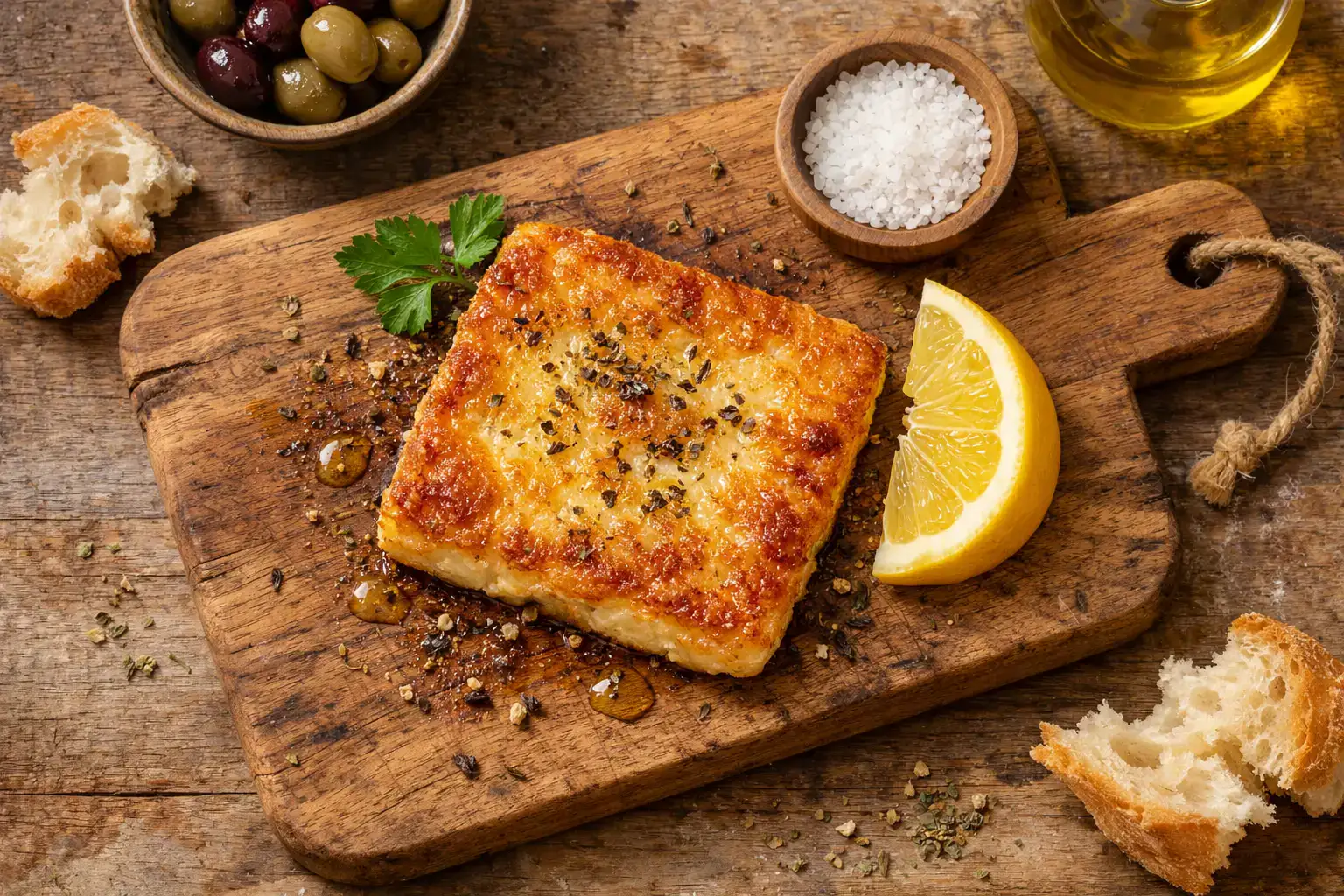
Greece's iconic pan-fried cheese appetizer with a golden crust, rich in protein and calcium, served sizzling with a squeeze of fresh lemon.
Quick Nutrition Facts
Per 100g (Fried Saganaki)
| Nutrient | Amount |
|---|---|
| Calories | 320 kcal |
| Protein | 18g |
| Carbohydrates | 2g |
| Fiber | 0g |
| Sugars | 0.5g |
| Fat | 26g |
| Saturated Fat | 16g |
| Calcium | 500mg |
| Sodium | 800mg |
| Cholesterol | 80mg |
Macronutrient Breakdown
 ChatGPT
  Claude
  AI Mode
  Perplexity
NUTRITIONIST INSIGHT
Saganaki delivers 50% of your daily calcium needs in a single serving, supporting bone density and muscle function. Despite being fried, the kasseri cheese base provides high-quality complete protein. Keep portions to one piece (80g) to manage saturated fat intake.
Myth Busters
MYTH #1: Saganaki Is Just Empty Calories
TRUTH: A 100g serving provides 18g of complete protein and 500mg calcium (50% DV). Cheese calcium has been shown to attenuate saturated fat-induced increases in LDL cholesterol, making it more nutritious than many fried snacks.
MYTH #2: Fried Cheese Always Spikes Blood Sugar
TRUTH: Saganaki has only 2g carbs per 100g and a near-zero glycemic index, typical of cheese-based foods. The minimal flour coating adds negligible carbohydrates compared to breaded fried foods.
MYTH #3: All Saturated Fat in Cheese Is Harmful
TRUTH: A meta-analysis of prospective studies found cheese consumption was not associated with increased cardiovascular disease risk, and may have a slightly protective effect. The calcium and conjugated linoleic acid in cheese may offset saturated fat effects.
MYTH #4: Saganaki Has No Nutritional Value Beyond Fat
TRUTH: Saganaki provides significant calcium (500mg), phosphorus, vitamin A, and B12 from the cheese base. Cheese consumption has been linked to higher bone mineral density and reduced fracture risk in multiple studies.
MYTH #5: You Should Never Eat Fried Cheese on a Diet
TRUTH: A half portion (40g, ~128 kcal) paired with a Greek salad makes a satisfying, protein-rich appetizer. The high protein and fat content promotes satiety, helping you eat less overall at the meal.
NutriScore by Health Goals
| Health Goal | NutriScore | Why This Score? |
|---|---|---|
| Weight Loss |  | 320 kcal/100g with 26g fat is calorie-dense. Limit to half portion (40g, 128 kcal) and pair with vegetables. |
| Muscle Gain |  | 18g complete protein per 100g plus 500mg calcium for muscle contraction. Good post-workout with carb source. |
| Diabetes Management | | Near-zero GI with only 2g carbs means minimal blood sugar impact. Watch sodium if managing blood pressure alongside diabetes. |
| PCOS Management |  | Low carb is favorable, but high saturated fat may affect inflammation. Limit to 1 serving per week. |
| Pregnancy Nutrition | | Excellent calcium source (500mg). ACOG recommends 1,000mg calcium daily during pregnancy. Ensure cheese is pasteurized. |
| Viral/Flu Recovery | | Protein supports immune function, but high fat may be hard to digest when ill. Choose lighter options during acute illness. |
PERSONALIZED NUTRITION
Track your meals with NutriScan for personalized NutriScores based on your specific health goals!
Blood Sugar Response to Saganaki
Understanding how saganaki affects your blood glucose helps inform meal planning, especially for diabetics.
Typical Glucose Response Curve
*This chart shows typical blood glucose response for general healthy individuals. Individual responses may vary. Not medical advice.*
How to Flatten the Spike
Cheese has a near-zero glycemic index, so saganaki causes minimal blood sugar rise. To keep it balanced:
- 🥗 Pair with a Greek salad - Fiber from vegetables slows any glucose absorption from the flour coating
- 🍋 Squeeze fresh lemon - Traditional serving; citric acid may help moderate post-meal glucose
- 🫒 Choose olive oil for frying - Healthier fat profile than butter or seed oils
- 🥒 Add tzatziki on the side - Yogurt-based dip adds protein and probiotics
Cultural Significance
Saganaki takes its name from the small two-handled frying pan (sagani) used to prepare it. The dish became a staple of Greek mezze culture.
In Greece:
- Served as a hot appetizer (orektiko) at tavernas across the country
- Traditional cheeses used: kasseri, kefalotiri, kefaloraviera, or graviera
- Flambeed with ouzo or brandy in some regions, served with the exclamation "Opa!"
- Part of the Mediterranean mezze tradition alongside olives, dips, and bread
Global Impact:
- Greek-American restaurants popularized the flaming version in the 1960s (credited to The Parthenon restaurant in Chicago)
- Now found on Mediterranean restaurant menus worldwide
- Inspired similar dishes: Turkish "hellim" (fried halloumi), Italian "provolone in carrozza"
- The word "saganaki" now refers to any dish cooked in the small sagani pan
Compare & Substitute
Saganaki vs Similar Foods (Per 100g)
| Nutrient | 🧀 Saganaki | 🧀 Halloumi (Grilled) | 🧀 Mozzarella Sticks | 🧀 Feta Cheese |
|---|---|---|---|---|
| Calories | 320 kcal | 321 kcal | 280 kcal | 264 kcal |
| Carbs | 2g | 3g | 24g | 4g |
| Fiber | 0g | 0g | 1g | 0g |
| Protein | 18g | 25g | 12g | 14g |
| Fat | 26g | 25g | 17g | 21g |
| Calcium | 500mg | 700mg | 200mg | 493mg |
| Sodium | 800mg | 1,150mg | 640mg | 917mg |
| Best For | Greek mezze, appetizer | Grilled protein snack | Indulgent snacking | Salads, lighter option |
Frequently Asked Questions
How many calories are in saganaki?
100g of saganaki contains approximately 320 calories. A typical restaurant serving (80g, one piece) provides about 256 calories with 20.8g fat, 14.4g protein, and 1.6g carbs.
Is saganaki healthy?
Saganaki provides 18g protein and 500mg calcium per 100g, supporting muscle and bone health. However, 26g fat (16g saturated) and 800mg sodium per 100g mean moderation is key. Enjoy as an occasional appetizer, not a daily food.
Can diabetics eat saganaki?
Saganaki is one of the more diabetes-friendly fried foods with only 2g carbs per 100g and a near-zero glycemic index. The protein and fat content means minimal blood sugar impact. Watch overall sodium intake and pair with non-starchy vegetables.
What cheese is used in saganaki?
Traditional saganaki uses semi-hard Greek cheeses that hold shape when fried: kasseri, kefalotiri, kefaloraviera, or graviera. These are typically made from sheep's or goat's milk. Outside Greece, halloumi or provolone are sometimes substituted.
Is saganaki safe during pregnancy?
Saganaki is generally safe during pregnancy if made with pasteurized cheese and cooked thoroughly (frying kills harmful bacteria). The high calcium content (500mg per 100g) supports fetal bone development. Avoid if the cheese source is unpasteurized. Always consult your healthcare provider.
How is saganaki different from halloumi?
Saganaki is flour-dusted kasseri cheese pan-fried in oil, creating a golden crust with melted interior. Halloumi is a Cypriot cheese grilled or pan-fried without flour. Halloumi has higher protein (25g vs 18g) and calcium (700mg vs 500mg), while saganaki has a richer, meltier texture.




Similar Nutritious Foods
4505 Chicharrones Classic Chili Salt
7 Eleven Japan Crispy Corn Cheese
Explore More Nutrition Tools & Resources
AI Calorie Counter App - Snap a Photo, Get Macros
AI Nutritionist App That Reads Your Logged Meals
Best Protein Supplements for Women
Bulking Meal Plan App That Sets Your Surplus
ChatGPT Calorie Counter Alternative That Keeps the Total
ChatGPT Diet Plan Alternative That Tracks What You Eat
ChatGPT Weight Loss Coach Alternative With a Food Log
Fast Food Calorie Counter App That Reads the Tray
Free Calorie Tracker App with AI Photo Scans | NutriScan
Indian Diet Plan App With Veg and Non Veg Meals
Indian Food Calorie Calculator - Get Instant Nutrition Facts for Desi Meals — 2026
Intermittent Fasting for Women, Timer and Meal Log App
Intermittent Fasting Tracker App - Free Fasting Timer
Macro Tracker App That Fills the Numbers From a Photo
Mediterranean Diet Meal Plan App That Counts the Oil
Micronutrient Tracker App for Vitamins and Minerals
MyFitnessPal Alternative That Stays Free | NutriScan
NutriScore App: A Free Grade on Every Meal | NutriScan
Nutrition Label Scanner App for the Amount You Ate
Second Trimester Protein Guide
Vegetarian Meal Plan App With a Protein Target
Voice Calorie Counter - Speak to Track Meals Hands-Free
Water and Calorie Tracker App - Free Water Log