Salad: Calories, Nutrition and Health Benefits
The ultimate low-calorie, nutrient-dense meal packed with fiber, vitamins, and antioxidants for optimal health.
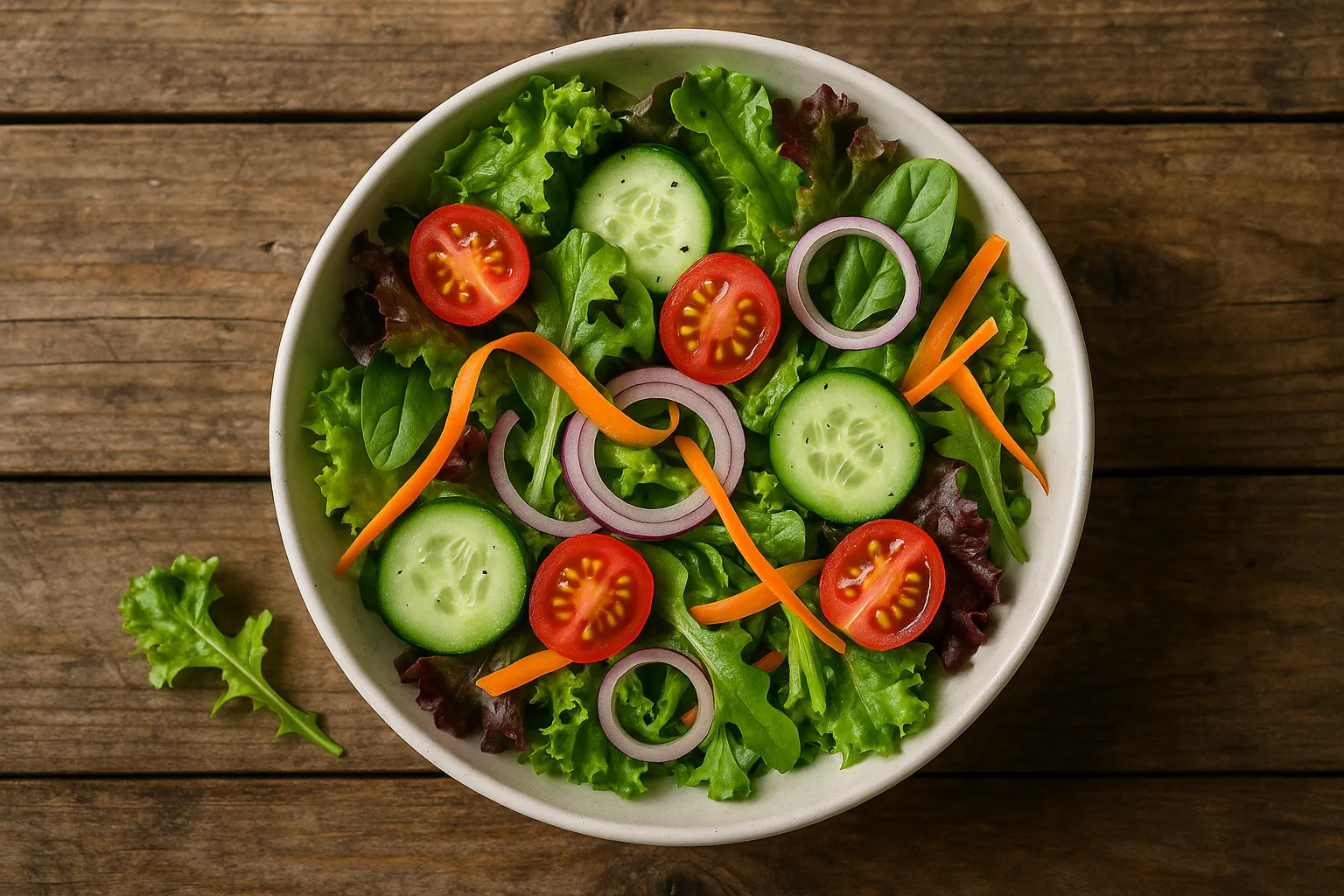
Quick Nutrition Facts
Per 100g (1 Medium Bowl)
| Nutrient | Amount |
|---|---|
| Calories | 30 kcal |
| Protein | 2g |
| Carbohydrates | 6g |
| Fiber | 2.5g |
| Sugars | 2g |
| Fat | 0.3g |
| Vitamin A | 550 IU |
| Vitamin C | 15mg |
| Vitamin K | 85mcg |
| Folate | 45mcg |
Macronutrient Breakdown
 ChatGPT
  Claude
  AI Mode
  Perplexity
NUTRITIONIST INSIGHT
Salads offer maximum nutrition with minimal calories. The 2.5g fiber per 100g promotes gut health and fullness, while vitamins A, C, and K support immunity, vision, and bone health.
Myth Busters
MYTH #1: All Salads Are Healthy
TRUTH: Restaurant salads with creamy dressings, fried toppings, and cheese can contain 800+ calories. A basic green salad has only 30 calories per 100g. Choose olive oil vinaigrette and skip fried toppings for true health benefits.
MYTH #2: Salads Don't Keep You Full
TRUTH: Large salads with protein (chicken, chickpeas, eggs) provide volume and fiber that promote lasting fullness. Studies show people who eat salad before meals consume 11% fewer calories overall.
MYTH #3: Salads Lack Protein
TRUTH: While basic greens have 2g protein, adding grilled chicken (30g), boiled eggs (6g each), or chickpeas (9g per 100g) makes salads complete high-protein meals.
MYTH #4: You Need Dressing for Taste
TRUTH: Fresh salads with variety (tomatoes, cucumbers, peppers, herbs) offer natural flavor. Use lemon juice, balsamic vinegar, or minimal olive oil (1 tablespoon = 120 calories) instead of heavy dressings.
MYTH #5: Salads Cause Bloating
TRUTH: Only if you're not used to fiber or eat too quickly. Gradually increase vegetable intake and chew thoroughly to prevent gas and bloating.
MYTH #6: Raw Vegetables Are Hard to Digest
TRUTH: Raw vegetables in salads are rich in enzymes that aid digestion. Most people digest them well. Only those with IBS or specific conditions may need lightly steamed vegetables instead.
NutriScore by Health Goals
| Health Goal | NutriScore | Why This Score? |
|---|---|---|
| Weight Loss |  | Only 30 calories per 100g, high fiber for fullness, nutrient-dense. Unlimited portions for weight loss. |
| Muscle Gain |  | Provides vitamins and fiber but needs added protein (chicken, eggs, chickpeas) for muscle building. |
| Diabetes Management | | Very low GI (15), high fiber helps control blood sugar. Ideal for diabetes when paired with lean protein. |
| PCOS Management | | Low glycemic impact, anti-inflammatory properties, supports hormone balance with fiber and nutrients. |
| Pregnancy Nutrition | | Rich in folate (45mcg per 100g), vitamin K for bone health, fiber prevents constipation. Ensure thorough washing to avoid foodborne illness. |
| Viral/Flu Recovery | | Vitamins A and C boost immunity, easy to digest, hydrating with high water content. |
PERSONALIZED NUTRITION
Track your meals with NutriScan for personalized NutriScores based on your specific health goals!
Blood Sugar Response to Salad
Understanding how salads affect blood glucose helps demonstrate their benefits for metabolic health.
Typical Glucose Response Curve
This chart shows typical blood glucose response for general healthy individuals. Individual responses may vary. Not medical advice.
How Salad Stabilizes Blood Sugar
Eating salad before main meals reduces post-meal glucose spikes due to fiber content:
- 🥗 Fiber slows digestion - Delays glucose absorption from other foods
- 🥬 Low glycemic load - Minimal direct impact on blood sugar (GI: 15)
- 🫒 Healthy fats (olive oil) - Further reduce glycemic response when added
- 🥚 Protein additions - Chicken, eggs, or chickpeas stabilize blood sugar longer
This combination makes salads ideal for diabetes management and weight loss.
Cultural Significance
Salads have evolved from simple vegetable dishes to global culinary staples reflecting regional ingredients and traditions.
In India:
- Traditional kachumber (cucumber, tomato, onion salad) served with meals
- Sprouted moong or chickpea salads for protein and fiber
- Raita variations (cucumber, boondi, mixed vegetable) cool the palate
- Modern salad bars in metros feature quinoa, avocado, and international greens
Global Impact:
- Mediterranean diet emphasizes salads with olive oil and fresh vegetables
- Caesar salad (Italy/Mexico), Greek salad (Greece), Niçoise (France) iconic worldwide
- Farm-to-table movement promotes seasonal, local salad ingredients
- Salad consumption linked to reduced chronic disease risk across populations
Compare & Substitute
Salad vs Similar Low-Calorie Options (Per 100g)
| Nutrient | 🥗 Mixed Salad | 🥒 Cucumber | 🍅 Tomato | 🥦 Broccoli (Raw) |
|---|---|---|---|---|
| Calories | 30 kcal | 15 kcal | 18 kcal | 34 kcal |
| Carbs | 6g | 3.6g | 3.9g | 7g |
| Fiber | 2.5g | 0.5g | 1.2g | 2.6g |
| Protein | 2g | 0.7g | 0.9g | 2.8g |
| Fat | 0.3g | 0.1g | 0.2g | 0.4g |
| Vitamin C | 15mg | 2.8mg | 14mg | 89mg |
| Vitamin K | 85mcg | 16mcg | 7.9mcg | 102mcg |
| Folate | 45mcg | 7mcg | 15mcg | 63mcg |
| Best For | Weight loss, full meals | Hydration, low-calorie snacking | Lycopene, heart health | Vitamin C, anti-cancer |
Frequently Asked Questions
Is salad good for weight loss?
Yes, salads are one of the best foods for weight loss. At only 30 calories per 100g with 2.5g fiber, they provide volume and nutrients with minimal calorie density.
Weight loss benefits: Large portions without guilt; fiber promotes fullness; displaces higher-calorie foods; rich in water content. A 300g salad bowl has only 90 calories but fills you up significantly.
Can diabetics eat salad?
Salads are ideal for diabetics with very low glycemic impact (GI 15). The high fiber content slows carbohydrate absorption from other foods eaten at the same meal.
Tips for diabetics:
- Eat salad before or with main meals to reduce overall glucose spike
- Add lean protein (grilled chicken, fish) for balanced blood sugar
- Use olive oil and vinegar dressing, not high-sugar options
- Include variety of colorful vegetables for maximum nutrients
Always consult your healthcare provider for personalized advice.
How much protein is in a salad?
A basic green salad contains about 2g protein per 100g. This is minimal, so add protein sources to make it a complete meal:
Protein boosters: Grilled chicken breast (30g per 100g), boiled eggs (6g each), chickpeas (9g per 100g), grilled tofu (8g per 100g), cottage cheese/paneer (11g per 100g).
What are the main health benefits of salads?
Key Benefits:
- Weight Management: High volume, low calories, promotes fullness
- Digestive Health: 2.5g fiber per 100g supports gut health and regularity
- Heart Health: Antioxidants, potassium, and fiber reduce cardiovascular risk
- Blood Sugar Control: Low GI, high fiber stabilizes glucose levels
- Immune Support: Vitamins A and C strengthen immune function
- Bone Health: Vitamin K essential for bone density and strength
When is the best time to eat salad?
Depends on your goal:
- Weight Loss: Start lunch and dinner with salad to reduce overall meal calories by 11%. Eat before main course.
- Diabetes: Before main meals to lower post-meal glucose spikes.
- Digestive Health: With meals to aid digestion with fiber and enzymes.
- General Health: Daily at any meal; consistency matters most.
PRO TIP
Eating salad first ensures you consume vegetables even if you get full during the meal.
What makes a salad unhealthy?
Calorie bombs to avoid:
- Heavy dressings: Ranch, caesar, blue cheese (100-150 cal per 2 tbsp)
- Fried toppings: Croutons, fried noodles, bacon bits
- Excessive cheese: 100g cheese = 400 calories
- Processed meats: Salami, pepperoni, bacon
Healthy alternatives: Olive oil + balsamic vinegar (1:1 ratio); lemon juice; herbs and spices; small amounts of nuts or seeds; grilled chicken instead of fried.
How do I make salad more filling?
Add volume and protein:
- Protein: Grilled chicken, boiled eggs, chickpeas, paneer, tofu
- Healthy fats: Avocado slices, handful of nuts, olive oil dressing
- Complex carbs: Quinoa, brown rice, sweet potato cubes
- Variety: Mix different textures (crunchy, soft) and colors
Portion size: Aim for 300-500g total salad including proteins and toppings.
Can I eat salad every day?
Yes, daily salad consumption is highly beneficial. Studies show people who eat salads daily have higher vitamin and mineral intake, better weight management, and reduced chronic disease risk.
Daily salad tips: Rotate different greens (spinach, lettuce, arugula, kale); vary toppings for nutrient diversity; include different protein sources; ensure thorough washing to prevent foodborne illness.
Track your meals with NutriScan app to see how salads support your health goals.


Similar Nutritious Foods
4505 Chicharrones Classic Chili Salt
7 Eleven Japan Crispy Corn Cheese
Explore More Nutrition Tools & Resources
AI Calorie Counter App - Snap a Photo, Get Macros
AI Nutritionist App That Reads Your Logged Meals
Best Protein Supplements for Women
Bulking Meal Plan App That Sets Your Surplus
ChatGPT Calorie Counter Alternative That Keeps the Total
ChatGPT Diet Plan Alternative That Tracks What You Eat
ChatGPT Weight Loss Coach Alternative With a Food Log
Fast Food Calorie Counter App That Reads the Tray
Free Calorie Tracker App with AI Photo Scans | NutriScan
Indian Diet Plan App With Veg and Non Veg Meals
Indian Food Calorie Calculator - Get Instant Nutrition Facts for Desi Meals — 2026
Intermittent Fasting for Women, Timer and Meal Log App
Intermittent Fasting Tracker App - Free Fasting Timer
Macro Tracker App That Fills the Numbers From a Photo
Mediterranean Diet Meal Plan App That Counts the Oil
Micronutrient Tracker App for Vitamins and Minerals
MyFitnessPal Alternative That Stays Free | NutriScan
NutriScore App: A Free Grade on Every Meal | NutriScan
Nutrition Label Scanner App for the Amount You Ate
Second Trimester Protein Guide
Vegetarian Meal Plan App With a Protein Target
Voice Calorie Counter - Speak to Track Meals Hands-Free
Water and Calorie Tracker App - Free Water Log