Satay (Grilled Skewers): Calories, Nutrition and Health Benefits
Southeast Asia's beloved grilled meat skewers marinated in aromatic spices, served with rich peanut sauce for a protein-packed meal.
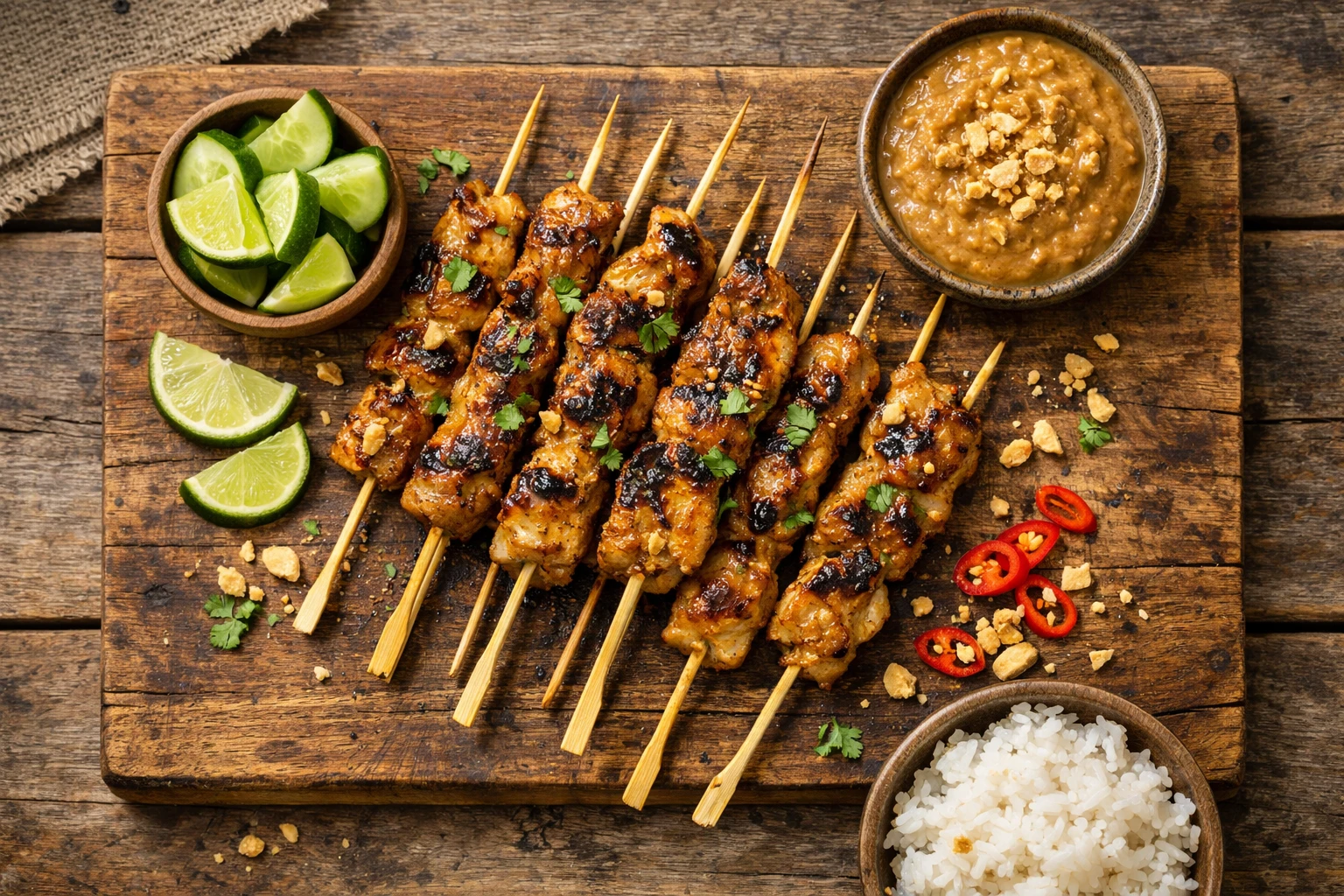
Quick Nutrition Facts
Per 3 Chicken Skewers (120g with sauce)
| Nutrient | Amount |
|---|---|
| Calories | 250 kcal |
| Protein | 22g |
| Carbohydrates | 8g |
| Fiber | 2g |
| Sugars | 4g |
| Fat | 15g |
| Saturated Fat | 3g |
| Sodium | 420mg |
| Iron | 1.8mg |
| Zinc | 2.2mg |
Macronutrient Breakdown
 ChatGPT
  Claude
  AI Mode
  Perplexity
NUTRITIONIST INSIGHT
Satay provides high-quality protein from grilled lean meat with aromatic turmeric, lemongrass, and galangal marinades that deliver anti-inflammatory compounds. The grilling method preserves protein quality while minimizing added fats compared to deep-frying.
Myth Busters
MYTH #1: Satay Is Too High in Fat to Be Healthy
TRUTH: Chicken satay without sauce contains only 5-7g fat per 3 skewers, mostly from marinade. The peanut sauce adds healthy monounsaturated fats and protein, similar to eating peanut butter. Control portions to 2 tablespoons of sauce (100 extra calories) for balanced nutrition.
MYTH #2: Grilled Meat Is Always Carcinogenic
TRUTH: While charring meat produces heterocyclic amines (HCAs), marinating in turmeric-based spices reduces HCA formation by up to 90%. Traditional satay marinades with turmeric, ginger, and lemongrass provide protective antioxidants. Avoid heavily charred pieces.
MYTH #3: Satay Is Just Street Food with No Nutritional Value
TRUTH: Satay delivers 22g complete protein per serving with all essential amino acids for muscle maintenance. The marinade provides curcumin (anti-inflammatory), lemongrass (antioxidants), and garlic (immune support). It's a balanced protein source comparable to grilled chicken breast.
MYTH #4: Peanut Sauce Makes Satay Unhealthy
TRUTH: Traditional peanut sauce (2 tablespoons) adds 100 calories but provides vitamin E, magnesium, and healthy fats that enhance nutrient absorption. The protein and fat from peanuts promote satiety. Choose homemade or low-sugar versions to avoid excess sugar (some commercial sauces add 8-10g sugar).
MYTH #5: Satay Is Too High in Sodium
TRUTH: Three chicken satay skewers contain 420mg sodium, which is 18% of daily value and moderate for a protein-rich meal. Compare to fried chicken (600-800mg) or deli meat (900mg+ per serving). Request low-sodium marinade or rinse excess sauce to reduce sodium further.
MYTH #6: All Satay Has the Same Calories
TRUTH: Chicken satay has 150 calories (without sauce), beef satay 180 calories, and lamb satay 200 calories per 3 skewers due to varying fat content. Tofu satay is lowest at 120 calories. Choose protein based on dietary goals and add sauce mindfully.
NutriScore by Health Goals
| Health Goal | NutriScore | Why This Score? |
|---|---|---|
| Weight Loss |  | 22g protein promotes fullness; 250 calories per serving is moderate. Limit peanut sauce to 1-2 tablespoons (50-100 extra calories) for calorie control. |
| Muscle Gain |  | High-quality protein (22g) with all essential amino acids supports muscle synthesis and recovery. Grilled preparation preserves leucine for protein synthesis. |
| Diabetes Management | | Low carbohydrates (8g), high protein stabilizes blood sugar. Peanut sauce's healthy fats slow glucose absorption. Avoid sweetened sauces. |
| PCOS Management | | High protein (22g) supports hormone balance; turmeric in marinade provides anti-inflammatory benefits. Moderate fat from peanut sauce; choose chicken over beef to reduce saturated fat. |
| Pregnancy Nutrition | | Rich in protein (22g) for fetal growth, iron (1.8mg) prevents anemia, zinc (2.2mg) supports immune function. Ensure meat is fully cooked. |
| Viral/Flu Recovery | | High protein aids immune recovery; turmeric and ginger in marinade provide antimicrobial and anti-inflammatory properties; easy to digest. |
PERSONALIZED NUTRITION
Track your meals with NutriScan for personalized NutriScores based on your specific health goals!
Blood Sugar Response to Satay
Understanding how satay affects blood glucose helps optimize meal timing and portion control.
Typical Glucose Response Curve
This chart shows typical blood glucose response for general healthy individuals. Individual responses may vary. Not medical advice.
How to Maintain Stable Blood Sugar
Pairing satay with fiber-rich vegetables and limiting sweetened sauces prevents glucose spikes:
- 🥒 Cucumber salad (acar) - Provides fiber and hydration without calories
- 🥜 Limit peanut sauce to 1-2 tablespoons - Reduces sugar intake from sweetened versions
- 🥗 Add side salad - Increases fiber to slow digestion
- 🌶️ Choose unsweetened chili sauce - Low-calorie, no sugar alternative
This combination provides sustained energy for 4-5 hours without blood sugar fluctuations.
Cultural Significance
Satay originated in Indonesia (Java) in the 19th century, influenced by Indian kebab traditions brought by Muslim traders.
In Southeast Asia:
- Indonesia: National dish; over 50 regional variants including Satay Padang (beef with spicy sauce) and Satay Lilit (minced fish wrapped around lemongrass)
- Malaysia: Street food staple; peanut sauce is thicker and sweeter than Indonesian versions
- Thailand: Known as "Sate" with coconut milk marinade and cucumber salad (acar)
- Singapore: Fusion variants include pork satay and modern twists like satay pizza
Global Impact:
- Recognized globally as iconic Southeast Asian street food
- Adapted to regional tastes: vegan tofu satay, lamb satay in Middle East, chicken satay in Western fast-casual restaurants
- Satay festivals held annually in Indonesia and Malaysia celebrating regional variants
Compare & Substitute
Satay vs Similar Grilled Proteins (Per 100g / ~3 skewers)
| Nutrient | 🍢 Chicken Satay | 🍗 Grilled Chicken Breast | 🥩 Beef Satay | 🍢 Tofu Satay |
|---|---|---|---|---|
| Calories | 208 kcal | 165 kcal | 250 kcal | 160 kcal |
| Carbs | 7g | 0g | 6g | 8g |
| Fiber | 2g | 0g | 1.5g | 2g |
| Protein | 18g | 31g | 20g | 12g |
| Fat | 12g | 3.6g | 17g | 10g |
| Iron | 1.5mg | 0.9mg | 2.8mg | 2.2mg |
| Flavor | Aromatic spices | Mild | Rich, savory | Plant-based |
| Best For | Balanced protein, flavor | Muscle gain, low-fat | Iron needs, higher calories | Vegan, lower calories |
Frequently Asked Questions
Is satay good for weight loss?
Satay can support weight loss when eaten in moderation. Three chicken satay skewers provide 22g protein promoting fullness with only 150 calories before sauce. Grilled preparation avoids deep-frying.
Best practices: Limit peanut sauce to 2 tablespoons (100 extra calories); choose chicken over beef or lamb; pair with cucumber salad or side vegetables; consume as lunch or dinner protein; avoid heavily sweetened sauces.
Can diabetics eat satay?
Diabetics can eat satay safely as it's low in carbohydrates (8g per serving with sauce). Grilled meat has minimal glycemic impact and provides protein that stabilizes blood sugar.
Tips for diabetics:
- Choose chicken or tofu satay (lower fat)
- Request reduced-sugar peanut sauce or limit to 1-2 tablespoons
- Pair with non-starchy vegetables like cucumber salad
- Monitor blood sugar if peanut sauce is sweetened (4-6g sugar typical)
- Best timing: lunch or early dinner
How much protein is in satay?
Three chicken satay skewers contain 22 grams of protein. Beef satay provides 24g protein per 3 skewers; tofu satay offers 12-15g plant-based protein. The high-quality protein contains all essential amino acids for muscle maintenance and recovery.
For muscle gain or high-protein diets, satay is an excellent choice comparable to grilled chicken breast but with added flavor from marinades.
Is satay healthier than fried chicken?
Yes, grilled satay is significantly healthier than fried chicken. Satay has 150 calories per 3 skewers (without sauce) versus 250-300 calories for equivalent fried chicken due to no breading or deep-frying oil.
Key differences: Grilling preserves protein quality; no trans fats from frying; 60-70% less saturated fat; marinades add antioxidants (turmeric, ginger, lemongrass) that protect against oxidation.
Can pregnant women eat satay?
Pregnant women can safely eat satay if the meat is thoroughly cooked to safe internal temperatures: chicken 165°F (74°C), beef 145°F (63°C). Avoid raw or undercooked meat.
Pregnancy benefits: High-quality protein (22g per serving) essential for fetal development; iron from beef or chicken prevents anemia; zinc supports immune function; turmeric provides anti-inflammatory benefits. Peanut sauce is safe unless there's peanut allergy.
What is the healthiest satay option?
Chicken satay is the leanest option at 150 calories and 22g protein per 3 skewers. For plant-based diets, tofu satay provides 12-15g protein with lower saturated fat.
Healthiest preparation: Choose grilled over charred to reduce carcinogenic compounds; request marinade without added sugar; opt for peanut sauce on the side and limit to 1-2 tablespoons; pair with cucumber salad as a low-calorie alternative to rice.
How many satay skewers should I eat per meal?
General Guidelines:
- 3-4 skewers - Light meal with vegetables (250-330 calories)
- 5-6 skewers - Full meal with rice or salad (400-500 calories)
- Diabetics: 3-4 skewers maximum with minimal sauce (8-12g carbs)
- Weight loss: 3-4 skewers with 1 tablespoon sauce and vegetables (300 calories)
- Athletes/muscle gain: 6-8 skewers with peanut sauce and rice (600-800 calories)
Track your meals with NutriScan app to see how satay fits your personal nutrition goals.
Can I make satay at home?
Yes, homemade satay is easy and allows ingredient control. Basic marinade: coconut milk, turmeric, lemongrass, garlic, coriander, cumin, and a touch of sugar. Marinate chicken or beef strips for 2-4 hours.
Grilling: Thread meat onto bamboo skewers (soaked in water); grill over medium-high heat 3-4 minutes per side until fully cooked; serve with homemade peanut sauce (peanut butter, coconut milk, soy sauce, lime juice, chili).


Similar Nutritious Fruits
4505 Chicharrones Classic Chili Salt
7 Eleven Japan Crispy Corn Cheese
Explore More Nutrition Tools & Resources
AI Calorie Counter App - Snap a Photo, Get Macros
AI Nutritionist App That Reads Your Logged Meals
Best Protein Supplements for Women
Bulking Meal Plan App That Sets Your Surplus
ChatGPT Calorie Counter Alternative That Keeps the Total
ChatGPT Diet Plan Alternative That Tracks What You Eat
ChatGPT Weight Loss Coach Alternative With a Food Log
Fast Food Calorie Counter App That Reads the Tray
Free Calorie Tracker App with AI Photo Scans | NutriScan
Indian Diet Plan App With Veg and Non Veg Meals
Indian Food Calorie Calculator - Get Instant Nutrition Facts for Desi Meals — 2026
Intermittent Fasting for Women, Timer and Meal Log App
Intermittent Fasting Tracker App - Free Fasting Timer
Macro Tracker App That Fills the Numbers From a Photo
Mediterranean Diet Meal Plan App That Counts the Oil
Micronutrient Tracker App for Vitamins and Minerals
MyFitnessPal Alternative That Stays Free | NutriScan
NutriScore App: A Free Grade on Every Meal | NutriScan
Nutrition Label Scanner App for the Amount You Ate
Second Trimester Protein Guide
Vegetarian Meal Plan App With a Protein Target
Voice Calorie Counter - Speak to Track Meals Hands-Free
Water and Calorie Tracker App - Free Water Log