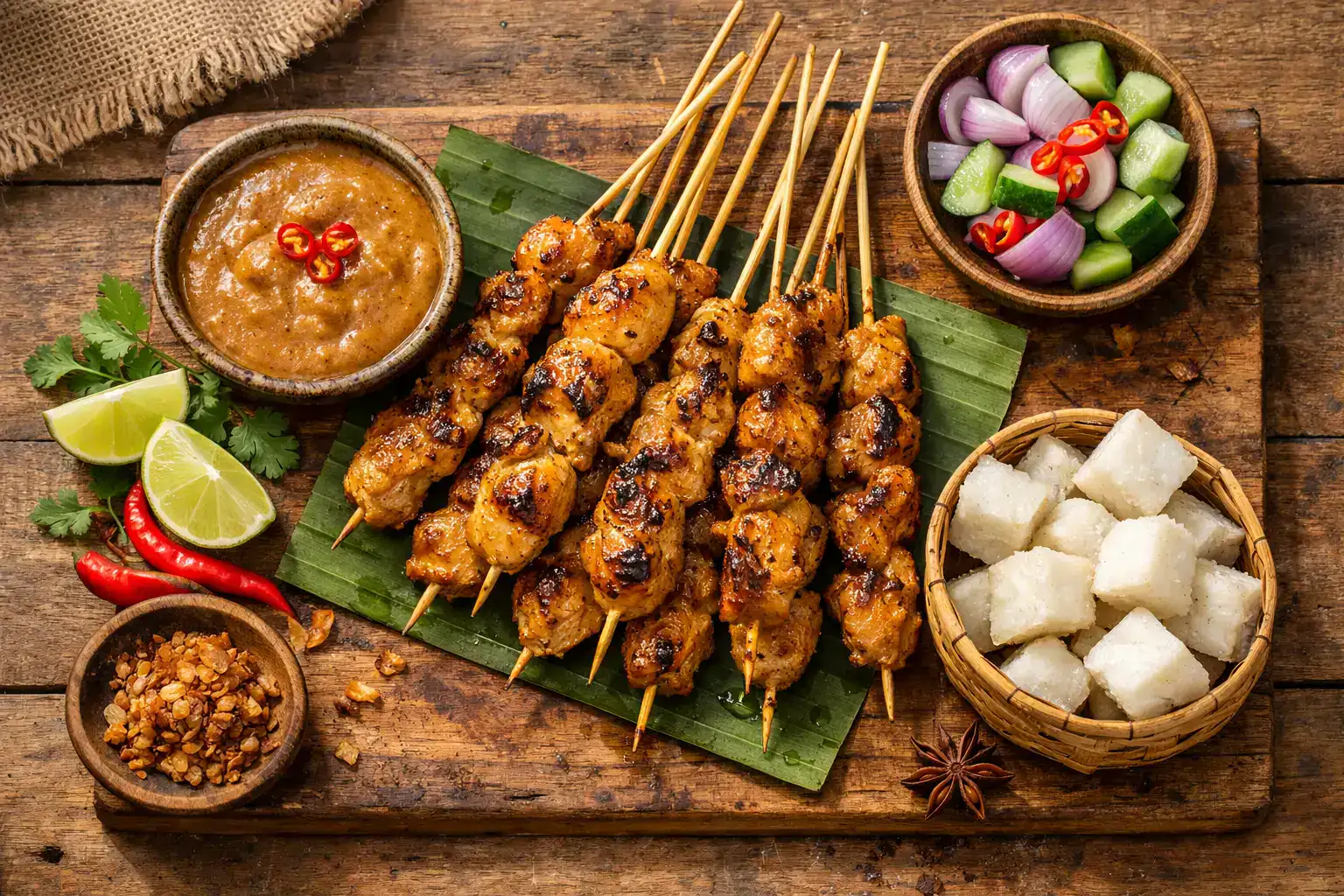
Sate Ayam: Calories, Nutrition and Health Benefits
Sate Ayam (Indonesian chicken satay) delivers 320 calories per serving (5 skewers, 150g) with an impressive 28g of complete protein. This traditional grilled dish combines marinated chicken thighs with aromatic spices and rich peanut sauce, creating a balanced meal that supports muscle building, weight management, and stable blood sugar levels.
Quick Nutrition Facts
A serving of sate ayam (5 skewers, 150g with peanut sauce) provides essential macronutrients and micronutrients. The grilled chicken offers high-quality protein while the traditional peanut sauce contributes healthy fats and additional plant protein.
| Nutrition Facts (per 5 skewers, 150g) | |
|---|---|
| Calories | 320 kcal |
| Protein | 28g (56% DV) |
| Total Fat | 18g (23% DV) |
| Saturated Fat | 4g (20% DV) |
| Carbohydrates | 12g (4% DV) |
| Dietary Fiber | 2g (7% DV) |
| Sugars | 6g |
| Sodium | 580mg (25% DV) |
| Vitamin B6 | 0.5mg (29% DV) |
| Niacin (B3) | 9mg (56% DV) |
| Selenium | 22mcg (40% DV) |
| Phosphorus | 220mg (18% DV) |
🔥 Grilled Excellence: High heat grilling creates flavorful char while reducing fat content compared to fried preparations
🥜 Protein Power: Combined chicken and peanut sauce deliver complete and complementary proteins for optimal muscle synthesis
🌿 Spice Benefits: Traditional turmeric marinade provides curcumin with anti-inflammatory properties
Macronutrient Distribution
Balanced protein-rich profile ideal for active lifestyles
 ChatGPT
  Claude
  AI Mode
  Perplexity
💡 NUTRITIONIST INSIGHT
Sate ayam's protein-to-calorie ratio (0.09g per calorie) ranks among the highest for street food dishes. The grilling method preserves nutrients while minimizing added fats. For optimal nutrition, request extra vegetables and ask for peanut sauce on the side to control portion sizes.
Myth Busters
MYTH #1: Peanut sauce makes sate ayam unhealthy
TRUTH: Peanut sauce provides healthy monounsaturated fats, plant protein, and vitamin E. The key is portion control—2-3 tablespoons (30-45ml) adds beneficial nutrients without excessive calories. Homemade versions with reduced sugar offer better nutritional profiles than commercial preparations.
MYTH #2: Grilled chicken creates harmful compounds
TRUTH: While high-temperature grilling can form compounds like heterocyclic amines (HCAs), traditional Indonesian marinades containing turmeric, garlic, and ginger significantly reduce HCA formation by up to 90% according to research on marinades and meat quality. The acidic and spice-rich marinade creates a protective barrier during cooking.
MYTH #3: Sate ayam is too high in sodium for daily consumption
TRUTH: A serving contains 580mg sodium (25% DV), which is moderate compared to many restaurant dishes. You can reduce sodium by 40% by using low-sodium soy sauce in marinades and limiting additional salt. The potassium from chicken and peanuts (350mg) helps balance sodium effects on blood pressure.
MYTH #4: Street food sate ayam lacks nutritional value
TRUTH: Properly prepared sate ayam delivers complete protein (all essential amino acids), B vitamins for energy metabolism, selenium for immune function, and healthy fats from peanuts. The turmeric marinade adds anti-inflammatory curcumin compounds. Choose vendors with visible hygiene practices and freshly grilled preparations.
NutriScore by Health Goals
 Weight Loss
High protein content promotes satiety with moderate calories. Control peanut sauce portions (2 tbsp max) and pair with cucumber salad. The 28g protein preserves muscle mass during calorie deficit. Best consumed as lunch or post-workout meal for optimal fat burning.
 Muscle Gain
Exceptional 28g complete protein per serving supports muscle protein synthesis. The leucine content (2.3g per serving) triggers anabolic pathways. Combine with rice or sweet potato for optimal post-workout recovery. The moderate fat aids testosterone production and nutrient absorption.
Diabetes ManagementLow carbohydrate content (12g) with high protein creates minimal blood sugar impact. [Protein-first eating patterns improve glycemic control](https://pmc.ncbi.nlm.nih.gov/articles/PMC4876745/) in type 2 diabetes. Choose sugar-free marinades and limit sweet peanut sauce. The 28g protein helps stabilize post-meal glucose levels when paired with vegetables.
 PCOS Management
High protein supports hormone balance and reduces insulin resistance. The moderate saturated fat (4g) requires portion awareness. Choose lean chicken breast cuts and limit peanut sauce to 2 tablespoons. Pair with low-GI vegetables like broccoli or cauliflower for optimal blood sugar control.
Pregnancy NutritionExcellent protein source (28g) supports fetal development and maternal tissue growth. B vitamins (especially B6 and niacin) aid neural development. Ensure chicken is cooked to 165°F (74°C) internal temperature to prevent foodborne illness. The selenium (40% DV) supports thyroid function during pregnancy. Choose fresh preparations and avoid street vendors without proper refrigeration.
Viral/Flu RecoveryHigh-quality protein supports immune system rebuilding and tissue repair. Selenium (40% DV) enhances immune response. The turmeric in traditional marinades provides anti-inflammatory curcumin. B vitamins support energy metabolism during recovery. The easily digestible grilled chicken requires minimal digestive effort.
🎯 PERSONALIZED NUTRITION
Track your sate ayam portions and blood sugar response using NutriScan's food logging features. The app's macro calculator helps optimize protein timing around workouts. Logging packaged peanut sauce or pre-marinated chicken under the Packaged Food tag, by photo, voice, or text, keeps tracking simple.
Blood Sugar Response
Understanding how sate ayam affects glucose levels helps optimize meal timing and portion control for metabolic health.
Typical Blood Glucose Response
Based on 5 skewers (150g) consumed by healthy adults
Smart Pairing Strategies
For Stable Blood Sugar:
- Eat protein first: Consuming protein before carbohydrates reduces postprandial glucose by 29% in type 2 diabetes
- Pair with fiber-rich vegetables like cucumber, tomato, and lettuce
- Add a small portion of brown rice (1/2 cup) instead of white rice
- Include fermented foods like pickled vegetables to slow carbohydrate absorption
Best Timing:
- Weight loss: Lunch (12-2 PM) for sustained afternoon energy and satiety
- Muscle gain: Post-workout within 60 minutes for optimal protein synthesis
- Diabetes: Mid-day meal when insulin sensitivity is higher, avoid late dinner
- General health: Any meal, ideally paired with vegetables and limited rice
Avoid:
- Large portions of sticky rice or ketupat (compressed rice cakes)
- Sweet beverages alongside the meal
- Eating sate ayam on empty stomach if prone to acid reflux
- Consuming excess peanut sauce (>3 tablespoons adds 120+ calories)
Medical Disclaimer: Blood glucose responses vary by individual metabolism, activity level, and health status. Consult healthcare providers for personalized diabetes management plans.
Cultural Significance
Sate ayam holds deep cultural roots across Indonesia and Southeast Asia, evolving from ancient Indonesian cooking traditions dating back over 1,000 years. The dish represents the fusion of indigenous grilling techniques with Arab and Indian spice trade influences.
In Indonesia, sate vendors (known as "tukang sate") are cultural icons found at street corners, markets, and celebrations. The rhythmic fanning of charcoal grills and aromatic smoke signal gathering points for communities. Regional variations showcase local ingredients—Javanese sate often uses sweet soy sauce (kecap manis), while Madura-style emphasizes black pepper and lime.
Indian cuisine features similar skewered traditions like seekh kebab and chicken tikka, though Indonesian sate distinguishes itself through smaller meat pieces, bamboo skewers, and the signature peanut sauce (bumbu kacang). The use of turmeric, lemongrass, and galangal reflects Indonesia's unique spice palette.
Religious and ceremonial contexts embrace sate ayam during Islamic Eid celebrations, Hindu temple festivals in Bali, and wedding feasts across the archipelago. The communal aspect of grilling and sharing skewers symbolizes hospitality and unity.
Globally, sate ayam has influenced Thai satay, Malaysian sate, and Vietnamese dishes, each adapting the concept while maintaining the core appeal of grilled, spiced meat on skewers. Modern adaptations include fusion versions in Western restaurants and health-conscious preparations using air fryers.
Compare & Substitute
| Food (per 100g) | Calories | Protein | Carbs | Fat | Fiber | Sodium | Key Nutrients |
|---|---|---|---|---|---|---|---|
| Sate Ayam | 213 | 19g | 8g | 12g | 1g | 387mg | B6 (29%), Niacin (56%), Selenium (40%) |
| Tandoori Chicken | 148 | 21g | 4g | 5g | 0.5g | 450mg | B6, Niacin, Iron |
| Grilled Chicken Breast | 165 | 31g | 0g | 4g | 0g | 74mg | B6, Niacin, Phosphorus |
| Chicken Tikka | 186 | 24g | 5g | 7g | 1g | 520mg | Protein, Vitamin A, Calcium |
| Grilled Tofu Satay | 158 | 15g | 6g | 9g | 2g | 290mg | Iron, Calcium, Magnesium |
Frequently Asked Questions
1. How many calories are in sate ayam with peanut sauce?
Five skewers (150g) with peanut sauce contain approximately 320 calories. Without sauce, the chicken alone provides about 180-200 calories. Each tablespoon of peanut sauce adds 40-50 calories.
2. Is sate ayam healthier than fried chicken?
Yes, grilled sate ayam contains 40-50% less fat than fried chicken. The grilling method reduces added oils while preserving protein content. Fried chicken typically contains 25-30g fat per 150g versus 18g in sate ayam.
3. Can I eat sate ayam on a low-carb or keto diet?
Yes, sate ayam fits low-carb and keto diets with 12g net carbs per serving. Skip rice accompaniments and limit peanut sauce to 2 tablespoons. The high protein (28g) and moderate fat (18g) support ketogenic macros.
4. How much protein do I need from sate ayam after a workout?
One serving (5 skewers, 28g protein) provides sufficient protein for muscle recovery after moderate workouts. For intense strength training, combine with additional protein sources to reach 0.25-0.4g protein per kg body weight.
5. Is the peanut sauce in sate ayam allergenic?
Yes, peanut sauce contains tree nuts (peanuts) and common allergens. Always inform vendors of allergies. Alternative sauces include sweet soy glaze (kecap manis), sambal (chili paste), or coconut-based sauces.
6. What is the best way to reheat leftover sate ayam?
Reheat in a 180°C (350°F) oven for 8-10 minutes or air fryer at 160°C (320°F) for 5 minutes. Avoid microwaving, which creates rubbery texture. Brush with reserved marinade before reheating for moisture.
7. How long does marinated chicken for sate ayam last in the refrigerator?
Marinated raw chicken stays safe 1-2 days refrigerated at 4°C (40°F) or below. For food safety, marinate no longer than 24 hours. Freeze marinated chicken up to 3 months. Always cook to 74°C (165°F) internal temperature.
Similar Nutritious Foods
4505 Chicharrones Classic Chili Salt
7 Eleven Japan Crispy Corn Cheese


Discover More Nutrition Content with NutriScan
AI Calorie Counter App - Snap a Photo, Get Macros
AI Nutritionist App That Reads Your Logged Meals
Best Protein Supplements for Women
Bulking Meal Plan App That Sets Your Surplus
ChatGPT Calorie Counter Alternative That Keeps the Total
ChatGPT Diet Plan Alternative That Tracks What You Eat
ChatGPT Weight Loss Coach Alternative With a Food Log
Fast Food Calorie Counter App That Reads the Tray
Free Calorie Tracker App with AI Photo Scans | NutriScan
Indian Diet Plan App With Veg and Non Veg Meals
Indian Food Calorie Calculator - Get Instant Nutrition Facts for Desi Meals — 2026
Intermittent Fasting for Women, Timer and Meal Log App
Intermittent Fasting Tracker App - Free Fasting Timer
Macro Tracker App That Fills the Numbers From a Photo
Mediterranean Diet Meal Plan App That Counts the Oil
Micronutrient Tracker App for Vitamins and Minerals
MyFitnessPal Alternative That Stays Free | NutriScan
NutriScore App: A Free Grade on Every Meal | NutriScan
Nutrition Label Scanner App for the Amount You Ate
Second Trimester Protein Guide
Vegetarian Meal Plan App With a Protein Target
Voice Calorie Counter - Speak to Track Meals Hands-Free
Water and Calorie Tracker App - Free Water Log
All nutritional data verified by registered dietitians and backed by peer-reviewed research
📱 Track Your Nutrition with NutriScan
Photograph your meals, log them instantly, and get personalized nutrition insights powered by AI.
Smart Food Recognition
Take a photo of your meal and get instant nutritional breakdown powered by advanced AI
Personalized Macro Goals
Set custom calorie and macro targets based on your fitness goals and dietary preferences
Detailed Analytics
Track your nutrition trends over time with beautiful charts and actionable insights