Sauerkraut: Calories, Nutrition and Health Benefits
Germany's probiotic powerhouse - fermented cabbage packed with gut-friendly bacteria, vitamin C, and fiber at just 27 calories per cup.
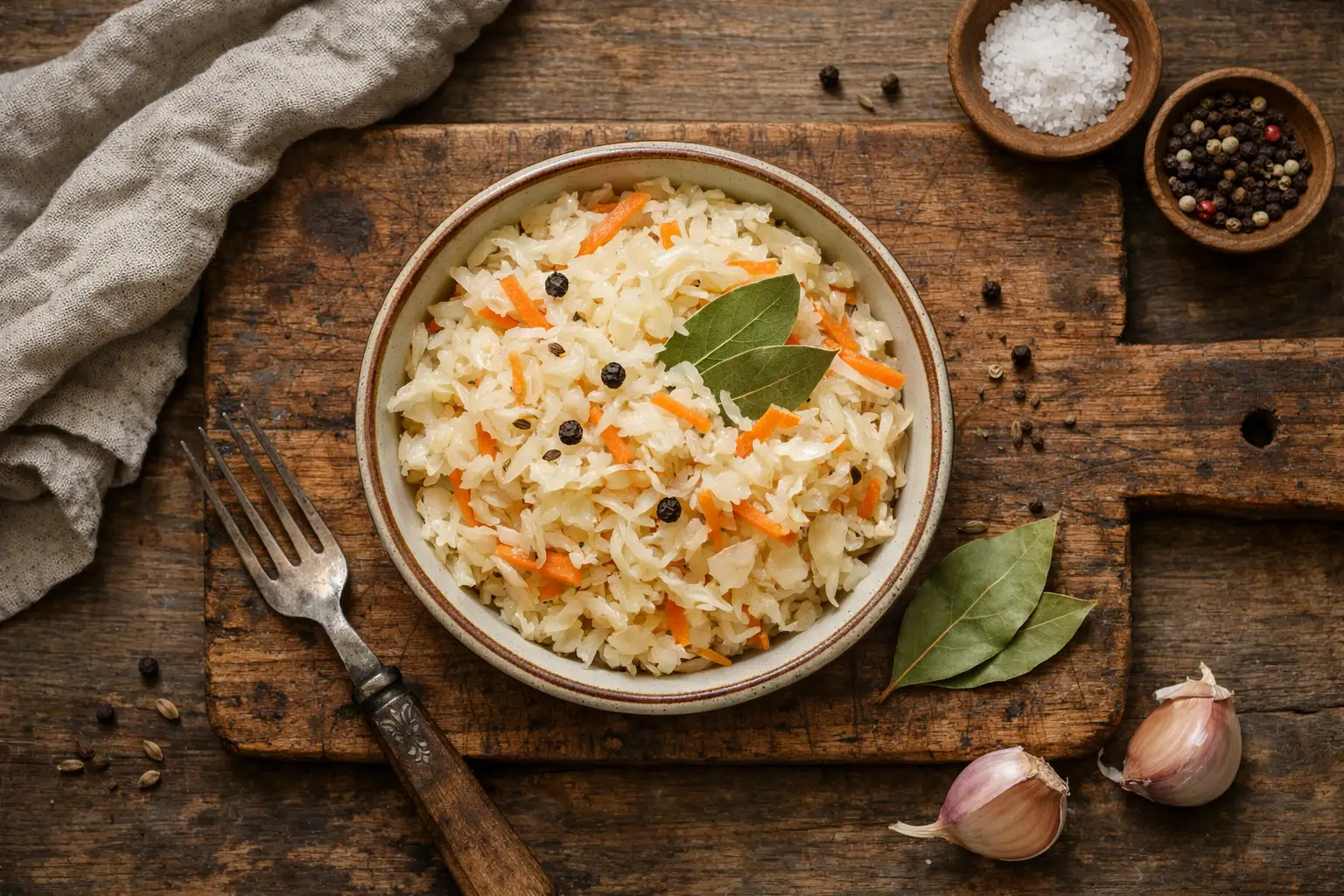
Quick Nutrition Facts
Per 1 Cup Sauerkraut (142g)
| Nutrient | Amount |
|---|---|
| Calories | 27 kcal |
| Protein | 1.3g |
| Carbohydrates | 6g |
| Fiber | 4g |
| Sugars | 1.8g |
| Fat | 0.2g |
| Sodium | 939mg |
| Vitamin C | 21mg |
| Vitamin K | 19mcg |
| Iron | 2mg |
Macronutrient Breakdown
 ChatGPT
  Claude
  AI Mode
  Perplexity
NUTRITIONIST INSIGHT
Sauerkraut is one of the most nutrient-dense foods per calorie. One cup provides 35% daily vitamin C, 24% vitamin K, and billions of live probiotics. Choose unpasteurized versions for maximum gut health benefits.
Myth Busters
MYTH #1: Sauerkraut Is Just Pickled Cabbage
TRUTH: Unlike pickles made with vinegar, sauerkraut is naturally fermented using salt and the cabbage's own bacteria. This lacto-fermentation creates live probiotics that support gut health, something vinegar-pickled vegetables cannot provide.
MYTH #2: All Sauerkraut Contains Probiotics
TRUTH: Only raw, unpasteurized sauerkraut contains live probiotics. Most store-bought sauerkraut is pasteurized, which kills beneficial bacteria. Look for refrigerated brands labeled "raw" or "unpasteurized" for probiotic benefits.
MYTH #3: Sauerkraut Is Too High in Sodium
TRUTH: While sauerkraut contains 939mg sodium per cup, typical serving sizes are 2-4 tablespoons (130-260mg sodium). The potassium and probiotics may actually help regulate blood pressure. Rinsing reduces sodium by 30-40%.
MYTH #4: Fermented Foods Are Unsafe
TRUTH: Properly fermented sauerkraut is extremely safe. The acidic environment (pH below 4.6) prevents harmful bacteria growth. Commercial sauerkraut has excellent safety records, though homemade requires proper technique.
MYTH #5: Sauerkraut Causes Bloating in Everyone
TRUTH: Initial bloating is common when starting any probiotic-rich food as your gut adjusts. Start with 1-2 tablespoons and gradually increase. Most people adapt within 1-2 weeks and experience improved digestion.
NutriScore by Health Goals
| Health Goal | NutriScore | Why This Score? |
|---|---|---|
| Weight Loss |  | Ultra-low 27 calories per cup, 4g fiber promotes satiety, probiotics may boost metabolism. |
| Muscle Gain |  | Low protein (1.3g), but excellent side dish. Probiotics improve nutrient absorption from protein sources. |
| Diabetes Management | | Very low GI (32), only 6g carbs per cup. Fermented foods may improve insulin sensitivity. |
| PCOS Management | | Low glycemic impact, probiotics support hormone balance, anti-inflammatory compounds. |
| Pregnancy Nutrition |  | Rich in folate and vitamin C. Commercial pasteurized sauerkraut is safe during pregnancy; avoid homemade due to contamination risk. |
| Viral/Flu Recovery | | 35% daily vitamin C for immunity, probiotics strengthen gut-immune axis, anti-inflammatory. |
PERSONALIZED NUTRITION
Track your meals with NutriScan for personalized NutriScores based on your specific health goals!
Blood Sugar Response to Sauerkraut
Understanding how sauerkraut affects your blood glucose can help you make informed dietary decisions.
Typical Glucose Response Curve
This chart shows typical blood glucose response for general healthy individuals. Individual responses may vary. Not medical advice.
How to Optimize Blood Sugar Benefits
Pairing sauerkraut with meals slows glucose absorption from other foods:
- 🥩 With protein meals - Probiotics improve protein digestion and absorption
- 🍞 With higher-carb foods - Fiber and acids slow carbohydrate breakdown
- 🥗 As a salad topping - Adds negligible calories with gut benefits
- 🌭 Traditional pairings - With sausages, the fiber slows fat absorption
This combination not only minimizes glucose spikes but also enhances nutrient absorption from your entire meal.
Cultural Significance
Sauerkraut has been a cornerstone of European food preservation for over 2,000 years.
In Germany:
- National dish served with bratwurst, pork knuckle, and beer
- Traditional preparation uses wooden barrels for months-long fermentation
- Each region has signature variations (Bavarian, Alsatian, Franconian)
- New Year's tradition: eating sauerkraut for good luck and prosperity
Global Variations:
- Korea: Kimchi - spicier, with gochugaru peppers
- Poland: Bigos (hunter's stew) combines sauerkraut with meats
- Russia: Shchi soup features sauerkraut as base ingredient
- USA: Reuben sandwich, hot dogs with sauerkraut
- Alsace: Choucroute garnie with sausages and potatoes
Compare & Substitute
Sauerkraut vs Similar Fermented Foods (Per 100g)
| Nutrient | 🥬 Sauerkraut | 🌶️ Kimchi | 🥒 Pickles | 🥛 Yogurt |
|---|---|---|---|---|
| Calories | 19 kcal | 15 kcal | 11 kcal | 59 kcal |
| Carbs | 4.3g | 2.4g | 2.3g | 3.6g |
| Fiber | 2.9g | 1.6g | 1.2g | 0g |
| Protein | 0.9g | 1.1g | 0.3g | 10g |
| Sodium | 661mg | 498mg | 1208mg | 36mg |
| Vitamin C | 15mg | 18mg | 1mg | 0.5mg |
| Probiotics | High (if raw) | High (if raw) | None (vinegar) | Moderate |
| Best For | Gut health, low-cal sides | Spice lovers, immunity | Quick condiment | Protein, calcium |
Frequently Asked Questions
Is sauerkraut good for gut health?
Yes, unpasteurized sauerkraut is excellent for gut health. It contains billions of live Lactobacillus bacteria that colonize your digestive tract, improving microbiome diversity and digestive function.
Key benefits:
- Increases beneficial gut bacteria populations
- May reduce IBS symptoms including bloating and constipation
- Supports the gut-immune connection
- Improves nutrient absorption
Can diabetics eat sauerkraut?
Absolutely. Sauerkraut is one of the best foods for diabetics with only 27 calories and 6g carbs per cup. The glycemic index of 32 means minimal blood sugar impact.
Why it helps:
- Very low carbohydrate content
- 4g fiber slows glucose absorption
- Probiotics may improve insulin sensitivity
- Adds flavor without calories to meals
How much sauerkraut should I eat daily?
Recommended intake:
- Beginners: 1-2 tablespoons daily
- Regular users: 1/4 to 1/2 cup daily
- Maximum: 1 cup daily (watch sodium)
Start small and increase gradually over 2 weeks to allow your gut to adjust. Too much too quickly can cause temporary gas and bloating.
Does cooking sauerkraut kill the probiotics?
Yes, heating above 115°F (46°C) destroys live probiotics. For gut health benefits, eat raw unpasteurized sauerkraut cold or at room temperature.
Cooking trade-offs:
- Cooked sauerkraut still provides fiber, vitamins, and flavor
- Traditional dishes like Reuben sandwiches use heated sauerkraut
- For probiotic benefits, add raw sauerkraut as a topping after cooking
Is sauerkraut safe during pregnancy?
Commercial pasteurized sauerkraut is safe during pregnancy and provides beneficial folate and vitamin C. Unpasteurized raw sauerkraut from reputable brands is also generally safe.
Precautions:
- Avoid homemade fermented foods during pregnancy
- Choose refrigerated commercial brands
- Check expiration dates and proper storage
- Start with small portions if new to fermented foods
How do I choose the best sauerkraut?
For probiotic benefits:
- Look for "raw," "unpasteurized," or "live cultures" labels
- Buy from refrigerated section (shelf-stable = pasteurized)
- Ingredients should be just cabbage and salt
- Avoid brands with vinegar, preservatives, or added sugars
For general use:
- Jarred shelf-stable works fine for cooking
- Canned sauerkraut is convenient but no probiotics


Similar Nutritious Foods
4505 Chicharrones Classic Chili Salt
7 Eleven Japan Crispy Corn Cheese
Explore More Nutrition Tools & Resources
AI Calorie Counter App - Snap a Photo, Get Macros
AI Nutritionist App That Reads Your Logged Meals
Best Protein Supplements for Women
Bulking Meal Plan App That Sets Your Surplus
ChatGPT Calorie Counter Alternative That Keeps the Total
ChatGPT Diet Plan Alternative That Tracks What You Eat
ChatGPT Weight Loss Coach Alternative With a Food Log
Fast Food Calorie Counter App That Reads the Tray
Free Calorie Tracker App with AI Photo Scans | NutriScan
Indian Diet Plan App With Veg and Non Veg Meals
Indian Food Calorie Calculator - Get Instant Nutrition Facts for Desi Meals — 2026
Intermittent Fasting for Women, Timer and Meal Log App
Intermittent Fasting Tracker App - Free Fasting Timer
Macro Tracker App That Fills the Numbers From a Photo
Mediterranean Diet Meal Plan App That Counts the Oil
Micronutrient Tracker App for Vitamins and Minerals
MyFitnessPal Alternative That Stays Free | NutriScan
NutriScore App: A Free Grade on Every Meal | NutriScan
Nutrition Label Scanner App for the Amount You Ate
Second Trimester Protein Guide
Vegetarian Meal Plan App With a Protein Target
Voice Calorie Counter - Speak to Track Meals Hands-Free
Water and Calorie Tracker App - Free Water Log