Sauteed Bok Choy: Calories, Nutrition and Health Benefits
A nutrient-dense Asian green packed with highly bioavailable calcium, vitamin K, and cancer-fighting glucosinolates — all in just 65 calories per cup.
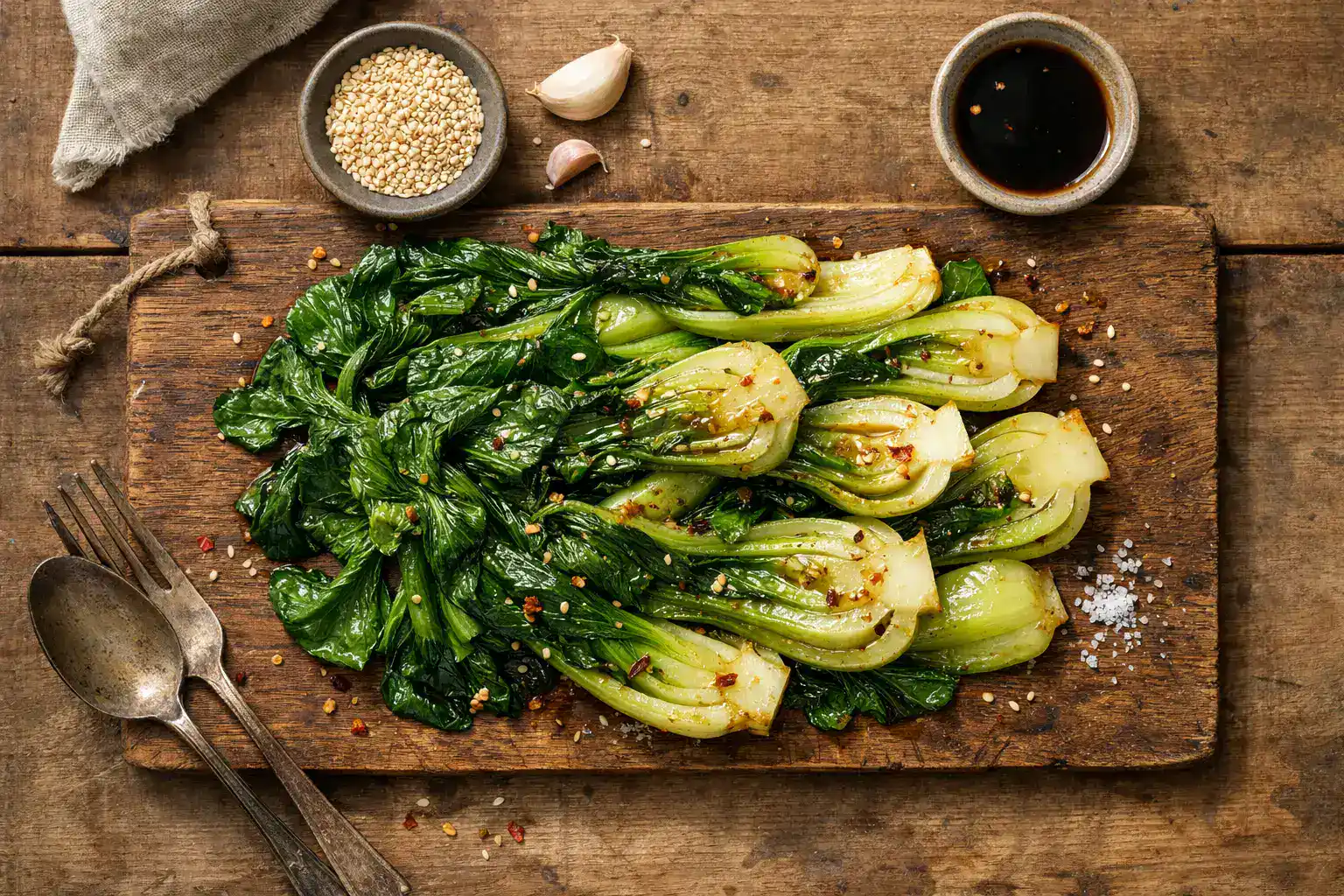
Quick Nutrition Facts
Per 1 Cup Sauteed Bok Choy (170g, with 1 tsp oil)
| Nutrient | Amount |
|---|---|
| Calories | 65 kcal |
| Protein | 3g |
| Carbohydrates | 6g |
| Fiber | 2g |
| Sugars | 2.5g |
| Fat | 3g |
| Calcium | 158mg |
| Vitamin K | 57.8mcg |
| Vitamin C | 44mg |
| Potassium | 631mg |
Macronutrient Breakdown
 ChatGPT
  Claude
  AI Mode
  Perplexity
NUTRITIONIST INSIGHT
Bok choy delivers 54% bioavailable calcium — far more absorbable than spinach (5%) or even milk (32%). Its low oxalate content means your body actually uses the calcium for bone health, making it one of the best plant-based calcium sources available.
Myth Busters
MYTH #1: Bok Choy Is Just Water with No Nutrition
TRUTH: While bok choy is 95% water, it packs remarkable nutrient density. One cup cooked provides 72% DV of vitamin C, 27% DV of vitamin A, and 158mg of highly bioavailable calcium. It's one of the most nutrient-dense foods per calorie.
MYTH #2: You Can't Get Enough Calcium from Vegetables
TRUTH: Bok choy has 54% calcium bioavailability — higher than milk (32%) and far higher than spinach (5%). Its low oxalate content (just 1mg per cup) means calcium is freely absorbed. Two cups of cooked bok choy provides more usable calcium than a glass of milk.
MYTH #3: Cruciferous Vegetables Are Bad for Thyroid
TRUTH: You'd need to eat extremely large amounts of raw bok choy daily to affect thyroid function. Cooking significantly reduces goitrogens. For people with normal thyroid function, sauteed bok choy is perfectly safe and beneficial.
MYTH #4: Sauteing Destroys All the Nutrients
TRUTH: Quick sauteing (2-3 minutes) actually preserves most nutrients and increases bioavailability of fat-soluble vitamins A and K. Only prolonged boiling significantly leaches water-soluble vitamins. Stir-frying is one of the best cooking methods for bok choy.
MYTH #5: Bok Choy and Spinach Are Nutritionally Identical
TRUTH: While both are leafy greens, bok choy has far superior calcium absorption (54% vs 5%) due to its low oxalate content. Bok choy also provides more vitamin C and potassium per calorie than spinach.
NutriScore by Health Goals
| Health Goal | NutriScore | Why This Score? |
|---|---|---|
| Weight Loss |  | Only 65 calories per cup with high water content and fiber. Extremely low calorie density makes it ideal for volume eating. |
| Muscle Gain |  | Good potassium (631mg/cup) prevents cramps, calcium supports muscle contraction. Pair with protein source for complete meal. |
| Diabetes Management | | Very low GI, minimal carbs (6g/cup). Cruciferous vegetables improve glycemic control and eating vegetables first reduces blood sugar spikes. |
| PCOS Management | | Anti-inflammatory glucosinolates, very low sugar, supports hormone balance through calcium and vitamin K. |
| Pregnancy Nutrition | | Rich in folate and calcium essential for fetal bone development, vitamin K for blood clotting, potassium prevents leg cramps. |
| Viral/Flu Recovery | | 72% DV vitamin C per cup boosts immunity, easy to digest, hydrating, and provides electrolytes for recovery. |
PERSONALIZED NUTRITION
Track your meals with NutriScan for personalized NutriScores based on your specific health goals!
Blood Sugar Response to Sauteed Bok Choy
Understanding how sauteed bok choy affects your blood glucose can help you make informed decisions about when and how to eat it.
Typical Glucose Response Curve
This chart shows typical blood glucose response for general healthy individuals. Individual responses may vary. Not medical advice.
How to Flatten the Spike
Eating vegetables before carbohydrates significantly reduces postprandial blood sugar spikes:
- 🧄 Garlic and sesame oil sauteed bok choy - Eat before rice or noodles to blunt glucose response
- 🥚 Paired with scrambled eggs - Protein and fat slow carb absorption
- 🥜 Topped with crushed peanuts or cashews - Healthy fats and fiber extend satiety
- 🍋 Finished with lemon juice - Vitamin C boosts iron absorption and adds beneficial acids
This combination not only minimizes glucose spikes but also maximizes nutrient absorption from the bok choy.
Cultural Significance
Bok choy (pak choi) has been cultivated in China for over 5,000 years, making it one of the oldest cultivated vegetables in the world.
In China & East Asia:
- Essential ingredient in Cantonese, Shanghainese, and Korean cuisine
- Symbolizes prosperity in Lunar New Year celebrations
- Baby bok choy prized as a premium variety in dim sum restaurants
- Used in Traditional Chinese Medicine for cooling properties and digestive health
In India:
- Growing popularity in Indo-Chinese fusion cuisine
- Cultivated in northeastern states (Sikkim, Meghalaya) and hill stations
- Used in Tibetan-influenced dishes in Himalayan regions
- Increasingly available in urban markets as health awareness grows
Global Impact:
- One of the most widely cultivated vegetables worldwide
- Grows year-round in temperate climates with fast 45-day harvest cycle
- Sustainable crop requiring less water than most leafy greens
- Pinterest trending +35% as home cooks discover quick Asian-style preparations
Compare & Substitute
Sauteed Bok Choy vs Similar Greens (Per 100g Cooked)
| Nutrient | 🥬 Bok Choy | 🥦 Broccoli | 🥬 Spinach | 🥬 Kale |
|---|---|---|---|---|
| Calories | 12 kcal | 35 kcal | 23 kcal | 28 kcal |
| Carbs | 1.8g | 7.2g | 3.8g | 5.6g |
| Fiber | 1g | 3.3g | 2.4g | 2g |
| Protein | 1.6g | 2.4g | 2.9g | 1.9g |
| Fat | 0.2g | 0.4g | 0.3g | 0.4g |
| Calcium | 93mg | 40mg | 136mg | 72mg |
| Ca Absorbed | ~54% | ~61% | ~5% | ~49% |
| Vitamin C | 26mg | 65mg | 10mg | 41mg |
| Best For | Calcium, low cal, quick cook | Fiber, sulforaphane, meal prep | Iron, folate (cook to reduce oxalates) | Vitamin K, antioxidants |
Frequently Asked Questions
How many calories are in sauteed bok choy?
One cup (170g) of sauteed bok choy contains approximately 65 calories when cooked with 1 teaspoon of oil. Without added oil, boiled bok choy has only 20 calories per cup. Even with a tablespoon of oil, a generous serving stays under 100 calories.
Calorie breakdown by cooking method:
- Raw: 9 calories per cup (70g)
- Boiled/steamed: 20 calories per cup (170g)
- Sauteed with 1 tsp oil: 65 calories per cup (170g)
- Stir-fried with sauce: 80-100 calories per cup
Is bok choy good for weight loss?
Bok choy is one of the best vegetables for weight loss. At only 13 calories per 100g raw, it provides exceptional volume for minimal calories.
Best practices: Use as a base for stir-fries instead of rice, eat 1-2 cups before your main meal, pair with lean protein for satiety, and choose steaming or light sauteing over deep-frying.
Is bok choy high in calcium?
Yes, bok choy is an outstanding source of bioavailable calcium. About 54% of its calcium is absorbed by the body, compared to only 5% from spinach and 32% from milk.
Tips for maximizing calcium:
- Cook lightly to concentrate nutrients (sauteing is ideal)
- Pair with vitamin D-rich foods for better absorption
- Two cups of cooked bok choy provides more usable calcium than a glass of milk
- Low oxalate content (1mg per cup) means no calcium-binding interference
Can diabetics eat sauteed bok choy?
Sauteed bok choy is excellent for diabetics. It has a very low glycemic index, minimal carbohydrates (6g per cup cooked), and research shows cruciferous vegetables improve glycemic control.
Tips for diabetics:
- Eat bok choy before carbohydrate-rich foods to reduce glucose spikes
- Sautee with healthy fats (olive oil, sesame oil) for slower absorption
- Combine with protein for balanced blood sugar response
- Include in daily meals — no portion restriction needed for most diabetics
What are the main health benefits of bok choy?
Key Benefits:
- Bone Health: 54% bioavailable calcium + vitamin K strengthens bones and prevents osteoporosis
- Cancer Prevention: Glucosinolates and sulforaphane have demonstrated anti-cancer properties
- Heart Health: Potassium (631mg/cup) regulates blood pressure, folate reduces homocysteine
- Immune Support: 72% DV vitamin C per cup boosts immune function
- Anti-Inflammatory: Glucosinolates reduce chronic inflammation markers
- Eye Health: Beta-carotene and vitamin A protect vision and prevent macular degeneration
How should I cook bok choy to retain nutrients?
Best cooking methods (ranked by nutrient retention):
- Stir-fry/sautee (2-3 minutes): Best overall — preserves vitamins, enhances fat-soluble nutrient absorption
- Steaming (3-4 minutes): Excellent for water-soluble vitamins, no added calories
- Raw in salads: Maximum vitamin C but lower calcium bioavailability
- Boiling (avoid): Leaches up to 40% of water-soluble vitamins into water
Pro tip: Add bok choy last in stir-fries. A squeeze of lemon juice after cooking boosts iron absorption.
How much bok choy should I eat per day?
General Guidelines:
- 1-2 cups cooked daily — Most people, for calcium and vitamin K benefits
- 2-3 cups daily — Pregnancy, bone health focus, or weight loss goals
- Unlimited raw — Safe for snacking, extremely low calorie
Caution: People on blood-thinning medications (warfarin) should maintain consistent vitamin K intake. Consult your healthcare provider about appropriate portions.
Track your meals with NutriScan app to see how bok choy fits your personal nutrition goals.


Similar Nutritious Foods
4505 Chicharrones Classic Chili Salt
7 Eleven Japan Crispy Corn Cheese
Explore More Nutrition Tools & Resources
AI Calorie Counter App - Snap a Photo, Get Macros
AI Nutritionist App That Reads Your Logged Meals
Best Protein Supplements for Women
Bulking Meal Plan App That Sets Your Surplus
ChatGPT Calorie Counter Alternative That Keeps the Total
ChatGPT Diet Plan Alternative That Tracks What You Eat
ChatGPT Weight Loss Coach Alternative With a Food Log
Fast Food Calorie Counter App That Reads the Tray
Free Calorie Tracker App with AI Photo Scans | NutriScan
Indian Diet Plan App With Veg and Non Veg Meals
Indian Food Calorie Calculator - Get Instant Nutrition Facts for Desi Meals — 2026
Intermittent Fasting for Women, Timer and Meal Log App
Intermittent Fasting Tracker App - Free Fasting Timer
Macro Tracker App That Fills the Numbers From a Photo
Mediterranean Diet Meal Plan App That Counts the Oil
Micronutrient Tracker App for Vitamins and Minerals
MyFitnessPal Alternative That Stays Free | NutriScan
NutriScore App: A Free Grade on Every Meal | NutriScan
Nutrition Label Scanner App for the Amount You Ate
Second Trimester Protein Guide
Vegetarian Meal Plan App With a Protein Target
Voice Calorie Counter - Speak to Track Meals Hands-Free
Water and Calorie Tracker App - Free Water Log