Sautéed Vegetables: Calories, Nutrition and Health Benefits
Colorful, nutrient-dense vegetables lightly cooked to perfection - low calorie, high fiber, packed with vitamins for optimal health.
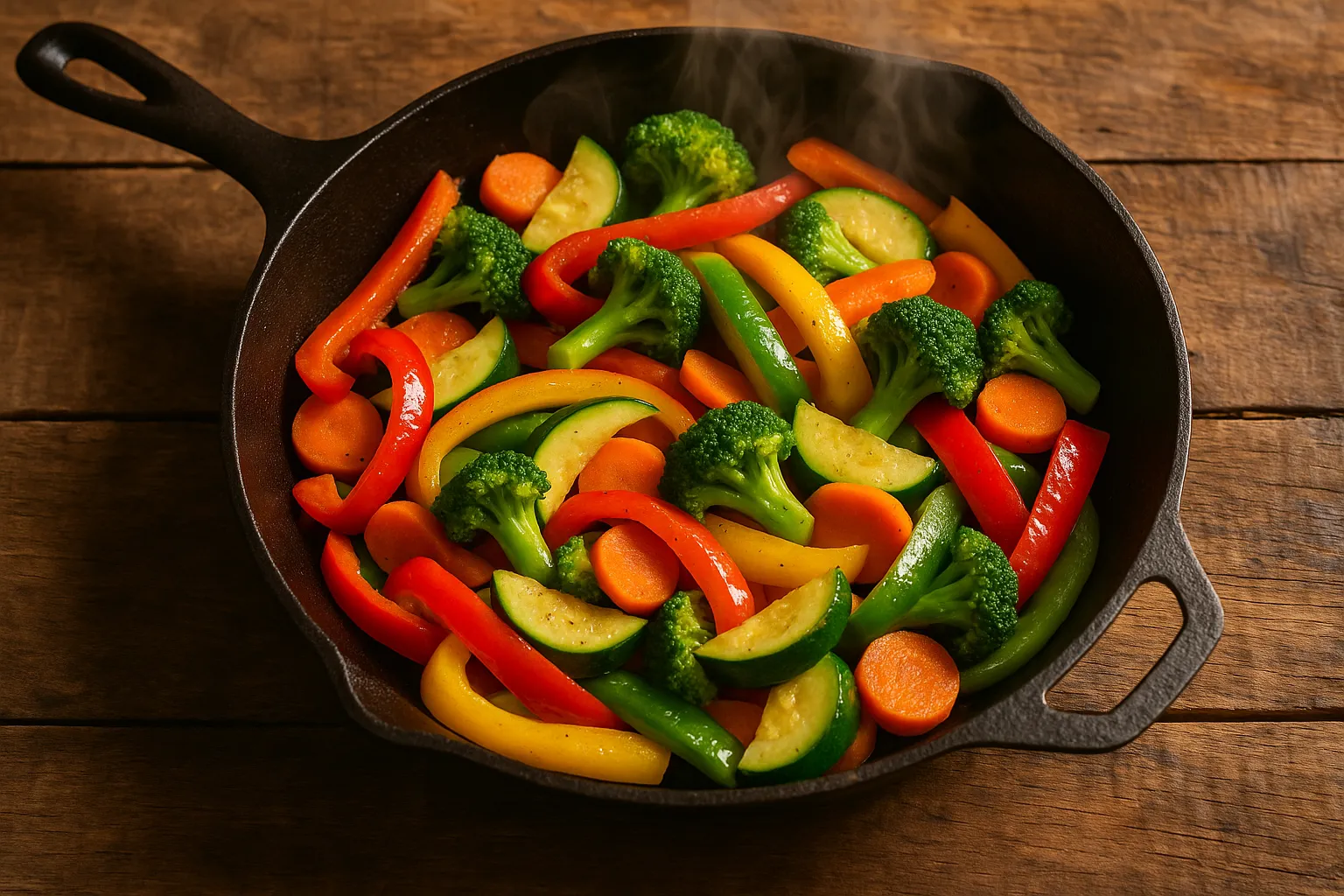
Quick Nutrition Facts
Per 1 Cup (145g) Mixed Sautéed Vegetables
| Nutrient | Amount |
|---|---|
| Calories | 67 kcal |
| Protein | 2.3g |
| Carbohydrates | 11g |
| Fiber | 3.5g |
| Sugars | 4.2g |
| Fat | 2.3g |
| Vitamin A | 2415 IU |
| Vitamin C | 48mg |
| Potassium | 387mg |
| Folate | 56mcg |
Macronutrient Breakdown
 ChatGPT
  Claude
  AI Mode
  Perplexity
NUTRITIONIST INSIGHT
Sautéing with a small amount of healthy fat enhances absorption of fat-soluble vitamins A, E, and K by up to 400%. Quick cooking preserves 70-90% of nutrients.
Myth Busters
MYTH #1: Cooked Vegetables Lose All Nutrients
TRUTH: Sautéing preserves 70-90% of nutrients when done quickly. Some nutrients like lycopene and beta-carotene become more bioavailable with cooking. Vitamin C reduces 10-30%, but overall nutrition remains excellent.
MYTH #2: You Need Lots of Oil to Sauté
TRUTH: Only 1-2 tsp of oil per serving is needed. Use a non-stick pan or small amount of water to prevent sticking. Excess oil adds unnecessary calories without nutritional benefit.
MYTH #3: All Cooking Methods Are Equal
TRUTH: Sautéing and air-frying retain more nutrients than boiling or deep frying. Boiling leaches water-soluble vitamins into cooking water. Sautéing keeps nutrients in the vegetables.
MYTH #4: Sautéed Vegetables Are High in Calories
TRUTH: At 67 calories per cup with minimal oil, sautéed vegetables are one of the lowest-calorie cooked foods. The fat content (2.3g) is mostly from healthy cooking oil, not the vegetables themselves.
MYTH #5: Frozen Vegetables Are Less Nutritious
TRUTH: Frozen vegetables are flash-frozen at peak ripeness, preserving nutrients. They're equally nutritious as fresh for sautéing. Skip the thawing step - sauté directly from frozen for best texture.
MYTH #6: You Should Sauté All Vegetables the Same Way
TRUTH: Different vegetables require different cooking times. Hard vegetables (carrots, broccoli) need 7-10 minutes; soft vegetables (peppers, zucchini) need 3-5 minutes. Add vegetables in stages for even cooking.
NutriScore by Health Goals
| Health Goal | NutriScore | Why This Score? |
|---|---|---|
| Weight Loss |  | Only 67 calories per cup, high fiber (3.5g) promotes fullness, low energy density. Fill half your plate with sautéed vegetables for satiety. |
| Muscle Gain |  | Provides vitamins and minerals for recovery but limited protein (2.3g). Pair with protein source. Potassium (387mg) prevents muscle cramps. |
| Diabetes Management | | Low glycemic index, 3.5g fiber slows glucose absorption. Non-starchy vegetables have minimal blood sugar impact. Ideal for unlimited portions. |
| PCOS Management | | Low calorie, high fiber aids weight management. Antioxidants reduce inflammation. Non-starchy vegetables don't spike insulin. Perfect base for PCOS-friendly meals. |
| Pregnancy Nutrition | | Rich in folate (56mcg), vitamin A, vitamin C essential for fetal development. Fiber prevents pregnancy constipation. Safe for daily consumption. |
| Viral/Flu Recovery | | Vitamin C (48mg) boosts immunity, vitamin A supports mucous membranes, antioxidants fight infection. Easy to digest, hydrating, gentle on stomach. |
PERSONALIZED NUTRITION
Track your meals with NutriScan for personalized NutriScores based on your specific health goals!
Cultural Significance
Sautéing vegetables is a universal cooking technique found across all cuisines, adapted to regional ingredients and flavor profiles.
In India:
- Bhaji, sabji, and subzi - everyday vegetable sautés with spices
- Tadka (tempering) adds cumin, mustard seeds, curry leaves to vegetables
- Regional variations: Bengali posto (poppy seed), Punjabi bhuna masala, South Indian poriyal
- Served with roti, rice, or dal as part of thali
Global Variations:
- France: Sautéed vegetables with herbs de Provence
- China: Stir-fry with ginger, garlic, soy sauce
- Italy: Soffritto base (onions, celery, carrots)
- Mexico: Rajas (sautéed peppers and onions)
Modern Health Movement:
- Mediterranean diet emphasizes sautéed vegetables in olive oil
- Plant-based eating promotes vegetables as meal centerpiece
- Meal prep: batch-sautéed vegetables for week's meals
Compare & Substitute
Sautéed Vegetables vs Other Cooking Methods (Per 1 Cup / 145g)
| Nutrient | 🥘 Sautéed Vegetables | 🍲 Steamed Vegetables | 🥗 Raw Vegetables | 🍳 Deep Fried Vegetables |
|---|---|---|---|---|
| Calories | 67 kcal | 45 kcal | 35 kcal | 185 kcal |
| Protein | 2.3g | 2.5g | 2.1g | 2.2g |
| Carbs | 11g | 10g | 8g | 18g |
| Fiber | 3.5g | 3.8g | 3.2g | 3.1g |
| Fat | 2.3g | 0.3g | 0.2g | 12g |
| Vitamin C | 48mg (70-90% retained) | 55mg (80-95% retained) | 65mg (100%) | 35mg (40-60% retained) |
| Vitamin A | 2415 IU (enhanced) | 2200 IU | 1800 IU | 1950 IU |
| Best For | Flavor, nutrient absorption, meal prep | Maximum vitamin retention | Maximum enzymes, raw diets | Occasional treat, texture contrast |
Frequently Asked Questions
Are sautéed vegetables good for weight loss?
Yes, sautéed vegetables are excellent for weight loss. At only 67 calories per cup with 3.5g fiber, they provide high volume with minimal calories. The fiber promotes fullness and reduces overall calorie intake.
Best practices: Use 1-2 tsp olive oil per serving (adds 40-80 calories); fill half your plate with sautéed vegetables; choose non-starchy vegetables (peppers, broccoli, zucchini, mushrooms); avoid heavy sauces or cheese toppings. Aim for 2-3 cups daily as part of weight loss plan.
Can diabetics eat sautéed vegetables?
Sautéed non-starchy vegetables are ideal for diabetics with minimal blood sugar impact. Low glycemic index, only 11g carbs per cup, and 3.5g fiber that slows glucose absorption make them perfect for unlimited portions.
Best vegetables for diabetes: Broccoli, cauliflower, bell peppers, zucchini, mushrooms, green beans, asparagus. Limit: Starchy vegetables (carrots, peas, corn) to 1/2 cup per meal. Fiber and antioxidants improve insulin sensitivity.
What are the main health benefits of sautéed vegetables?
Key Benefits:
- Weight Management: Low calories (67 per cup), high fiber (3.5g) promote satiety
- Digestive Health: Fiber supports regular bowel movements and gut bacteria
- Heart Health: Potassium (387mg), antioxidants reduce blood pressure and inflammation
- Immune Support: Vitamins A (2415 IU) and C (48mg) boost immune function
- Eye Health: Beta-carotene and lutein protect vision
- Cancer Prevention: Antioxidants and phytonutrients reduce oxidative stress
What's the best oil for sautéing vegetables?
Extra virgin olive oil is best for sautéing vegetables with heart-healthy monounsaturated fats, antioxidants, and suitable smoke point (375°F/190°C). Use 1-2 tsp per serving.
Other good options:
- Avocado oil: Higher smoke point (520°F), neutral flavor, expensive
- Grapeseed oil: High smoke point (420°F), mild flavor, omega-6 fatty acids
- Coconut oil: Medium smoke point (350°F), adds flavor, saturated fat (use sparingly)
Avoid: Butter (burns easily), vegetable oil blends (highly processed), excessive amounts of any oil.
How long should I sauté vegetables?
Cooking times vary by vegetable:
5-10 minutes over medium-high heat for tender-crisp texture. Quick cooking preserves vitamins and prevents mushiness.
Hard vegetables (7-10 minutes): Carrots, broccoli, cauliflower, green beans - add first Medium vegetables (5-7 minutes): Bell peppers, onions, mushrooms - add second Soft vegetables (3-5 minutes): Zucchini, spinach, tomatoes - add last
Tips: Don't overcrowd pan; cut vegetables uniformly; cook in batches if needed; vegetables should be bright-colored, not grey or mushy.
Do sautéed vegetables lose nutrients?
Sautéing preserves 70-90% of nutrients when done quickly over medium-high heat. Water-soluble vitamins (C, B vitamins) reduce 10-30%, but fat-soluble vitamins (A, E, K) absorption improves up to 400% with added fat.
Comparison:
- Sautéing: 70-90% nutrient retention, enhanced fat-soluble vitamin absorption
- Steaming: 80-95% retention, best for vitamin C
- Boiling: 40-70% retention (vitamins leach into water)
- Deep frying: 40-60% retention, high calories
Best practice: Use minimal oil, quick cooking time, don't overcook to preserve maximum nutrients while improving bioavailability.
Can I meal prep sautéed vegetables?
Yes, sautéed vegetables store well for 3-5 days refrigerated in airtight containers. They're perfect for meal prep.
Meal prep tips:
- Sauté vegetables until just tender-crisp (slightly undercooked)
- Cool completely before refrigerating
- Store in glass containers for best freshness
- Reheat in skillet or microwave (1-2 minutes)
- Add fresh herbs or lemon juice before serving
Best vegetables for meal prep: Bell peppers, broccoli, zucchini, mushrooms, green beans. Avoid: Leafy greens (spinach, kale) - they wilt and become slimy. Add these fresh when serving.


Similar Nutritious Foods
4505 Chicharrones Classic Chili Salt
7 Eleven Japan Crispy Corn Cheese
Explore More Nutrition Tools & Resources
AI Calorie Counter App - Snap a Photo, Get Macros
AI Nutritionist App That Reads Your Logged Meals
Best Protein Supplements for Women
Bulking Meal Plan App That Sets Your Surplus
ChatGPT Calorie Counter Alternative That Keeps the Total
ChatGPT Diet Plan Alternative That Tracks What You Eat
ChatGPT Weight Loss Coach Alternative With a Food Log
Fast Food Calorie Counter App That Reads the Tray
Free Calorie Tracker App with AI Photo Scans | NutriScan
Indian Diet Plan App With Veg and Non Veg Meals
Indian Food Calorie Calculator - Get Instant Nutrition Facts for Desi Meals — 2026
Intermittent Fasting for Women, Timer and Meal Log App
Intermittent Fasting Tracker App - Free Fasting Timer
Macro Tracker App That Fills the Numbers From a Photo
Mediterranean Diet Meal Plan App That Counts the Oil
Micronutrient Tracker App for Vitamins and Minerals
MyFitnessPal Alternative That Stays Free | NutriScan
NutriScore App: A Free Grade on Every Meal | NutriScan
Nutrition Label Scanner App for the Amount You Ate
Second Trimester Protein Guide
Vegetarian Meal Plan App With a Protein Target
Voice Calorie Counter - Speak to Track Meals Hands-Free
Water and Calorie Tracker App - Free Water Log