Schnitzel: Calories, Nutrition and Health Benefits
A beloved German classic featuring tender meat in a crispy golden breading, delivering high-quality protein and essential B vitamins.
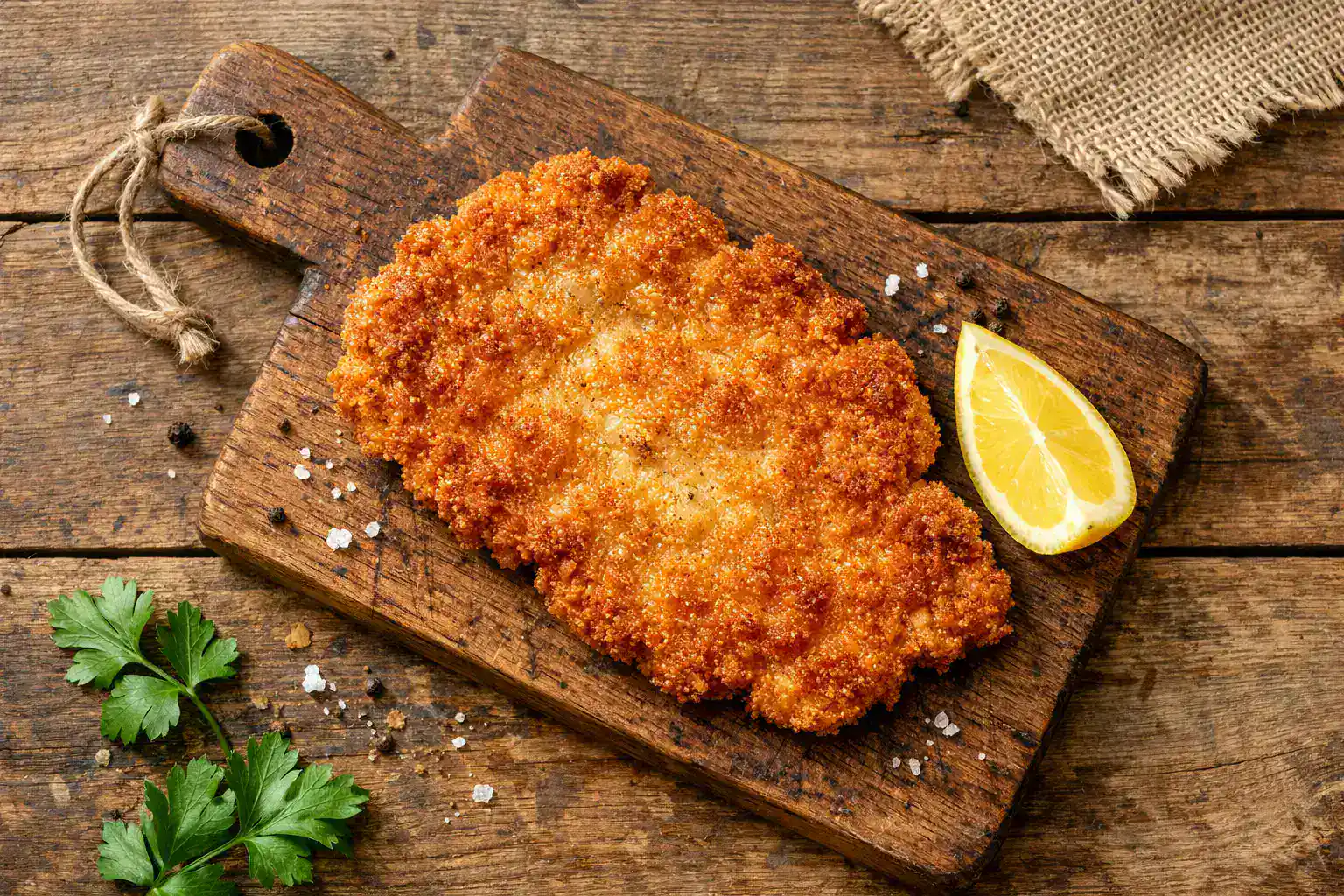
Quick Nutrition Facts
Per 1 Piece Schnitzel (150g)
| Nutrient | Amount |
|---|---|
| Calories | 280 kcal |
| Protein | 25g |
| Carbohydrates | 18g |
| Fiber | 1g |
| Sugars | 1g |
| Fat | 12g |
| Saturated Fat | 3g |
| Sodium | 420mg |
| Vitamin B1 | 0.8mg |
| Zinc | 3.2mg |
Macronutrient Breakdown
 ChatGPT
  Claude
  AI Mode
  Perplexity
NUTRITIONIST INSIGHT
Schnitzel is an excellent source of complete protein and B vitamins essential for energy metabolism. The zinc content supports immune function while iron aids oxygen transport. Choose baked versions to reduce saturated fat intake.
Myth Busters
MYTH #1: Schnitzel Is Always Unhealthy
TRUTH: While fried schnitzel has more fat, the base meat provides high-quality protein and essential nutrients like B vitamins, zinc, and iron. Baking or air frying reduces calories by 30-40% while maintaining nutritional benefits.
MYTH #2: All Schnitzels Have the Same Calories
TRUTH: Calorie content varies significantly based on meat type and preparation. Chicken schnitzel has ~200 calories per serving, while pork has ~280 and veal ~260. Breading thickness and cooking oil also impact totals.
MYTH #3: Schnitzel Has No Nutritional Value
TRUTH: Schnitzel delivers 25g protein, 50% daily B1 (thiamine), 40% zinc, and 30% B12 per serving. Pork is particularly rich in thiamine, essential for converting glucose to energy.
MYTH #4: Breading Makes Schnitzel High Glycemic
TRUTH: Despite the breading, schnitzel has a moderate glycemic impact due to the high protein and fat content that slows carbohydrate absorption. The glycemic index is lower than plain bread or potatoes.
MYTH #5: You Must Avoid Schnitzel for Weight Loss
TRUTH: The 25g protein in schnitzel promotes satiety and helps preserve muscle mass during weight loss. Portion control and choosing baked versions make it compatible with weight management goals.
NutriScore by Health Goals
| Health Goal | NutriScore | Why This Score? |
|---|---|---|
| Weight Loss |  | 280 calories is moderate; high protein promotes satiety. Choose baked versions, skip fries, pair with salad. |
| Muscle Gain |  | Excellent 25g complete protein with all essential amino acids. Zinc supports muscle repair and testosterone. |
| Diabetes Management | | Protein slows glucose absorption. Count 18g carbs from breading. Pair with non-starchy vegetables. |
| PCOS Management | | High protein supports insulin sensitivity. Limit fried versions; choose baked with olive oil. |
| Pregnancy Nutrition |  | Good zinc and B12 for fetal development. Ensure meat is thoroughly cooked to safe internal temperature (165°F/74°C). |
| Viral/Flu Recovery | | Zinc supports immune function; protein aids tissue repair. Easy to digest when appetite is limited. |
PERSONALIZED NUTRITION
Track your meals with NutriScan for personalized NutriScores based on your specific health goals!
Blood Sugar Response to Schnitzel
Understanding how schnitzel affects your blood glucose helps with meal planning, especially for diabetics.
Typical Glucose Response Curve
This chart shows typical blood glucose response for general healthy individuals. Individual responses may vary. Not medical advice.
How to Flatten the Spike
Pairing schnitzel with fiber-rich foods slows glucose absorption and reduces blood sugar peaks:
- 🥗 Green salad with vinaigrette - Fiber and acid slow digestion
- 🥒 Cucumber and tomato side - Low-carb, high-water vegetables
- 🍋 Lemon juice squeeze - Traditional pairing that aids protein digestion
- 🥦 Steamed broccoli or green beans - Non-starchy fiber boost
Skip the traditional fries and potato salad if watching blood sugar. These combinations reduce the glucose spike while keeping the meal satisfying.
Cultural Significance
Schnitzel originated in Austria in the 19th century, with Wiener Schnitzel becoming a national culinary treasure.
In German-Speaking Countries:
- Wiener Schnitzel (veal) is legally protected in Austria
- German Schweineschnitzel (pork) is the everyday version
- Traditional Sunday family meal across Central Europe
- Served with potato salad, lingonberry jam, or lemon
Global Variations:
- Japan: Tonkatsu with panko breading and tonkatsu sauce
- Israel: Schnitzel is a staple, often made with chicken
- Italy: Cotoletta alla Milanese inspired the Austrian version
- Argentina: Milanesa, brought by Italian immigrants
In India:
- Adapted as "cutlet" with local spices
- Popular in Anglo-Indian cuisine
- Often made with mutton or chicken
- Served with mint chutney
Compare & Substitute
Schnitzel vs Similar Proteins (Per 100g)
| Nutrient | 🥩 Pork Schnitzel | 🍗 Chicken Schnitzel | 🐄 Veal Schnitzel | 🐟 Fish Fingers |
|---|---|---|---|---|
| Calories | 185 kcal | 165 kcal | 175 kcal | 220 kcal |
| Carbs | 12g | 11g | 12g | 18g |
| Fiber | 0.5g | 0.5g | 0.5g | 1g |
| Protein | 17g | 19g | 18g | 12g |
| Fat | 8g | 6g | 7g | 12g |
| Sodium | 280mg | 350mg | 260mg | 450mg |
| Zinc | 2.1mg | 1.2mg | 3.5mg | 0.5mg |
| Best For | B vitamins, muscle gain | Lower fat, lean protein | Zinc, elegant dining | Omega-3s, quick meals |
Frequently Asked Questions
Is schnitzel healthy?
Schnitzel can be part of a balanced diet. It provides 25g high-quality protein, significant B vitamins, zinc, and iron per serving.
Healthier options:
- Bake instead of frying (saves 80-100 calories)
- Use whole wheat breadcrumbs for added fiber
- Air fry for crispy texture with less oil
- Choose chicken for lower fat content
How many calories are in schnitzel?
A typical pork schnitzel (150g serving) contains approximately 280 calories. Per 100g:
- Fried pork schnitzel: 185-200 calories
- Baked schnitzel: 150-170 calories
- Chicken schnitzel: 140-165 calories
Calories vary based on breading thickness and cooking oil used.
Can diabetics eat schnitzel?
Diabetics can include schnitzel in moderation. The 18g carbs per serving should be counted in meal planning.
Tips for diabetics:
- Pair with non-starchy vegetables instead of potatoes
- Choose thinner breading
- Monitor portions (one piece maximum)
- Check blood sugar 2 hours after eating
The high protein content actually helps stabilize blood sugar compared to eating breaded items alone.
What vitamins are in schnitzel?
Schnitzel is rich in B vitamins essential for energy metabolism:
- Vitamin B1 (Thiamine): 50% DV - converts glucose to energy
- Vitamin B12: 30% DV - nerve function and red blood cells
- Vitamin B6: 25% DV - protein metabolism and brain health
- Niacin (B3): 35% DV - DNA repair and energy
- Zinc: 40% DV - immune function and wound healing
Is schnitzel good for muscle building?
Yes, schnitzel is excellent for muscle building. The 25g complete protein per serving provides all essential amino acids needed for muscle protein synthesis.
Benefits for athletes:
- High biological value protein
- Zinc supports testosterone production
- B vitamins aid muscle recovery
- Carbs replenish glycogen post-workout
Best consumed post-workout with vegetables for optimal recovery.
How can I make schnitzel healthier?
Preparation tips:
- Pound meat thin for less cooking oil needed
- Use panko or whole wheat breadcrumbs
- Bake at 400°F (200°C) instead of frying
- Use cooking spray instead of oil
- Air fry for 12-15 minutes, flipping halfway
Serving suggestions:
- Pair with salad instead of fries
- Add lemon for vitamin C and digestion
- Serve with roasted vegetables
- Choose smaller portions (100-120g)
IMPORTANT NOTE
Always cook schnitzel to an internal temperature of 145°F (63°C) for pork or 165°F (74°C) for chicken to ensure food safety.
What's the difference between Wiener and pork schnitzel?
Wiener Schnitzel:
- Made exclusively from veal
- Protected name in Austria/Germany
- Slightly leaner (7g fat per 100g)
- Higher zinc content
- More expensive
Pork Schnitzel (Schweineschnitzel):
- Made from pork loin or cutlet
- More common everyday version
- Higher in B1 (thiamine)
- More affordable
- Slightly richer flavor
Both are prepared identically with egg wash and breadcrumb coating.


Similar Nutritious Foods
4505 Chicharrones Classic Chili Salt
7 Eleven Japan Crispy Corn Cheese
Explore More Nutrition Tools & Resources
AI Calorie Counter App - Snap a Photo, Get Macros
AI Nutritionist App That Reads Your Logged Meals
Best Protein Supplements for Women
Bulking Meal Plan App That Sets Your Surplus
ChatGPT Calorie Counter Alternative That Keeps the Total
ChatGPT Diet Plan Alternative That Tracks What You Eat
ChatGPT Weight Loss Coach Alternative With a Food Log
Fast Food Calorie Counter App That Reads the Tray
Free Calorie Tracker App with AI Photo Scans | NutriScan
Indian Diet Plan App With Veg and Non Veg Meals
Indian Food Calorie Calculator - Get Instant Nutrition Facts for Desi Meals — 2026
Intermittent Fasting for Women, Timer and Meal Log App
Intermittent Fasting Tracker App - Free Fasting Timer
Macro Tracker App That Fills the Numbers From a Photo
Mediterranean Diet Meal Plan App That Counts the Oil
Micronutrient Tracker App for Vitamins and Minerals
MyFitnessPal Alternative That Stays Free | NutriScan
NutriScore App: A Free Grade on Every Meal | NutriScan
Nutrition Label Scanner App for the Amount You Ate
Second Trimester Protein Guide
Vegetarian Meal Plan App With a Protein Target
Voice Calorie Counter - Speak to Track Meals Hands-Free
Water and Calorie Tracker App - Free Water Log