Are Scrambled Eggs Healthy? Calories and Nutrition
The perfect high-protein breakfast delivering complete nutrition and lasting satiety in every fluffy bite.
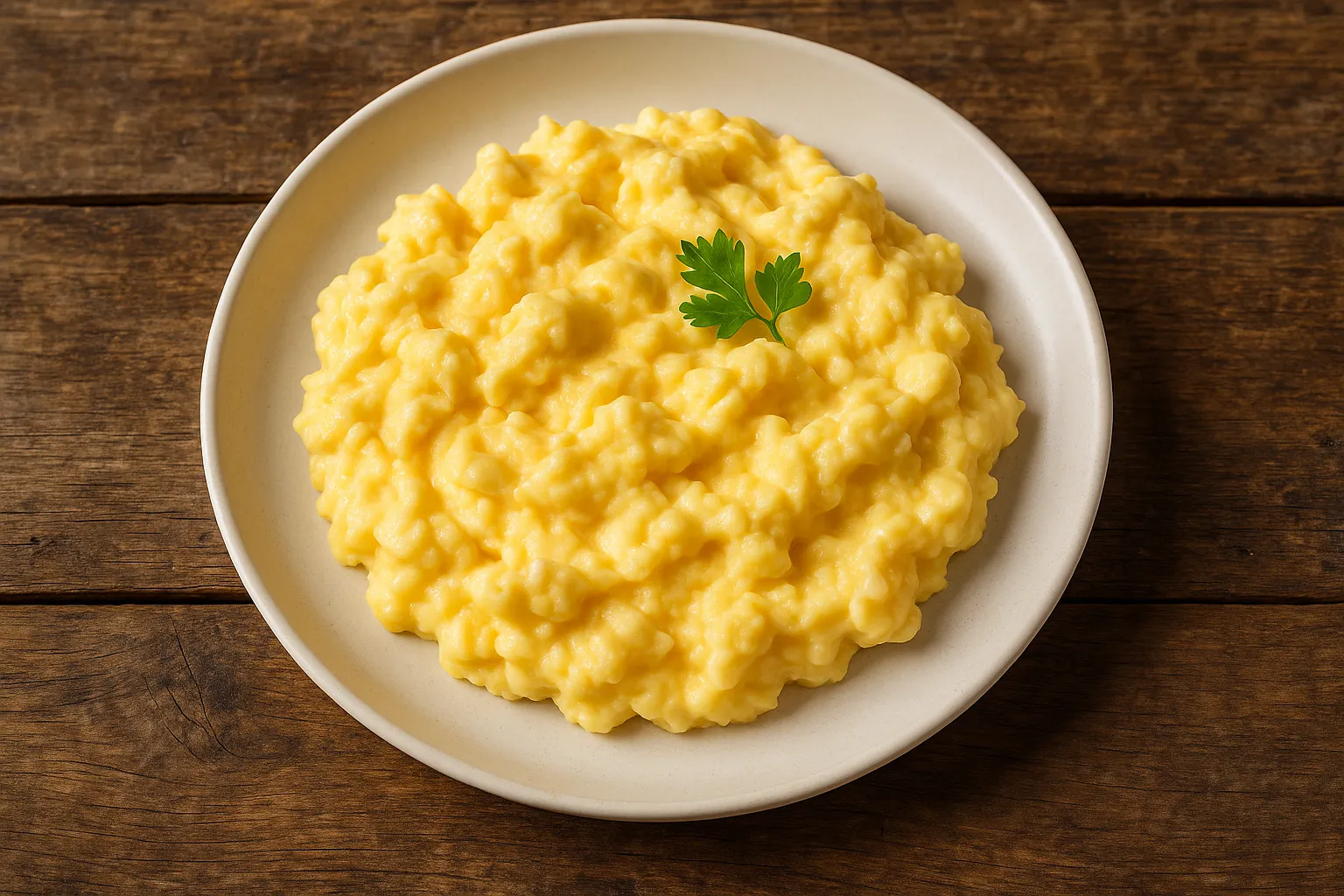
Quick Nutrition Facts
Per 100g (approx. 2 large eggs)
| Nutrient | Amount |
|---|---|
| Calories | 149 kcal |
| Protein | 10g |
| Carbohydrates | 1.6g |
| Fat | 11g |
| Saturated Fat | 3.3g |
| Cholesterol | 277mg |
| Choline | 221mg |
| Vitamin B12 | 0.75mcg |
| Selenium | 23.4mcg |
| Iron | 1.3mg |
Macronutrient Breakdown
 ChatGPT
  Claude
  AI Mode
  Perplexity
NUTRITIONIST INSIGHT
Scrambled eggs provide 10g complete protein with all 9 essential amino acids per 100g. The high choline content (221mg) supports brain health, liver function, and fetal development during pregnancy.
Are Scrambled Eggs Healthy? What the Numbers Say
Yes, for most people scrambled eggs are a healthy breakfast, and the pan decides how healthy. The eggs themselves bring protein and micronutrients at 149 calories per 100 g; the butter, cream, and cheese people add are what push a light breakfast into a heavy one.
Three reasons they earn a place at breakfast
- 10 g of complete protein per 100 g, with all nine essential amino acids, which keeps hunger down until lunch better than toast or cereal alone.
- 221 mg of choline per 100 g, one of the few everyday foods that supplies choline in a meaningful amount for brain and liver function.
- 23.4 mcg of selenium, 0.75 mcg of vitamin B12 and 1.3 mg of iron per 100 g, so a two-egg serving covers real micronutrient ground for its calories.
Two things to watch
- Fat comes mostly from the cooking. The standard version is 11 g of fat per 100 g, including 3.3 g saturated, and every extra knob of butter or splash of cream adds to that.
- Cholesterol is 277 mg per 100 g. That is fine for most people, but a minority respond strongly to dietary cholesterol and should keep egg servings smaller.
Portion guidance: two eggs (roughly 100 g cooked) is a normal breakfast, three suits a training day. Cook in a non-stick pan with a teaspoon of oil instead of butter, keep the heat low, and add spinach or tomatoes rather than cheese.
Compare with boiled eggs, which need no cooking fat at all, or an omelette.
Myth Busters
MYTH #1: Scrambled Eggs Cause High Cholesterol
TRUTH: Recent research shows dietary cholesterol in eggs has minimal impact on blood cholesterol for most people. Eggs increase HDL (good cholesterol) more than LDL. The 2015-2020 Dietary Guidelines removed the 300mg daily cholesterol limit, allowing healthy adults to eat eggs daily.
MYTH #2: Egg Whites Are Healthier Than Whole Eggs
TRUTH: While egg whites are lower in calories, the yolk contains 90% of eggs' vitamins (A, D, E, K, B12), all the choline, and half the protein. Whole eggs provide superior nutrition and better satiety than whites alone for weight management.
MYTH #3: Scrambled Eggs Are Bad for Weight Loss
TRUTH: Scrambled eggs are one of the best weight loss foods. High protein (10g per 100g) increases satiety hormones and reduces hunger. Studies show egg breakfasts lead to 135 fewer calories consumed at lunch and improved body composition over time.
MYTH #4: You Should Only Eat Eggs for Breakfast
TRUTH: Eggs are nutritious any time of day. The protein supports muscle synthesis whether eaten at breakfast, lunch, or dinner. Post-workout eggs aid recovery; evening eggs don't interfere with sleep. Timing is personal preference, not nutritional necessity.
MYTH #5: Adding Milk Makes Eggs Unhealthy
TRUTH: A tablespoon of milk adds 10-15 calories while creating fluffier texture. The small amount doesn't significantly alter nutritional profile. For lowest calories, use unsweetened almond milk (3 calories per tbsp) or skip milk entirely—eggs scramble perfectly with just heat.
MYTH #6: Scrambled Eggs Spike Blood Sugar
TRUTH: With only 1.6g carbs per 100g, scrambled eggs have virtually no glycemic impact. The high protein actually helps stabilize blood sugar, making eggs ideal for diabetes management and preventing energy crashes between meals.
NutriScore by Health Goals
| Health Goal | NutriScore | Why This Score? |
|---|---|---|
| Weight Loss |  | Exceptional for weight loss: 149 calories, 10g protein per 100g provides superior satiety. Studies show egg breakfasts reduce daily calorie intake and support fat loss over time. |
| Muscle Gain | | Perfect muscle-building food: 10g complete protein with all essential amino acids, leucine for muscle synthesis, and healthy fats for hormone production. |
| Diabetes Management | | Ideal for diabetes: 1.6g carbs, 10g protein stabilizes blood sugar. Regular egg consumption improves insulin sensitivity. |
| PCOS Management | | Excellent for PCOS: high protein supports hormone balance, low carbs prevent insulin spikes, choline aids liver function for hormone metabolism. |
| Pregnancy Nutrition | | Outstanding for pregnancy: 221mg choline per 100g supports fetal brain development, complete protein for growth, folate for neural tube health. Ensure eggs are fully cooked (160°F). |
| Viral/Flu Recovery | | Great for recovery: easily digestible protein supports immune function, selenium boosts immunity, B vitamins aid energy production during illness. |
PERSONALIZED NUTRITION
Track your scrambled eggs and meals with NutriScan for personalized NutriScores based on your specific health goals!
Blood Sugar Response to Scrambled Eggs
Understanding how scrambled eggs affect blood glucose shows their metabolic benefits.
Typical Glucose Response Curve
*This chart shows typical blood glucose response for general healthy individuals. Individual responses may vary. Not medical advice.*
How to Optimize Nutritional Impact
While eggs alone have minimal glucose impact, pairing strategically enhances overall nutrition:
- 🥑 Avocado slices - Healthy fats increase satiety, add fiber and potassium
- 🍅 Fresh tomatoes and spinach - Adds vitamins C, K, antioxidants with minimal calories
- 🫑 Bell peppers and mushrooms - Fiber-rich vegetables boost volume without raising glucose
- 🥖 Whole grain toast (1 slice) - Complex carbs for sustained energy with protein moderation
This combination creates a balanced, nutrient-dense meal under 350 calories with 15-20g protein, keeping blood sugar stable for hours.
Cultural Significance
Scrambled eggs represent one of humanity's most universal comfort foods, transcending cultural boundaries.
Global Variations:
- French (Œufs Brouillés): Low heat, constant stirring, crème fraîche for ultra-creamy texture
- American: Quick high-heat cooking, often with cheese, served with toast
- Indian (Bhurji): Spiced with onions, tomatoes, green chilies, turmeric, coriander
- Chinese: Stir-fried with tomatoes, often served over rice
- Mexican (Huevos Revueltos): Mixed with salsa, jalapeños, sometimes refried beans
Historical Context:
- Evidence of cooked eggs dates back to ancient Rome (1st century AD)
- "Scrambling" technique popularized in 19th century France
- 1920s: Became American breakfast staple with industrialization
- Today: Consumed by billions worldwide as affordable, complete protein source
Compare & Substitute
Scrambled Eggs vs Similar Breakfast Proteins (Per 100g)
| Nutrient | 🍳 Scrambled Eggs | 🥚 Boiled Eggs | 🍳 Egg Omelet | 🥓 Greek Yogurt (Plain) |
|---|---|---|---|---|
| Calories | 149 kcal | 155 kcal | 154 kcal | 59 kcal |
| Carbs | 1.6g | 1.1g | 2.3g | 3.6g |
| Protein | 10g | 13g | 10.6g | 10g |
| Fat | 11g | 11g | 11.7g | 0.4g |
| Cholesterol | 277mg | 373mg | 275mg | 5mg |
| Choline | 221mg | 294mg | 226mg | 15mg |
| B12 | 0.75mcg | 0.89mcg | 0.79mcg | 0.75mcg |
| Best For | Weight loss | Meal prep | Veggie boost | Low-fat option |
Frequently Asked Questions
Are scrambled eggs good for weight loss?
Yes, scrambled eggs are exceptional for weight loss. At 149 calories per 100g with 10g protein, they provide one of the highest satiety-to-calorie ratios of any breakfast food.
Weight loss benefits: High protein increases GLP-1 (satiety hormone) and reduces ghrelin (hunger hormone); studies show egg breakfasts lead to 135 fewer calories consumed at subsequent meals; protein requires 20-30% more energy to digest (thermic effect); eggs keep you fuller 30% longer than carb-heavy breakfasts.
Best practices: Eat 2-3 whole eggs (not just whites) for breakfast; cook with minimal oil or use non-stick spray; pair with vegetables to increase volume; avoid adding cheese, butter, or cream for lowest calories.
Two scrambled eggs (182 calories, 12g protein) make an ideal weight loss breakfast when paired with black coffee and berries.
Can diabetics eat scrambled eggs?
Diabetics can absolutely eat scrambled eggs—they're one of the best breakfast choices for blood sugar control. With only 1.6g carbs and 10g protein per 100g, eggs have virtually no glycemic impact.
Diabetes benefits: Protein slows carbohydrate absorption when eaten together; regular egg consumption (7-14 eggs per week) improves insulin sensitivity in type 2 diabetes; eggs help maintain stable energy without glucose spikes; high choline content supports liver health crucial for glucose metabolism.
Best practices: Pair with non-starchy vegetables (spinach, mushrooms, tomatoes); use minimal oil or cooking spray; add herbs for flavor without affecting blood sugar; include 1 slice whole-grain toast only if carb budget allows.
Monitor blood glucose 2 hours after eating. Most diabetics see stable or slightly reduced readings compared to carb-heavy breakfasts.
How much protein is in scrambled eggs?
Scrambled eggs contain 10g of complete protein per 100g. A standard 2-egg serving (122g) provides approximately 12g of protein, meeting 25% of daily needs for most adults.
This is complete protein containing all 9 essential amino acids in optimal ratios for human nutrition, including 1.2g of leucine per 100g—the key amino acid triggering muscle protein synthesis.
Protein comparison: 100g scrambled eggs (10g protein) = 100g chicken breast (31g protein but 3x the calories) = 100g Greek yogurt (10g protein, similar). Eggs offer the best protein-to-cost ratio globally.
For muscle gain, consume 20-25g protein per meal. Combine 3 scrambled eggs (18g protein) with whole-grain toast for optimal post-workout recovery.
Is the cholesterol in scrambled eggs harmful?
No, dietary cholesterol in scrambled eggs (277mg per 100g) is not harmful for most people. Modern research has dramatically changed our understanding of egg cholesterol.
Scientific evidence: Dietary cholesterol has minimal impact on blood cholesterol for 70% of people (called "hypo-responders"); eggs increase HDL (good) cholesterol more than LDL (bad) cholesterol, improving the critical HDL:LDL ratio; the 2015-2020 Dietary Guidelines removed the 300mg daily cholesterol limit.
Who should limit: Only 30% are "hyper-responders" whose LDL increases moderately with eggs; people with familial hypercholesterolemia should limit to 3-4 eggs weekly; those with existing high cholesterol should consult doctors.
For the majority, eating 1-3 whole eggs daily is safe and nutritious. The complete protein and choline benefits outweigh theoretical cholesterol concerns for most individuals.
When is the best time to eat scrambled eggs?
Scrambled eggs are beneficial any time, but timing can optimize specific goals:
For Weight Loss: Breakfast (7-9 AM)—high-protein egg breakfasts increase satiety for 24+ hours, reduce total daily calorie intake by 135+ calories, and prevent mid-morning energy crashes
For Muscle Gain: Within 2 hours post-workout OR breakfast (provides 10g complete protein with leucine for muscle synthesis); evening eggs don't interfere with sleep or recovery
For Diabetes: Morning or lunch—protein helps maintain stable glucose through the day; avoid pairing with high-carb foods at any meal
For Pregnancy: Breakfast—provides choline when fetal brain development is most active; eat throughout pregnancy for consistent nutrient delivery
The high-quality protein makes eggs nutritious regardless of timing. Choose based on your schedule and health goals, not rigid meal timing rules.
Are scrambled eggs with milk healthier?
Adding milk creates fluffier texture but slightly alters nutrition. Whether this is "healthier" depends on your goals.
Nutrition impact of 1 tablespoon milk per 2 eggs: Whole milk adds 9 calories, 0.5g protein, 0.6g carbs; 2% milk adds 7 calories; skim milk adds 5 calories; unsweetened almond milk adds only 2-3 calories.
Benefits of milk: Creates softer, creamier texture; adds calcium (15mg per tbsp); provides extra protein (minimal); easier to digest for some people
Skip milk if: You want lowest calories for weight loss; you're lactose intolerant (use almond/oat milk instead); you prefer denser, more egg-forward flavor
Best practice: Use 1 tablespoon per 2 eggs maximum. For fluffiness without milk, whisk eggs vigorously and cook on medium-low heat with frequent stirring. Water (1 tsp per egg) also adds moisture with zero calories.
How can I make scrambled eggs healthier?
Healthier Cooking Methods:
- Use minimal fat: Cook with 1/2 tsp oil or butter for 2 eggs instead of 1 tablespoon (saves 35 calories)
- Try non-stick spray: Olive oil spray provides 0-1 calorie per serving
- Low and slow: Cook on medium-low heat, stirring constantly for creamier texture without added fat
- Microwave option: Whisk eggs with 1 tsp milk in bowl, microwave 30 seconds, stir, repeat (no oil needed)
Nutrient-Boosting Add-ins:
- Spinach (adds iron, vitamin K, fiber with 7 calories per cup)
- Tomatoes (lycopene, vitamin C, 32 calories per cup)
- Mushrooms (vitamin D, selenium, 15 calories per cup)
- Bell peppers (vitamin C, antioxidants, 30 calories per cup)
Avoid These Additions: Cheese (adds 80-115 calories per ounce); heavy cream (52 calories per tablespoon); excessive butter (102 calories per tablespoon)
Serving Strategy: Pair with whole grain toast (80 calories) and berries (60 calories) for a complete 400-calorie breakfast with 20g protein, 5g fiber, and 25+ vitamins and minerals.
Are scrambled eggs healthy for breakfast?
Yes. At 149 calories and 10 g protein per 100 g, scrambled eggs hold hunger off longer than most cereal or toast, and they carry choline, selenium and vitamin B12 that few breakfast foods provide. The health question is really about the pan: cooked with a teaspoon of oil they stay close to 149 calories per 100 g, while butter, cream and cheese can double that. Two eggs most mornings, cooked low and slow with vegetables, fits almost any goal.




Similar Nutritious Foods
4505 Chicharrones Classic Chili Salt
7 Eleven Japan Crispy Corn Cheese
Explore More Nutrition Tools & Resources
AI Calorie Counter App - Snap a Photo, Get Macros
AI Nutritionist App That Reads Your Logged Meals
Best Protein Supplements for Women
Bulking Meal Plan App That Sets Your Surplus
ChatGPT Calorie Counter Alternative That Keeps the Total
ChatGPT Diet Plan Alternative That Tracks What You Eat
ChatGPT Weight Loss Coach Alternative With a Food Log
Fast Food Calorie Counter App That Reads the Tray
Free Calorie Tracker App with AI Photo Scans | NutriScan
Indian Diet Plan App With Veg and Non Veg Meals
Indian Food Calorie Calculator - Get Instant Nutrition Facts for Desi Meals — 2026
Intermittent Fasting for Women, Timer and Meal Log App
Intermittent Fasting Tracker App - Free Fasting Timer
Macro Tracker App That Fills the Numbers From a Photo
Mediterranean Diet Meal Plan App That Counts the Oil
Micronutrient Tracker App for Vitamins and Minerals
MyFitnessPal Alternative That Stays Free | NutriScan
NutriScore App: A Free Grade on Every Meal | NutriScan
Nutrition Label Scanner App for the Amount You Ate
Second Trimester Protein Guide
Vegetarian Meal Plan App With a Protein Target
Voice Calorie Counter - Speak to Track Meals Hands-Free
Water and Calorie Tracker App - Free Water Log