Scrambled Eggs with Bacon: Calories, Nutrition and Health Benefits
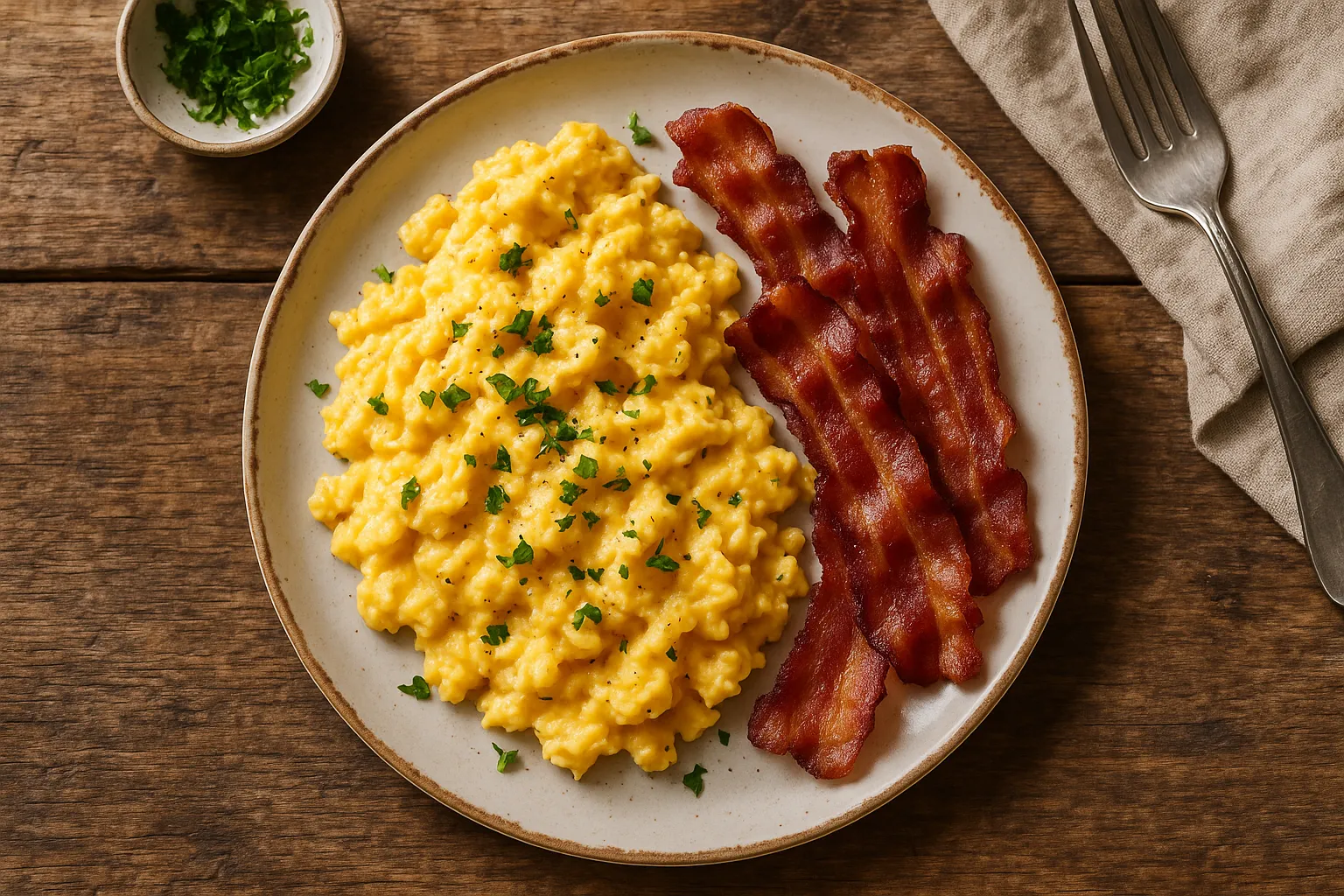
Classic high-protein breakfast packed with complete amino acids, choline, and B vitamins for sustained energy and muscle building.
Quick Nutrition Facts
Per 100g (approximately 2 eggs + 2 strips bacon)
| Nutrient | Amount |
|---|---|
| Calories | 276 kcal |
| Protein | 19.6g |
| Fat | 21.6g |
| Carbohydrates | 1.6g |
| Fiber | 0g |
| Saturated Fat | 8g |
| Cholesterol | 240mg |
| Sodium | 520mg |
| Choline | 180mg |
| Vitamin B12 | 0.6mcg |
Macronutrient Breakdown
 ChatGPT
  Claude
  AI Mode
  Perplexity
NUTRITIONIST INSIGHT
This breakfast delivers 20g complete protein with all essential amino acids. Rich in choline (180mg) for brain health and B vitamins for energy metabolism—ideal for muscle building and sustained morning energy.
Myth Busters
MYTH #1: Eggs with Bacon Will Clog Your Arteries
TRUTH: Dietary cholesterol has minimal impact on blood cholesterol for most people. The 240mg cholesterol in this breakfast doesn't directly cause heart disease. Focus on overall dietary patterns, fiber intake, and avoiding trans fats rather than demonizing eggs.
MYTH #2: This Breakfast Causes Gestational Diabetes
TRUTH: Research shows mixed evidence on eggs and gestational diabetes. Some studies link high egg intake (≥7/week) to increased GDM risk, while others show protective effects. Moderation (3-4 eggs/week) and balanced diet matter most. Consult your healthcare provider.
MYTH #3: Bacon Is Always Unhealthy
TRUTH: While processed meat carries health concerns when consumed excessively, moderate intake of uncured bacon (2-3 times/week) can fit a balanced diet. Choose uncured, nitrate-free bacon; cook without burning; pair with vegetables; control portions.
MYTH #4: You Must Avoid This Breakfast for Weight Loss
TRUTH: High-protein breakfasts (19.6g) promote satiety and reduce overall calorie intake. Studies show protein-rich breakfasts help control appetite throughout the day. Key: Control portions, cook with minimal added fat, pair with vegetables, and fit within daily calorie goals.
MYTH #5: Egg Yolks Are Bad—Only Eat Whites
TRUTH: Yolks contain most of the egg's nutrients: choline for brain health, lutein and zeaxanthin for eye health, vitamins A, D, E, K, and B12. While yolks add calories and cholesterol, they provide essential nutrients. Whole eggs are more nutritious than whites alone.
NutriScore by Health Goals
| Health Goal | NutriScore | Why This Score? |
|---|---|---|
| Weight Loss |  | High protein (19.6g) promotes fullness, but 276 calories and 21.6g fat add up. Best for breakfast; pair with vegetables; limit to 3-4 times/week. |
| Muscle Gain |  | Excellent protein source (19.6g) with complete amino acids, ideal for post-workout or breakfast. B vitamins support energy metabolism, choline aids muscle function. |
| Diabetes Management |  | Low carbs (1.6g), high protein stabilizes blood sugar. Choose turkey bacon or lean bacon; limit to 2-3 times/week; pair with fiber-rich vegetables. |
| PCOS Management | | High protein supports insulin sensitivity, but saturated fat (8g) may affect hormones. Limit to 2 times/week; choose turkey bacon; pair with vegetables. |
| Pregnancy Nutrition | | Choline (180mg) essential for fetal brain development, protein supports growth. Ensure fully cooked eggs; limit bacon; watch sodium intake. |
| Viral/Flu Recovery | | High protein (19.6g) aids tissue repair, B vitamins boost energy, zinc from eggs supports immunity. Easy to digest; provides sustained energy. Reduce bacon if nausea occurs. |
PERSONALIZED NUTRITION
Track your meals with NutriScan for personalized NutriScores based on your specific health goals!
Blood Sugar Response to Scrambled Eggs with Bacon
Low-carb, high-protein breakfast causes minimal blood sugar impact, ideal for diabetes management and sustained energy.
Typical Glucose Response Curve
This chart shows typical blood glucose response for general healthy individuals. Individual responses may vary. Not medical advice.
Enhance Your Breakfast
Pairing eggs with vegetables and healthy fats creates a complete, balanced breakfast with stable blood sugar:
- 🥑 Avocado slices - Healthy fats, fiber, and potassium
- 🍅 Cherry tomatoes - Antioxidants and vitamins with minimal carbs
- 🥬 Sautéed spinach or kale - Fiber, iron, and micronutrients
- 🫑 Bell peppers - Vitamin C, fiber, and vibrant color
This combination provides complete nutrition, extends satiety, and keeps blood sugar stable for hours.
Want more options beyond eggs and bacon? See our guide to healthy breakfast ideas that keep you full, with high-protein, egg-free, dairy-free, and make-ahead choices.
Cultural Significance
Scrambled eggs with bacon represents the iconic American breakfast, evolving from English traditions to global popularity.
In America:
- Classic diner breakfast since 1920s
- Symbol of hearty, satisfying morning meals
- Variations: Southern-style (with cheese), Southwest (with jalapeños), California (with avocado)
- Part of "bacon and eggs" cultural phenomenon
Global Adaptations:
- United Kingdom: Traditional "full English breakfast" with eggs, bacon, beans, tomatoes
- Australia: "Brekkie" with eggs, bacon, and toast
- Canada: Peameal bacon with eggs
- Modern Keto/Paleo: Cornerstone of low-carb, high-protein diets
Historical Context:
- Bacon and eggs breakfast popularized by 1920s marketing campaigns
- Evolved from medieval European breakfast traditions
- Became symbol of prosperity and hearty meals
- Modern health debates shifted perceptions, but remains beloved comfort food
Compare & Substitute
Scrambled Eggs with Bacon vs Similar Breakfasts (Per 100g)
| Nutrient | 🍳 Eggs + Bacon | 🥚 Plain Scrambled Eggs | 🍗 Eggs + Turkey Bacon | 🥑 Eggs + Avocado |
|---|---|---|---|---|
| Calories | 276 kcal | 149 kcal | 205 kcal | 195 kcal |
| Protein | 19.6g | 10g | 16g | 8.5g |
| Fat | 21.6g | 11g | 14g | 16g |
| Carbs | 1.6g | 1.6g | 1.8g | 3.5g |
| Sodium | 520mg | 88mg | 380mg | 90mg |
| Cholesterol | 240mg | 277mg | 255mg | 260mg |
| Choline | 180mg | 221mg | 200mg | 215mg |
| Vitamin B12 | 0.6mcg | 0.75mcg | 0.7mcg | 0.7mcg |
| Best For | Muscle gain, keto, hearty breakfast | Low-sodium, weight loss, simplicity | Lower fat, less sodium, health-conscious | Healthy fats, fiber, vegetarian-friendly |
Frequently Asked Questions
How many calories are in 2 slices of bacon and 2 eggs?
Two eggs scrambled with 2 slices of bacon is a 120 to 140g serving at 330 to 385 calories. The same mix is 276 calories per 100g, with 19.6g protein, 21.6g fat and 1.6g carbs. That plate delivers 20 to 24g of complete protein, which makes it a filling low-carb breakfast.
Are scrambled eggs with bacon good for weight loss?
Scrambled eggs with bacon can support weight loss when consumed in moderation as part of a balanced diet. With 19.6g protein per 100g, this high-protein breakfast promotes satiety, reduces mid-morning cravings, and helps preserve muscle mass during calorie deficit.
Best practices: Limit portions to 100-150g (about 2 eggs + 2 bacon strips); cook with minimal added fat (use non-stick pan or cooking spray); pair with vegetables (spinach, tomatoes, bell peppers); limit to 3-4 times per week; avoid toast and high-calorie sides; consider turkey bacon for lower calories.
Can diabetics eat scrambled eggs with bacon?
Yes, diabetics can eat scrambled eggs with bacon in moderation. With only 1.6g carbohydrates and 19.6g protein per 100g, this breakfast has minimal impact on blood sugar levels and provides sustained energy.
Tips for diabetics: Choose turkey bacon or lean bacon to reduce saturated fat; limit to 1-2 times per week; pair with high-fiber vegetables (broccoli, spinach, cauliflower); avoid adding sugar or high-carb sides; monitor blood sugar 2 hours after eating; trim visible fat from bacon; consult your healthcare provider for personalized advice.
How much protein is in scrambled eggs with bacon?
Scrambled eggs with bacon contains 19.6g of protein per 100g. A typical serving (2 large eggs + 2 strips bacon, approximately 120-140g total) provides 20-24g of complete protein with all essential amino acids.
This makes it an excellent breakfast choice for muscle building, post-workout recovery, and high-protein diets. The protein comes from both eggs (complete protein) and bacon (pork protein), providing diverse amino acid profiles.
Is scrambled eggs with bacon healthy?
Scrambled eggs with bacon can be part of a healthy diet when consumed mindfully and in moderation.
Benefits: 19.6g high-quality protein with complete amino acids; choline (180mg) for brain health and liver function; B vitamins (B12, B6, riboflavin) for energy metabolism; selenium and zinc for immunity; satisfying breakfast that reduces overall calorie intake.
Concerns: High sodium (520mg = 22% DV); saturated fat (8g = 40% DV); cholesterol (240mg); processed meat (bacon) linked to health risks when consumed excessively.
Healthier approach: Limit to 2-3 times per week; choose uncured, nitrate-free bacon; cook without burning; pair with vegetables; use minimal added fat; consider turkey bacon as lower-fat alternative. Balance with other nutritious breakfasts throughout the week.
Is scrambled eggs with bacon good for keto diet?
Yes, scrambled eggs with bacon is ideal for the ketogenic diet. With only 1.6g carbs, 21.6g fat, and 19.6g protein per 100g, it fits keto macros perfectly (70-80% fat, 15-20% protein, 5-10% carbs).
Keto optimization tips: Cook eggs in butter, ghee, or coconut oil to increase healthy fat content; add full-fat cheese for extra fat and flavor; pair with avocado (healthy fats); include low-carb vegetables (spinach, mushrooms, zucchini); choose fattier bacon cuts; avoid milk in eggs (use heavy cream if needed).
This breakfast provides sustained energy, ketones for fat burning, and complete protein—perfect for maintaining ketosis.
Can pregnant women eat scrambled eggs with bacon?
Pregnant women can eat scrambled eggs with bacon, with important safety considerations.
Benefits: Choline (180mg) essential for fetal brain and spinal cord development; protein (19.6g) supports fetal growth and maternal tissue development; iron from bacon helps prevent anemia; B vitamins support energy and development.
Safety guidelines: Ensure eggs are fully cooked until yolks are firm (no runny parts) to prevent salmonella; choose fully cooked, crispy bacon; limit bacon consumption due to sodium and processed meat concerns; avoid deli-style or undercooked bacon; wash hands and surfaces thoroughly; limit to 2-3 times per week; pair with vegetables for balanced nutrition.
Consult your healthcare provider for personalized dietary advice during pregnancy.
How many calories are in scrambled eggs with bacon?
A 100g serving contains 276 calories. A typical restaurant or homemade serving (2 large eggs + 2 strips bacon, approximately 120-140g) contains 330-385 calories.
Calorie breakdown: Protein provides 78 calories (28%), fat provides 194 calories (70%), carbohydrates provide 6 calories (2%).
Lower-calorie options: Use egg whites instead of whole eggs (reduces calories by 50%); choose turkey bacon (reduces calories by 30-40%); cook with cooking spray instead of butter; limit portions to 100g.
Track your meals with NutriScan app to see how this breakfast fits your daily calorie and macro goals.


Similar Nutritious Foods
4505 Chicharrones Classic Chili Salt
7 Eleven Japan Crispy Corn Cheese
Explore More Nutrition Tools & Resources
AI Calorie Counter App - Snap a Photo, Get Macros
AI Nutritionist App That Reads Your Logged Meals
Best Protein Supplements for Women
Bulking Meal Plan App That Sets Your Surplus
ChatGPT Calorie Counter Alternative That Keeps the Total
ChatGPT Diet Plan Alternative That Tracks What You Eat
ChatGPT Weight Loss Coach Alternative With a Food Log
Fast Food Calorie Counter App That Reads the Tray
Free Calorie Tracker App with AI Photo Scans | NutriScan
Indian Diet Plan App With Veg and Non Veg Meals
Indian Food Calorie Calculator - Get Instant Nutrition Facts for Desi Meals — 2026
Intermittent Fasting for Women, Timer and Meal Log App
Intermittent Fasting Tracker App - Free Fasting Timer
Macro Tracker App That Fills the Numbers From a Photo
Mediterranean Diet Meal Plan App That Counts the Oil
Micronutrient Tracker App for Vitamins and Minerals
MyFitnessPal Alternative That Stays Free | NutriScan
NutriScore App: A Free Grade on Every Meal | NutriScan
Nutrition Label Scanner App for the Amount You Ate
Second Trimester Protein Guide
Vegetarian Meal Plan App With a Protein Target
Voice Calorie Counter - Speak to Track Meals Hands-Free
Water and Calorie Tracker App - Free Water Log