Seekh Kebab: Calories, Nutrition and Health Benefits
Smoky, spiced, and protein-packed—seekh kebab is a beloved South Asian grilled delicacy that delivers satisfying flavor with impressive nutritional benefits.
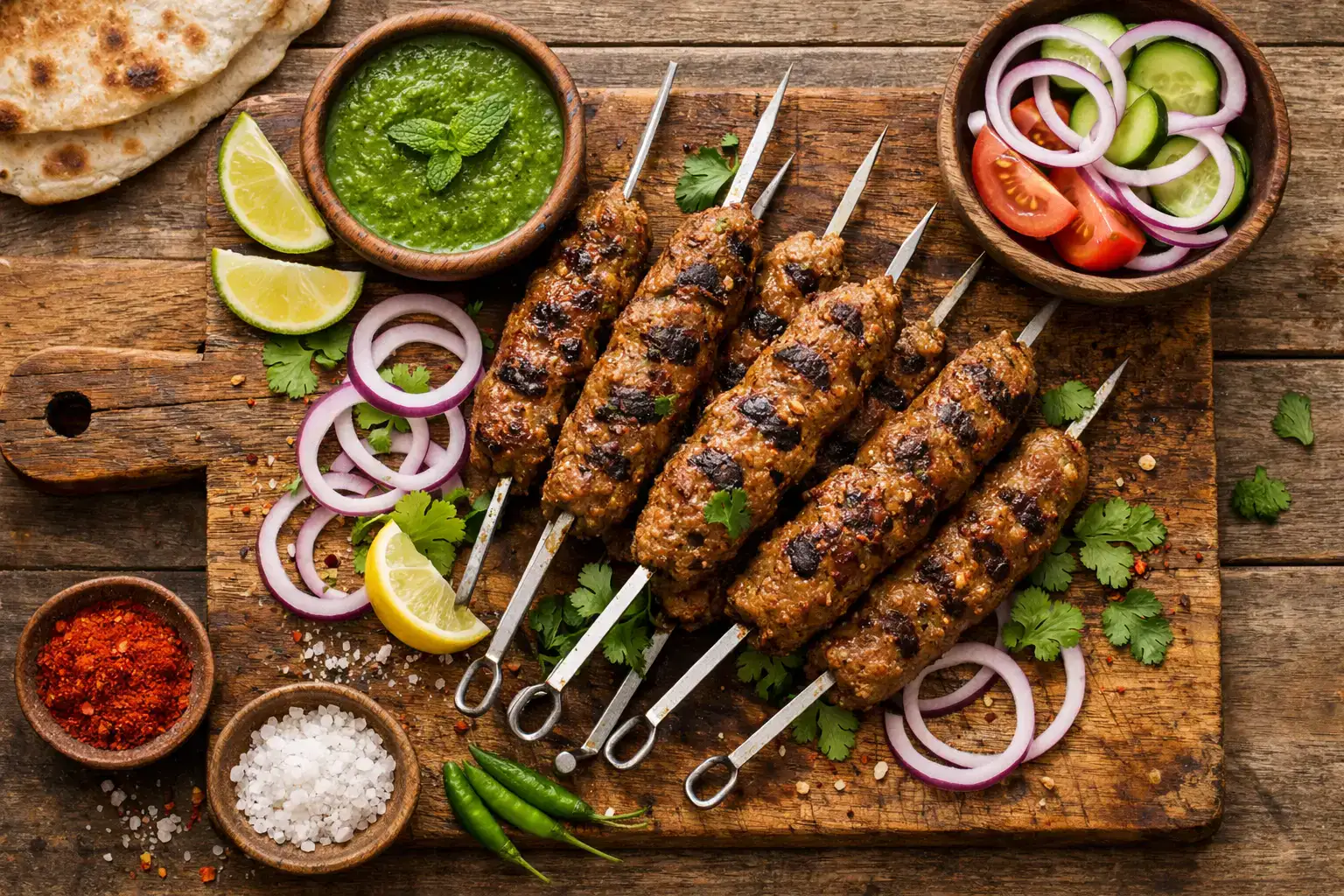
Quick Nutrition Facts
Per 100g Serving (about 2 skewers)
| Nutrient | Amount |
|---|---|
| Calories | 200 kcal |
| Protein | 15g |
| Carbohydrates | 5g |
| Fiber | 0.5g |
| Sugars | 1g |
| Fat | 15g |
| Saturated Fat | 6g |
| Iron | 2.5mg |
| Zinc | 4.2mg |
| Vitamin B12 | 2.4mcg |
Macronutrient Breakdown
 ChatGPT
  Claude
  AI Mode
  Perplexity
NUTRITIONIST INSIGHT
Seekh kebab is an excellent source of complete protein and bioavailable iron. The charcoal grilling method adds flavor without extra calories. Pair with mint chutney and salad for a balanced, satisfying meal under 300 calories.
Myth Busters
MYTH #1: Seekh Kebab Is Unhealthy Junk Food
TRUTH: When grilled (not fried), seekh kebab is a nutritious high-protein food. With 15g protein per 100g and no breading or deep-frying, it's far healthier than most fast food. The spices used (cumin, coriander) have anti-inflammatory and digestive benefits.
MYTH #2: All Kebabs Are High in Fat
TRUTH: Fat content varies significantly by meat choice. Chicken seekh kebab has only 6g fat per 100g, while lamb has 15-18g. Choosing lean meat and trimming visible fat reduces calories by 30-40% without sacrificing protein.
MYTH #3: Red Meat Always Spikes Blood Sugar
TRUTH: Pure protein and fat have minimal impact on blood glucose. Seekh kebab with only 5g carbs per 100g causes negligible blood sugar rise. The concern is accompaniments like naan and sweet chutneys, not the kebab itself.
MYTH #4: Charcoal Grilling Is Carcinogenic
TRUTH: While excessive charring can produce HCAs, proper grilling at moderate temperatures is safe. Marinating meat with spices, garlic, and acidic ingredients reduces HCA formation by up to 90%—and traditional seekh kebab recipes include all these protective ingredients.
MYTH #5: Seekh Kebab Has No Nutritional Value
TRUTH: Seekh kebab provides essential nutrients often lacking in modern diets: bioavailable heme iron (2.5mg), zinc (4.2mg), vitamin B12 (2.4mcg), and all essential amino acids. It's particularly valuable for preventing iron-deficiency anemia.
NutriScore by Health Goals
| Health Goal | NutriScore | Why This Score? |
|---|---|---|
| Weight Loss |  | High protein (15g) promotes satiety; moderate calories (200/100g). Limit to 2 skewers, skip naan. |
| Muscle Gain |  | Complete protein with all essential amino acids supports muscle synthesis. Excellent post-workout option. |
| Diabetes Management | | Only 5g carbs per 100g, minimal blood sugar impact from protein-rich foods. Avoid sweet chutneys. |
| PCOS Management | | High protein, low carb supports insulin sensitivity. Choose chicken version for lower saturated fat. |
| Pregnancy Nutrition | | Rich in iron (2.5mg), B12, and protein for fetal development. Ensure meat is thoroughly cooked to safe internal temperature. |
| Viral/Flu Recovery | | Zinc (4.2mg) and protein support immune function and tissue repair. Easy to digest when recovering. |
PERSONALIZED NUTRITION
Track your meals with NutriScan for personalized NutriScores based on your specific health goals!
Blood Sugar Response to Seekh Kebab
Understanding how seekh kebab affects your blood glucose can help you make informed decisions about when and how to eat it.
Typical Glucose Response Curve
*This chart shows typical blood glucose response for general healthy individuals. Individual responses may vary. Not medical advice.*
How to Maintain Stable Blood Sugar
Protein and fat slow gastric emptying, leading to minimal glucose fluctuation:
- Skip the naan - Pair with salad or grilled vegetables instead
- Choose mint chutney - Avoid sweet tamarind sauce
- Add fiber - Serve with cucumber raita or onion salad
- Moderate portions - 2-3 skewers (100-150g) is sufficient
This combination maintains stable blood sugar while providing sustained energy and satisfaction.
Cultural Significance
Seekh kebab has deep roots in Mughal culinary tradition, originating in the royal kitchens of the Indian subcontinent over 500 years ago.
In Pakistan & India:
- Essential at celebrations: Eid, weddings, and family gatherings
- Street food culture: Roadside vendors grill on sigris (charcoal braziers)
- Regional variations: Lucknowi (delicate), Peshawari (bold spices), Hyderabadi (with herbs)
- Symbol of hospitality: Served to honor guests
Global Impact:
- Popular across Middle East, Central Asia, and worldwide
- UK's favorite takeaway meat dish
- Foundation for many fusion cuisines
- Part of UNESCO-recognized food heritage traditions
Compare & Substitute
Seekh Kebab vs Similar Protein Sources (Per 100g)
| Nutrient | 🍢 Seekh Kebab (Lamb) | 🍗 Chicken Tikka | 🥩 Beef Steak | 🧆 Falafel (Fried) |
|---|---|---|---|---|
| Calories | 200 kcal | 165 kcal | 250 kcal | 333 kcal |
| Carbs | 5g | 2g | 0g | 32g |
| Fiber | 0.5g | 0g | 0g | 5g |
| Protein | 15g | 25g | 26g | 13g |
| Fat | 15g | 7g | 15g | 18g |
| Iron | 2.5mg | 1.1mg | 2.6mg | 3.4mg |
| Best For | Balanced macros, B12, zinc | Lean protein, low calorie | Maximum protein, keto | Plant-based, fiber |
Frequently Asked Questions
How many calories are in seekh kebab?
One serving of seekh kebab (100g, about 2 skewers) contains approximately 200 calories. A single skewer (50g) has about 100 calories. Chicken seekh kebab has fewer calories (145-165 per 100g) compared to lamb or beef versions.
Per skewer (50g): 100 calories, 7.5g protein, 7.5g fat, 2.5g carbs.
Is seekh kebab healthy for weight loss?
Yes, seekh kebab can support weight loss when eaten mindfully. The high protein content (15g per 100g) promotes satiety and preserves lean muscle mass during calorie restriction.
Weight loss tips:
- Limit to 2-3 skewers per meal
- Choose chicken over lamb (30% fewer calories)
- Skip naan bread and pair with salad
- Use mint chutney instead of creamy sauces
- Avoid fried versions
Can diabetics eat seekh kebab?
Yes, diabetics can safely enjoy seekh kebab. With only 5g carbohydrates per 100g, it has minimal impact on blood sugar levels.
Tips for diabetics:
- Stick to 2 skewers (100g) per serving
- Avoid sweet chutneys and accompaniments
- Pair with non-starchy vegetables
- Skip the naan—use lettuce wraps instead
- Monitor portions of raita (contains some carbs)
What is seekh kebab made of?
Traditional seekh kebab contains minced meat (lamb, beef, chicken, or mutton) mixed with onions, ginger-garlic paste, green chilies, fresh coriander, mint, and aromatic spices including cumin, coriander powder, red chili, and garam masala.
The mixture is shaped onto metal skewers (seekh means "skewer") and grilled over hot charcoal, creating the signature smoky flavor and charred exterior.
Is seekh kebab good for muscle building?
Seekh kebab is excellent for muscle building. It provides 15g of complete, high-biological-value protein per 100g with all essential amino acids required for muscle protein synthesis.
Muscle-building benefits:
- Complete amino acid profile
- High leucine content triggers muscle growth
- Zinc supports testosterone production
- Iron helps oxygen delivery to muscles
- Easy to digest post-workout
Consume 3-4 skewers (150-200g) within 2 hours post-workout for optimal results.
How much protein is in one seekh kebab?
One seekh kebab skewer (approximately 50g) contains 7.5g of protein. A standard serving of two skewers (100g) provides 15g of protein—equivalent to about 2 large eggs.
For muscle gain goals, aim for 3-4 skewers to get 22-30g protein per meal.
What's the healthiest way to eat seekh kebab?
Healthiest preparation and serving:
- Choose grilled over fried
- Select chicken or lean lamb
- Serve with grilled vegetables or salad
- Use mint-yogurt chutney (probiotic benefits)
- Add sliced onions and lemon (vitamin C aids iron absorption)
- Skip naan and creamy curries
Track your seekh kebab intake with NutriScan app to see how it fits your daily nutrition targets.
Can I eat seekh kebab during pregnancy?
Yes, seekh kebab is beneficial during pregnancy when properly cooked. It provides iron (prevents anemia), B12 (neural development), zinc (immune support), and high-quality protein.
Safety tips:
- Ensure internal temperature reaches 165°F (74°C)
- Avoid undercooked or pink meat
- Skip raw accompaniments from street vendors
- Limit to 2-3 times per week




Similar Nutritious Foods
4505 Chicharrones Classic Chili Salt
7 Eleven Japan Crispy Corn Cheese
Explore More Nutrition Tools & Resources
AI Calorie Counter App - Snap a Photo, Get Macros
AI Nutritionist App That Reads Your Logged Meals
Best Protein Supplements for Women
Bulking Meal Plan App That Sets Your Surplus
ChatGPT Calorie Counter Alternative That Keeps the Total
ChatGPT Diet Plan Alternative That Tracks What You Eat
ChatGPT Weight Loss Coach Alternative With a Food Log
Fast Food Calorie Counter App That Reads the Tray
Free Calorie Tracker App with AI Photo Scans | NutriScan
Indian Diet Plan App With Veg and Non Veg Meals
Indian Food Calorie Calculator - Get Instant Nutrition Facts for Desi Meals — 2026
Intermittent Fasting for Women, Timer and Meal Log App
Intermittent Fasting Tracker App - Free Fasting Timer
Macro Tracker App That Fills the Numbers From a Photo
Mediterranean Diet Meal Plan App That Counts the Oil
Micronutrient Tracker App for Vitamins and Minerals
MyFitnessPal Alternative That Stays Free | NutriScan
NutriScore App: A Free Grade on Every Meal | NutriScan
Nutrition Label Scanner App for the Amount You Ate
Second Trimester Protein Guide
Vegetarian Meal Plan App With a Protein Target
Voice Calorie Counter - Speak to Track Meals Hands-Free
Water and Calorie Tracker App - Free Water Log