Seitan: Calories, Nutrition and Health Benefits
The plant-based protein powerhouse for vegans, bodybuilders, and anyone seeking meat-free muscle fuel.
Two different foods get called seitan, so read the numbers carefully. Prepared seitan, the hydrated block or strips you cook and log, runs 106 to 158 kcal and 17.9 to 26.3g protein per 100 g across USDA-listed products. This page uses 120 kcal and 21g protein as the representative figure. Dry vital wheat gluten, the flour you start from, is a different thing at 370 kcal and 75g protein per 100 g, and every dry-gluten number below says so.
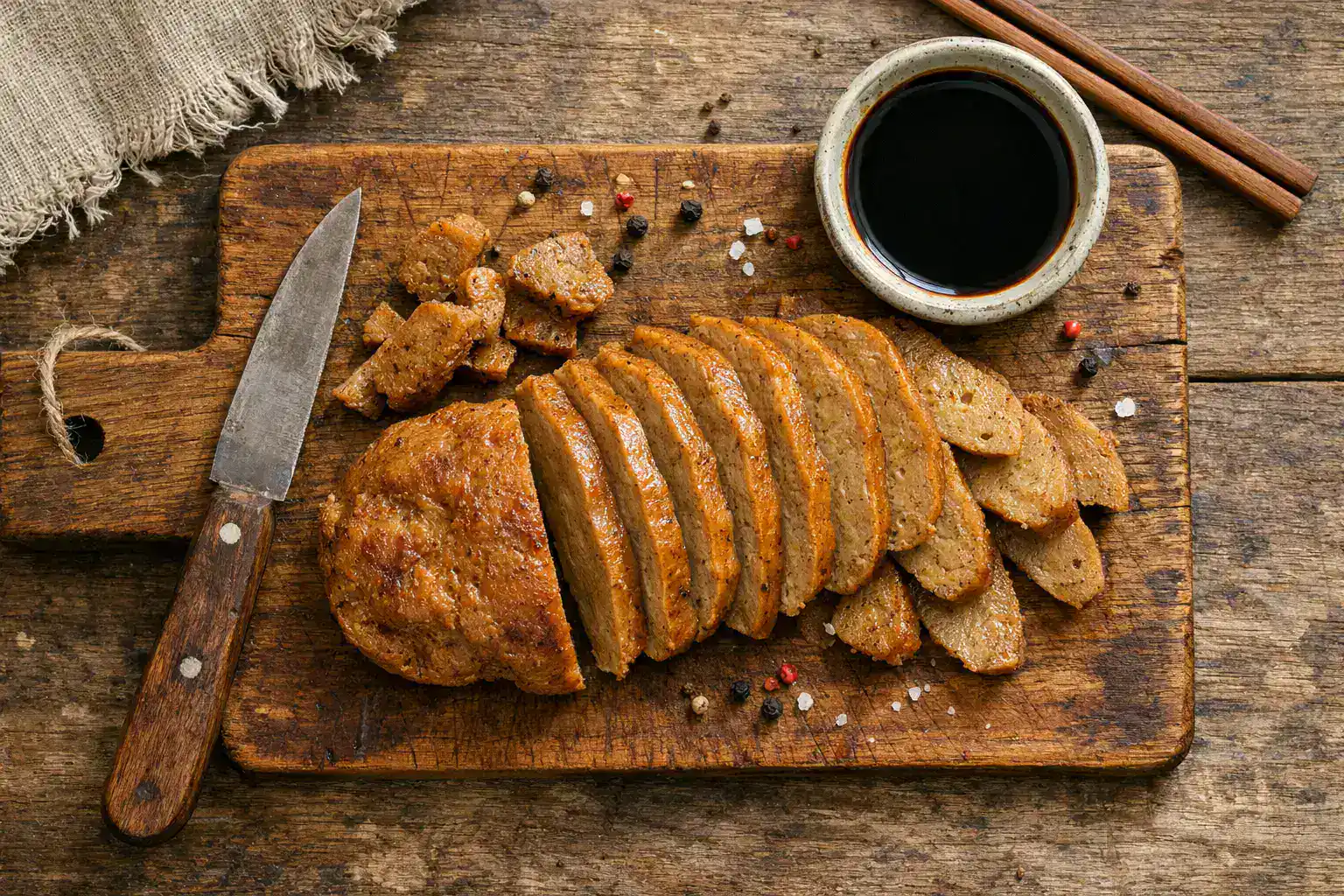
Quick Nutrition Facts
Per 100g
| Nutrient | Prepared seitan | Dry vital wheat gluten |
|---|---|---|
| Calories | 120 kcal | 370 kcal |
| Protein | 21g | 75g |
| Carbohydrates | 7g | 14g |
| Fiber | 1g | 1g |
| Sugars | 0g | 0g |
| Fat | 2g | 2g |
| Sodium | varies by brand | 60mg |
| Iron | 1.7mg | 5.2mg |
| Selenium | not published | 15mcg |
| Phosphorus | not published | 120mg |
The prepared column is a representative 100 g of packaged seitan. USDA-listed products run 106 to 158 kcal, 17.9 to 26.3g protein, 4.7 to 11.9g carbs and 0 to 3.5g fat. The dry column is vital wheat gluten flour before hydration, which is what you buy to make seitan rather than what you eat.
Macronutrient Breakdown
 ChatGPT
  Claude
  AI Mode
  Perplexity
NUTRITIONIST INSIGHT
Seitan delivers more protein per calorie than almost any other plant food. Prepared seitan carries about 21g protein in 120 kcal per 100g, which beats chicken breast per calorie, and the dry vital wheat gluten it is made from is 75g protein per 100g. The key caveat: it's pure gluten, making it completely unsuitable for those with celiac disease or gluten sensitivity.
Myth Busters
MYTH #1: Seitan Is a Complete Protein
TRUTH: Seitan is low in lysine, an essential amino acid. To get complete protein, pair seitan with lysine-rich foods like legumes, beans, or soy products throughout the day.
MYTH #2: Seitan Is Unhealthy Processed Food
TRUTH: Traditional seitan is simply wheat flour washed to isolate gluten protein - no chemicals added. Harvard Nutrition Source confirms gluten acts as a prebiotic feeding beneficial gut bacteria in non-sensitive individuals.
MYTH #3: Everyone Should Avoid Gluten
TRUTH: Only about 1% of the population has celiac disease, and 6% have gluten sensitivity. For the remaining 93%, gluten-containing foods like seitan provide health benefits including fiber and B vitamins.
MYTH #4: Seitan Has No Nutritional Value Beyond Protein
TRUTH: Seitan provides significant iron (5.2mg/100g - 29% DV), selenium, and phosphorus. It's naturally low in fat (2g) and carbs (14g), making it nutrient-dense for its calorie content.
MYTH #5: Seitan Is the Same as Tofu
TRUTH: They're completely different. Prepared seitan is wheat-based with about 21g protein/100g; tofu is soy-based with 8g protein/100g. Seitan has meat-like texture while tofu is softer, and they come from different food allergen categories.
MYTH #6: Seitan Is Hard to Digest
TRUTH: For people without gluten sensitivity, seitan is easily digestible. Plant protein digestibility ranges from 0.4-0.9, and properly prepared seitan falls on the higher end due to processing that breaks down some complex structures.
NutriScore by Health Goals
| Health Goal | NutriScore | Why This Score? |
|---|---|---|
| Weight Loss |  | High protein (21g per 100g prepared) keeps you full at 120 cal with 2g fat. Perfect for high-protein, low-fat diets. |
| Muscle Gain | | Best plant protein for muscle building. 21g protein per 100g prepared rivals meat per calorie. Combine with legumes for complete amino acids. |
| Diabetes Management | | Very low glycemic impact with only 14g carbs and 0g sugar. High protein content slows glucose absorption. |
| PCOS Management |  | High protein supports insulin sensitivity. Low carb content beneficial. Monitor portion sizes (85g servings). |
| Pregnancy Nutrition |  | Good protein source but incomplete amino acids require careful meal planning. Pair with varied protein sources for fetal development. |
| Viral/Flu Recovery | | High protein supports immune recovery. Easy to add to soups. Provides iron for energy restoration. |
PERSONALIZED NUTRITION
Track your meals with NutriScan for personalized NutriScores based on your specific health goals!
Blood Sugar Response to Seitan
Understanding how seitan affects your blood glucose helps optimize meal timing and pairings.
Typical Glucose Response Curve
This chart shows typical blood glucose response for general healthy individuals. Individual responses may vary. Not medical advice.
How to Optimize Blood Sugar
Seitan's high protein and low carb content naturally produces a minimal glucose response. Combining protein with carbohydrates slows glucose absorption:
- Add vegetables - Fiber from veggies extends satiety
- Include healthy fats - Sesame oil or avocado further blunts any spike
- Pair with whole grains - Rice or quinoa provides sustained energy
- Balance portions - 85g seitan with vegetables creates ideal meal
Cultural Significance
Seitan originated in China over 1,500 years ago, developed by Buddhist monks seeking meat alternatives for vegetarian diets.
In Asia:
- Called "mianjin" (面筋) in China, meaning "wheat muscle"
- Japanese Zen Buddhist cuisine features "fu" (wheat gluten)
- Macrobiotic diet popularized seitan in the West during the 1960s
- Used in traditional Chinese Buddhist temple cooking for centuries
Global Adoption:
- Named "seitan" by Japanese macrobiotic teacher George Ohsawa in 1961
- Popular in Western vegan and vegetarian cuisine since 1970s
- Growing market: plant-based meat alternatives projected at $15 billion by 2027
- Used as base for many commercial vegan meat products
Compare & Substitute
Seitan vs Other Protein Sources (Per 100g)
| Nutrient | Seitan (prepared) | Seitan (dry gluten) | Chicken Breast | Tofu | Tempeh |
|---|---|---|---|---|---|
| Calories | 106-158 kcal | 370 kcal | 165 kcal | 80 kcal | 193 kcal |
| Protein | 18-26g | 75g | 31g | 8g | 19g |
| Carbs | 5-12g | 14g | 0g | 2g | 9g |
| Fat | 0-3.5g | 2g | 3.6g | 4.8g | 11g |
| Fiber | 0-1.8g | 1g | 0g | 0.3g | 0g |
| Iron | 1-2.4mg | 5.2mg | 1mg | 2.7mg | 2.7mg |
| Best For | Muscle gain, vegan protein | Cooking from scratch | Lean protein, keto | Complete protein, hormonal balance | Gut health, complete protein |
Frequently Asked Questions
Is seitan good for muscle building?
Yes, seitan is exceptional for muscle building. Prepared seitan carries about 21g protein per 100g at only 120 kcal, which beats chicken breast per calorie, and the dry vital wheat gluten behind it is 75g per 100g. For complete amino acids, combine it with lysine-rich foods like chickpeas, lentils, or soy throughout the day.
Best practices: Consume 25-30g protein portions post-workout, pair with legumes or quinoa, space protein intake across meals.
Can people with celiac disease eat seitan?
No. Seitan is pure wheat gluten and is strictly off-limits for anyone with celiac disease, non-celiac gluten sensitivity, or wheat allergy. Even trace amounts can trigger intestinal damage in celiac patients.
Alternatives: Choose tofu, tempeh, legumes, or other naturally gluten-free protein sources.
How much protein is in seitan?
Prepared seitan contains about 21g of protein per 100g, with USDA-listed products ranging from 17.9g to 26.3g. A typical 150g serving provides roughly 32g of protein. Dry vital wheat gluten, before you hydrate and cook it, is 75g per 100g.
For context:
- Seitan, prepared: 21g protein/100g at 120 kcal
- Vital wheat gluten, dry: 75g protein/100g at 370 kcal
- Chicken breast: 31g protein/100g at 165 kcal
- Tofu: 8g protein/100g at 80 kcal
- Lentils: 9g protein/100g (cooked)
Is seitan healthier than tofu?
Both have unique benefits - choose based on your goals:
Seitan advantages:
- More protein than tofu (21g vs 8g per 100g prepared)
- Meat-like texture for satisfying meals
- Lower fat content
Tofu advantages:
- Complete protein with all amino acids
- Contains beneficial isoflavones
- Suitable for those avoiding gluten
- More versatile texture options
Does seitan spike blood sugar?
No, seitan has minimal blood sugar impact. Prepared seitan carries about 21g protein and only 5 to 12g carbohydrates per 100g, so it produces a very flat glucose curve. This makes it excellent for diabetics and those monitoring blood sugar.
How should I prepare seitan?
Common cooking methods:
- Stir-fry - Slice thin, cook with vegetables and sauce
- Grill/BBQ - Marinate first, grill for smoky flavor
- Braise - Simmer in broth for tender texture
- Bread and fry - Creates crispy "chicken" alternative
Tip: Marinate for at least 30 minutes to enhance flavor absorption.
How much seitan should I eat per day?
General guidelines:
Portions below are prepared seitan at about 21g protein per 100g:
- Muscle gain: 200-250g daily (42-52g protein)
- Weight maintenance: 150g daily (32g protein)
- Weight loss: 100g daily (21g protein)
Important: Balance with other protein sources to ensure complete amino acid intake. Don't rely solely on seitan for all protein needs.
Can I make seitan at home?
Yes, homemade seitan is simple and economical:
- Mix vital wheat gluten with water and seasonings
- Knead until elastic
- Simmer in seasoned broth for 45-60 minutes
- Cool and slice for use
Store refrigerated up to 5 days or frozen for 3 months.


Similar Nutritious Foods
4505 Chicharrones Classic Chili Salt
7 Eleven Japan Crispy Corn Cheese
Explore More Nutrition Tools & Resources
AI Calorie Counter App - Snap a Photo, Get Macros
AI Nutritionist App That Reads Your Logged Meals
Best Protein Supplements for Women
Bulking Meal Plan App That Sets Your Surplus
ChatGPT Calorie Counter Alternative That Keeps the Total
ChatGPT Diet Plan Alternative That Tracks What You Eat
ChatGPT Weight Loss Coach Alternative With a Food Log
Fast Food Calorie Counter App That Reads the Tray
Free Calorie Tracker App with AI Photo Scans | NutriScan
Indian Diet Plan App With Veg and Non Veg Meals
Indian Food Calorie Calculator - Get Instant Nutrition Facts for Desi Meals — 2026
Intermittent Fasting for Women, Timer and Meal Log App
Intermittent Fasting Tracker App - Free Fasting Timer
Macro Tracker App That Fills the Numbers From a Photo
Mediterranean Diet Meal Plan App That Counts the Oil
Micronutrient Tracker App for Vitamins and Minerals
MyFitnessPal Alternative That Stays Free | NutriScan
NutriScore App: A Free Grade on Every Meal | NutriScan
Nutrition Label Scanner App for the Amount You Ate
Second Trimester Protein Guide
Vegetarian Meal Plan App With a Protein Target
Voice Calorie Counter - Speak to Track Meals Hands-Free
Water and Calorie Tracker App - Free Water Log