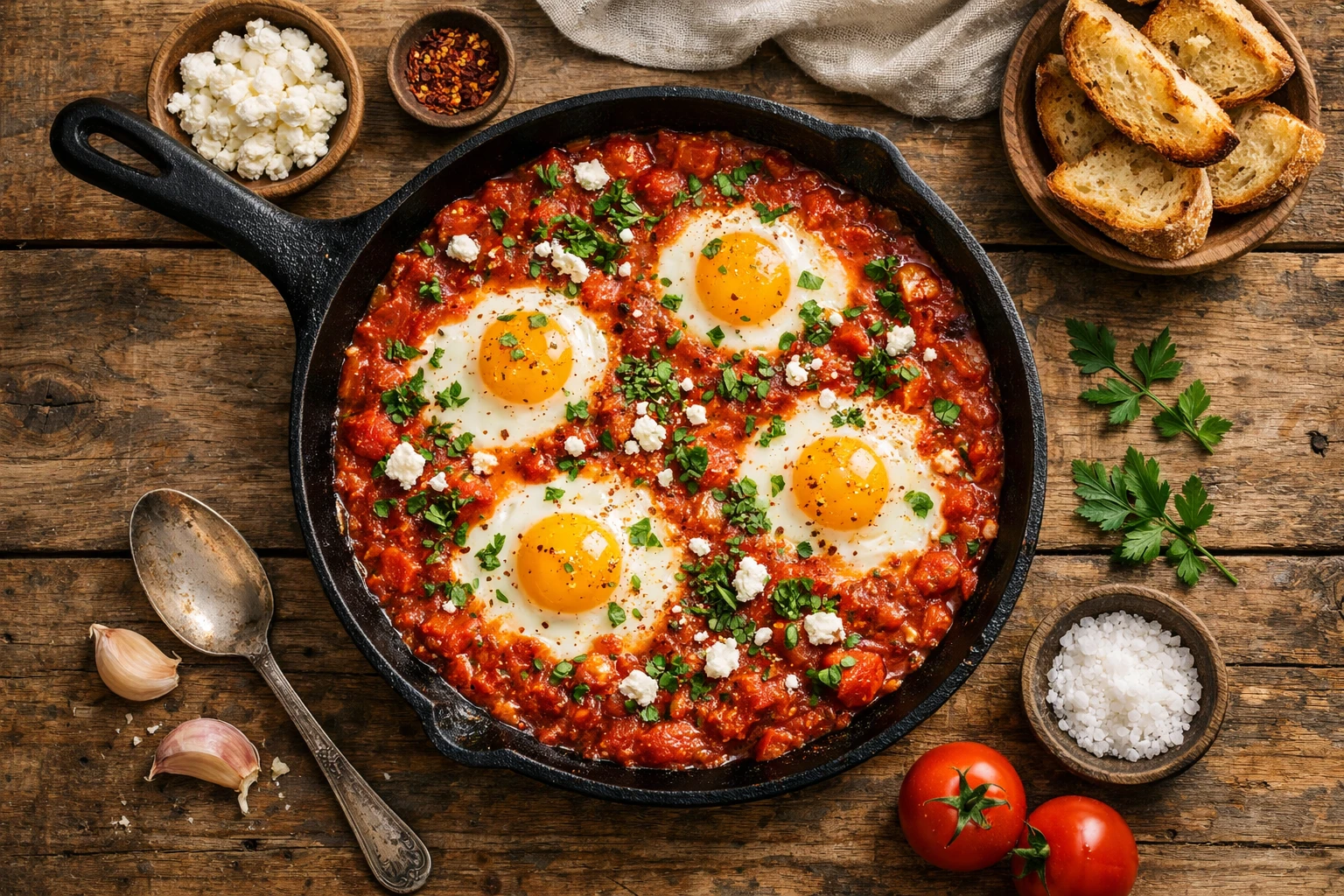
Shakshuka: Calories, Nutrition and Health Benefits
Protein-packed Middle Eastern breakfast with eggs poached in spiced tomato sauce—complete nutrition in one satisfying skillet.
Quick Nutrition Facts
Per 1 Serving (250g with 2 large eggs)
| Nutrient | Amount |
|---|---|
| Calories | 220 kcal |
| Protein | 12g |
| Carbohydrates | 12g |
| Fiber | 3g |
| Sugars | 7g |
| Fat | 14g |
| Cholesterol | 372mg |
| Sodium | 450mg |
| Vitamin A | 850 IU |
| Vitamin C | 18mg |
| Iron | 2.4mg |
| Choline | 294mg |
Macronutrient Breakdown
 ChatGPT
  Claude
  AI Mode
  Perplexity
NUTRITIONIST INSIGHT
Shakshuka delivers complete protein from eggs with all 9 essential amino acids, plus lycopene from tomatoes that reduces cardiovascular disease risk by 14%. The combination creates balanced blood sugar response.
Myth Busters
MYTH #1: Eggs in Shakshuka Raise Cholesterol Dangerously
TRUTH: Dietary cholesterol has minimal impact on blood cholesterol for most people. Eggs provide choline essential for brain development, especially during pregnancy. Focus on overall diet quality, not single foods.
MYTH #2: Shakshuka Is Too High in Calories for Weight Loss
TRUTH: At 220 calories with 12g protein, shakshuka is an excellent weight loss breakfast. High protein increases satiety and boosts metabolism by 20-30% for several hours. Skip bread and add spinach to reduce calories further.
MYTH #3: The Tomato Sauce Is Just Empty Carbs
TRUTH: Tomatoes provide lycopene, a powerful antioxidant linked to heart health, vitamin C for immunity, and potassium for blood pressure regulation. The 12g carbs include 3g fiber and natural sugars, not refined carbohydrates.
MYTH #4: You Must Eat Shakshuka with Bread
TRUTH: Traditional serving includes bread, but shakshuka is nutritionally complete without it. Serve with salad, roasted vegetables, or eat alone for lower carb, higher nutrient density. Bread adds 150-200 calories without essential nutrients.
MYTH #5: Shakshuka Isn't Safe During Pregnancy
TRUTH: Fully cooked shakshuka is highly nutritious during pregnancy, providing choline for fetal brain development, folate from tomatoes, and complete protein. Ensure eggs are cooked until yolks are firm to avoid foodborne illness.
NutriScore by Health Goals
| Health Goal | NutriScore | Why This Score? |
|---|---|---|
| Weight Loss |  | 220 calories with 12g protein promotes fullness; high satiety index; skip bread and add vegetables for volume. |
| Muscle Gain | | Complete amino acid profile from eggs (12g protein); add feta cheese for extra protein (16g total); ideal post-workout meal. |
| Diabetes Management | | Low glycemic index; protein and fat slow glucose absorption; 12g carbs mainly from tomatoes; avoid bread for better control. |
| PCOS Management | | High protein improves insulin sensitivity; anti-inflammatory from tomatoes and spices; balanced macros support hormone regulation. |
| Pregnancy Nutrition | | Choline supports fetal brain development (294mg); folate from tomatoes; iron and complete protein; cook eggs fully. |
| Viral/Flu Recovery | | Easy to digest; vitamin C and lycopene boost immunity; protein supports recovery; anti-inflammatory spices aid healing. |
PERSONALIZED NUTRITION
Track your meals with NutriScan for personalized NutriScores based on your specific health goals!
Blood Sugar Response to Shakshuka
Understanding how shakshuka affects blood glucose helps optimize timing and pairing for your health goals.
Typical Glucose Response Curve
This chart shows typical blood glucose response for general healthy individuals. Individual responses may vary. Not medical advice.
How to Optimize Blood Sugar Control
Shakshuka naturally has minimal blood sugar impact due to protein and fat. Enhance control further:
- 🥒 Serve with raw vegetables (cucumbers, bell peppers, carrots) - Adds fiber and volume without bread carbs
- 🥗 Add to salad bowls - Combines protein, greens, and healthy fats for balanced meals
- 🍗 Pair with grilled protein - Chicken, fish, or falafel extend satiety and stabilize glucose
- 🫓 Choose whole grain pita sparingly - If using bread, opt for whole wheat and limit to 1-2 small pieces
This approach maintains the creamy satisfaction while minimizing glucose fluctuations.
Cultural Significance
Shakshuka (Arabic: شكشوكة; Hebrew: שקשוקה) has ancient North African and Middle Eastern roots, now beloved worldwide.
Origins & Evolution:
- Likely originated in Ottoman North Africa (Tunisia, Libya) in 16th century
- Sephardic Jews brought recipe to Israel, where it became national breakfast icon
- Name derives from Arabic "shakshek" meaning "a mixture" or Berber "chakchouka"
- Each region has variations: Tunisian version uses harissa; Israeli adds cumin and paprika
Cultural Impact:
- Symbol of Israeli breakfast culture served in every café and home
- Sunday brunch staple in Middle East, often eaten communally from shared skillet
- Gained global popularity in 2010s through food blogs and restaurant menus
- Represents Mediterranean diet principles: vegetables, eggs, olive oil, minimal processing
Compare & Substitute
Shakshuka vs Similar Egg Dishes (Per Serving)
| Nutrient | 🍳 Shakshuka (2 eggs) | 🥚 Scrambled Eggs (2) | 🍳 Frittata (slice) | 🌯 Breakfast Burrito |
|---|---|---|---|---|
| Calories | 220 kcal | 182 kcal | 210 kcal | 450 kcal |
| Carbs | 12g | 2g | 8g | 45g |
| Fiber | 3g | 0g | 2g | 4g |
| Protein | 12g | 13g | 14g | 18g |
| Fat | 14g | 14g | 15g | 22g |
| Vitamin A | 850 IU | 540 IU | 720 IU | 450 IU |
| Lycopene | High | None | Medium (if tomatoes) | None |
| Best For | Balanced nutrition, flavor | Quick protein, low-carb | Meal prep, vegetables | High calories, portable |
Frequently Asked Questions
Is shakshuka good for weight loss?
Yes, shakshuka supports weight loss with 220 calories and 12g protein that significantly increases satiety. High protein breakfast reduces hunger throughout the day and boosts metabolism by 20-30%. Tomatoes provide volume and fiber with minimal calories.
Best practices: Skip bread to save 150-200 calories; add extra vegetables (spinach, bell peppers, zucchini); use 1 tbsp olive oil instead of 2-3; eat for breakfast to extend satiety until lunch.
Can diabetics eat shakshuka?
Yes, shakshuka is excellent for diabetics. The combination of 12g protein, 14g fat, and 3g fiber creates minimal blood sugar impact despite 12g carbs from tomatoes. Low glycemic index with balanced macronutrients.
Tips for diabetics:
- Avoid serving with white bread or pita; use small portion of whole grain if needed
- Add extra vegetables to increase fiber and reduce glycemic load
- Eat with salad for additional fiber and nutrients
- Monitor blood sugar 2 hours after to understand personal response
Most diabetics experience stable blood sugar with shakshuka alone.
How much protein is in shakshuka?
A serving with 2 eggs contains 12g of complete protein providing all 9 essential amino acids. Eggs deliver highest quality protein with bioavailability score of 100%.
For higher protein needs (muscle gain, athletes), add feta cheese (4g per 28g) or serve with Greek yogurt side (10g per 100g) for 16-22g total protein.
What are the main health benefits of shakshuka?
Key Benefits:
- Complete Protein: All essential amino acids for muscle repair and satiety
- Heart Health: Lycopene from tomatoes reduces cardiovascular disease risk by 14%
- Brain Development: Choline supports fetal brain growth during pregnancy (294mg per serving)
- Eye Health: Vitamin A and lycopene protect vision and reduce macular degeneration
- Anti-Inflammatory: Spices (cumin, paprika) and tomatoes reduce systemic inflammation
- Blood Sugar Control: Protein and fat combination stabilizes glucose levels
What's the best time to eat shakshuka?
Breakfast (optimal): High protein increases satiety and metabolism throughout the day; stabilizes blood sugar until lunch; provides sustained energy for morning activities.
Lunch or Dinner: Works as complete meal with added vegetables; lighter than traditional dinner proteins; Mediterranean cultures eat eggs any time.
Pre-Workout: Not recommended—high fat delays digestion.
Post-Workout: Acceptable within 2 hours for protein recovery; add whole grain bread for glycogen replenishment.
For weight loss and diabetes management, breakfast is ideal timing.
Is shakshuka safe during pregnancy?
Yes, fully cooked shakshuka is highly nutritious during pregnancy. Eggs provide choline essential for fetal brain development (294mg per serving—53% DV), complete protein, iron, and B vitamins. Tomatoes add folate critical for neural tube development.
Safety tips: Cook eggs until yolks are completely firm (not runny) to avoid salmonella; ensure internal temperature reaches 160°F (71°C); avoid unpasteurized feta if added.
Shakshuka supports maternal nutrition and fetal growth when properly prepared.


Similar Nutritious Fruits
4505 Chicharrones Classic Chili Salt
7 Eleven Japan Crispy Corn Cheese
Explore More Nutrition Tools & Resources
AI Calorie Counter App - Snap a Photo, Get Macros
AI Nutritionist App That Reads Your Logged Meals
Best Protein Supplements for Women
Bulking Meal Plan App That Sets Your Surplus
ChatGPT Calorie Counter Alternative That Keeps the Total
ChatGPT Diet Plan Alternative That Tracks What You Eat
ChatGPT Weight Loss Coach Alternative With a Food Log
Fast Food Calorie Counter App That Reads the Tray
Free Calorie Tracker App with AI Photo Scans | NutriScan
Indian Diet Plan App With Veg and Non Veg Meals
Indian Food Calorie Calculator - Get Instant Nutrition Facts for Desi Meals — 2026
Intermittent Fasting for Women, Timer and Meal Log App
Intermittent Fasting Tracker App - Free Fasting Timer
Macro Tracker App That Fills the Numbers From a Photo
Mediterranean Diet Meal Plan App That Counts the Oil
Micronutrient Tracker App for Vitamins and Minerals
MyFitnessPal Alternative That Stays Free | NutriScan
NutriScore App: A Free Grade on Every Meal | NutriScan
Nutrition Label Scanner App for the Amount You Ate
Second Trimester Protein Guide
Vegetarian Meal Plan App With a Protein Target
Voice Calorie Counter - Speak to Track Meals Hands-Free
Water and Calorie Tracker App - Free Water Log