Shashlik: Calories, Nutrition and Health Benefits
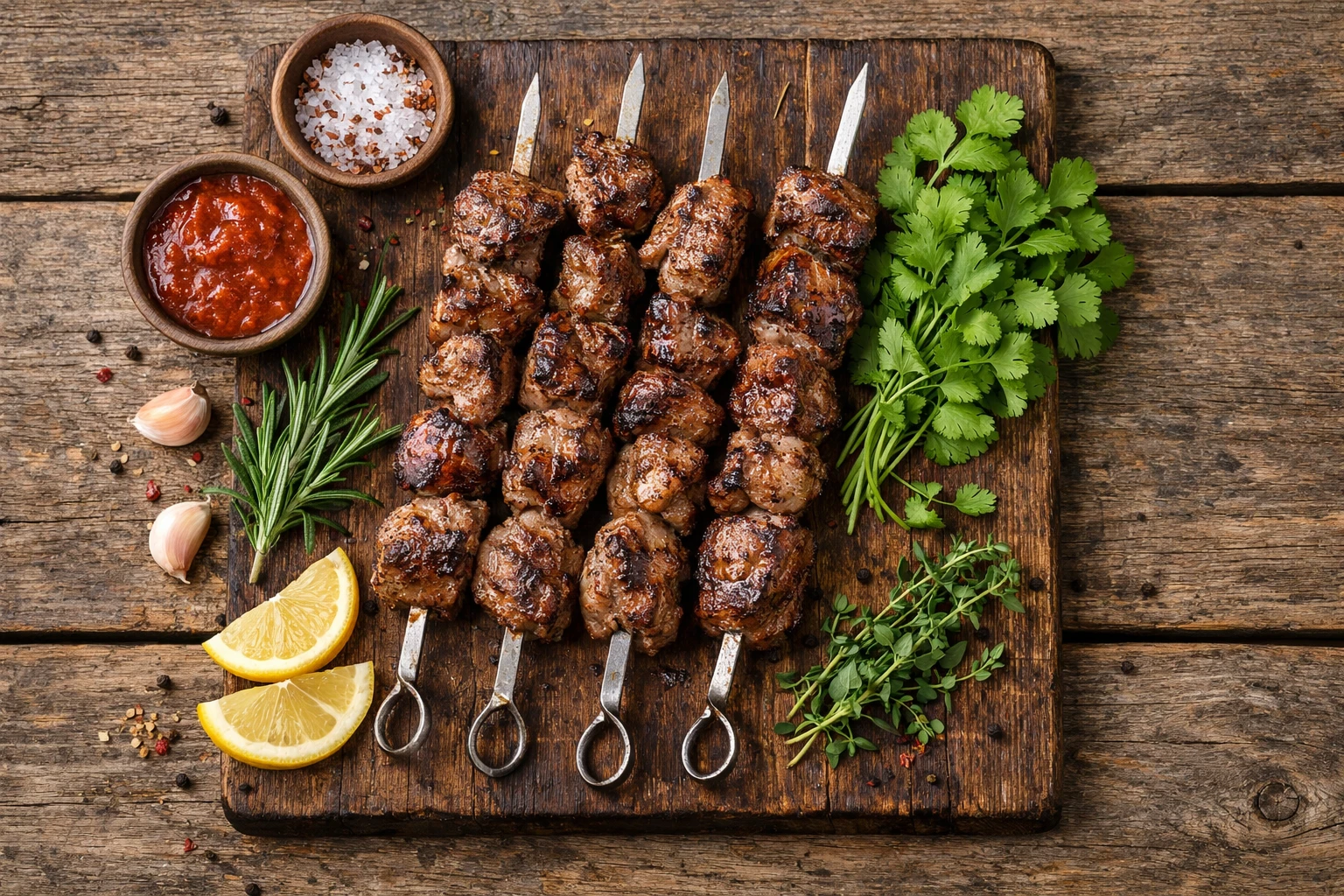
Central Asia's beloved grilled lamb skewers—marinated in kefir, rich in protein, iron, and B12 for sustained energy and muscle health.
Quick Nutrition Facts
Per 3 Skewers (150g serving)
| Nutrient | Amount |
|---|---|
| Calories | 280 kcal |
| Protein | 28g |
| Carbohydrates | 2g |
| Fiber | 0g |
| Sugars | 1g |
| Fat | 18g |
| Saturated Fat | 7g |
| Iron | 2.5mg |
| Vitamin B12 | 2.5mcg |
| Zinc | 5mg |
Macronutrient Breakdown
 ChatGPT
  Claude
  AI Mode
  Perplexity
NUTRITIONIST INSIGHT
Shashlik provides 28g of complete protein per serving—nearly half your daily needs. The kefir marinade adds probiotics and tenderizes the meat while reducing harmful compounds formed during grilling.
Myth Busters
MYTH #1: Red Meat Like Shashlik Is Always Unhealthy
TRUTH: Moderate consumption of lean lamb provides essential nutrients. Fresh lamb consumption is associated with higher intakes of protein, niacin, vitamins B6, B12, zinc and potassium. The key is portion control and cooking method.
MYTH #2: Grilled Meat Causes Cancer
TRUTH: While charring can produce harmful compounds, marinating meat in yogurt or kefir (traditional shashlik method) reduces heterocyclic amine formation by up to 90%. Avoid charring and flip frequently.
MYTH #3: Shashlik Is Too Fatty for Weight Loss
TRUTH: With only 250 calories per 100g and 25g protein, shashlik provides excellent satiety. Protein has the highest thermic effect of food, meaning your body burns more calories digesting it.
MYTH #4: You Can't Eat Shashlik on a Low-Carb Diet
TRUTH: Shashlik is ideal for low-carb and keto diets with only 2g carbs per serving. It's a perfect protein source that won't spike blood sugar or kick you out of ketosis.
NutriScore by Health Goals
| Health Goal | NutriScore | Why This Score? |
|---|---|---|
| Weight Loss |  | High protein (28g) promotes satiety, low carbs (2g). Limit to 2-3 skewers per meal. |
| Muscle Gain |  | Excellent complete protein source with all essential amino acids, iron for oxygen transport, B12 for energy metabolism. |
| Diabetes Management | | Very low carbs (2g) cause minimal blood sugar impact. High protein meals help stabilize glucose levels. Avoid sweet marinades. |
| PCOS Management | | High protein supports hormone balance, low carbs help insulin sensitivity. Choose lean cuts. |
| Pregnancy Nutrition | | Rich in iron (prevents anemia), B12 (neural development), zinc (immune support). Ensure meat is thoroughly cooked to 165°F/74°C. |
| Viral/Flu Recovery | | High zinc supports immune function, protein aids tissue repair, B vitamins boost energy recovery. |
PERSONALIZED NUTRITION
Track your meals with NutriScan for personalized NutriScores based on your specific health goals!
Blood Sugar Response to Shashlik
Understanding how shashlik affects your blood glucose helps optimize meal timing and pairings.
Typical Glucose Response Curve
This chart shows typical blood glucose response for general healthy individuals. Individual responses may vary. Not medical advice.
How to Optimize Blood Sugar Response
Pairing protein with fiber-rich vegetables further stabilizes glucose and enhances nutrient absorption:
- 🥗 Grilled vegetables - Tomatoes, onions, peppers add fiber and antioxidants
- 🥒 Fresh salad with herbs - Parsley, cilantro, dill aid digestion
- 🍞 Whole grain lavash - If adding carbs, choose whole grain for slower absorption
- 🥛 Ayran (salted yogurt drink) - Traditional pairing adds probiotics and calcium
This combination provides balanced nutrition while keeping blood sugar stable.
Cultural Significance
Shashlik (шашлык) is one of Central Asia's most iconic dishes, with roots tracing back thousands of years to nomadic herding cultures.
Origins & History:
- Name derived from Turkic "shish" (skewer) and "lik" (relating to)
- Evolved from nomadic cooking methods on the Eurasian steppes
- Spread along Silk Road trade routes to Russia, Caucasus, and Eastern Europe
- Each region developed unique marinades and spice blends
In Central Asia:
- Kazakhstan: Often made with horse meat or lamb, served at celebrations
- Uzbekistan: Marinated in vinegar and onions, cooked in tandoor
- Kyrgyzstan: Traditionally prepared with kefir marinade
- Russia: Became popular through Caucasian cuisine in Soviet era
Cultural Importance:
- Central to celebrations, weddings, and family gatherings
- Preparing shashlik is traditionally men's responsibility
- Symbol of hospitality—offering shashlik honors guests
- Eaten with flatbread, raw onions, and fresh herbs
Compare & Substitute
Shashlik vs Similar Protein Sources (Per 100g)
| Nutrient | 🍖 Shashlik (Lamb) | 🐔 Chicken Kebab | 🥩 Beef Kebab | 🐟 Fish Kebab |
|---|---|---|---|---|
| Calories | 250 kcal | 165 kcal | 250 kcal | 120 kcal |
| Carbs | 2g | 1g | 1g | 0g |
| Fiber | 0g | 0g | 0g | 0g |
| Protein | 25g | 31g | 26g | 22g |
| Fat | 18g | 4g | 15g | 3g |
| Iron | 2.5mg | 1.0mg | 2.8mg | 0.5mg |
| B12 | 2.5mcg | 0.3mcg | 2.0mcg | 1.5mcg |
| Zinc | 5mg | 1.5mg | 6mg | 0.5mg |
| Best For | Iron needs, B12, flavor | Lean protein, low fat | Iron, zinc, muscle gain | Omega-3s, low calorie |
Frequently Asked Questions
How many calories are in shashlik?
A serving of 3 shashlik skewers (about 150g) contains approximately 280 calories. Per 100g, shashlik provides around 250 calories with 25g protein, 18g fat, and only 2g carbs.
Calorie breakdown by cut:
- Lean lamb leg: 220 kcal/100g
- Lamb shoulder (fattier): 290 kcal/100g
- Mixed with vegetables: 180-200 kcal/100g
Is shashlik good for muscle building?
Yes, shashlik is excellent for muscle building. It provides 25-28g of complete protein per serving with all essential amino acids needed for muscle synthesis.
Muscle-building benefits:
- High biological value protein for efficient absorption
- Iron supports oxygen delivery to muscles
- Zinc aids protein synthesis and recovery
- B12 supports energy metabolism during workouts
Can diabetics eat shashlik?
Yes, shashlik is diabetes-friendly due to its very low carbohydrate content (2g per serving). The high protein and fat content provides stable energy without blood sugar spikes.
Tips for diabetics:
- Choose lean cuts to reduce saturated fat
- Avoid sweet or sugary marinades
- Pair with non-starchy vegetables
- Monitor portion sizes (2-3 skewers per meal)
What makes shashlik different from other kebabs?
Shashlik is the Central Asian/Russian version of grilled meat skewers with distinct characteristics:
Unique features:
- Traditional kefir or yogurt marinade (tenderizes and adds probiotics)
- Typically larger meat chunks than Middle Eastern kebabs
- Often includes lamb fat pieces for moisture
- Served with raw onions and fresh herbs
Is the fat in shashlik bad for you?
Lamb fat contains both saturated and unsaturated fats. While high in saturated fat (7g per serving), it also provides:
- Conjugated linoleic acid (CLA) with potential health benefits
- Oleic acid (same as olive oil)
- Essential fatty acids
Best practices:
- Trim visible fat before cooking
- Limit to 2-3 servings per week
- Balance with fish and plant proteins
How should I prepare shashlik for maximum health benefits?
Healthy preparation tips:
- Marinate in yogurt/kefir (reduces harmful compounds, adds probiotics)
- Use lean cuts and trim excess fat
- Don't char—cook over medium heat
- Flip frequently to prevent burning
- Serve with plenty of vegetables and herbs
Track your protein intake with NutriScan app to optimize your nutrition goals.


Similar Nutritious Foods
4505 Chicharrones Classic Chili Salt
7 Eleven Japan Crispy Corn Cheese
Explore More Nutrition Tools & Resources
AI Calorie Counter App - Snap a Photo, Get Macros
AI Nutritionist App That Reads Your Logged Meals
Best Protein Supplements for Women
Bulking Meal Plan App That Sets Your Surplus
ChatGPT Calorie Counter Alternative That Keeps the Total
ChatGPT Diet Plan Alternative That Tracks What You Eat
ChatGPT Weight Loss Coach Alternative With a Food Log
Fast Food Calorie Counter App That Reads the Tray
Free Calorie Tracker App with AI Photo Scans | NutriScan
Indian Diet Plan App With Veg and Non Veg Meals
Indian Food Calorie Calculator - Get Instant Nutrition Facts for Desi Meals — 2026
Intermittent Fasting for Women, Timer and Meal Log App
Intermittent Fasting Tracker App - Free Fasting Timer
Macro Tracker App That Fills the Numbers From a Photo
Mediterranean Diet Meal Plan App That Counts the Oil
Micronutrient Tracker App for Vitamins and Minerals
MyFitnessPal Alternative That Stays Free | NutriScan
NutriScore App: A Free Grade on Every Meal | NutriScan
Nutrition Label Scanner App for the Amount You Ate
Second Trimester Protein Guide
Vegetarian Meal Plan App With a Protein Target
Voice Calorie Counter - Speak to Track Meals Hands-Free
Water and Calorie Tracker App - Free Water Log