Shokupan (Japanese Milk Bread): Calories, Nutrition and Health Benefits
Japan's iconic ultra-soft milk bread made with the tangzhong method, delivering pillowy texture with 120 calories and 4g protein per slice.
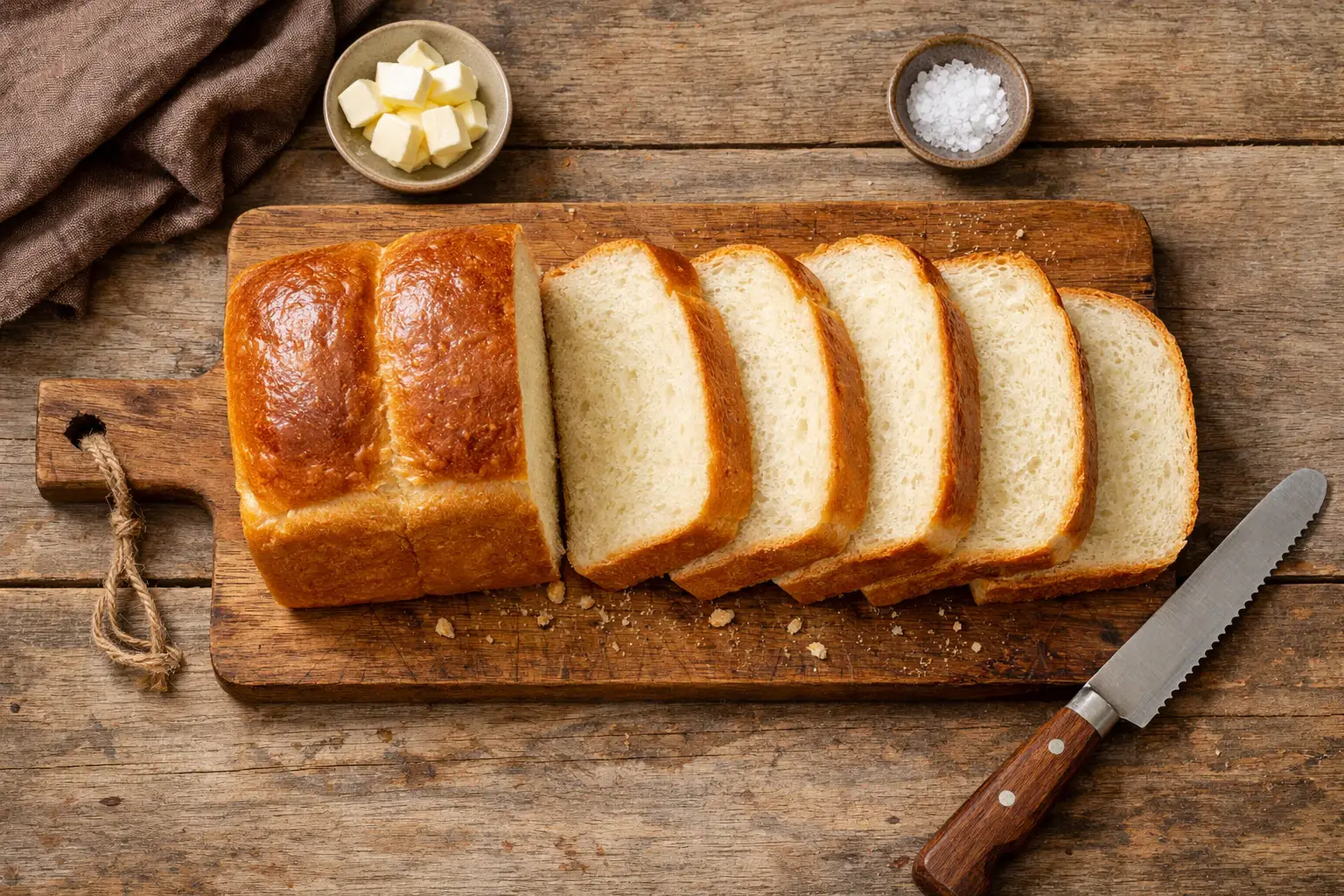
Quick Nutrition Facts
Per 1 Slice of Shokupan (48g)
| Nutrient | Amount |
|---|---|
| Calories | 120 kcal |
| Protein | 4g |
| Carbohydrates | 22g |
| Fiber | 0.8g |
| Sugars | 2.4g |
| Fat | 2g |
| Saturated Fat | 1g |
| Calcium | 40mg |
| Sodium | 160mg |
| Iron | 1.2mg |
Macronutrient Breakdown
 ChatGPT
  Claude
  AI Mode
  Perplexity
NUTRITIONIST INSIGHT
Shokupan gets its signature softness from the tangzhong (water roux) method, which gelatinizes starches for better moisture retention. While it provides calcium and B vitamins from added milk, it remains a refined-flour product with limited fiber. Pair with protein-rich toppings for a more balanced meal.
Myth Busters
MYTH #1: Shokupan Is Much Healthier Than Regular White Bread
TRUTH: Shokupan has a similar calorie profile to regular white bread (250 vs 265 kcal per 100g). The added milk provides slightly more calcium and protein, but it is still refined flour with high glycemic impact. The tangzhong method improves texture, not nutrition.
MYTH #2: The Tangzhong Method Reduces Carbs
TRUTH: Tangzhong (cooking flour with water) gelatinizes starches but does not remove or reduce carbohydrates. The total carb content remains the same. The method only changes texture by allowing the dough to retain more moisture.
MYTH #3: Japanese Bread Is Low in Sugar
TRUTH: While plain shokupan contains only 2.4g sugar per slice, many commercial varieties add significantly more sugar. Always check the label. Even plain shokupan has a high glycemic index similar to white bread (GI ~70).
MYTH #4: Milk Bread Is a Good Source of Protein
TRUTH: At 4g protein per slice, shokupan provides only 8% of daily needs. The milk and butter add minimal protein compared to whole grain or sprouted breads. For a protein boost, top with eggs, nut butter, or lean meat.
MYTH #5: Shokupan Stays Fresh Because of Preservatives
TRUTH: Authentic shokupan stays soft for 2-3 days without preservatives. The tangzhong method creates a water roux that locks in moisture naturally. Commercial versions may contain preservatives, but traditional recipes rely on the roux technique alone.
NutriScore by Health Goals
| Health Goal | NutriScore | Why This Score? |
|---|---|---|
| Weight Loss |  | 120 cal per slice with low fiber (0.8g). Refined flour digests quickly, offering less satiety. Limit to 1 slice and pair with protein. |
| Muscle Gain |  | Decent post-workout carb source (22g per slice) for glycogen replenishment. Add eggs or chicken for complete meal. |
| Diabetes Management |  | High GI (~70) causes rapid blood sugar spikes. Whole grain bread significantly lowers postprandial glucose compared to white bread. Limit portions and pair with fat/protein. |
| PCOS Management | | Refined carbs can worsen insulin resistance. Choose whole grain alternatives or limit to occasional use with protein. |
| Pregnancy Nutrition | | Enriched flour provides folate important for neural tube development. Good source of calcium from milk. Easy to digest during morning sickness. |
| Viral/Flu Recovery | | Gentle on stomach, provides quick energy. Easy to eat when appetite is low. Pair with soup or broth for hydration. |
PERSONALIZED NUTRITION
Track your meals with NutriScan for personalized NutriScores based on your specific health goals!
Blood Sugar Response to Shokupan
Understanding how shokupan affects your blood glucose helps you make informed decisions about portion size and food pairing.
Typical Glucose Response Curve
*This chart shows typical blood glucose response for general healthy individuals. Individual responses may vary. Not medical advice.*
How to Flatten the Spike
Adding fat to bread significantly lowers the glycemic response by slowing gastric emptying and glucose absorption:
- 🥑 Avocado - Healthy fats and fiber slow glucose absorption
- 🥚 Eggs (scrambled or boiled) - Complete protein flattens the curve
- 🥜 Almond or peanut butter - Adds healthy fats and protein
- 🧀 Cheese - Protein and fat combination for sustained energy
Toasting shokupan or freezing and defrosting before eating can also modestly lower its glycemic impact.
Cultural Significance
Shokupan (food bread) has been a staple of Japanese breakfast culture since the early 20th century, evolving from Western bread-making traditions.
In Japan:
- Introduced during the Meiji era when Japan opened to Western influences
- The name "shokupan" literally means "eating bread" or "food bread"
- Thick-cut (4-slice loaf) is preferred for toast; thin-cut (8-slice) for sandwiches
- Foundation of "kissaten" (coffee shop) culture with thick toast, butter, and red bean paste
- Yamazaki, Pasco, and artisan bakeries produce millions of loaves daily
Global Impact:
- The tangzhong/yudane technique has spread worldwide through Asian baking culture
- Popularized globally through social media and home baking communities
- Influenced Western artisan bread trends toward softer, enriched loaves
- Used as the base for Japanese sandwiches (sando), including katsu sando and fruit sando
Compare & Substitute
Shokupan vs Similar Breads (Per 100g)
| Nutrient | 🍞 Shokupan | 🥖 White Bread | 🌾 Whole Wheat Bread | 🥐 Brioche |
|---|---|---|---|---|
| Calories | 250 kcal | 265 kcal | 247 kcal | 346 kcal |
| Carbs | 47g | 49g | 41g | 44g |
| Fiber | 1.7g | 2.7g | 7g | 2.4g |
| Protein | 8.3g | 8.9g | 13g | 10g |
| Fat | 3.3g | 3.2g | 3.4g | 14g |
| Sugar | 5g | 5g | 4.4g | 10g |
| Calcium | 83mg | 52mg | 107mg | 74mg |
| GI | ~70 | ~75 | ~54 | ~68 |
| Best For | Soft sandwiches, toast | General use, toast | Diabetes, weight loss, fiber | Indulgent baking, French toast |
Frequently Asked Questions
How many calories are in a slice of shokupan?
A standard slice of shokupan (48g) contains approximately 120 calories, with 22g carbohydrates, 4g protein, and 2g fat. Thicker Japanese-style slices (4-slice loaf cut) can have up to 200 calories per slice.
Per 100g: 250 calories, 47g carbs, 8.3g protein, 3.3g fat, 1.7g fiber.
Is shokupan healthier than regular white bread?
Shokupan has marginally more calcium (83mg vs 52mg per 100g) due to added milk. However, both are refined-flour products with similar calorie and carb profiles. Shokupan has slightly less fiber (1.7g vs 2.7g per 100g) than standard white bread.
Bottom line: Choose whole grain bread for better nutrition. Use shokupan when you want superior texture and taste.
Can diabetics eat shokupan?
Diabetics should be cautious with shokupan due to its high glycemic index (~70). If eating it, keep portions small and pair with protein or healthy fat.
Tips for diabetics:
- Limit to half a slice or 1 thin slice
- Always pair with eggs, cheese, or avocado
- Choose toasted over fresh (slightly lower GI)
- Monitor blood sugar 2 hours after eating
- Whole grain bread is a better daily choice
What makes shokupan so soft and fluffy?
The secret is the tangzhong (water roux) or yudane method. A portion of flour is cooked with water or milk to 65C, gelatinizing the starches. This allows the dough to absorb more moisture, resulting in a bread that stays soft and moist for days without preservatives.
Additional factors include higher-protein bread flour, whole milk, butter, and longer fermentation times.
Is shokupan good for weight loss?
Shokupan is not the best choice for weight loss. It has low fiber (0.8g per slice), moderate calories (120 per slice), and its refined carbs digest quickly without providing lasting fullness.
If including shokupan in a weight loss plan: Limit to 1 slice per day, top with high-protein options (eggs, lean turkey), and eat it earlier in the day when your body can use the carbs for energy.
Track your meals with NutriScan app to see how shokupan fits your personal nutrition goals.
How should I store shokupan to keep it fresh?
Storage guidelines:
- Room temperature: Keep in airtight bag for 2-3 days
- Freezer: Slice and freeze in zip-lock bag for up to 1 month
- Toast from frozen: Place directly in toaster, no need to thaw
- Avoid refrigeration: Cold accelerates staling by recrystallizing starches
Homemade shokupan stays softest for 24 hours, then gradually firms. The tangzhong method extends freshness by 1-2 days compared to regular bread.




Similar Nutritious Foods
4505 Chicharrones Classic Chili Salt
7 Eleven Japan Crispy Corn Cheese
Explore More Nutrition Tools & Resources
AI Calorie Counter App - Snap a Photo, Get Macros
AI Nutritionist App That Reads Your Logged Meals
Best Protein Supplements for Women
Bulking Meal Plan App That Sets Your Surplus
ChatGPT Calorie Counter Alternative That Keeps the Total
ChatGPT Diet Plan Alternative That Tracks What You Eat
ChatGPT Weight Loss Coach Alternative With a Food Log
Fast Food Calorie Counter App That Reads the Tray
Free Calorie Tracker App with AI Photo Scans | NutriScan
Indian Diet Plan App With Veg and Non Veg Meals
Indian Food Calorie Calculator - Get Instant Nutrition Facts for Desi Meals — 2026
Intermittent Fasting for Women, Timer and Meal Log App
Intermittent Fasting Tracker App - Free Fasting Timer
Macro Tracker App That Fills the Numbers From a Photo
Mediterranean Diet Meal Plan App That Counts the Oil
Micronutrient Tracker App for Vitamins and Minerals
MyFitnessPal Alternative That Stays Free | NutriScan
NutriScore App: A Free Grade on Every Meal | NutriScan
Nutrition Label Scanner App for the Amount You Ate
Second Trimester Protein Guide
Vegetarian Meal Plan App With a Protein Target
Voice Calorie Counter - Speak to Track Meals Hands-Free
Water and Calorie Tracker App - Free Water Log