Shurpa: Calories, Nutrition and Health Benefits
A hearty Central Asian lamb soup packed with protein, vegetables, and warming spices for complete nourishment.
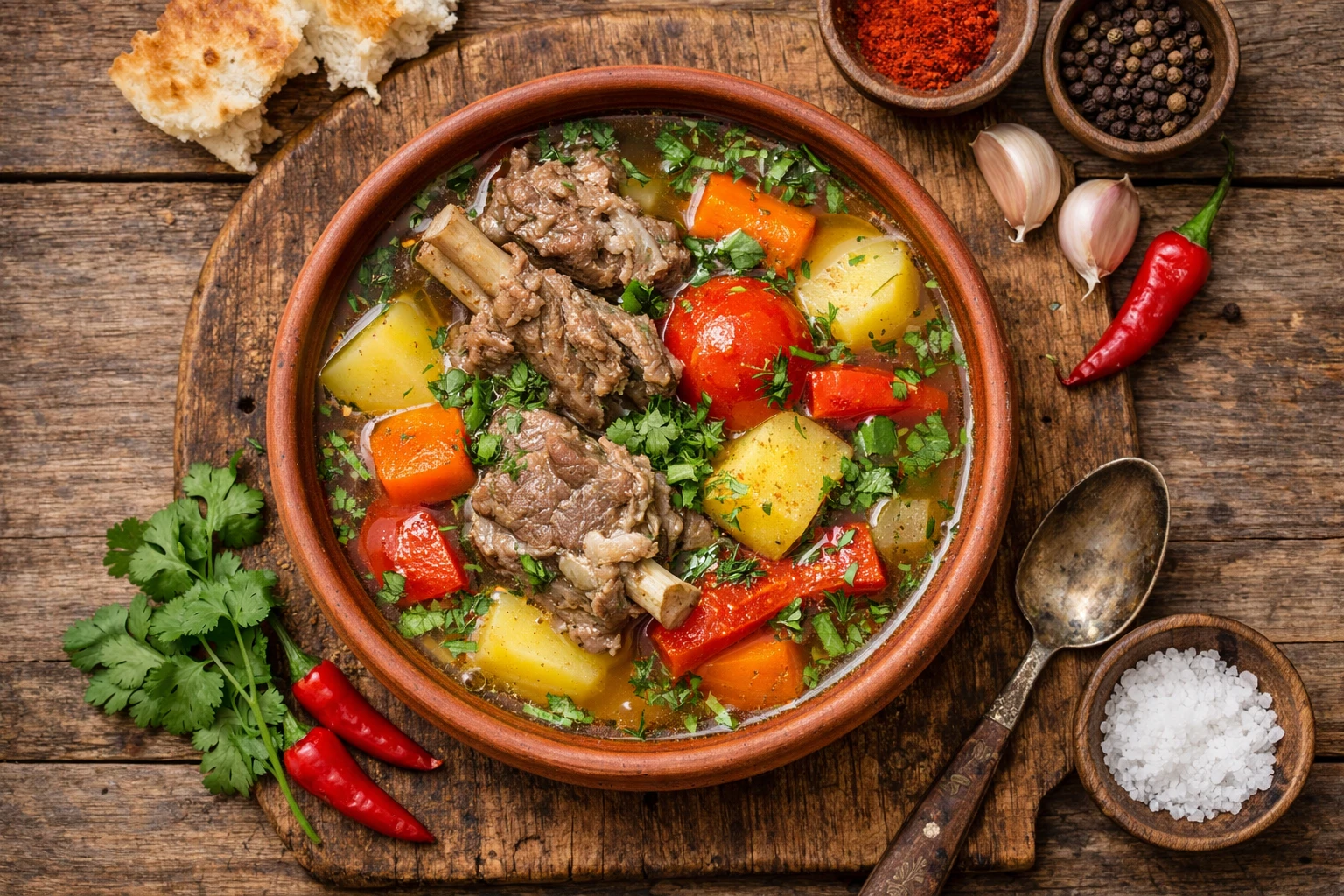
Quick Nutrition Facts
Per 1 1/4 Cup Serving (310g)
| Nutrient | Amount |
|---|---|
| Calories | 210 kcal |
| Protein | 10g |
| Carbohydrates | 24g |
| Fiber | 3g |
| Sugars | 4g |
| Fat | 9g |
| Saturated Fat | 3.5g |
| Cholesterol | 30mg |
| Sodium | 260mg |
| Potassium | 10% DV |
| Iron | 6% DV |
| Calcium | 2% DV |
Macronutrient Breakdown
 ChatGPT
  Claude
  AI Mode
  Perplexity
NUTRITIONIST INSIGHT
Shurpa provides complete protein from lamb with all essential amino acids. The slow-cooked broth extracts collagen and minerals from bones, while root vegetables add fiber and potassium for heart health.
Myth Busters
MYTH #1: Lamb Soup Is Too Fatty
TRUTH: A properly prepared shurpa has only 9g fat per serving. Trimming visible fat from lamb and skimming the broth significantly reduces fat content while preserving protein and flavor.
MYTH #2: Shurpa Is Just Empty Calories
TRUTH: Shurpa delivers 10g complete protein, 3g fiber, and essential minerals per serving. The combination of lamb, potatoes, carrots, and peas creates a nutritionally balanced meal with vitamins A, C, and B-complex.
MYTH #3: You Can't Eat Shurpa on a Diet
TRUTH: At 210 calories per generous serving, shurpa is diet-friendly. The high protein content promotes satiety, helping you feel full longer. Choose leaner lamb cuts and increase vegetable portions for weight management.
MYTH #4: Lamb Broth Has No Nutritional Value
TRUTH: Slow-cooking lamb bones releases beneficial compounds including amino acids, collagen, and minerals like calcium and magnesium. Bone broth supports gut health and joint function.
NutriScore by Health Goals
| Health Goal | NutriScore | Why This Score? |
|---|---|---|
| Weight Loss |  | 210 calories with 10g protein promotes fullness. Reduce potato portion for lower carbs. |
| Muscle Gain |  | Complete protein from lamb supports muscle synthesis. Add extra meat for higher protein intake. |
| Diabetes Management | | Protein and fat slow glucose absorption. Limit potatoes and monitor portions. |
| PCOS Management | | Balanced macros with quality protein. Choose lean lamb and increase non-starchy vegetables. |
| Pregnancy Nutrition | | Iron and zinc from lamb support fetal development. Ensure meat reaches 145°F internal temperature. |
| Viral/Flu Recovery | | Warm broth soothes throat, provides hydration. Protein and vitamins support immune function. |
PERSONALIZED NUTRITION
Track your meals with NutriScan for personalized NutriScores based on your specific health goals!
Blood Sugar Response to Shurpa
Understanding how shurpa affects blood glucose helps you make informed meal choices.
Typical Glucose Response Curve
This chart shows typical blood glucose response for general healthy individuals. Individual responses may vary. Not medical advice.
How to Flatten the Spike
The protein and fat in shurpa naturally moderate glucose response. For even better blood sugar control:
- Increase vegetables - More carrots, celery, and turnips add fiber
- Reduce potatoes - Swap half the potatoes for cauliflower or turnips
- Add legumes - Chickpeas provide extra fiber and protein
- Eat slowly - Savoring hot soup naturally slows consumption
Cultural Significance
Shurpa is a cornerstone of Central Asian cuisine, with roots stretching back centuries across the Silk Road.
Origins and Tradition:
- Name derives from Arabic "shorba" meaning broth or soup
- Traditional preparation uses whole lamb cuts with bone-in for richer flavor
- Cooked in cast iron kazan (cauldron) over open fire
- Served as a main course at celebrations and family gatherings
Regional Variations:
- Uzbek Shurpa: Large vegetable chunks, minimal spices, clear broth
- Kazakh Shurpa: Often includes noodles, fattier lamb cuts
- Afghan Shorba: Spiced with turmeric, coriander, and cumin
- Indian Shorba: Lighter, more aromatic with garam masala
Modern Significance:
- Symbol of hospitality across Central Asia
- Winter comfort food providing warmth and nourishment
- Often served to guests as a sign of respect
- Increasingly popular in global cuisine for its nutritional balance
Compare & Substitute
Shurpa vs Similar Soups (Per Serving)
| Nutrient | 🍲 Shurpa | 🥣 Beef Stew | 🍜 Pho | 🥘 Irish Stew |
|---|---|---|---|---|
| Calories | 210 kcal | 250 kcal | 180 kcal | 280 kcal |
| Carbs | 24g | 20g | 25g | 22g |
| Fiber | 3g | 2g | 1g | 3g |
| Protein | 10g | 15g | 12g | 18g |
| Fat | 9g | 12g | 5g | 14g |
| Sodium | 260mg | 480mg | 750mg | 520mg |
| Best For | Balanced nutrition, warmth | High protein, hearty meal | Light meal, lower fat | Maximum protein, cold weather |
Frequently Asked Questions
How many calories are in shurpa?
A standard serving of shurpa (1 1/4 cup or 310g) contains approximately 210 calories. This includes 10g protein, 24g carbohydrates, and 9g fat.
Calorie variations depend on:
- Lamb cut (fattier cuts add 30-50 calories)
- Vegetable-to-meat ratio
- Cooking method (skimming fat reduces calories)
- Added ingredients like rice or noodles
Is shurpa healthy?
Yes, shurpa is a nutritionally complete meal. It provides complete protein with all essential amino acids, complex carbohydrates from vegetables, and beneficial fats.
Key nutritional benefits:
- 10g protein for muscle maintenance
- 3g fiber for digestive health
- Iron and zinc from lamb
- Vitamins A and C from vegetables
- Hydration from broth
Can diabetics eat shurpa?
Shurpa can fit into a diabetes-friendly diet with modifications. The protein and fat content helps moderate blood glucose response.
Tips for diabetics:
- Reduce potato portions by half
- Increase non-starchy vegetables
- Choose lean lamb cuts
- Monitor portion sizes (1 cup recommended)
- Check blood sugar 2 hours after eating
Is shurpa good for pregnancy?
Shurpa provides essential nutrients for pregnancy including iron, zinc, and protein from lamb. These minerals support fetal development and help prevent anemia.
Pregnancy safety tips:
- Cook lamb to 145°F internal temperature
- Use fresh, quality ingredients
- Avoid excessive sodium
- Enjoy 1-2 servings per week as part of varied diet
What is the difference between shurpa and shorba?
Shurpa and shorba are regional names for the same family of meat-based soups. The terms are used interchangeably across Central Asia and Middle East.
Regional differences:
- Uzbek/Kazakh "shurpa" uses lamb with large vegetable chunks
- Indian "shorba" tends to be lighter and more spiced
- Middle Eastern variations may include legumes
- Afghan versions feature aromatic spices like turmeric
How much protein is in shurpa?
One serving of shurpa contains approximately 10g of complete protein from lamb. This provides about 20% of daily protein needs for most adults.
Protein benefits:
- All essential amino acids present
- Supports muscle building and repair
- Promotes satiety and fullness
- Easily digestible when slow-cooked


Similar Nutritious Foods
4505 Chicharrones Classic Chili Salt
7 Eleven Japan Crispy Corn Cheese
Explore More Nutrition Tools & Resources
AI Calorie Counter App - Snap a Photo, Get Macros
AI Nutritionist App That Reads Your Logged Meals
Best Protein Supplements for Women
Bulking Meal Plan App That Sets Your Surplus
ChatGPT Calorie Counter Alternative That Keeps the Total
ChatGPT Diet Plan Alternative That Tracks What You Eat
ChatGPT Weight Loss Coach Alternative With a Food Log
Fast Food Calorie Counter App That Reads the Tray
Free Calorie Tracker App with AI Photo Scans | NutriScan
Indian Diet Plan App With Veg and Non Veg Meals
Indian Food Calorie Calculator - Get Instant Nutrition Facts for Desi Meals — 2026
Intermittent Fasting for Women, Timer and Meal Log App
Intermittent Fasting Tracker App - Free Fasting Timer
Macro Tracker App That Fills the Numbers From a Photo
Mediterranean Diet Meal Plan App That Counts the Oil
Micronutrient Tracker App for Vitamins and Minerals
MyFitnessPal Alternative That Stays Free | NutriScan
NutriScore App: A Free Grade on Every Meal | NutriScan
Nutrition Label Scanner App for the Amount You Ate
Second Trimester Protein Guide
Vegetarian Meal Plan App With a Protein Target
Voice Calorie Counter - Speak to Track Meals Hands-Free
Water and Calorie Tracker App - Free Water Log