Sisig: Calories, Nutrition and Health Benefits
The iconic Filipino sizzling dish from Pampanga featuring chopped pork seasoned with calamansi, onions, and chili peppers served on a hot plate.
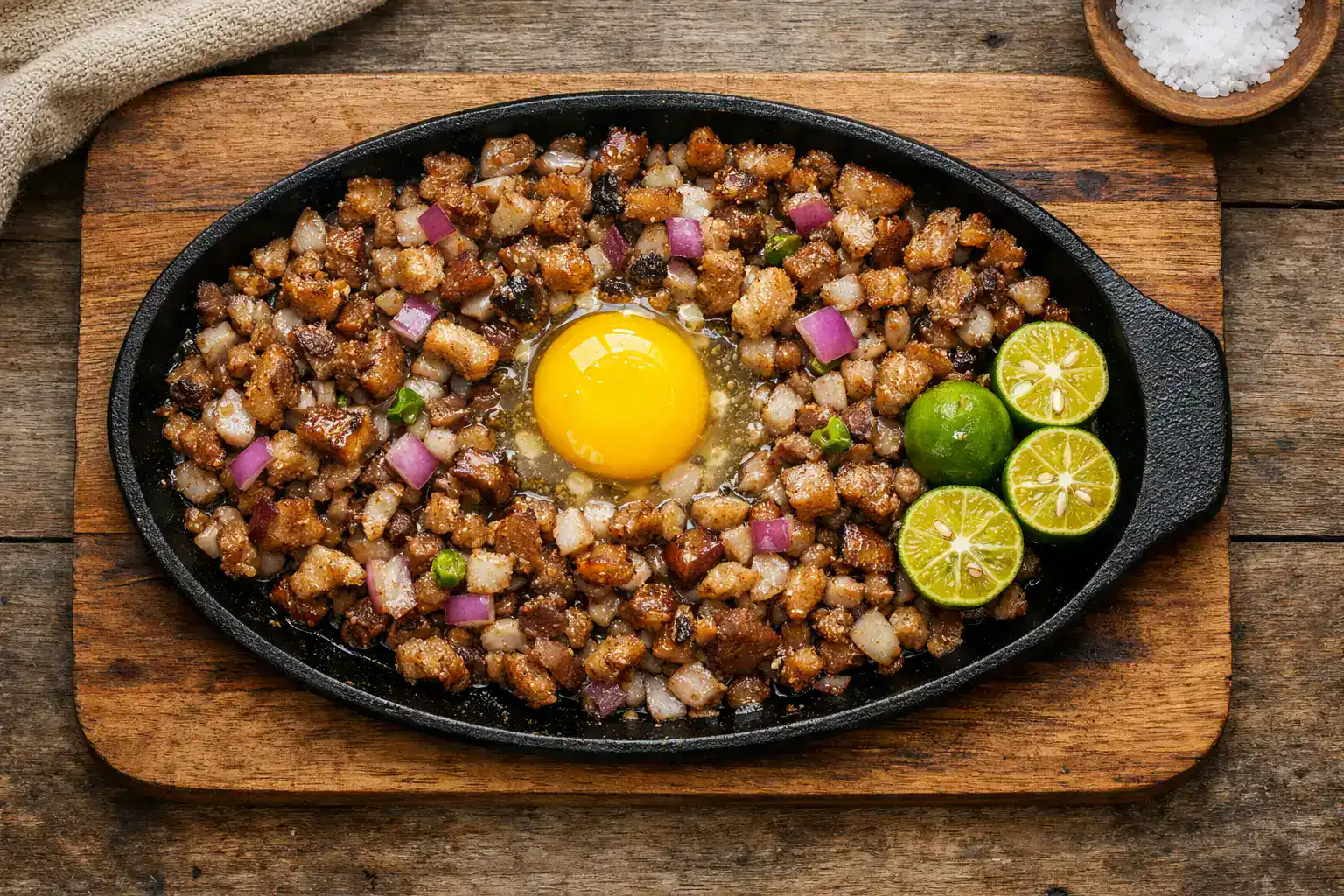
Quick Nutrition Facts
Per 1 Serving (150g)
| Nutrient | Amount |
|---|---|
| Calories | 270 kcal |
| Protein | 13g |
| Carbohydrates | 4g |
| Fiber | 0.5g |
| Sugars | 1g |
| Fat | 20g |
| Saturated Fat | 7g |
| Sodium | 533mg |
| Iron | 1.5mg |
| Vitamin B12 | 1.2mcg |
Macronutrient Breakdown
 ChatGPT
  Claude
  AI Mode
  Perplexity
NUTRITIONIST INSIGHT
Sisig is high in protein (13g) but also high in saturated fat (7g) and sodium (533mg). As an occasional indulgence, skip the mayonnaise and egg topping, and pair with vegetables instead of rice to reduce overall calorie and carb intake.
Myth Busters
MYTH #1: Sisig Is Too Fatty to Be Nutritious
TRUTH: While sisig is high in fat, it provides valuable protein (13g) and B vitamins from pork. The key is portion control. A 100g serving with vegetables instead of rice keeps calories manageable at ~180 kcal.
MYTH #2: Sisig Causes Immediate Heart Problems
TRUTH: Occasional sisig consumption won't cause immediate harm. However, regular processed meat intake is linked to 42% higher coronary heart disease risk. Enjoy as a treat, not a staple.
MYTH #3: All Sisig Is Equally Unhealthy
TRUTH: Traditional sisig with pig face and liver differs from modern versions. Chicken sisig or tofu sisig are lower-fat alternatives. Homemade versions without mayonnaise have significantly less fat.
MYTH #4: Diabetics Must Avoid Sisig Completely
TRUTH: Sisig is actually low-carb (4g per serving). Protein and fat slow glucose absorption, making blood sugar response minimal when eaten without rice. Monitor sodium intake instead.
MYTH #5: The Egg Makes Sisig Healthier
TRUTH: Adding a raw egg increases cholesterol and calories. If you're watching cardiovascular health, skip the egg. It adds ~70 calories and ~186mg cholesterol per serving.
NutriScore by Health Goals
| Health Goal | NutriScore | Why This Score? |
|---|---|---|
| Weight Loss |  | High fat (20g) and calorie-dense. Limit to 100g portions, skip mayo and egg, pair with salad. |
| Muscle Gain |  | Good protein source (13g) for muscle repair. Best post-workout with moderate portions. |
| Diabetes Management |  | Low carbs (4g) but high sodium linked to diabetes complications. Skip rice, monitor blood pressure. |
| PCOS Management | | High saturated fat may worsen insulin resistance. Choose chicken sisig instead. |
| Pregnancy Nutrition | | Liver contains high vitamin A which can be harmful in excess. Avoid liver-containing versions during pregnancy. |
| Viral/Flu Recovery | | Protein and B vitamins support recovery, but high fat may slow digestion when ill. |
PERSONALIZED NUTRITION
Track your meals with NutriScan for personalized NutriScores based on your specific health goals!
Blood Sugar Response to Sisig
Understanding how sisig affects your blood glucose helps you make informed decisions about pairings and portions.
Typical Glucose Response Curve
This chart shows typical blood glucose response for sisig alone (no rice). Adding rice significantly increases the glucose spike. Individual responses vary. Not medical advice.
How to Minimize Blood Sugar Impact
Pairing high-protein, high-fat foods with fiber helps maintain stable blood sugar:
- 🥬 Serve with sautéed kangkong - Adds fiber and reduces calorie density
- 🥒 Pair with fresh cucumber salad - Hydrating and low-carb
- 🍚 Skip white rice - Or use cauliflower rice for keto option
- 🥗 Add a side of ensaladang talong - Grilled eggplant salad with tomatoes
This approach keeps the glucose curve flat while enjoying the savory flavors of sisig.
Cultural Significance
Sisig originated in Pampanga, Philippines, and has become one of the country's most beloved dishes, now famous worldwide.
Origins & History:
- Created in Angeles City, Pampanga in the 1970s
- Originally made from pig face, ears, and cheeks (nose-to-tail cooking)
- Lucia Cunanan is credited with the modern sizzling plate presentation
- The name comes from "sisigan" meaning "to make sour" (referring to the calamansi marinade)
In Filipino Culture:
- Considered the unofficial national dish alongside adobo and lechon
- Traditionally served as pulutan (beer food) in bars and restaurants
- Every sizzling plate is topped with a raw egg mixed in by the diner
- Regional variations include Kapampangan original, Bicolano with coconut, and modern fusion versions
Global Recognition:
- Voted "Best Pork Dish" by National Geographic in 2010
- Featured on Anthony Bourdain's shows multiple times
- Filipino restaurants worldwide now serve sisig variations
- Inspired vegan and chicken alternatives for health-conscious diners
Compare & Substitute
Sisig vs Similar Filipino Dishes (Per 100g)
| Nutrient | 🍳 Sisig | 🐷 Lechon Kawali | 🥘 Pork Adobo | 🥓 Tocino |
|---|---|---|---|---|
| Calories | 180 kcal | 250 kcal | 165 kcal | 220 kcal |
| Carbs | 2.7g | 1g | 4g | 15g |
| Fiber | 0.3g | 0g | 0.5g | 0g |
| Protein | 8.7g | 15g | 18g | 12g |
| Fat | 13.3g | 20g | 10g | 14g |
| Sodium | 355mg | 380mg | 620mg | 450mg |
| Best For | Keto, low-carb | Crispy texture cravings | Higher protein needs | Sweet-savory preference |
Frequently Asked Questions
Is sisig good for weight loss?
Sisig is calorie-dense at 270 calories per 150g serving with 20g of fat. For weight loss, limit portions to 100g (180 kcal), skip mayonnaise and egg toppings, and pair with non-starchy vegetables instead of rice.
Weight loss tips:
- Choose chicken or tofu sisig (~30% fewer calories)
- Ask for no mayo when ordering out
- Fill half your plate with vegetables
- Eat slowly on the sizzling plate to feel fuller
Can diabetics eat sisig?
Sisig is low in carbohydrates (4g per serving), making it diabetes-friendly in terms of blood sugar impact. However, the high sodium content (~533mg) is concerning as it may affect blood pressure.
Tips for diabetics:
- Skip the rice entirely or use cauliflower rice
- Limit portions to 100g
- Monitor blood pressure regularly
- Choose homemade versions with less soy sauce
The high protein and fat content actually helps stabilize blood sugar by slowing digestion.
How much protein is in sisig?
A standard serving of sisig (150g) contains 13g of protein. Per 100g, that's approximately 8.7g of protein. While not as protein-dense as grilled chicken breast, sisig provides a moderate amount for muscle maintenance.
For higher protein, choose versions with more lean pork or add chicken liver to increase the protein content.
What are the health benefits of sisig?
Key Benefits:
- Protein Source: 13g per serving supports muscle maintenance
- B Vitamins: Pork and liver provide B12 and niacin for energy metabolism
- Iron: 1.5mg per serving (8% DV) supports blood health
- Low Carb: Only 4g carbs makes it keto-friendly
- Zinc: Pork provides zinc for immune function
Considerations: High in saturated fat (7g) and sodium (533mg). Enjoy occasionally, not as a daily protein source.
Is sisig keto-friendly?
Yes, traditional sisig is keto-friendly with only 4g net carbs per serving. The macros (20g fat, 13g protein, 4g carbs) align well with ketogenic diet ratios.
Keto-friendly tips:
- Order without rice
- The egg topping adds fat and protein (good for keto)
- Skip any sweet dipping sauces
- Pair with low-carb vegetables
What makes sisig unhealthy?
Sisig should be enjoyed in moderation due to:
- High saturated fat (7g) - linked to cardiovascular disease
- High sodium (533mg, 23% DV) - may raise blood pressure
- Cholesterol - liver and egg add significant cholesterol
- Processed meat association - regular consumption linked to increased disease risk
Healthier alternatives: Choose chicken sisig, reduce portion sizes, skip mayo, and enjoy as an occasional treat rather than a weekly habit.


Similar Nutritious Foods
4505 Chicharrones Classic Chili Salt
7 Eleven Japan Crispy Corn Cheese
Explore More Nutrition Tools & Resources
AI Calorie Counter App - Snap a Photo, Get Macros
AI Nutritionist App That Reads Your Logged Meals
Best Protein Supplements for Women
Bulking Meal Plan App That Sets Your Surplus
ChatGPT Calorie Counter Alternative That Keeps the Total
ChatGPT Diet Plan Alternative That Tracks What You Eat
ChatGPT Weight Loss Coach Alternative With a Food Log
Fast Food Calorie Counter App That Reads the Tray
Free Calorie Tracker App with AI Photo Scans | NutriScan
Indian Diet Plan App With Veg and Non Veg Meals
Indian Food Calorie Calculator - Get Instant Nutrition Facts for Desi Meals — 2026
Intermittent Fasting for Women, Timer and Meal Log App
Intermittent Fasting Tracker App - Free Fasting Timer
Macro Tracker App That Fills the Numbers From a Photo
Mediterranean Diet Meal Plan App That Counts the Oil
Micronutrient Tracker App for Vitamins and Minerals
MyFitnessPal Alternative That Stays Free | NutriScan
NutriScore App: A Free Grade on Every Meal | NutriScan
Nutrition Label Scanner App for the Amount You Ate
Second Trimester Protein Guide
Vegetarian Meal Plan App With a Protein Target
Voice Calorie Counter - Speak to Track Meals Hands-Free
Water and Calorie Tracker App - Free Water Log