Skyr: Calories, Nutrition and Health Benefits
Iceland's ancient superfood with exceptional protein content, creamy texture, and gut-friendly probiotics for every health goal.
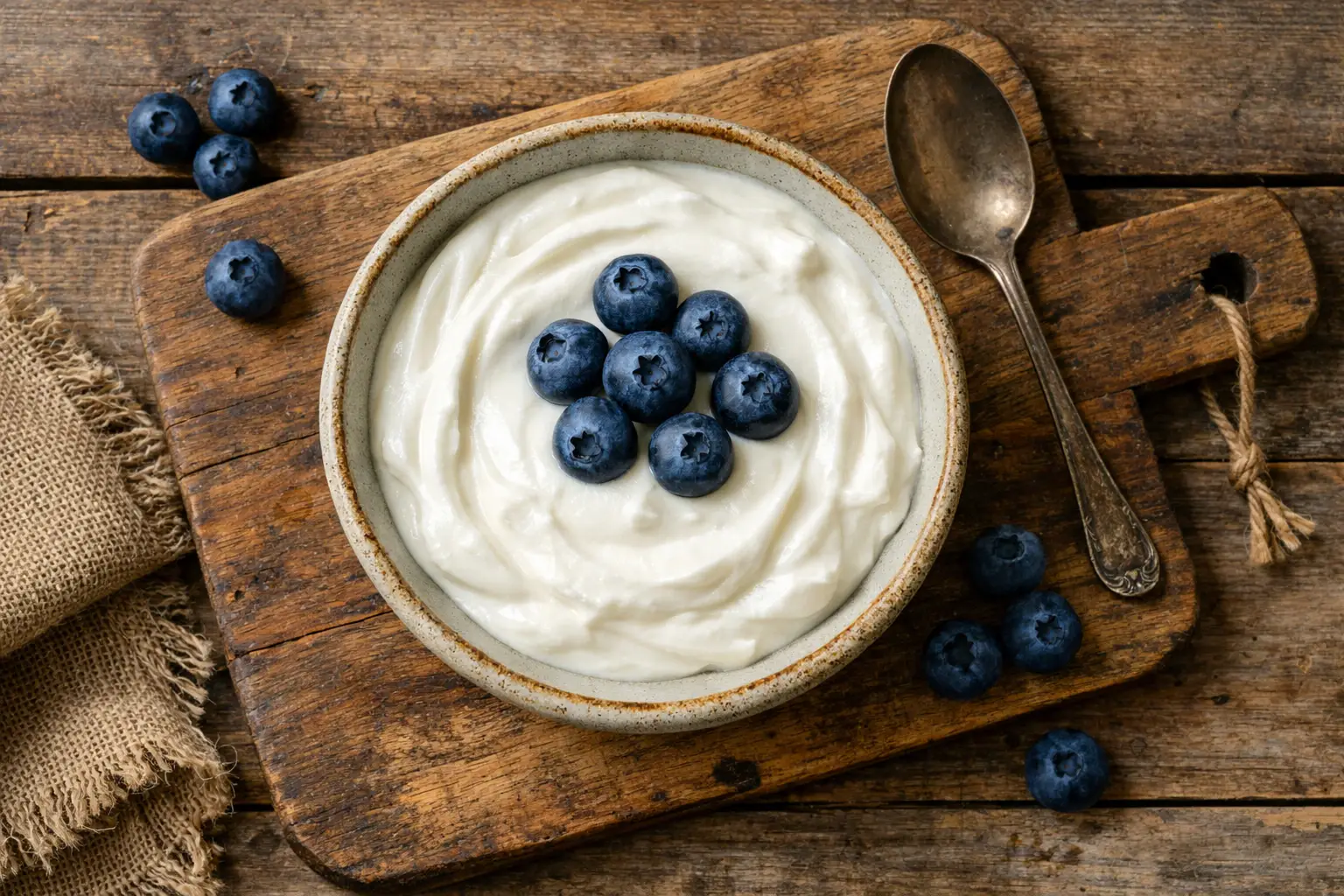
Quick Nutrition Facts
Per 1 Serving Plain Skyr (150g)
| Nutrient | Amount |
|---|---|
| Calories | 98 kcal |
| Protein | 16.5g |
| Carbohydrates | 5.3g |
| Fiber | 0g |
| Sugars | 4.5g |
| Fat | 0.3g |
| Calcium | 180mg |
| Phosphorus | 225mg |
| Vitamin B12 | 1.14mcg |
| Riboflavin | 0.32mg |
Macronutrient Breakdown
 ChatGPT
  Claude
  AI Mode
  Perplexity
NUTRITIONIST INSIGHT
Skyr delivers 11g protein per 100g - nearly double that of regular yogurt. The straining process concentrates nutrients while removing 90% of lactose, making it suitable for many lactose-intolerant individuals. Live cultures support gut microbiome health.
Skyr Nutrition Facts Per 100 g
Most pots sold in Europe print their values per 100 g, so here is plain nonfat skyr at that reference weight, scaled from the 150 g figures above.
| Nutrient | Per 100 g |
|---|---|
| Calories | 61 kcal |
| Protein | 11.0 g |
| Carbohydrates | 3.5 g |
| Sugars | 3.0 g |
| Fiber | 0 g |
| Fat | 0.2 g |
| Calcium | 120 mg |
| Vitamin B12 | 0.76 mcg |
Two things explain the rest of the label. Skyr is strained, and three to four times more milk goes in than for a regular yogurt. The casein stays behind while the water and most of the lactose drain away, which is what pushes protein past 11 g. Because the milk is skimmed first, the fat column sits near zero, so 100 g costs only 61 kcal.
How skyr compares per 100 g
| Food | Calories | Protein |
|---|---|---|
| Skyr | 61 kcal | 11.0 g |
| Greek yogurt | 59 kcal | 10.2 g |
| Cottage cheese | 72 kcal | 11.1 g |
On calories, skyr and Greek yogurt are neck and neck. The gap shows up in sugar, because skyr strains longer and keeps less lactose.
Myth Busters
MYTH #1: Skyr Is Just Fancy Yogurt
TRUTH: Skyr is technically a fresh cheese, not yogurt. It requires 3-4 times more milk than yogurt, uses different bacterial cultures, and has a significantly higher protein content (11g vs 3-7g per 100g). The straining process creates its distinctive thick texture.
MYTH #2: All Dairy Is Bad for Weight Loss
TRUTH: High-protein dairy like skyr actually supports weight loss. Studies show that protein increases satiety and thermogenesis, helping burn more calories. Skyr's 17g protein per serving keeps you fuller longer than low-protein alternatives.
MYTH #3: Skyr Has Too Much Sugar
TRUTH: Plain skyr contains only 4g of natural milk sugars per 150g serving - less than most fruits. The issue is flavored varieties with added sugars. Always choose plain skyr and add your own berries or a drizzle of honey for controlled sweetness.
MYTH #4: You Can't Eat Skyr If You're Lactose Intolerant
TRUTH: The straining process removes about 90% of lactose from skyr. Many lactose-intolerant people can tolerate fermented dairy without issues. Start with a small portion to test your individual tolerance.
MYTH #5: Skyr Is Only Good for Breakfast
TRUTH: Skyr is versatile - use it as a protein-rich snack, post-workout recovery, baking substitute for sour cream, or base for smoothies. Its neutral flavor makes it adaptable for both sweet and savory dishes throughout the day.
MYTH #6: Fat-Free Means Less Nutritious
TRUTH: Skyr's fat-free nature doesn't diminish its nutritional value. It's naturally made from skim milk but retains concentrated protein, calcium, and B vitamins. For added healthy fats, pair with nuts, seeds, or avocado.
NutriScore by Health Goals
| Health Goal | NutriScore | Why This Score? |
|---|---|---|
| Weight Loss |  | Only 100 calories with 17g protein. High satiety, low calorie density, and protein boosts metabolism. |
| Muscle Gain | | Excellent casein protein source. Pre-sleep casein supports overnight muscle protein synthesis. |
| Diabetes Management | | Low carb (6g), high protein slows glucose absorption. Yogurt consumption linked to reduced type 2 diabetes risk. |
| PCOS Management | | Low glycemic impact, high protein supports insulin sensitivity. Choose plain varieties only. |
| Pregnancy Nutrition | | Rich in calcium (200mg) for fetal bone development, high-quality protein for growth. High protein, low GI diet safe during pregnancy. |
| Viral/Flu Recovery | | Easy to digest, protein supports immune function, probiotics support gut health during recovery. |
PERSONALIZED NUTRITION
Track your meals with NutriScan for personalized NutriScores based on your specific health goals!
Blood Sugar Response to Skyr
Understanding how skyr affects your blood glucose can help you make informed decisions about when and how to eat it.
Typical Glucose Response Curve
This chart shows typical blood glucose response for general healthy individuals. Individual responses may vary. Not medical advice.
How to Keep Blood Sugar Stable
Skyr's high protein content naturally slows glucose absorption. For even better blood sugar control:
- Add fiber - Top with berries, chia seeds, or flaxseed
- Include healthy fats - Pair with almonds, walnuts, or a drizzle of nut butter
- Avoid flavored varieties - Added sugars spike blood glucose faster
- Combine with complex carbs - Pair with oatmeal or whole grain toast
This combination not only maintains stable blood sugar but also extends energy release, keeping you fuller for longer.
Cultural Significance
Skyr has been a staple in Iceland for over 1,000 years, brought by Norse settlers around 900 AD.
Icelandic Heritage:
- Traditional preservation method in the harsh Icelandic climate
- Made from raw sheep's milk originally, now typically cow's milk
- Served with cream and sugar as a traditional dessert
- Part of Iceland's UNESCO-listed cultural heritage
Modern Global Adoption:
- Popularized worldwide in the 2010s by brands like Siggi's
- Now produced in the US, UK, Germany, and Australia
- Athletes and fitness communities embrace it for protein content
- Part of the Nordic diet movement emphasizing whole foods
Compare & Substitute
Skyr vs Similar Dairy (Per 100g, Plain Nonfat)
| Nutrient | 🥛 Skyr | 🥛 Greek Yogurt | 🥛 Regular Yogurt | 🧀 Cottage Cheese | 🥛 Kefir |
|---|---|---|---|---|---|
| Calories | 61 kcal | 59 kcal | 63 kcal | 72 kcal | 43 kcal |
| Protein | 11.0g | 10.2g | 3.5g | 11.1g | 3.3g |
| Fat | 0.2g | 0.7g | 1.6g | 1.0g | 1.0g |
| Carbs | 3.5g | 3.6g | 7.0g | 2.7g | 4.8g |
| Sugar | 3.0g | 3.2g | 7.0g | 2.7g | 4.4g |
| Calcium | 120mg | 110mg | 121mg | 83mg | 130mg |
| GI | 27-36 | 11-27 | 27-36 | ~10 | ~36 |
| Best For | Max protein, weight loss | High protein, versatile | Smoothies, cooking | Savory meals, high protein | Gut health, probiotics |
Frequently Asked Questions
Is skyr good for weight loss?
Yes, skyr is excellent for weight loss. A 150g serving provides only 100 calories but delivers 17g of protein. Studies show high-protein foods increase satiety, reduce appetite, and boost metabolism through diet-induced thermogenesis.
Best practices: Choose plain skyr, use as a breakfast base or snack, pair with fiber-rich berries, and avoid flavored varieties with added sugars.
Can diabetics eat skyr?
Plain skyr is diabetes-friendly with only 6g carbs and 17g protein per serving. The high protein slows glucose absorption, preventing blood sugar spikes.
Tips for diabetics:
- Always choose plain, unsweetened varieties
- Avoid flavored skyr with added sugars (can have 15-20g sugar)
- Pair with nuts or seeds for added healthy fats
- Monitor blood sugar response as individual tolerance varies
Research shows yogurt consumption is linked to reduced type 2 diabetes risk. Always consult your healthcare provider.
How much protein is in skyr?
A 150g serving of plain skyr contains 17g of protein. Per 100g, skyr provides about 11g of protein - nearly double regular yogurt (3.5g) and 50% more than Greek yogurt (7g).
This makes skyr ideal for muscle building, weight management, and anyone seeking to increase protein intake without excessive calories.
What is the difference between skyr and Greek yogurt?
Key Differences:
- Protein: Skyr has ~11g/100g vs Greek yogurt's ~7g/100g
- Technical classification: Skyr is a fresh cheese; Greek yogurt is strained yogurt
- Texture: Skyr is thicker and creamier
- Origin: Skyr uses Icelandic cultures; Greek yogurt uses different strains
- Fat content: Traditional skyr is fat-free; Greek yogurt varies (0-10%)
Both are excellent choices - skyr for maximum protein, Greek yogurt for versatility.
Is skyr safe during pregnancy?
Yes, skyr is excellent during pregnancy. It provides high-quality protein for fetal development, calcium for bone formation, and probiotics for digestive health.
Benefits for pregnancy:
- 200mg calcium per serving supports baby's bone development
- High protein (17g) aids fetal tissue growth
- Probiotics support maternal gut health
- Low mercury, no raw milk concerns with commercial brands
Choose pasteurized commercial skyr and avoid homemade versions from raw milk.
How much skyr should I eat per day?
General Guidelines:
- 1-2 servings (150-300g) daily - Most adults
- 2-3 servings daily - Athletes, muscle building, pregnancy
- 1 serving daily - Weight loss, calorie restriction
Skyr's high protein content makes it filling. Excessive consumption can lead to too much protein for kidney-sensitive individuals. Balance with other protein sources throughout the day.
Track your meals with NutriScan app to see how skyr fits your personal nutrition goals.
Does skyr contain lactose?
Skyr contains very little lactose. The straining process removes about 90% of the lactose content, making it more tolerable than regular dairy for many lactose-intolerant individuals.
If lactose intolerant:
- Start with a small portion (50-75g) to test tolerance
- Eat with other foods to slow digestion
- Consider lactase supplements if needed
- Individual responses vary - some tolerate it well, others don't
Those with milk protein allergies (casein/whey) should avoid skyr entirely.
Skyr nutrition: what is in 100 g?
Plain nonfat skyr gives 61 kcal, 11.0 g protein, 3.5 g carbohydrates, 3.0 g sugars and 0.2 g fat per 100 g, plus 120 mg calcium and 0.76 mcg vitamin B12. A standard 150 g pot works out to 98 kcal and 16.5 g protein. Flavored pots can carry 15 g to 20 g of sugar, so check the label if you track carbs.


Similar Nutritious Foods
4505 Chicharrones Classic Chili Salt
7 Eleven Japan Crispy Corn Cheese
Explore More Nutrition Tools & Resources
AI Calorie Counter App - Snap a Photo, Get Macros
AI Nutritionist App That Reads Your Logged Meals
Best Protein Supplements for Women
Bulking Meal Plan App That Sets Your Surplus
ChatGPT Calorie Counter Alternative That Keeps the Total
ChatGPT Diet Plan Alternative That Tracks What You Eat
ChatGPT Weight Loss Coach Alternative With a Food Log
Fast Food Calorie Counter App That Reads the Tray
Free Calorie Tracker App with AI Photo Scans | NutriScan
Indian Diet Plan App With Veg and Non Veg Meals
Indian Food Calorie Calculator - Get Instant Nutrition Facts for Desi Meals — 2026
Intermittent Fasting for Women, Timer and Meal Log App
Intermittent Fasting Tracker App - Free Fasting Timer
Macro Tracker App That Fills the Numbers From a Photo
Mediterranean Diet Meal Plan App That Counts the Oil
Micronutrient Tracker App for Vitamins and Minerals
MyFitnessPal Alternative That Stays Free | NutriScan
NutriScore App: A Free Grade on Every Meal | NutriScan
Nutrition Label Scanner App for the Amount You Ate
Second Trimester Protein Guide
Vegetarian Meal Plan App With a Protein Target
Voice Calorie Counter - Speak to Track Meals Hands-Free
Water and Calorie Tracker App - Free Water Log