Smash Burger: Calories, Nutrition and Health Benefits
The crispy-edged, flavor-packed burger trend delivering 350 calories and 20g protein per patty with a perfect Maillard crust.
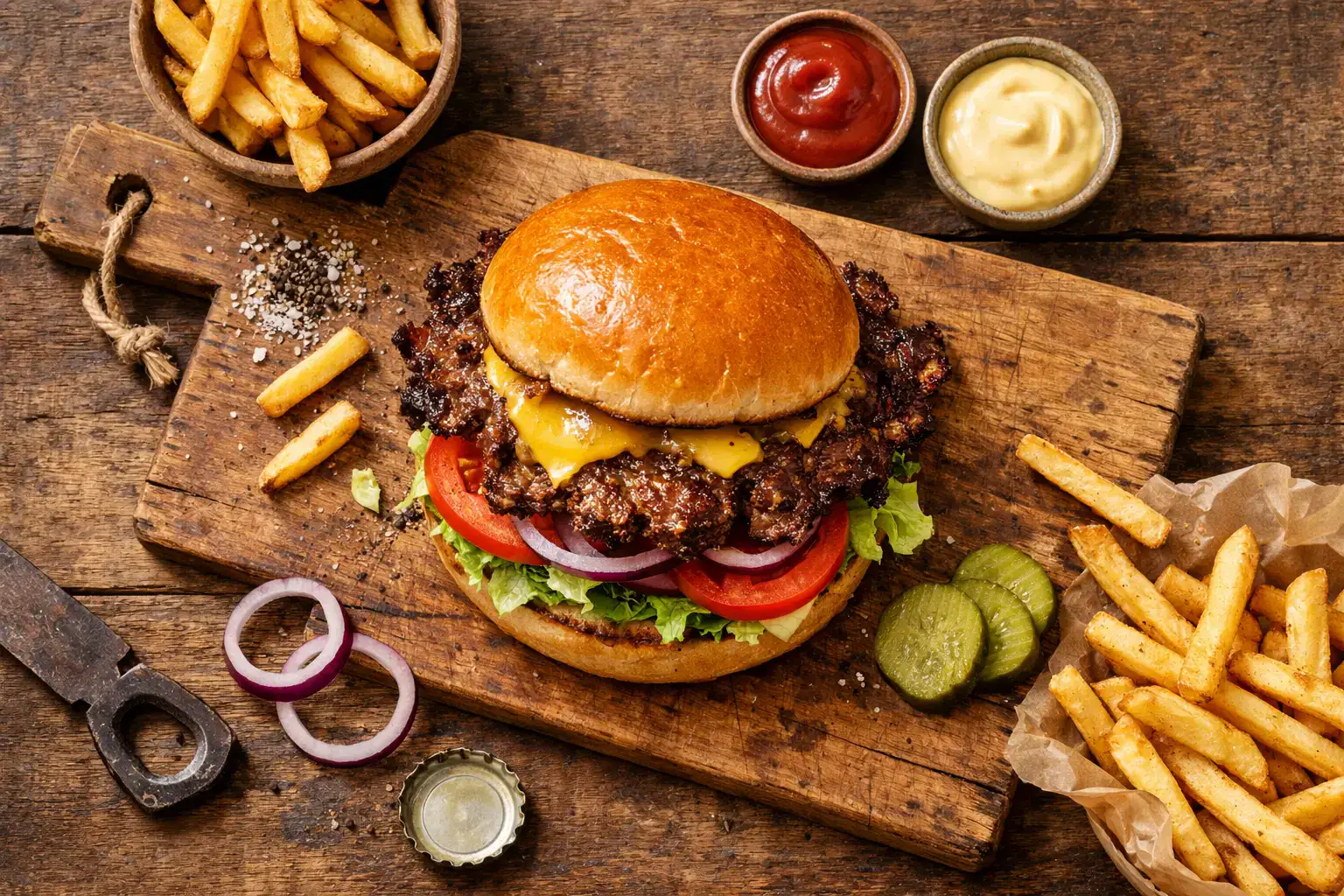
Quick Nutrition Facts
Per 1 Smash Burger Patty with Bun (180g)
| Nutrient | Amount |
|---|---|
| Calories | 350 kcal |
| Protein | 20g |
| Carbohydrates | 28g |
| Fiber | 1.5g |
| Sugars | 5g |
| Fat | 19g |
| Saturated Fat | 8g |
| Iron | 2.7mg |
| Zinc | 4.8mg |
| Vitamin B12 | 2.5mcg |
Macronutrient Breakdown
 ChatGPT
  Claude
  AI Mode
  Perplexity
NUTRITIONIST INSIGHT
A single smash burger patty provides 20g of complete protein with highly bioavailable heme iron (2.7mg, 15% DV). The thin patty technique maximizes flavor through the Maillard reaction without adding extra fat. Swap the white bun for whole grain to add 3g fiber and lower the glycemic impact by 15-20 points.
Myth Busters
MYTH #1: Smash Burgers Are Healthier Than Regular Burgers
TRUTH: Smash burgers and regular burgers use the same ground beef, so nutritional content is nearly identical. The smashing technique affects texture and flavor through the Maillard reaction, not nutrition. Health depends on meat quality, fat ratio, and toppings.
MYTH #2: The Maillard Reaction Makes Burgers Carcinogenic
TRUTH: While the Maillard reaction produces trace compounds like acrylamide and heterocyclic amines, no credible evidence links normal food consumption levels to human cancer risk. The browning reaction is the same one that occurs in bread, coffee, and roasted vegetables.
MYTH #3: Smashing Removes Fat from the Patty
TRUTH: Pressing a burger ball onto a hot griddle renders some surface fat, but most fat remains in the patty. An 80/20 ground beef smash burger retains roughly the same fat content as any other cooking method. The sizzle you see is mostly moisture, not fat draining away.
MYTH #4: Red Meat Is Always Bad for You
TRUTH: Beef provides essential nutrients like heme iron, B12, zinc, and complete protein that are difficult to get from plant sources alone. Research shows that moderate unprocessed red meat consumption (1-2 servings/week) is not associated with increased cardiovascular risk. The key is portion control and frequency.
MYTH #5: Homemade Burgers Are Always Healthier
TRUTH: Homemade lets you control meat quality, fat ratio, and sodium, but it is not automatically healthier. Restaurant smash burgers may use better-quality beef on a flat-top griddle. What matters most is the 80/20 vs 90/10 lean ratio, bun choice, and toppings you add.
NutriScore by Health Goals
| Health Goal | NutriScore | Why This Score? |
|---|---|---|
| Weight Loss |  | 350 calories per patty with 19g fat. High calorie density limits portions. Use lettuce wrap and skip cheese to save 150+ calories. |
| Muscle Gain |  | 20g complete protein per patty with leucine for muscle protein synthesis. Heme iron and zinc support recovery. Ideal post-workout meal. |
| Diabetes Management | | White bun drives medium GI (65). Swap to whole grain bun or lettuce wrap and limit to one patty. |
| PCOS Management |  | Moderate protein helps insulin sensitivity, but saturated fat (8g) may worsen inflammation. Choose 90/10 lean beef and add vegetables. |
| Pregnancy Nutrition | | Good source of iron and B12 for fetal development. Must cook to 160F/71C internal temperature. Limit red meat to reduce GDM risk. |
| Viral/Flu Recovery |  | High-quality protein (20g), zinc (4.8mg), and B12 (2.5mcg) support immune function and recovery. Easy to eat and digest when feeling unwell. |
PERSONALIZED NUTRITION
Track your meals with NutriScan for personalized NutriScores based on your specific health goals!
Blood Sugar Response to Smash Burger
Understanding how a smash burger affects your blood glucose helps you make informed decisions about when and how to enjoy it.
Typical Glucose Response Curve
*This chart shows typical blood glucose response for general healthy individuals. Individual responses may vary. Not medical advice.*
How to Flatten the Spike
Pairing your smash burger with fiber and healthy fats slows glucose absorption and reduces the peak blood sugar level:
- 🥬 Lettuce wrap instead of bun - Eliminates the primary blood sugar driver entirely
- 🥗 Side salad with vinaigrette - Fiber slows glucose absorption; vinegar may improve response
- 🥑 Add avocado slices - Healthy fats moderate the blood sugar spike
- 🥒 Pickle spear on the side - Vinegar-based condiments can improve postprandial glucose
This combination not only reduces the glucose spike but also extends energy release, keeping you fuller for longer.
Cultural Significance
The smash burger is a distinctly American culinary innovation that traces back nearly a century.
Origins and History:
- Thin-pressed burgers appeared at fairs and factory lunch counters in the 1890s-1930s
- During the Great Depression, the smashing technique helped stretch portions further
- Dairy Cheer in Ashland, Kentucky (1960s) popularized pressing patties with a bean can
- Miner Dunn in Highland, Indiana has served smash burgers continuously since 1932
Modern Revival:
- Shake Shack (2004) and SmashBurger (2007) brought the technique to mainstream fast-casual dining
- Called the "it burger" of the 2020s, overtaking thick bistro-style burgers
- The UK and Europe saw rapid adoption after 2022 with dedicated smash burger restaurants
Global Impact:
- The technique spread to India, Japan, and Australia through social media and food trends
- Cost-effective for restaurants: uses less meat per patty while maximizing flavor
- Home cooks embraced the method during lockdowns, driving flat-top griddle sales
Compare & Substitute
Smash Burger vs Similar Foods (Per 100g, Patty Only)
| Nutrient | Smash Burger (Beef) | Turkey Burger | Veggie Burger | Grilled Chicken Breast |
|---|---|---|---|---|
| Calories | 233 kcal | 115 kcal | 160 kcal | 150 kcal |
| Protein | 16.7g | 21g | 12g | 24g |
| Fat | 18.7g | 5.5g | 8g | 4g |
| Saturated Fat | 8g | 1g | 1.5g | 1g |
| Carbs | 0g | 0g | 15g | 0g |
| Iron | 2.7mg | 1.5mg | 2mg | 0.7mg |
| Zinc | 4.8mg | 2.5mg | 1mg | 1mg |
| Best For | Flavor, iron, muscle gain | Weight loss, lean protein | Plant-based diets | Lowest fat, highest protein |
Frequently Asked Questions
How many calories are in a smash burger?
A single smash burger patty with bun contains approximately 350 calories. Per 100g of beef patty alone, there are about 233 calories. A double smash burger with cheese and condiments can reach 550-700 calories depending on toppings and sauces added.
Calorie-saving tips: Use a lettuce wrap (-120 cal), skip cheese (-110 cal), or choose 90/10 lean beef (-40 cal per patty).
Are smash burgers healthier than regular burgers?
Smash burgers and regular burgers use the same ground beef, so nutritional content is nearly identical. The smashing technique creates more surface browning through the Maillard reaction, which adds flavor but does not change macronutrient content.
What actually matters: Lean-to-fat ratio (80/20 vs 90/10), bun type (white vs whole grain), toppings, and portion size determine how healthy your burger is.
How much protein is in a smash burger?
A single smash burger patty with bun provides about 20g of complete protein containing all essential amino acids. The beef patty alone (100g) delivers 16.7g of highly bioavailable protein with leucine for muscle protein synthesis.
For muscle gain, pair with a side of Greek yogurt or add a second patty for 35-40g total protein per meal.
Can diabetics eat smash burgers?
Diabetics can eat smash burgers occasionally with modifications. The white bun is the primary blood sugar driver with a GI of 61-65.
Tips for diabetics:
- Use a whole grain bun or lettuce wrap to lower glycemic impact
- Stick to one patty (20g protein + fat helps moderate blood sugar)
- Add a side salad with vinaigrette for fiber
- Monitor blood sugar 2 hours after eating
The protein and fat in the beef patty naturally slow carbohydrate absorption from the bun. Always consult your healthcare provider.
Is a smash burger safe during pregnancy?
Smash burgers are safe during pregnancy if cooked to an internal temperature of 160F (71C) to eliminate pathogens. Beef provides beneficial iron (2.7mg) and B12 (2.5mcg) for fetal development.
Caution: Higher red meat consumption during pregnancy is associated with increased gestational diabetes risk. Limit to 1-2 servings per week and balance with poultry, fish, or plant proteins.
What makes a smash burger different from a regular burger?
A smash burger is made by pressing a ball of ground beef firmly onto a hot griddle, creating a thin patty with crispy, caramelized edges. Regular burgers are shaped thicker and cooked without pressing.
Key differences:
- Thinner patty with more surface area for browning
- Crispier edges from maximum Maillard reaction contact
- Faster cooking (2-3 minutes per side vs 5-7 for thick patties)
- More flavor per ounce due to caramelization




Similar Nutritious Foods
4505 Chicharrones Classic Chili Salt
7 Eleven Japan Crispy Corn Cheese
Explore More Nutrition Tools & Resources
AI Calorie Counter App - Snap a Photo, Get Macros
AI Nutritionist App That Reads Your Logged Meals
Best Protein Supplements for Women
Bulking Meal Plan App That Sets Your Surplus
ChatGPT Calorie Counter Alternative That Keeps the Total
ChatGPT Diet Plan Alternative That Tracks What You Eat
ChatGPT Weight Loss Coach Alternative With a Food Log
Fast Food Calorie Counter App That Reads the Tray
Free Calorie Tracker App with AI Photo Scans | NutriScan
Indian Diet Plan App With Veg and Non Veg Meals
Indian Food Calorie Calculator - Get Instant Nutrition Facts for Desi Meals — 2026
Intermittent Fasting for Women, Timer and Meal Log App
Intermittent Fasting Tracker App - Free Fasting Timer
Macro Tracker App That Fills the Numbers From a Photo
Mediterranean Diet Meal Plan App That Counts the Oil
Micronutrient Tracker App for Vitamins and Minerals
MyFitnessPal Alternative That Stays Free | NutriScan
NutriScore App: A Free Grade on Every Meal | NutriScan
Nutrition Label Scanner App for the Amount You Ate
Second Trimester Protein Guide
Vegetarian Meal Plan App With a Protein Target
Voice Calorie Counter - Speak to Track Meals Hands-Free
Water and Calorie Tracker App - Free Water Log