Snickers: Calories, Nutrition and Health Benefits
Classic chocolate bar with peanuts, caramel, and nougat - satisfying hunger with quick energy, but high in sugar and calories.
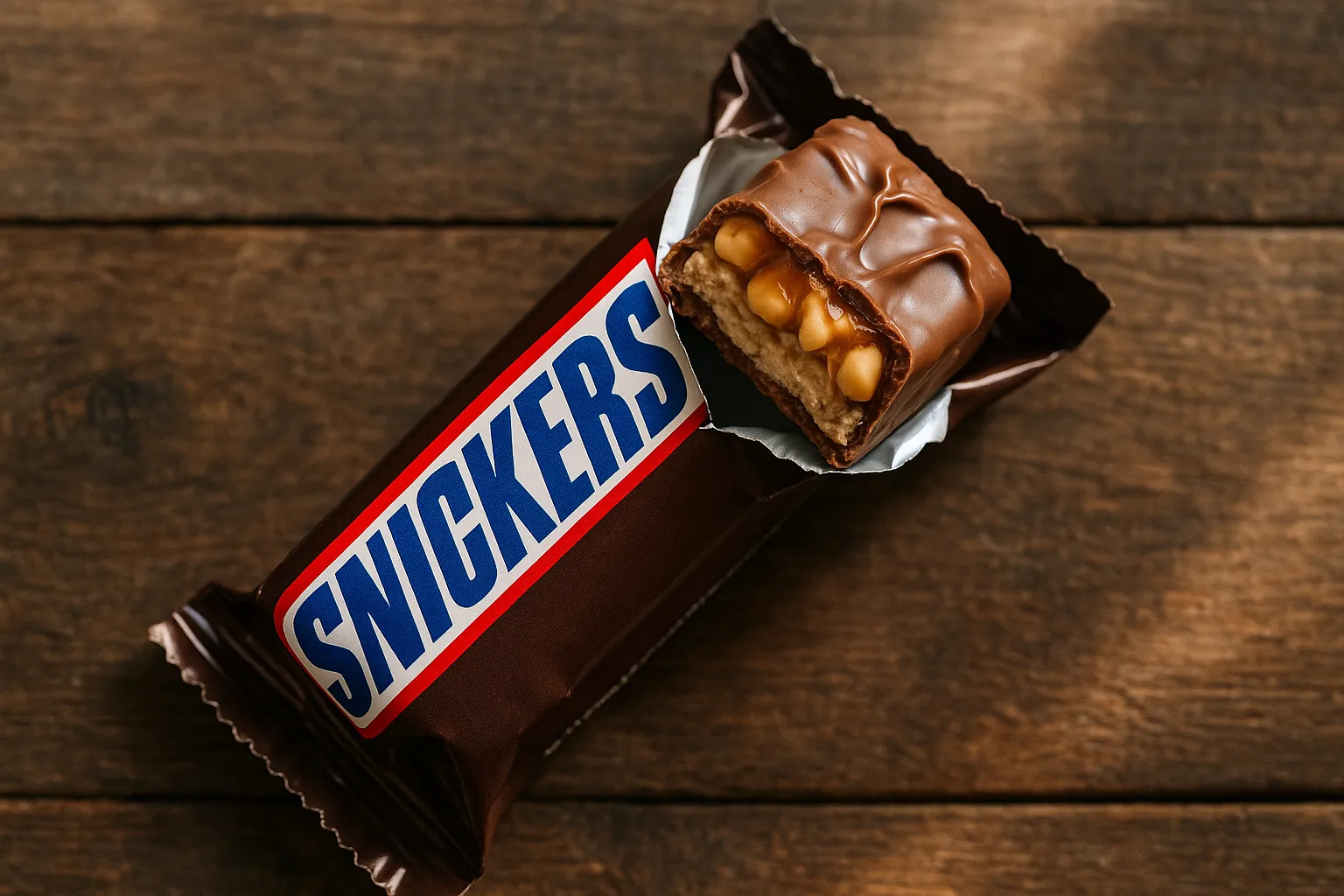
Quick Nutrition Facts
Per 1 Regular Bar (52.7g)
| Nutrient | Amount |
|---|---|
| Calories | 250 kcal |
| Protein | 4.3g |
| Carbohydrates | 33g |
| Fiber | 1.4g |
| Sugars | 28g |
| Fat | 12g |
| Saturated Fat | 4.5g |
| Sodium | 120mg |
| Magnesium | 40mg |
| Iron | 0.5mg |
Macronutrient Breakdown
 ChatGPT
  Claude
  AI Mode
  Perplexity
NUTRITIONIST INSIGHT
Snickers provides 4.3g protein from peanuts and quick energy from 33g carbs, making it useful for emergency energy. However, 28g sugar (56% of bar's carbs) makes it unsuitable for regular consumption due to blood sugar impacts and empty calories.
Myth Busters
MYTH #1: Snickers Is a Good Protein Snack
TRUTH: With only 4.3g protein and 28g sugar per bar, Snickers has an unfavorable 1:6.5 protein-to-sugar ratio. Protein bars or Greek yogurt with nuts provide far superior protein without excess sugar. The "packed with peanuts" marketing is misleading.
MYTH #2: Snickers Satisfies Hunger Better Than Other Candy
TRUTH: While peanuts and caramel provide temporary satiety, the high sugar content triggers insulin spikes followed by hunger rebounds within 1-2 hours. Complex carbs with protein offer longer-lasting fullness.
MYTH #3: Eating Snickers Before Workouts Boosts Performance
TRUTH: High sugar and fat slow digestion, potentially causing stomach discomfort during exercise. Better pre-workout options: banana with peanut butter, oatmeal, or sports nutrition products designed for athletic performance.
MYTH #4: Snickers Is Fine for Diabetics in Moderation
TRUTH: 28g sugar per bar causes significant blood glucose spikes unsuitable for diabetic management. "Moderation" for diabetics means choosing sugar-free alternatives or fresh fruit with nuts, not candy bars.
MYTH #5: Fun-Size Snickers Are Healthy Portion Control
TRUTH: Fun-size bars (80 calories, 9g sugar each) are still concentrated sugar sources. Easy to consume multiple pieces (2-3 bars = 240 calories, 27g sugar) without realizing. Better portion control: measure servings of dark chocolate or nuts.
MYTH #6: Peanuts in Snickers Provide Heart Health Benefits
TRUTH: While peanuts contain healthy fats, the added sugars and saturated fat from chocolate negate cardiovascular benefits. Eating plain roasted peanuts provides heart health without the downsides.
NutriScore by Health Goals
| Health Goal | NutriScore | Why This Score? |
|---|---|---|
| Weight Loss |  | High calorie density (474 kcal/100g), 28g sugar per bar. Occasional treat only; limit to fun-size once weekly maximum. |
| Muscle Gain |  | Provides 4.3g protein and 33g carbs for post-workout recovery, but protein bars offer better macros without excess sugar. |
| Diabetes Management | | 28g sugar per bar causes severe glucose spikes. Strongly avoid; choose sugar-free dark chocolate or nuts. |
| PCOS Management | | Excess sugar worsens insulin resistance and hormonal imbalance. Avoid regular consumption. |
| Pregnancy Nutrition | | Provides quick energy and small iron amounts, but excess sugar unhealthy during pregnancy. Limit intake. |
| Viral/Flu Recovery | | Quick energy when appetite is low, but high sugar may temporarily suppress immunity. Better choices: nutrient-dense fruits and protein smoothies. |
PERSONALIZED NUTRITION
Track your meals with NutriScan for personalized NutriScores based on your specific health goals!
Blood Sugar Response to Snickers
Understanding how Snickers affects blood glucose helps make informed decisions about consumption timing and health impacts.
Typical Glucose Response Curve
This chart shows typical blood glucose response for general healthy individuals. Individual responses may vary. Not medical advice.
How to Reduce the Spike
Pairing Snickers with protein or consuming after balanced meals can help moderate blood sugar impact:
- 🥛 Greek yogurt or curd - High protein slows sugar absorption significantly
- 🥜 Handful of almonds or peanuts - Additional healthy fats buffer glucose response
- After protein-rich meal - Consume as dessert after chicken, fish, or eggs with vegetables
- Never on empty stomach - Causes rapid spike followed by energy crash
This approach reduces glucose spike magnitude and prevents rapid insulin surges, but complete avoidance is better for blood sugar management.
Cultural Significance
Snickers was created in 1930 by Frank and Ethel Mars in the United States, named after their family's favorite horse.
Global Impact:
- World's best-selling candy bar with over $2 billion annual sales
- Sold in over 70 countries with 15 million bars produced daily
- "You're not you when you're hungry" - one of most recognized advertising campaigns
- Popular in sports sponsorships and athletic events worldwide
In India:
- Widely available since 1990s liberalization
- Popular among urban youth and working professionals
- Often consumed as quick energy snack during long commutes
- Positioned as premium imported chocolate bar in tier-2/tier-3 cities
- Growing sales during festivals and gifting occasions
Compare & Substitute
Snickers vs Similar Candy Bars (Per 100g)
| Nutrient | 🍫 Snickers | 🍫 Mars Bar | 🍫 Milky Way | 🥜 KIND Protein Bar |
|---|---|---|---|---|
| Calories | 474 kcal | 449 kcal | 455 kcal | 240 kcal |
| Carbs | 62.6g | 68g | 71g | 20g |
| Fiber | 2.7g | 1.5g | 1g | 7g |
| Protein | 8.2g | 3.8g | 4.5g | 12g |
| Fat | 22.8g | 17.4g | 17.3g | 16g |
| Sugar | 53.1g | 58.5g | 60g | 8g |
| Sodium | 228mg | 195mg | 180mg | 125mg |
| Best For | Quick energy, hunger control | Caramel lovers, sweet tooth | Lightest option, low fat | Protein needs, low sugar |
Frequently Asked Questions
Are Snickers good for weight loss?
Snickers bars are not suitable for weight loss due to high calorie density (250 calories per bar) and 28g sugar. However, can be incorporated rarely as a controlled indulgence if tracked within daily calorie limits.
Best practices: Maximum 1 fun-size bar (80 calories) once weekly; consume after balanced meal to reduce cravings; track calories rigorously; never as meal replacement; choose dark chocolate with nuts for better satiety and nutrition.
Better alternatives: protein bars, fresh fruit with almond butter, or homemade energy balls with dates and nuts.
Can diabetics eat Snickers?
Diabetics should strongly avoid Snickers due to extremely high sugar content (28g per bar = 7 teaspoons). The combination of refined sugars and fat causes significant, prolonged blood glucose spikes.
If consumed on rare occasions:
- Choose fun-size version only (80 calories, 9g sugar); consume immediately after high-protein, high-fiber meal; monitor blood sugar 2-3 hours after eating; never on empty stomach or as standalone snack; limit to once monthly maximum.
Far better alternatives: sugar-free dark chocolate (70%+ cocoa), roasted nuts with cinnamon, or fresh berries with Greek yogurt. Always consult healthcare provider before consuming candy bars.
How much protein is in a Snickers bar?
A regular Snickers bar (52.7g) contains 4.3g of protein from peanuts. While higher than most candy bars, this is still low - five bars needed for equivalent protein to one chicken breast (25g).
For muscle building or high-protein diets, protein bars (12-20g protein) or whole food sources (eggs, Greek yogurt, chicken) provide far superior nutrition without the 28g sugar burden.
What are the main health benefits of Snickers?
Limited Benefits:
- Quick Energy: 33g carbs provide rapid energy during emergencies or intense physical activity
- Protein: 4.3g from peanuts supports muscle function (though minimal)
- Magnesium: 40mg (10% DV) supports muscle and nerve function
- Iron: 0.5mg helps oxygen transport
- Temporary Satiety: Peanuts and caramel provide brief hunger satisfaction
Critical Caveat: High sugar (28g) and saturated fat (4.5g) severely limit health benefits. Suitable only as occasional treat, not regular nutrition source. Whole food alternatives provide same benefits without downsides.
When is the best time to eat a Snickers?
Depends on your goal:
- Athletes/Muscle Gain: Post-workout (within 30 minutes) for quick carb and protein recovery; however, protein bars or chocolate milk are superior choices.
- Weight Management: Avoid or limit to rare occasions; if consumed, after balanced dinner as small dessert (not standalone snack).
- Diabetes: Strongly discourage; if consumed, only after high-protein meal with blood sugar monitoring.
- Energy Crash: Emergency energy during long gaps between meals; not ideal but better than skipping food entirely.
IMPORTANT NOTE
Never consume on empty stomach - 28g sugar causes rapid spike and crash. Always pair with protein or fiber-rich foods. Not suitable for pre-workout due to high fat content slowing digestion.
How many Snickers should I eat per day?
General Guidelines:
- Weight Loss: Maximum 1 fun-size bar (80 cal) once weekly, tracked within calorie limit
- Maintenance: 1 regular bar as rare treat (2-3 times monthly maximum)
- Diabetes/PCOS: Avoid regular consumption; limit to special occasions only with monitoring
- Athletes: 1 regular bar post-workout for recovery (but protein bars preferred)
- Daily Consumption: Not recommended for anyone due to high sugar and calorie content
Warning: One regular bar = 250 calories, 28g sugar (7 teaspoons), 4.5g saturated fat. Eating daily would contribute significantly to weight gain, blood sugar issues, and dental problems.
Track portions with NutriScan app to see how Snickers fits your personal nutrition goals and calorie budget.
Can I eat Snickers on an empty stomach?
Strongly not recommended for anyone - 28g sugar without fiber causes rapid blood glucose spike followed by severe crash, leading to fatigue, irritability, and increased hunger.
Especially harmful if you have:
- Diabetes: Extreme glucose spike without buffering nutrients
- PCOS: Worsens insulin resistance and hormonal imbalance
- Weight Loss Goals: Triggers intense cravings and overeating
- Low Blood Sugar Prone: Causes rebound hypoglycemia after initial spike
Better approach: Consume only as dessert after protein-rich meal (grilled chicken, fish, eggs with vegetables and whole grains); pair with handful of plain almonds or walnuts if eating as snack; never as breakfast or first food of the day.


Similar Nutritious Fruits
4505 Chicharrones Classic Chili Salt
7 Eleven Japan Crispy Corn Cheese
Explore More Nutrition Tools & Resources
AI Calorie Counter App - Snap a Photo, Get Macros
AI Nutritionist App That Reads Your Logged Meals
Best Protein Supplements for Women
Bulking Meal Plan App That Sets Your Surplus
ChatGPT Calorie Counter Alternative That Keeps the Total
ChatGPT Diet Plan Alternative That Tracks What You Eat
ChatGPT Weight Loss Coach Alternative With a Food Log
Fast Food Calorie Counter App That Reads the Tray
Free Calorie Tracker App with AI Photo Scans | NutriScan
Indian Diet Plan App With Veg and Non Veg Meals
Indian Food Calorie Calculator - Get Instant Nutrition Facts for Desi Meals — 2026
Intermittent Fasting for Women, Timer and Meal Log App
Intermittent Fasting Tracker App - Free Fasting Timer
Macro Tracker App That Fills the Numbers From a Photo
Mediterranean Diet Meal Plan App That Counts the Oil
Micronutrient Tracker App for Vitamins and Minerals
MyFitnessPal Alternative That Stays Free | NutriScan
NutriScore App: A Free Grade on Every Meal | NutriScan
Nutrition Label Scanner App for the Amount You Ate
Second Trimester Protein Guide
Vegetarian Meal Plan App With a Protein Target
Voice Calorie Counter - Speak to Track Meals Hands-Free
Water and Calorie Tracker App - Free Water Log