Sourdough Bread: Calories, Nutrition and Health Benefits
 ChatGPT
  Claude
  AI Mode
  Perplexity
 Traditionally fermented bread with lower glycemic impact, improved digestibility, and scientifically proven blood sugar benefits compared to regular bread.
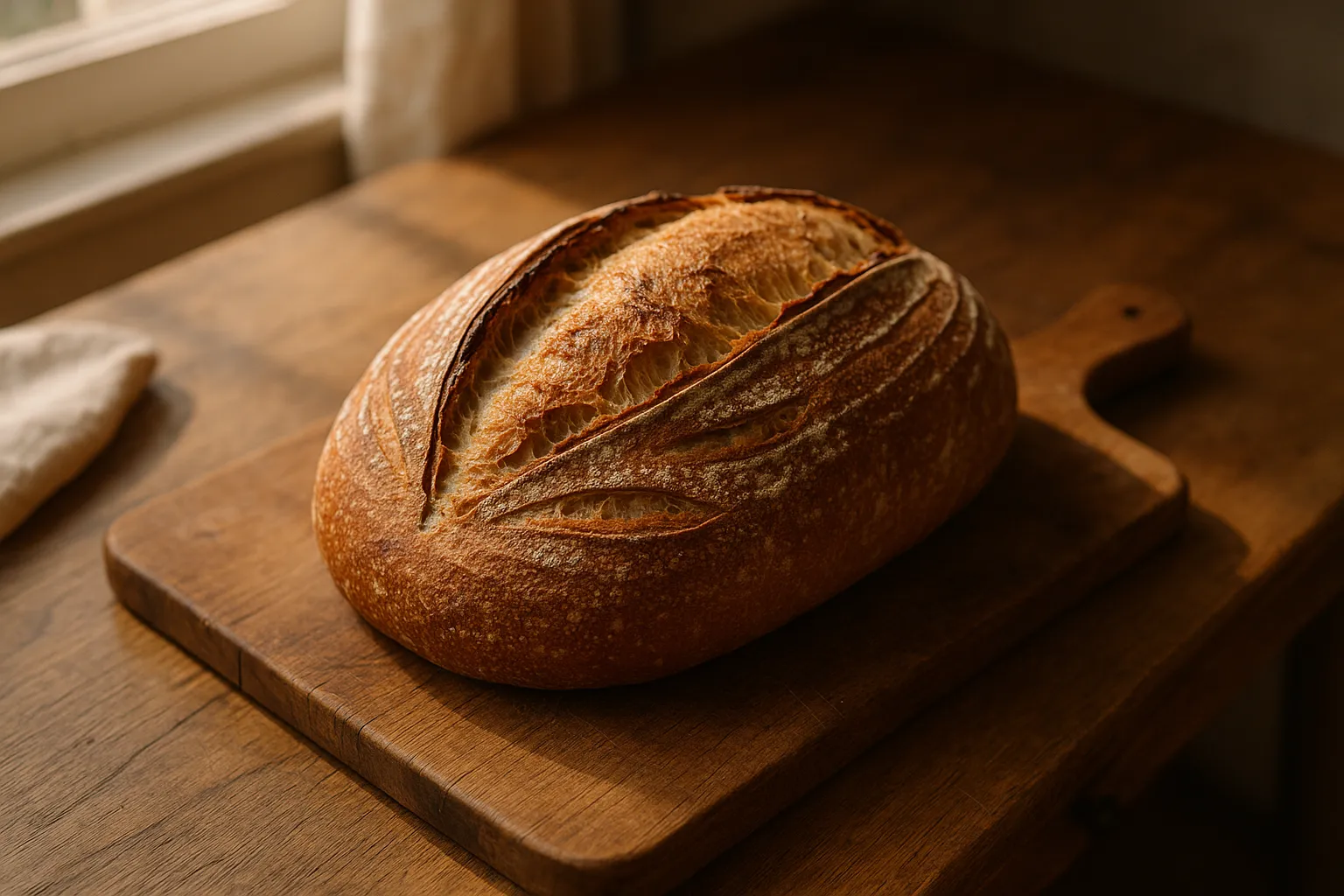
Quick Nutrition Facts
Per 1 Slice (50g)
Per 100 g: 272 kcal, 10.8 g protein, 51.9 g carbs, 2.2 g fiber
| Nutrient | Amount |
|---|---|
| Calories | 136 kcal |
| Protein | 5.4g |
| Carbohydrates | 26g |
| Fiber | 1.1g |
| Sugars | 2.3g |
| Fat | 1.2g |
| Sodium | 301mg |
| Iron | 1.4mg |
| Magnesium | 12mg |
| Glycemic Index | 48 |
Macronutrient Breakdown

NUTRITIONIST INSIGHT
Authentic sourdough's 12-72 hour fermentation produces organic acids that lower the glycemic index by 29% and improve mineral absorption by reducing phytic acid content. The longer the fermentation, the greater the health benefits.
Myth Busters
MYTH #1: All Sourdough Bread is the Same
TRUTH: True sourdough requires 12-72 hours of natural fermentation with wild yeast and bacteria. Most commercial "sourdough" uses baker's yeast with vinegar for sour flavor, skipping the fermentation that provides health benefits. Check ingredients: authentic sourdough lists only flour, water, salt, and starter.
MYTH #2: Sourdough Has the Same Glycemic Index as Regular Bread
TRUTH: Authentic sourdough has a GI of 48 compared to 69 for regular white bread. Research shows sourdough fermentation reduces postprandial glucose by 20-29% through organic acid production, especially when made with whole wheat flour.
MYTH #3: Sourdough is Gluten-Free
TRUTH: Sourdough is NOT gluten-free, but fermentation partially breaks down gluten proteins making it easier to digest for some people. Those with celiac disease must avoid all sourdough. Only people with mild gluten sensitivity may tolerate long-fermented sourdough better.
MYTH #4: The Tangier the Sourdough, the Healthier
TRUTH: Tang comes from acetic acid (vinegar-like), but lactic acid provides the glycemic benefits. Bread can be mildly sour yet highly beneficial if properly fermented. Focus on fermentation time (24-48 hours) over sourness level.
MYTH #5: Sourdough Doesn't Spike Blood Sugar at All
TRUTH: Sourdough still contains carbs and will raise blood sugar, just more slowly than regular bread. A slice has 26g carbs. Pairing with protein or fat further reduces the glucose spike. It's better, not magic.
MYTH #6: Frozen or Par-Baked Sourdough is Just as Good
TRUTH: Freezing and par-baking can alter starch structure and reduce some fermentation benefits. Fresh-baked or fully fermented before freezing retains more health properties. Commercial par-baked versions often have shorter fermentation times.
NutriScore by Health Goals
| Health Goal | NutriScore | Why This Score? |
|---|---|---|
| Weight Loss |  | 136 cal per slice, 1.1g fiber promotes fullness, lower GI reduces hunger. Limit to 1-2 slices daily, pair with protein. |
| Muscle Gain | | 5.4g protein per slice, good carb source for post-workout glycogen. Combine with eggs, avocado, or nut butter for complete meal. |
| Diabetes Management |  | GI of 48 vs 69 for regular bread, 20-29% lower glucose response. Best bread choice for diabetics when portion-controlled (1 slice) and paired with protein/fat. |
| PCOS Management | | Lower GI improves insulin sensitivity. Choose whole grain sourdough, limit to 1 slice, always pair with protein. |
| Pregnancy Nutrition | | Folate enrichment in flour, better mineral absorption from reduced phytic acid. Provides steady energy; choose whole grain varieties. |
| Viral/Flu Recovery | | Easy to digest, provides quick energy, probiotic benefits from fermentation. Toast lightly for easier digestion. |
PERSONALIZED NUTRITION
Track your meals with NutriScan to see how sourdough affects your personal blood sugar and get customized NutriScores!
Blood Sugar Response to Sourdough Bread
Understanding sourdough's unique glucose response helps you time and pair it optimally for stable blood sugar.
Typical Glucose Response Curve
This chart shows typical blood glucose response for healthy individuals eating authentic sourdough. Individual responses vary. Not medical advice.
How to Optimize Sourdough's Blood Sugar Impact
Research confirms pairing sourdough with protein or healthy fat further reduces glucose peaks:
- 🥑 Avocado toast - Healthy fats slow carb absorption, add fiber
- 🥚 Eggs on sourdough - Complete protein stabilizes blood sugar
- 🥜 Almond or peanut butter - Protein + fat combination extends satiety
- 🧀 Cheese or cottage cheese - Protein-rich, minimal blood sugar impact
- 🐟 Smoked salmon - Omega-3s and protein for sustained energy
Timing tip: Eat sourdough earlier in the day when insulin sensitivity is higher. Avoid before bed to prevent nighttime glucose elevation.
Cultural Significance
Sourdough is humanity's oldest bread-making technique, predating commercial yeast by thousands of years.
Historical Origins:
- Evidence from 3700 BCE Ancient Egypt - sourdough starter found in archaeological sites
- Medieval European monasteries maintained mother starters for centuries
- San Francisco Gold Rush (1849) - miners relied on sourdough for survival, earning the nickname "sourdoughs"
- Each region developed unique microbial terroir affecting flavor profiles
In India:
- Traditional fermented breads: idli, dosa, amboli use similar wild fermentation
- Growing artisan sourdough movement in Mumbai, Bangalore, Delhi
- Whole wheat and multigrain sourdough gaining popularity for health benefits
- Indian bakers incorporating local grains: jowar, ragi, bajra into sourdough
Global Renaissance:
- 2020 pandemic sparked worldwide home sourdough baking revival
- Artisan bakeries prioritizing long fermentation over speed
- Scientific research validating ancestral fermentation wisdom
- Starter cultures passed through generations as family heirlooms
Compare & Substitute
Sourdough vs Other Breads (Per 100g)
| Nutrient | 🥖 Sourdough | 🍞 White Bread | 🌾 Whole Wheat Bread | 🥯 Bagel |
|---|---|---|---|---|
| Calories | 272 kcal | 265 kcal | 247 kcal | 257 kcal |
| Carbs | 51.9g | 49g | 41g | 53g |
| Fiber | 2.2g | 2.4g | 6.8g | 2.3g |
| Protein | 10.8g | 8.9g | 12g | 10g |
| Fat | 2.4g | 3.3g | 3.5g | 1.4g |
| Sodium | 602mg | 491mg | 443mg | 430mg |
| Glycemic Index | 48 | 69 | 69 | 72 |
| Iron | 3.9mg | 3.7mg | 2.5mg | 5.6mg |
| Best For | Blood sugar control, digestion | Quick energy, lowest fiber | High fiber, protein, satiety | Pre-workout carb loading |
Frequently Asked Questions
How many carbs are in a slice of sourdough bread?
A standard 50 g slice of sourdough has 26g carbohydrates, of which 1.1g is fiber, leaving about 24.9g net carbs. Per 100g, roughly two slices, that is 51.9g carbs.
Carbs by slice size:
- Thin slice (35g): about 18g carbs
- Standard slice (50g): 26g carbs
- Thick artisan slice (65g): about 34g carbs
- Two standard slices (100g): 51.9g carbs
Sourdough's glycemic index of 48 means those carbs reach the bloodstream more slowly than the same carbs from white bread at GI 69.
Is sourdough bread healthier than regular bread?
Yes, authentic sourdough offers multiple health advantages: GI of 48 vs 69 for regular bread (29% lower glucose spike); fermentation produces beneficial lactic acid bacteria supporting gut health; phytic acid reduced by 24-50% improving mineral absorption (iron, zinc, magnesium); easier digestion from partially broken-down gluten; longer satiety from slower carb digestion.
Key requirement: Must be genuine sourdough with 12-72 hour fermentation, not commercial "sourdough" made with baker's yeast and vinegar.
Can diabetics eat sourdough bread?
Yes, sourdough is the best bread choice for diabetics. It has the lowest GI (48) among common breads and reduces postprandial glucose response by 20-29% compared to regular bread.
Best practices for diabetics:
- Limit to 1 slice (50g, 26g carbs) per meal
- Always pair with protein (eggs, cheese, chicken) or healthy fat (avocado, nuts)
- Choose whole wheat sourdough for additional 2-3g fiber per slice
- Test blood sugar 2 hours after eating to understand personal response
- Eat earlier in day when insulin sensitivity is higher
Why it works: Organic acids from fermentation slow starch digestion and glucose absorption.
How many calories are in a slice of sourdough bread?
A standard 50g slice has 136 calories, made up of 26g carbs, 5.4g protein, 1.2g fat, 1.1g fiber and 301mg sodium.
Per 100g (2 slices): 272 calories, 51.9g carbs, 10.8g protein, 2.4g fat, 2.2g fiber.
Calorie variations:
- Homemade slice (50g): about 136 calories, the same as bakery sourdough when the recipe is flour, water, salt and starter
- Thin slice (35g): 95 calories
- Thick artisan slice (65g): 177 calories
- With 1 tbsp butter: +102 calories (238 total)
- With 1/4 avocado: +60 calories (196 total)
What makes sourdough bread authentic?
Real sourdough checklist:
- Ingredients: Only flour, water, salt, and starter (wild yeast + lactobacillus bacteria). No commercial yeast, no vinegar, no dough conditioners.
- Fermentation time: Minimum 12 hours, ideally 24-72 hours at room temperature.
- Starter: Active wild yeast culture maintained through regular feedings, not dry instant yeast packets.
- Tangy flavor: Natural sourness from lactic and acetic acid, not added vinegar.
- Texture: Open, irregular crumb structure with air pockets; crispy crust.
Red flags for fake sourdough:
- Ingredients list "yeast" or "baker's yeast"
- Made in under 4 hours
- Vinegar or "natural flavors" added for tang
- Uniform, soft sandwich bread texture
- Mass-produced at commercial scale without fermentation time
Does sourdough bread help with digestion?
Yes, sourdough's fermentation provides multiple digestive benefits:
Proven mechanisms:
- Partial gluten breakdown: Fermentation degrades gluten proteins, making bread easier to digest (not safe for celiac disease)
- Reduced phytic acid: 24-50% decrease improves absorption of iron, zinc, magnesium, calcium
- Probiotic bacteria: Lactobacillus survives baking in some cases, supporting gut microbiome
- Prebiotic compounds: Fermentation produces resistant starches feeding beneficial gut bacteria
- Lower FODMAP: Longer fermentation reduces fermentable carbs triggering IBS symptoms
Best results: Choose sourdough fermented 24+ hours; whole grain versions provide additional fiber for gut health.
How long should real sourdough ferment?
Fermentation timeline for maximum benefits:
- 12-18 hours (minimum): Basic sourness develops, slight GI reduction
- 24-48 hours (optimal): Greatest health benefits - lowest GI (48), maximum phytic acid reduction (40-50%), best mineral bioavailability, improved digestibility
- 48-72 hours (artisan): Intense flavor, highly digestible, potential for some probiotics to survive baking
What happens during fermentation:
- Hours 1-6: Starter activates, yeast begins multiplying
- Hours 6-12: Organic acids accumulate, pH drops
- Hours 12-24: Gluten breakdown accelerates, enzyme activity peaks
- Hours 24-48: Maximum phytic acid degradation, complex flavor development
- Beyond 48: Risk of over-fermentation, very sour taste
Temperature matters: 75-78°F (24-26°C) ideal. Colder slows fermentation (refrigerate for 48-72 hour ferments), warmer speeds it up.
Is sourdough bread good for weight loss?
Sourdough can support weight loss when consumed mindfully: 136 cal per slice is moderate; lower GI (48) reduces hunger hormones and cravings 2-3 hours after eating; 1.1g fiber per slice promotes fullness; slower digestion extends satiety compared to regular bread.
Weight loss guidelines:
- Portion: 1-2 slices maximum per day (272 calories)
- Timing: Breakfast or lunch, not dinner
- Pairings: Protein-rich toppings (eggs 70 cal, cottage cheese 80 cal, chicken breast 140 cal)
- Avoid: Butter (102 cal/tbsp), cream cheese (99 cal/2 tbsp), jam/honey (50-64 cal/tbsp)
- Track: Use NutriScan app to monitor how sourdough fits your calorie budget
Not magic: 3 slices daily = 408 calories; with toppings easily 600-800 calories, potentially exceeding weight loss targets.




Similar Nutritious Foods
4505 Chicharrones Classic Chili Salt
7 Eleven Japan Crispy Corn Cheese
Explore More Nutrition Tools & Resources
AI Calorie Counter App - Snap a Photo, Get Macros
AI Nutritionist App That Reads Your Logged Meals
Best Protein Supplements for Women
Bulking Meal Plan App That Sets Your Surplus
ChatGPT Calorie Counter Alternative That Keeps the Total
ChatGPT Diet Plan Alternative That Tracks What You Eat
ChatGPT Weight Loss Coach Alternative With a Food Log
Fast Food Calorie Counter App That Reads the Tray
Free Calorie Tracker App with AI Photo Scans | NutriScan
Indian Diet Plan App With Veg and Non Veg Meals
Indian Food Calorie Calculator - Get Instant Nutrition Facts for Desi Meals — 2026
Intermittent Fasting for Women, Timer and Meal Log App
Intermittent Fasting Tracker App - Free Fasting Timer
Macro Tracker App That Fills the Numbers From a Photo
Mediterranean Diet Meal Plan App That Counts the Oil
Micronutrient Tracker App for Vitamins and Minerals
MyFitnessPal Alternative That Stays Free | NutriScan
NutriScore App: A Free Grade on Every Meal | NutriScan
Nutrition Label Scanner App for the Amount You Ate
Second Trimester Protein Guide
Vegetarian Meal Plan App With a Protein Target
Voice Calorie Counter - Speak to Track Meals Hands-Free
Water and Calorie Tracker App - Free Water Log