Sprouted Beans Salad: Calories, Nutrition and Health Benefits
Living enzymes and bioavailable protein—nature's most nutrient-dense, easy-to-digest plant food for wellness warriors.
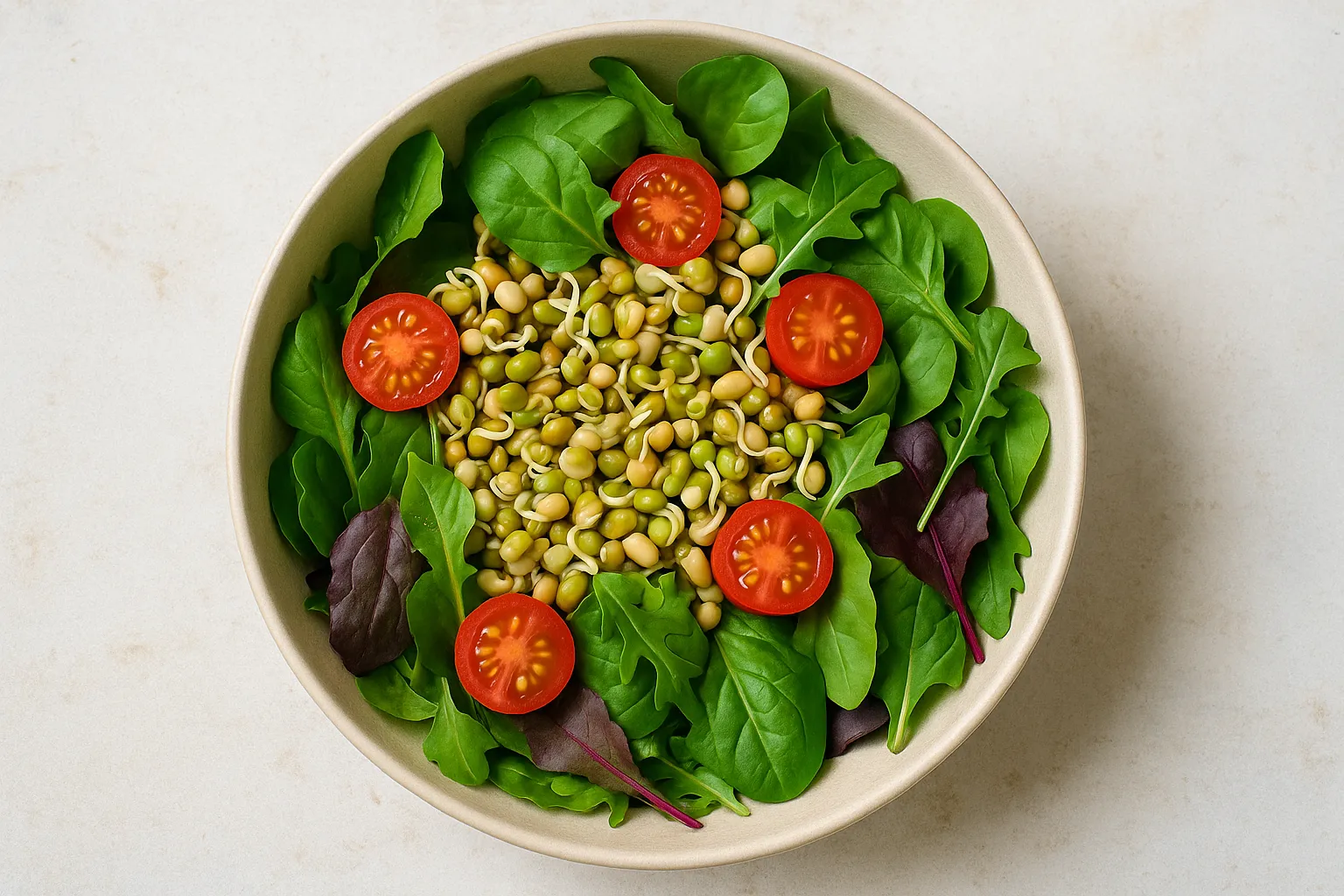
Quick Nutrition Facts
Per 1 Cup (120g fresh sprouts)
| Nutrient | Amount |
|---|---|
| Calories | 95 kcal |
| Protein | 8g |
| Carbohydrates | 10g |
| Fiber | 3g |
| Sugars | 1.2g |
| Fat | 1g |
| Vitamin C | 12mg |
| Folate | 65mcg |
| Manganese | 0.15mg |
| Enzymes | Active |
Macronutrient Breakdown
 ChatGPT
  Claude
  AI Mode
  Perplexity
NUTRITIONIST INSIGHT
Sprouting transforms beans into nutritional powerhouses—bioavailability increases by 30–40%, antinutrient load drops 70%, and enzyme content multiplies 3–5x. The raw, living enzymes aid complete nutrient absorption, making sprouted beans superior to cooked beans for micronutrient density.
Myth Busters
MYTH #1: Raw Sprouts Are Unsafe and Cause Foodborne Illness
TRUTH: Properly grown and handled sprouts are safe; risk is minimal with home sprouting or commercial sources with proper hygiene. The living enzyme content actually boosts immune function. Rinse sprouts well and store in refrigerator; avoid pre-cut packages left at room temperature.
MYTH #2: Sprouted Beans Have Less Protein Than Cooked Beans
TRUTH: Total protein appears lower in sprouts (per weight), but bioavailability is 30–40% higher due to reduced phytic acid. The amino acid profile improves; lysine and methionine increase significantly. One cup provides complete plant protein for muscle synthesis.
MYTH #3: All Enzyme Benefits Are Marketing Hype
TRUTH: Sprouting dramatically increases enzyme production—amylase increases 8–10x, protease 2–3x. These enzymes aid digestion and nutrient absorption. Raw enzymes survive stomach acid in food form; supplemented enzymes often degrade.
MYTH #4: You Can't Get Complete Amino Acids From Plants
TRUTH: Sprouted beans contain all 9 essential amino acids. Sprouting increases amino acid availability, particularly lysine. Pair with whole grains for optimal protein complementarity and sustained energy.
MYTH #5: Sprouted Beans Cause Bloating
TRUTH: Sprouting eliminates oligosaccharides (FODMAP compounds) and reduces phytic acid, actually reducing bloating compared to cooked beans. Raw enzyme content aids complete digestion. Most digestive discomfort decreases within 1–2 weeks of regular consumption.
MYTH #6: Sprouted Beans Are Expensive and Hard to Find
TRUTH: Home sprouting costs ₹30–50 per batch (soaking and rinsing dried beans). Commercial sprouts cost ₹80–120/100g, significantly cheaper than organic vegetables per calorie. Sprouting jars are one-time ₹200–300 investments.
NutriScore by Health Goals
| Health Goal | NutriScore | Why This Score? |
|---|---|---|
| Weight Loss |  | 95 calories, 8g protein, 3g fiber promote satiety with minimal energy. High water content (70%) adds volume; enzymes optimize digestion and nutrient absorption. |
| Muscle Gain |  | 8g complete protein with improved bioavailability, but lower caloric density than cooked beans. Pair with grains or oils for calorie surplus needed for hypertrophy. |
| Diabetes Management | | Only 10g carbs, <15 glycemic index, enzymes may improve insulin sensitivity. Sprouting increases resistant starch content. Excellent choice. |
| PCOS Management | | High protein (8g) for hormonal balance, low carbs (10g), high fiber for microbiome health. Enzymes support detoxification pathways. |
| Pregnancy Nutrition | | 65mcg folate (16% DV) prevents neural defects, 8g protein for fetal development, enzymes support nutrient absorption. Safe when properly sprouted and refrigerated. |
| Viral/Flu Recovery | | 12mg vitamin C boosts immunity, enzymes ease digestion, complete amino acid profile supports immune cell synthesis. Light, easily digestible during illness. |
PERSONALIZED NUTRITION
Track sprouted beans salad meals with NutriScan for personalized NutriScores based on your specific health goals!
Blood Sugar Response to Sprouted Beans Salad
Understanding glucose response helps optimize sprouted beans in meals for blood sugar stability.
Typical Glucose Response Curve
This chart shows typical blood glucose response for general healthy individuals. Individual responses may vary. Not medical advice.
How to Maximize Benefits
- 🌿 Leafy greens - Spinach, lettuce, or arugula add micronutrients with zero carb impact
- 🥒 Citrus vinaigrette - Acetic acid slows carb digestion by 30%, stabilizing blood sugar
- 🥑 Avocado or olive oil - Healthy fats slow glucose absorption, extend satiety
- 🧄 Garlic and ginger - Compounds support digestive enzyme function and anti-inflammatory response
This combination optimizes enzyme function and creates a metabolically favorable meal.
Cultural Significance
Sprouted beans hold deep roots in Indian wellness traditions and global health consciousness.
In India:
- Central to Ayurvedic medicine for digestive health and detoxification (Shuddhi protocols)
- Traditional preparation in North India during spring for seasonal cleansing
- Featured in ashram cuisine and yoga community practices for centuries
- Modern fitness culture embraced sprouting for bioavailable protein and enzyme density
- Home sprouting remains common practice in health-conscious households across regions
Global Impact:
- Ancient sprouting practices found in Chinese, Tibetan, and Middle Eastern healing traditions
- Modern wellness movement recognized sprouted foods as "living foods" for optimal vitality
- Raw food communities adopt sprouting as foundation for enzyme-rich diets
- Athletes and bodybuilders use sprouted grains for enhanced nutrient absorption
Compare & Substitute
Sprouted Beans vs Other Plant Proteins (Per 1 cup cooked, 120–150g)
| Nutrient | 🌱 Sprouted Beans | 🍚 Cooked Moong Beans | 🥬 Leafy Greens + Chickpea | 🌾 Sprouted Grains |
|---|---|---|---|---|
| Calories | 95 kcal | 105 kcal | 120 kcal | 110 kcal |
| Protein | 8g | 9g | 7g (with 15g chickpeas) | 4g |
| Carbs | 10g | 18g | 14g | 20g |
| Fiber | 3g | 2g | 4g | 3g |
| Fat | 1g | 0.5g | 3g (with oil) | 0.8g |
| Enzymes | Active, 3–5x higher | Deactivated by heat | Some (raw vegetables) | Active, 2–3x higher |
| Best For | Raw, digestion, enzyme benefits | Cooked curries, comfort meals | Complete meal, vegetables | Smoothies, breakfast bowls |
Frequently Asked Questions
Are sprouted beans good for weight loss?
Absolutely. Sprouted beans offer 95 calories per cup with 8g protein and 3g fiber for satiety. The high water content (70%) adds bulk with minimal calories, making them perfect for sustainable weight loss without deprivation. Pair with raw vegetables and lemon juice for complete meals under 150 calories.
Can diabetics eat sprouted beans?
Yes, sprouted beans are excellent for diabetics with only 10g carbs and a glycemic index below 15. Sprouting increases resistant starch and enzyme content, potentially improving insulin sensitivity. Always pair with healthy fats (olive oil) for optimal blood sugar stability.
How much protein is in sprouted beans?
Sprouted beans deliver 8g complete protein per cup (120g serving), containing all 9 essential amino acids. Sprouting increases amino acid bioavailability by 30–40%, making plant protein more efficient for muscle synthesis than cooked beans of same weight.
What are the health benefits?
Sprouted beans provide 8g complete protein, 3g fiber for digestive health, 12mg vitamin C (3x more than cooked), 65mcg folate for DNA synthesis, active enzymes (3–5x higher than cooked), and powerful antioxidants for immune support and inflammation reduction.
Why are sprouted beans better than cooked beans?
Sprouting deactivates phytic acid (70% reduction) and lectins, increasing mineral bioavailability by 30–40%. Enzyme content multiplies 3–5x, aiding complete digestion and nutrient absorption. Vitamin content increases (vitamin C 3x higher); amino acids become more available despite lower total protein.
When is the best time to eat sprouted beans salad?
For weight loss: lunch or afternoon snack for high satiety. For muscle gain: post-workout with whole grains for carb timing. For diabetes: any meal with vegetables; pair with healthy fats (olive oil, avocado) for glucose stability. Raw form is gentlest on digestive system.


Similar Nutritious Plant Foods
4505 Chicharrones Classic Chili Salt
7 Eleven Japan Crispy Corn Cheese
Explore More Nutrition Tools & Resources
AI Calorie Counter App - Snap a Photo, Get Macros
AI Nutritionist App That Reads Your Logged Meals
Best Protein Supplements for Women
Bulking Meal Plan App That Sets Your Surplus
ChatGPT Calorie Counter Alternative That Keeps the Total
ChatGPT Diet Plan Alternative That Tracks What You Eat
ChatGPT Weight Loss Coach Alternative With a Food Log
Fast Food Calorie Counter App That Reads the Tray
Free Calorie Tracker App with AI Photo Scans | NutriScan
Indian Diet Plan App With Veg and Non Veg Meals
Indian Food Calorie Calculator - Get Instant Nutrition Facts for Desi Meals — 2026
Intermittent Fasting for Women, Timer and Meal Log App
Intermittent Fasting Tracker App - Free Fasting Timer
Macro Tracker App That Fills the Numbers From a Photo
Mediterranean Diet Meal Plan App That Counts the Oil
Micronutrient Tracker App for Vitamins and Minerals
MyFitnessPal Alternative That Stays Free | NutriScan
NutriScore App: A Free Grade on Every Meal | NutriScan
Nutrition Label Scanner App for the Amount You Ate
Second Trimester Protein Guide
Vegetarian Meal Plan App With a Protein Target
Voice Calorie Counter - Speak to Track Meals Hands-Free
Water and Calorie Tracker App - Free Water Log