Star Fruit (Carambola): Calories, Nutrition and Health Benefits
Exotic tropical fruit with stunning star shape, low calories, and high vitamin C—but dangerous for anyone with kidney concerns.
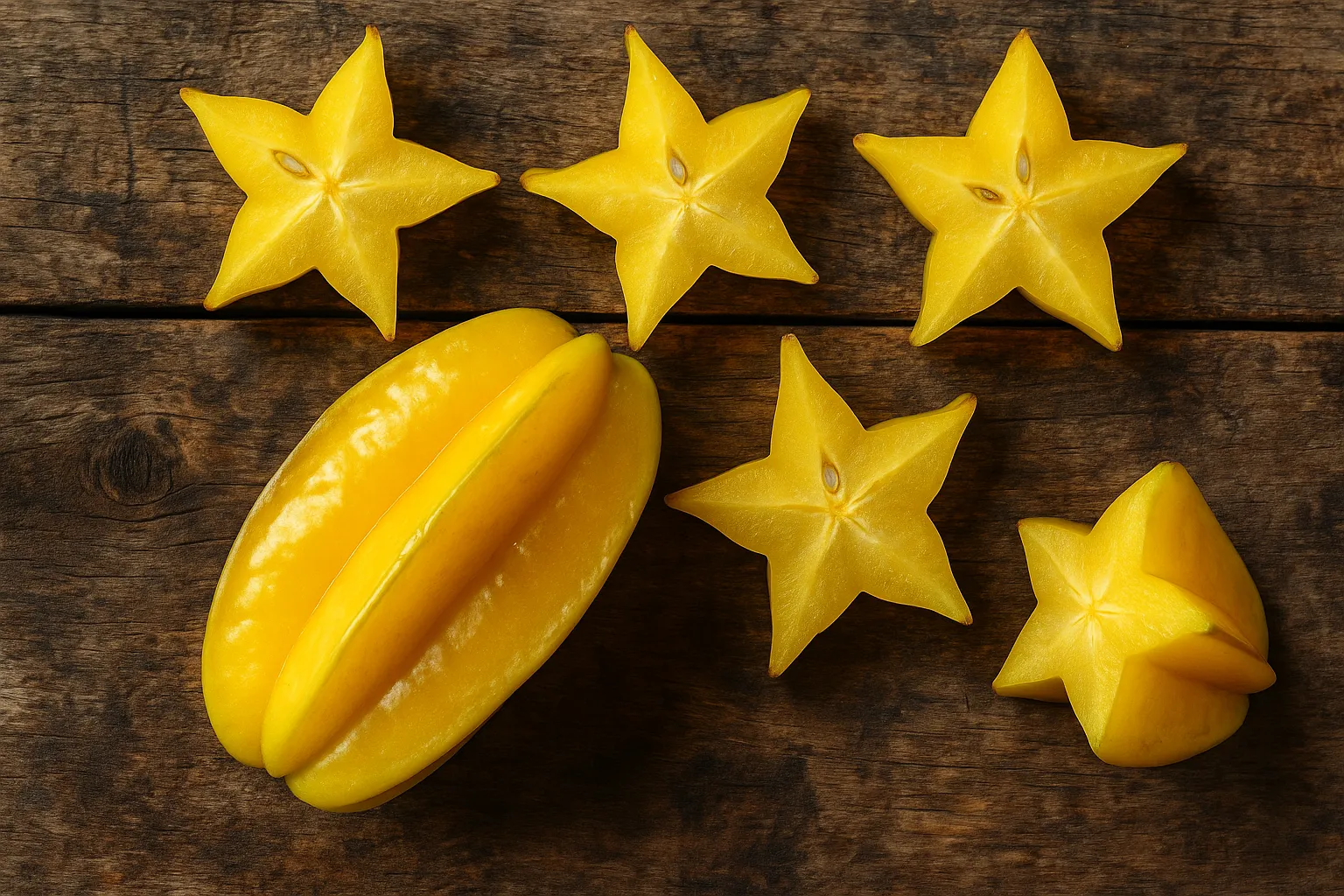
CRITICAL KIDNEY WARNING
Star fruit contains caramboxin, a neurotoxin that healthy kidneys filter out. If you have ANY kidney disease, kidney stones, or impaired kidney function, DO NOT eat star fruit. It can cause seizures, confusion, hiccups, and even death. Consult your doctor before consuming.
Quick Nutrition Facts
Per 1 Medium Fruit (91g)
| Nutrient | Amount |
|---|---|
| Calories | 28 kcal |
| Protein | 0.9g |
| Carbohydrates | 6.7g |
| Fiber | 2.5g |
| Sugars | 3.5g |
| Fat | 0.3g |
| Vitamin C | 31mg |
| Potassium | 119mg |
| Folate | 11mcg |
| Copper | 0.1mg |
Macronutrient Breakdown
 ChatGPT
  Claude
  AI Mode
  Perplexity
NUTRITIONIST INSIGHT
Star fruit provides 35% of your daily vitamin C needs in just 28 calories per fruit. Vitamin C supports immune function by protecting cells from oxidative stress. The 91% water content and 2.5g fiber make it incredibly filling for very few calories.
Myth Busters
MYTH #1: Star Fruit is Safe for Everyone
TRUTH: Star fruit is DANGEROUS for people with kidney disease. The caramboxin neurotoxin causes seizures, hiccups, confusion, and can be fatal. Even healthy individuals should limit intake. Kidney patients must avoid completely.
MYTH #2: You Can Eat Unlimited Star Fruit for Weight Loss
TRUTH: While low-calorie (28 per fruit), star fruit's high oxalate content (50-95mg per 100g) can cause kidney stones with excessive consumption. Safe limit: 1-2 fruits daily for healthy individuals. Oxalates bind calcium, increasing stone risk.
MYTH #3: Star Fruit is as Nutritious as Oranges
TRUTH: Star fruit has less vitamin C than oranges (34mg vs 53mg per 100g) and minimal protein (1g vs 0.9g). It excels in low calories and high water content for weight loss, but oranges are nutritionally denser overall.
MYTH #4: Removing Star Fruit Seeds Makes it Safe for Kidney Patients
TRUTH: The caramboxin neurotoxin is in the fruit flesh, not just seeds. Removing seeds does NOT eliminate the danger. People with chronic kidney disease must avoid star fruit entirely—even small amounts can be toxic.
MYTH #5: Star Fruit Has Zero Calories
TRUTH: Star fruit contains 28 calories per medium fruit (31 per 100g). The misconception comes from its high water content (91%) and low calorie density. It's lower than most fruits but still contributes calories—track portions for accuracy.
MYTH #6: Star Fruit is High in Antioxidants
TRUTH: Star fruit has moderate antioxidants (vitamin C, polyphenols) but significantly less than berries, pomegranates, or even oranges. The "superfruit" label is marketing hype. It's best valued for low calories and vitamin C, not antioxidant power.
NutriScore by Health Goals
| Health Goal | NutriScore | Why This Score? |
|---|---|---|
| Weight Loss |  | Only 28 calories with 2.5g fiber per fruit, 91% water content promotes fullness. Ideal for volume eating. Limit to 1-2 fruits daily due to oxalates. |
| Muscle Gain |  | Minimal protein (0.9g per fruit) makes it unsuitable for muscle building. Better as a refreshing snack post-workout. Pair with protein-rich foods. |
| Diabetes Management |  | Low GI (45), minimal sugars (3.5g per fruit). However, diabetics often have kidney complications—consult doctor before consuming. |
| PCOS Management | | Low GI and minimal sugars support blood sugar control. High fiber reduces insulin resistance. Safe snack for cravings without spikes. |
| Pregnancy Nutrition |  | Good vitamin C source but high oxalates may interfere with calcium absorption. Limit to 1 fruit occasionally. |
| Viral/Flu Recovery | | 35% daily vitamin C per fruit boosts immunity. Easy to digest, hydrating (91% water), gentle on stomach. Great for recovery. |
PERSONALIZED NUTRITION
Track your meals with NutriScan for personalized NutriScores based on your specific health goals!
Blood Sugar Response to Star Fruit
Understanding how star fruit affects your blood glucose helps optimize consumption timing.
Typical Glucose Response Curve
This chart shows typical blood glucose response for general healthy individuals. Individual responses may vary. Not medical advice.
How to Optimize Blood Sugar Control
Pairing star fruit with protein or healthy fat further stabilizes glucose and extends satisfaction:
- 🥜 Handful of almonds or cashews - Adds healthy fats and protein
- 🧀 Cottage cheese or paneer cubes - Provides protein and calcium
- 🥛 Greek yogurt - Combines protein and probiotics
- 🥑 Avocado slices - Healthy fats balance the fruit sugars
This combination creates a balanced snack that maintains steady energy for 2-3 hours while keeping you satisfied.
Cultural Significance
Star fruit (Averrhoa carambola) originated in Southeast Asia and has been cultivated for over 1,000 years across tropical regions.
In Asia:
- Native to Malaysia, Indonesia, and the Philippines
- Used in traditional Chinese medicine for coughs and fevers (now questioned due to toxicity)
- Popular in Thai, Malaysian, and Indonesian cuisine (salads, chutneys, pickles)
- India grows star fruit in Kerala, Karnataka, and Maharashtra
- Southeast Asian street food: sliced with salt and chili powder
Global Impact:
- Introduced to Florida and Hawaii in late 1800s
- Brazil is major producer outside Asia
- Ornamental appeal: Beautiful star-shaped slices for garnishes and fruit platters
- International awareness growing about kidney toxicity risks (2000s research)
Compare & Substitute
Star Fruit vs Similar Low-Calorie Fruits (Per 100g)
| Nutrient | ⭐ Star Fruit | 🍊 Orange | 🍓 Strawberries | 🍉 Watermelon |
|---|---|---|---|---|
| Calories | 31 kcal | 47 kcal | 32 kcal | 30 kcal |
| Carbs | 6.7g | 12g | 7.7g | 7.6g |
| Fiber | 2.8g | 2.4g | 2g | 0.4g |
| Protein | 1g | 0.9g | 0.7g | 0.6g |
| Fat | 0.3g | 0.1g | 0.3g | 0.2g |
| Vitamin C | 34.4mg | 53.2mg | 58.8mg | 8.1mg |
| Potassium | 133mg | 181mg | 153mg | 112mg |
| Oxalates | 50-95mg (HIGH) | 2-5mg (LOW) | 15mg (MODERATE) | 2mg (LOW) |
| Best For | Weight loss (caution) | Vitamin C, safer choice | Antioxidants, low-calorie | Hydration, safest option |
Frequently Asked Questions
Is star fruit safe for everyone?
NO. Star fruit is extremely dangerous for people with kidney disease, kidney stones, or impaired kidney function. The caramboxin neurotoxin cannot be filtered by damaged kidneys, leading to seizures, confusion, hiccups, and potentially death.
Who should NEVER eat star fruit:
- Chronic kidney disease (any stage)
- Kidney stones or history of stones
- Dialysis patients
- Kidney transplant recipients
- Elderly with declining kidney function
- Anyone taking certain medications (consult doctor)
Safe consumption: Healthy individuals with normal kidney function can eat 1-2 fruits daily. If unsure about kidney health, get tested before consuming.
Are star fruits good for weight loss?
Yes, star fruit supports weight loss with only 28 calories per medium fruit and 2.5g fiber promoting fullness. The 91% water content and low calorie density make it ideal for volume eating.
Best practices: Limit to 1-2 fruits daily (oxalate concerns), eat as mid-morning or afternoon snack, pair with protein (Greek yogurt, nuts), drink plenty of water, choose ripe yellow fruits for sweetness without added sugars.
Can diabetics eat star fruit?
Yes, diabetics with healthy kidney function can eat star fruit in moderation. With a low glycemic index (45) and minimal sugars (3.5g per fruit), star fruit causes minimal blood sugar spikes.
Critical warning: Many diabetics develop kidney complications over time. Consult your doctor and get kidney function tested before eating star fruit. Monitor blood sugar 2 hours after eating.
Tips for diabetics:
- Limit to 1 medium fruit (91g) serving
- Always pair with protein or healthy fat
- Best timing: mid-morning or afternoon snack
- Avoid on empty stomach
How much vitamin C is in star fruit?
Star fruit contains 34.4mg vitamin C per 100g (38% daily value). One medium fruit (91g) provides 31mg, meeting about 35% of daily needs.
Comparison: Oranges have more vitamin C (53mg per 100g), strawberries even more (59mg), but star fruit still qualifies as a good source while being lower in calories (31 vs 47-32 kcal).
What are the symptoms of star fruit poisoning?
Immediate symptoms (30 min to 14 hours):
- Persistent hiccups (most common, lasting hours)
- Confusion and agitation
- Insomnia and restlessness
- Muscle twitching and weakness
- Numbness and tingling
Severe symptoms (kidney patients):
- Seizures (can be life-threatening)
- Progression of kidney failure
- Coma
- Death (in extreme cases)
ACTION: Seek emergency medical care immediately if you experience ANY symptoms after eating star fruit. Treatment may require dialysis to remove the toxin.
Can I eat star fruit if I have kidney stones?
NO. Star fruit is extremely high in oxalates (50-95mg per 100g), which directly contribute to kidney stone formation—especially calcium oxalate stones (80% of all kidney stones).
Why it's dangerous:
- High oxalate intake increases stone risk 2-3x
- Oxalates bind calcium, forming crystals
- Even with normal kidney function, stones can develop
- Existing stones worsen with oxalate consumption
Better alternatives: Choose low-oxalate fruits like watermelon (2mg), oranges (2-5mg), grapes (3mg), or mangoes (4mg). Drink plenty of water (2-3 liters daily) to prevent stones.
How do I know if star fruit is ripe?
Ripe star fruit characteristics:
- Color: Bright yellow with brown ridges (edges)
- Texture: Firm but slightly yielding to gentle pressure
- Smell: Sweet, mildly fruity aroma
- Taste: Balance of sweet and tart
Avoid:
- Green color (unripe, very sour)
- All-brown ridges (overripe, mushy)
- Soft, squishy texture (spoiled)
- No aroma (underripe)
Ripening: Store unripe fruit at room temperature 2-3 days. Refrigerate ripe fruit up to 5 days.


Similar Nutritious Fruits
4505 Chicharrones Classic Chili Salt
7 Eleven Japan Crispy Corn Cheese
Explore More Nutrition Tools & Resources
AI Calorie Counter App - Snap a Photo, Get Macros
AI Nutritionist App That Reads Your Logged Meals
Best Protein Supplements for Women
Bulking Meal Plan App That Sets Your Surplus
ChatGPT Calorie Counter Alternative That Keeps the Total
ChatGPT Diet Plan Alternative That Tracks What You Eat
ChatGPT Weight Loss Coach Alternative With a Food Log
Fast Food Calorie Counter App That Reads the Tray
Free Calorie Tracker App with AI Photo Scans | NutriScan
Indian Diet Plan App With Veg and Non Veg Meals
Indian Food Calorie Calculator - Get Instant Nutrition Facts for Desi Meals — 2026
Intermittent Fasting for Women, Timer and Meal Log App
Intermittent Fasting Tracker App - Free Fasting Timer
Macro Tracker App That Fills the Numbers From a Photo
Mediterranean Diet Meal Plan App That Counts the Oil
Micronutrient Tracker App for Vitamins and Minerals
MyFitnessPal Alternative That Stays Free | NutriScan
NutriScore App: A Free Grade on Every Meal | NutriScan
Nutrition Label Scanner App for the Amount You Ate
Second Trimester Protein Guide
Vegetarian Meal Plan App With a Protein Target
Voice Calorie Counter - Speak to Track Meals Hands-Free
Water and Calorie Tracker App - Free Water Log