Steakhouse Burger: Calories, Nutrition and Health Benefits
The classic American steakhouse burger delivers serious protein punch with a thick, juicy beef patty, perfect for muscle building and satisfying hunger.
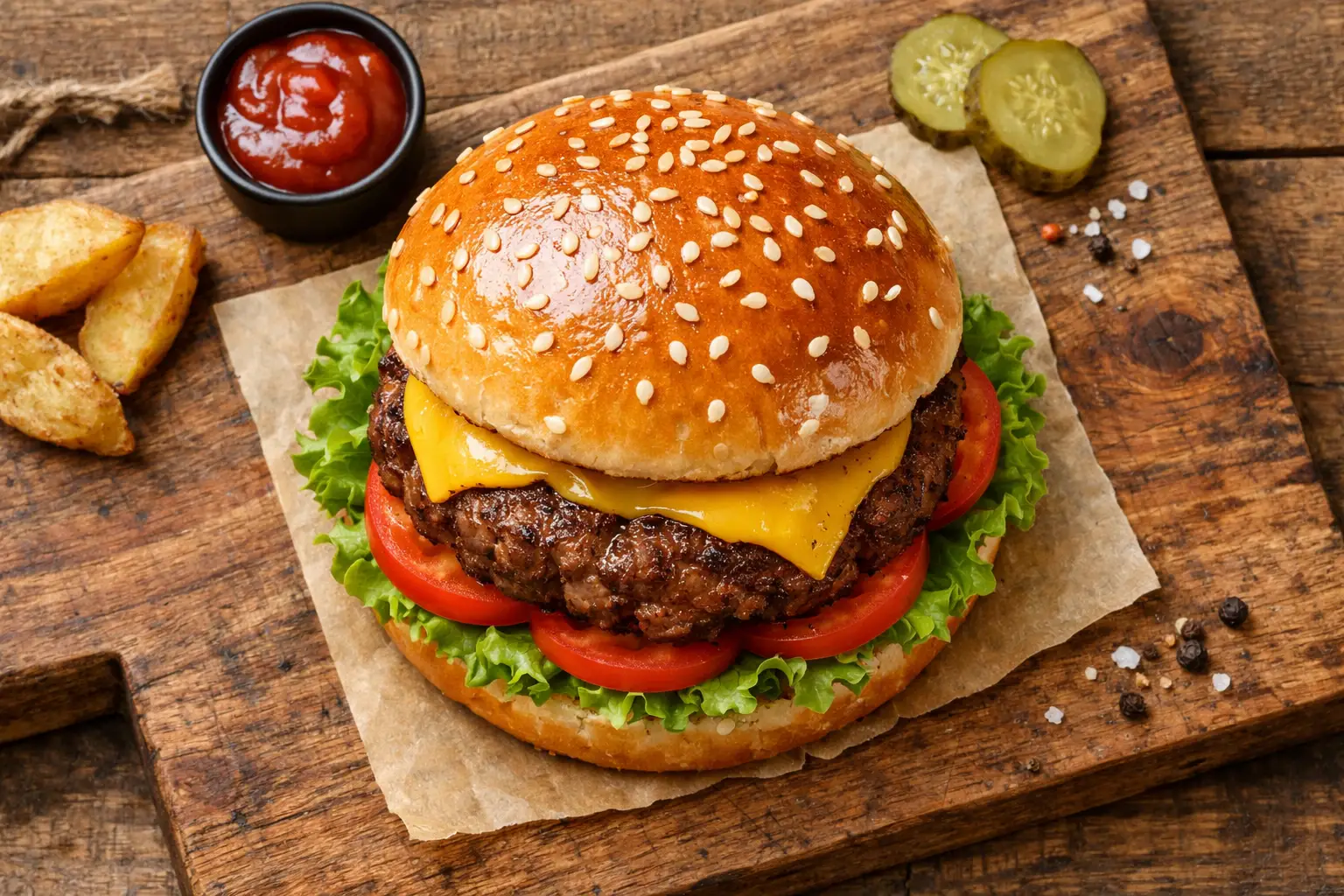
Quick Nutrition Facts
Per 1 Steakhouse Burger (~280g with bun)
| Nutrient | Amount |
|---|---|
| Calories | 650 kcal |
| Protein | 35g |
| Carbohydrates | 42g |
| Fiber | 2g |
| Sugars | 6g |
| Fat | 38g |
| Saturated Fat | 14g |
| Iron | 4.5mg |
| Zinc | 8mg |
| Vitamin B12 | 4mcg |
Macronutrient Breakdown
 ChatGPT
  Claude
  AI Mode
  Perplexity
NUTRITIONIST INSIGHT
A steakhouse burger provides 73% of your daily zinc needs and 167% of vitamin B12 in one serving. Choose grass-fed beef when possible for better omega-3 fatty acid content and pair with a side salad to boost fiber intake.
Myth Busters
MYTH #1: Burgers Are Just Empty Calories
TRUTH: A quality steakhouse burger delivers 35g complete protein, 25% DV iron, and 73% DV zinc. These nutrients are essential for immune function, oxygen transport, and muscle repair. The key is portion control and toppings.
MYTH #2: All Burgers Are Equally Unhealthy
TRUTH: Quality matters significantly. Steakhouse burgers often use higher-grade beef with fewer additives than fast-food alternatives. Grass-fed beef contains more omega-3s and conjugated linoleic acid (CLA).
MYTH #3: You Must Avoid Red Meat Entirely for Heart Health
TRUTH: Moderate consumption of lean red meat can be part of a heart-healthy diet. The key is choosing lean cuts, controlling portions (1-2 servings per week), and balancing with plenty of vegetables and whole grains.
MYTH #4: Burgers Have No Place in a Fitness Diet
TRUTH: With 35g protein per burger, they're actually excellent for muscle building. Post-workout, the protein and carbs from the bun help with muscle recovery. Bodybuilders often include lean beef burgers in their meal plans.
MYTH #5: The Bun Is the Worst Part
TRUTH: While refined flour buns add carbs, choosing whole grain buns adds 3-4g fiber and more nutrients. The bun also helps with satiety. Lettuce wraps work for low-carb diets but aren't inherently healthier for everyone.
NutriScore by Health Goals
| Health Goal | NutriScore | Why This Score? |
|---|---|---|
| Weight Loss |  | 650 calories is substantial. Skip cheese and mayo, use lettuce wrap, share portions. Protein helps preserve muscle during deficit. |
| Muscle Gain |  | Excellent 35g complete protein, iron for oxygen delivery, zinc for testosterone. Perfect post-workout meal with bun for glycogen. |
| Diabetes Management |  | Bun contributes most carbs; protein and fat slow glucose absorption. Use lettuce wrap or half bun to reduce glycemic impact. |
| PCOS Management | | High protein helps insulin sensitivity but watch saturated fat. Choose lean beef (90/10), skip cheese, add extra vegetables. |
| Pregnancy Nutrition |  | Excellent iron (25% DV) and B12 (167% DV) for fetal development. Must be cooked to 160°F (71°C) internal temperature to eliminate bacteria risk. |
| Viral/Flu Recovery | | High zinc (73% DV) supports immune function. Protein aids recovery. Easy to digest when well-cooked. |
PERSONALIZED NUTRITION
Track your meals with NutriScan for personalized NutriScores based on your specific health goals!
Blood Sugar Response to Steakhouse Burger
Understanding how a steakhouse burger affects your blood glucose can help you make informed decisions about when and how to eat them.
Typical Glucose Response Curve
This chart shows typical blood glucose response for general healthy individuals. Individual responses may vary. Not medical advice.
How to Flatten the Spike
The protein and fat in burgers naturally slow carbohydrate absorption, but you can further optimize:
- Skip the bun or use lettuce wrap - Eliminates most carbs, minimal glucose spike
- Choose whole grain bun - Lower glycemic index, more fiber
- Add extra vegetables - Fiber slows glucose absorption
- Pair with a side salad - Better than fries for blood sugar control
This combination not only reduces the glucose spike but also extends energy release, keeping you fuller for longer.
Cultural Significance
The hamburger is one of America's most iconic foods, with roots tracing back to German immigrants in the late 19th century.
In America:
- Hamburg steak evolved into the modern hamburger in the early 1900s
- Steakhouse burgers represent the premium tier of American burger culture
- Regional variations include Texas-style (thick patty, minimal toppings), California-style (avocado, sprouts), and NY-style (thick patty, glossy bun)
- Annual consumption exceeds 50 billion burgers in the United States
Global Impact:
- Burgers have become a worldwide comfort food phenomenon
- Adapted to local tastes: teriyaki burgers in Japan, lamb burgers in Middle East, paneer burgers in India
- Premium burger restaurants have elevated the humble hamburger to gourmet status
- Sustainable beef production is becoming increasingly important globally
Compare & Substitute
Steakhouse Burger vs Similar Foods (Per Serving)
| Nutrient | Steakhouse Burger | Fast Food Burger | Turkey Burger | Veggie Burger |
|---|---|---|---|---|
| Calories | 650 kcal | 540 kcal | 450 kcal | 380 kcal |
| Carbs | 42g | 45g | 38g | 42g |
| Fiber | 2g | 2g | 2g | 5g |
| Protein | 35g | 25g | 28g | 18g |
| Fat | 38g | 29g | 22g | 16g |
| Iron | 4.5mg | 3.2mg | 2.5mg | 3.8mg |
| B12 | 4mcg | 2.5mcg | 1.8mcg | 0mcg (unless fortified) |
| Best For | Muscle gain, protein needs | Quick meal, budget | Lower fat, lean protein | Plant-based, fiber |
Frequently Asked Questions
Are steakhouse burgers good for weight loss?
650 calories makes this a calorie-dense meal. For weight loss, use a lettuce wrap instead of bun (-150 cal), skip cheese (-100 cal), and choose mustard over mayo (-90 cal). The 35g protein helps maintain muscle during calorie deficit.
Best practices: Eat as your main meal, pair with salad instead of fries, track total daily calories with NutriScan.
Can diabetics eat steakhouse burgers?
Diabetics can enjoy burgers in moderation. The bun contributes most carbs (35-40g). Choose lettuce wrap or eat open-faced with half bun.
Tips for diabetics:
- Protein and fat slow carb absorption naturally
- Add extra lettuce, tomato, onion for fiber
- Skip sugary condiments (ketchup, BBQ sauce)
- Monitor blood sugar 2 hours after eating
The protein helps stabilize blood sugar better than eating carbs alone. Always consult your healthcare provider.
How much protein is in a steakhouse burger?
A thick patty steakhouse burger contains 35g of protein from the beef alone. Adding cheese provides 5-7g extra. This makes burgers an excellent protein source.
For comparison: chicken breast (31g/serving), salmon (25g/serving), tofu (20g/serving).
What are the main health benefits of beef burgers?
Key Benefits:
- Complete Protein: 35g with all essential amino acids for muscle building
- Iron Absorption: 4.5mg heme iron (25% DV), most bioavailable form
- Zinc for Immunity: 8mg (73% DV) supports immune function
- Vitamin B12: 4mcg (167% DV) for neurological health
- Creatine: Natural source for muscle energy
- Satiety: High protein and fat keep you full longer
When is the best time to eat a burger?
Depends on your goal:
- Weight Loss: Lunch (keeps you full until dinner) or dinner (satisfies cravings). Track calories carefully.
- Muscle Gain: Post-workout (within 2 hours) or lunch. The carbs from bun replenish glycogen.
- Diabetes: Lunch when insulin sensitivity is highest. Never on empty stomach alone.
- General Health: As occasional treat, 1-2 times per week maximum.
IMPORTANT NOTE
Always ensure burgers are cooked to 160°F (71°C) internal temperature to eliminate foodborne illness risk, especially important during pregnancy.
How can I make my burger healthier?
Healthier Burger Modifications:
- Choose 90/10 lean beef (saves ~100 calories)
- Use whole grain bun or lettuce wrap
- Load with vegetables (lettuce, tomato, onion, mushrooms)
- Skip mayo for mustard or avocado
- Choose side salad over fries
- Skip the cheese or use reduced-fat version
Recommendation: A modified steakhouse burger can fit into most healthy eating patterns when consumed in moderation.
How often should I eat red meat?
General Guidelines:
- 1-2 servings per week - Moderate consumption for most adults
- Limit to 12-18 oz per week - American Heart Association recommendation
- Balance with fish, poultry, plant proteins - Variety is key
Grass-fed beef offers better omega-3 to omega-6 ratio. Avoid processed meats (bacon, hot dogs) which have stronger links to health concerns.
Track your meat intake with NutriScan app to ensure balanced protein sources.


Similar Nutritious Foods
4505 Chicharrones Classic Chili Salt
7 Eleven Japan Crispy Corn Cheese
Explore More Nutrition Tools & Resources
AI Calorie Counter App - Snap a Photo, Get Macros
AI Nutritionist App That Reads Your Logged Meals
Best Protein Supplements for Women
Bulking Meal Plan App That Sets Your Surplus
ChatGPT Calorie Counter Alternative That Keeps the Total
ChatGPT Diet Plan Alternative That Tracks What You Eat
ChatGPT Weight Loss Coach Alternative With a Food Log
Fast Food Calorie Counter App That Reads the Tray
Free Calorie Tracker App with AI Photo Scans | NutriScan
Indian Diet Plan App With Veg and Non Veg Meals
Indian Food Calorie Calculator - Get Instant Nutrition Facts for Desi Meals — 2026
Intermittent Fasting for Women, Timer and Meal Log App
Intermittent Fasting Tracker App - Free Fasting Timer
Macro Tracker App That Fills the Numbers From a Photo
Mediterranean Diet Meal Plan App That Counts the Oil
Micronutrient Tracker App for Vitamins and Minerals
MyFitnessPal Alternative That Stays Free | NutriScan
NutriScore App: A Free Grade on Every Meal | NutriScan
Nutrition Label Scanner App for the Amount You Ate
Second Trimester Protein Guide
Vegetarian Meal Plan App With a Protein Target
Voice Calorie Counter - Speak to Track Meals Hands-Free
Water and Calorie Tracker App - Free Water Log