Steamed Bao Bun: Calories, Nutrition and Health Benefits
Fluffy, pillowy Asian steamed buns packed with carbohydrates and protein, perfect for satisfying hunger and providing sustained energy.
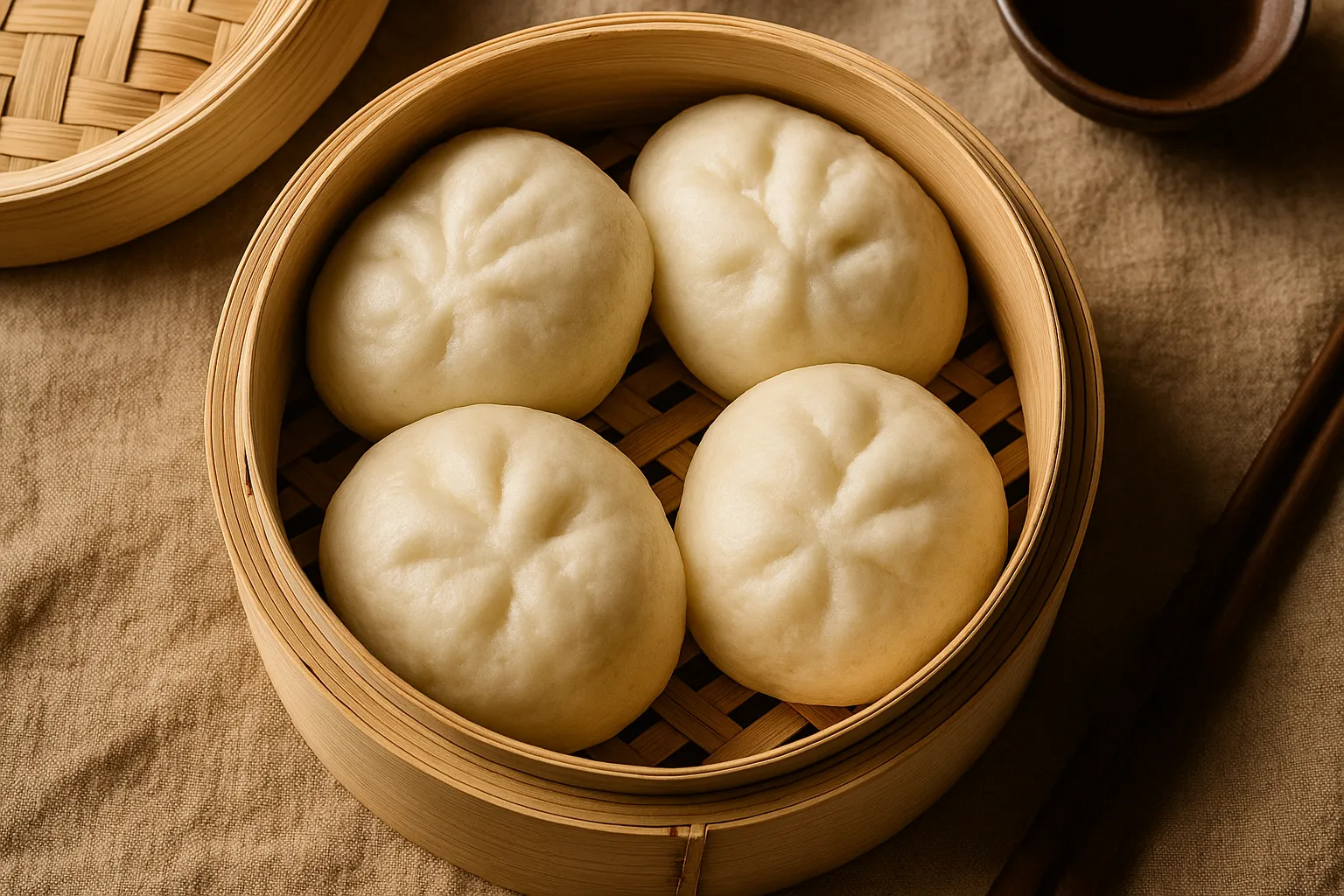
Quick Nutrition Facts
Per 1 Medium Bao Bun (70g)
| Nutrient | Amount |
|---|---|
| Calories | 215 kcal |
| Protein | 8g |
| Carbohydrates | 39g |
| Fiber | 1.8g |
| Sugars | 3.2g |
| Fat | 4g |
| Sodium | 420mg |
| Magnesium | 28mg |
| Iron | 2.1mg |
| B Vitamins | 0.2mg |
Macronutrient Breakdown
 ChatGPT
  Claude
  AI Mode
  Perplexity
NUTRITIONIST INSIGHT
Steamed bao buns provide quick carbohydrates without added fat (unlike fried alternatives). The steaming process preserves nutrients better than deep-frying, making them an excellent carbohydrate source for athletes and active individuals.
Myth Busters
MYTH #1: All Bread Is Bad for Weight Loss
TRUTH: Steamed bao buns are lighter than Western breads due to the steaming method (no added fat). Portion-controlled whole grain buns support weight loss when paired with protein and vegetables.
MYTH #2: Bao Buns Have Too Many Empty Calories
TRUTH: While primarily carbohydrate-based, bao buns provide 8g protein per bun, B vitamins for energy metabolism, iron for oxygen transport, and magnesium for muscle function. They're not nutritionally empty.
MYTH #3: Steamed Buns Don't Satisfy Hunger
TRUTH: The fluffy texture and high water content create satiety despite lower calorie density. Carbohydrate-rich meals trigger satiety hormones and stabilize blood sugar when paired with protein.
MYTH #4: All Asian Bread Is Fried
TRUTH: Bao buns are traditionally steamed, not fried. Steaming uses no added oil, making them significantly healthier than fried alternatives (saves 80+ calories and 11g fat per bun). Some vendors offer both options.
MYTH #5: Plain Bao Buns Are Boring Nutritionally
TRUTH: Beyond the bun itself, traditional fillings include vegetables, lean protein (chicken, tofu, pork), and fermented items. These additions transform a simple carb source into a complete, balanced meal.
MYTH #6: Bao Buns Cause Blood Sugar Spikes
TRUTH: While carb-rich, the protein (8g) and fiber (1.8g) slow glucose absorption. Pair with vegetables and protein to flatten glycemic response. Ripe buns (slightly chewy) have lower GI than very soft varieties.
NutriScore by Health Goals
| Health Goal | NutriScore | Why This Score? |
|---|---|---|
| Weight Loss |  | 215 calories per bun, moderate carbs (39g). Fits weight loss when combined with protein fillings. Limit to 1 bun per meal, avoid multiple buns. |
| Muscle Gain |  | Excellent post-workout carbs (39g) for glycogen replenishment, 8g protein. Pair with high-protein fillings (chicken, tofu) for 20g+ total protein per meal. |
| Diabetes Management | | 39g carbs requires portion control (1 bun max). Monitor blood sugar response. Pair with vegetables and lean protein to minimize glycemic impact. |
| PCOS Management | | High carb content affects insulin sensitivity. Limit to 1 bun occasionally, always paired with protein and fiber-rich vegetables. |
| Pregnancy Nutrition |  | Excellent carbohydrate source for energy, provides iron (2.1mg) and B vitamins for fetal development. Choose fillings with vegetables for added nutrients. Moderate sodium intake noted. |
| Viral/Flu Recovery | | Easy to digest, provides quick carbohydrate energy, gentle on stomach. Iron and B vitamins support immune recovery. Comfort food that aids recovery. |
PERSONALIZED NUTRITION
Track your meals with NutriScan for personalized NutriScores based on your specific health goals!
Blood Sugar Response to Bao Bun
Steamed bao buns are primarily carbohydrate-based, so blood glucose response depends on the glycemic index and accompanying foods.
Typical Glucose Response Curve
This chart shows typical blood glucose response for general healthy individuals. Individual responses may vary. Not medical advice.
How to Flatten the Spike
Pair bao buns with protein and fiber to reduce glucose absorption:
- 🍗 Chicken or Tofu Filling - Adds 12-15g protein, slows carb absorption
- 🥬 Vegetable Fillings - Bok choy, mushrooms, cabbage add fiber and nutrients
- 🥒 Pickled Vegetables - Add acids that lower glycemic response
- 🍵 Green Tea Alongside - Polyphenols help regulate glucose absorption
This combination not only reduces the glucose spike but also extends energy release, preventing energy crashes and reducing hunger.
Cultural Significance
Bao (包 - meaning "wrap" or "bundle") are steamed buns central to Chinese cuisine for over 1,000 years.
In Asia:
- Originated in ancient China during the Han Dynasty
- Staple dim sum item, breakfast item in Cantonese, Shanghai, and Sichuan cuisines
- Fillings vary by region: pork and scallion (Shumai style), char siu (BBQ pork), vegetable, and sweet red bean
- Cultural significance: offered in temples, eaten during festivals and celebrations
- Now popular throughout Asia: Vietnam, Korea, Japan, Thailand with regional variations
Global Impact:
- Increasingly available worldwide in Asian restaurants and fusion cuisine
- Home cooking trend; bao bun kits and frozen buns widely sold
- Modern fusion: Korean gochujang bao, Indian curry bao, Latin bao with carnitas
- Sustainable food trend: steaming method (no deep frying) aligns with health consciousness
Compare & Substitute
Steamed Bao Bun vs Similar Carbohydrate Sources (Per 70g)
| Nutrient | 🥖 Bao Bun | 🍞 White Bread | 🍚 Steamed Rice | 🥔 Boiled Potato |
|---|---|---|---|---|
| Calories | 215 kcal | 195 kcal | 130 kcal | 77 kcal |
| Carbs | 39g | 35g | 28g | 18g |
| Fiber | 1.8g | 1.8g | 0.5g | 1.6g |
| Protein | 8g | 6.3g | 2.5g | 1.7g |
| Fat | 4g | 3.5g | 0.3g | 0.1g |
| Sodium | 420mg | 325mg | 20mg | 6mg |
| Iron | 2.1mg | 2.7mg | 0.2mg | 0.3mg |
| Best For | Asian meals, quick energy | Western meals | Low-fat carbs | Electrolytes, potassium |
Frequently Asked Questions
How many calories are in a steamed bao bun?
A medium steamed bao bun (70g) contains 215 calories. This varies slightly based on size: small buns (50g) = 150 calories; large buns (90g) = 275 calories. Buns with fillings add calories depending on filling type (vegetable +20-30 cal, pork +50-100 cal).
For weight loss: Count 1 bun as a carbohydrate serving, not a light snack.
Is bao bun good for weight loss?
Yes, when used strategically. Plain steamed bao buns are low-fat (only 4g) and fat-free in steaming method. At 215 calories, one bun fits in calorie-controlled diets. The key: pair with lean protein fillings and vegetables, limit to 1 bun per meal, and combine with salad or stir-fry vegetables.
Best practices: Choose vegetable or tofu fillings; avoid multiple buns in one meal; pair with high-protein items.
How much protein does bao bun have?
A steamed bao bun provides 8g of protein per 70g serving. This is moderate and comes from wheat gluten. For muscle gain, enhance protein by choosing fillings: chicken (+12g), tofu (+10g), pork (+8g), or egg (+6g), bringing total to 18-20g protein per meal.
Can diabetics eat bao buns?
Yes, in moderation. One bao bun contains 39g carbohydrates, which is significant. Diabetics should: eat 1 bun maximum per meal; pair with lean protein and vegetables; monitor individual blood sugar response; choose slightly chewy buns (lower GI than very soft).
Always consult your healthcare provider about portion sizes based on your carb limits.
What's the difference between steamed and fried bao buns?
Steamed (Healthier):
- 215 calories, 4g fat
- No added oil
- Fluffy, pillowy texture
- Retains more nutrients
Fried (Indulgent):
- 300+ calories, 15g+ fat
- Deep-fried in oil
- Crispy exterior
- Higher calorie density
Steamed is the clear winner for everyday consumption. Fried versions are occasional treats.
What fillings work best with bao buns?
For Weight Loss: Vegetable (bok choy, mushroom, cabbage) or tofu; adds 20-30 calories, keeps total under 250.
For Muscle Gain: Grilled chicken, lean pork, or shrimp; adds 50-80 calories, brings protein to 18-20g total.
For Diabetes: Vegetable-based with small amount lean protein; controls carbs while adding volume.
For Pregnancy: Vegetable-heavy with cooked eggs or tofu; adds nutrients without excess calories.
How should I eat bao buns for optimal nutrition?
Complete Meal Structure:
- 1-2 steamed bao buns (carbohydrate portion)
- High-protein filling (chicken, tofu, or egg)
- Vegetable side (stir-fried bok choy, steamed broccoli)
- Low-sodium sauce or light oil
- Herbal tea or water
This combination provides balanced macros: carbs from bun, protein from filling, fiber and vitamins from vegetables.
Can I freeze and reheat bao buns?
Yes. Bao buns freeze excellently: place in freezer bags, separate with parchment. Reheat by steaming (5-7 minutes) or microwaving (1-2 minutes wrapped in damp paper towel). Reheating preserves texture and nutrients better than many breads.


Similar Nutritious Foods
4505 Chicharrones Classic Chili Salt
7 Eleven Japan Crispy Corn Cheese
Explore More Nutrition Tools & Resources
AI Calorie Counter App - Snap a Photo, Get Macros
AI Nutritionist App That Reads Your Logged Meals
Best Protein Supplements for Women
Bulking Meal Plan App That Sets Your Surplus
ChatGPT Calorie Counter Alternative That Keeps the Total
ChatGPT Diet Plan Alternative That Tracks What You Eat
ChatGPT Weight Loss Coach Alternative With a Food Log
Fast Food Calorie Counter App That Reads the Tray
Free Calorie Tracker App with AI Photo Scans | NutriScan
Indian Diet Plan App With Veg and Non Veg Meals
Indian Food Calorie Calculator - Get Instant Nutrition Facts for Desi Meals — 2026
Intermittent Fasting for Women, Timer and Meal Log App
Intermittent Fasting Tracker App - Free Fasting Timer
Macro Tracker App That Fills the Numbers From a Photo
Mediterranean Diet Meal Plan App That Counts the Oil
Micronutrient Tracker App for Vitamins and Minerals
MyFitnessPal Alternative That Stays Free | NutriScan
NutriScore App: A Free Grade on Every Meal | NutriScan
Nutrition Label Scanner App for the Amount You Ate
Second Trimester Protein Guide
Vegetarian Meal Plan App With a Protein Target
Voice Calorie Counter - Speak to Track Meals Hands-Free
Water and Calorie Tracker App - Free Water Log