Steamed Broccoli: Calories, Nutrition and Health Benefits
A cancer-fighting cruciferous powerhouse with only 35 calories per 100g, packed with sulforaphane, vitamin C, and fiber for every health goal.
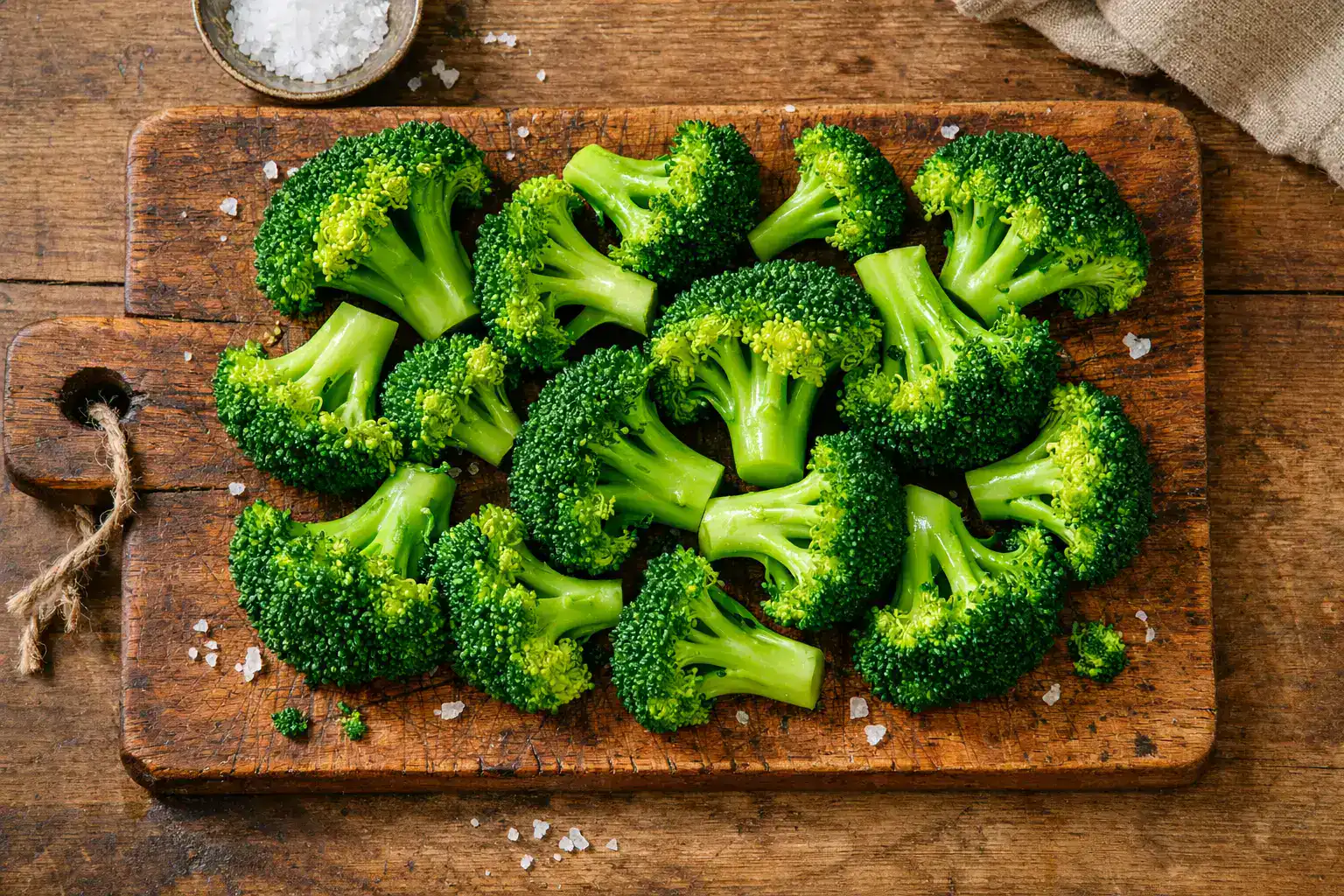
Quick Nutrition Facts
Per 1 Cup Steamed Broccoli (156g)
| Nutrient | Amount |
|---|---|
| Calories | 55 kcal |
| Protein | 3.7g |
| Carbohydrates | 11.2g |
| Fiber | 5.1g |
| Sugars | 2.2g |
| Fat | 0.6g |
| Vitamin C | 101mg |
| Vitamin K | 220mcg |
| Folate | 85mcg |
| Potassium | 457mg |
Macronutrient Breakdown
 ChatGPT
  Claude
  AI Mode
  Perplexity
NUTRITIONIST INSIGHT
Steamed broccoli delivers 169% of your daily vitamin C in just one cup, more than an orange. Light steaming for 3-5 minutes preserves the cancer-protective sulforaphane while making nutrients more bioavailable than eating it raw.
Myth Busters
MYTH #1: Broccoli Loses All Nutrients When Cooked
TRUTH: Steaming actually preserves most nutrients. Research shows steaming retains more sulforaphane and vitamin C than boiling or microwaving. Light steaming (3-5 minutes) is the optimal cooking method for maximizing nutrient retention.
MYTH #2: Broccoli Causes Thyroid Problems
TRUTH: You would need to eat over 1 kg of raw broccoli daily to affect thyroid function. Normal consumption of cruciferous vegetables does not impair thyroid function in healthy individuals. Cooking further reduces goitrogens.
MYTH #3: Broccoli Has No Protein
TRUTH: Broccoli contains 2.4g protein per 100g, making it one of the higher-protein vegetables. Per calorie, broccoli has more protein than beef. A 2-cup serving provides 7.4g of plant-based protein.
MYTH #4: Frozen Broccoli Is Less Nutritious
TRUTH: Flash-frozen broccoli retains comparable nutrient levels to fresh. Frozen vegetables are picked at peak ripeness and frozen within hours, sometimes preserving more nutrients than "fresh" produce that sits in transport for days.
MYTH #5: Broccoli Stalks Should Be Discarded
TRUTH: Broccoli stalks contain as much fiber and nutrients as florets. Simply peel the outer tough layer and steam or slice them. The stalk has a milder, sweeter flavor and reduces food waste.
NutriScore by Health Goals
| Health Goal | NutriScore | Why This Score? |
|---|---|---|
| Weight Loss |  | Only 35 cal/100g with 5.1g fiber per cup. One of the lowest calorie-density vegetables available. Eat unlimited portions. |
| Muscle Gain |  | 3.7g protein per cup, 457mg potassium for muscle recovery. Pair with lean protein for a complete post-workout meal. |
| Diabetes Management | | GI of 15 (very low). Sulforaphane improves insulin resistance in type 2 diabetics. One of the best vegetables for blood sugar control. |
| PCOS Management | | Very low glycemic impact, anti-inflammatory compounds, and fiber support hormonal balance and insulin sensitivity. |
| Pregnancy Nutrition | | Rich in folate (85mcg per cup) essential for neural tube development, plus vitamin C, calcium, and iron. |
| Viral/Flu Recovery | | 169% daily vitamin C per cup boosts immune defense. Easy to digest when steamed. Anti-inflammatory sulforaphane supports recovery. |
PERSONALIZED NUTRITION
Track your meals with NutriScan for personalized NutriScores based on your specific health goals!
Blood Sugar Response to Steamed Broccoli
Understanding how steamed broccoli affects your blood glucose can help you make informed decisions about incorporating it into your meals.
Typical Glucose Response Curve
This chart shows typical blood glucose response for general healthy individuals. Individual responses may vary. Not medical advice.
How to Flatten the Spike
Pairing broccoli with protein and healthy fats further minimizes any glucose response and creates a balanced meal:
- 🧀 Cheese or parmesan - Adds protein and fat for satiety
- 🥚 Scrambled eggs or omelette - Complete protein pairing
- 🫒 Olive oil or sesame oil drizzle - Healthy fats enhance nutrient absorption
- 🍗 Grilled chicken or salmon - Lean protein for a complete meal
Broccoli's very low glycemic index means it causes virtually no blood sugar spike on its own, making it ideal for diabetic-friendly meals.
Cultural Significance
Broccoli originated in the Mediterranean region, cultivated by the Romans over 2,000 years ago. The name comes from the Italian "broccolo," meaning "the flowering crest of a cabbage."
In India:
- Increasingly popular in urban Indian cuisine, used in stir-fries and parathas
- Grown commercially in Uttarakhand, Himachal Pradesh, and Jammu & Kashmir
- Used in Indo-Chinese dishes like broccoli Manchurian and broccoli fried rice
- Ayurvedic practitioners recommend cruciferous vegetables for detoxification
Global Impact:
- China produces over 10 million tonnes annually, making it the world's largest producer
- The "superfood" label has driven global consumption to increase 900% since the 1970s
- George H.W. Bush famously banned broccoli from Air Force One, sparking a national conversation about vegetable consumption
Compare & Substitute
Steamed Broccoli vs Similar Vegetables (Per 100g)
| Nutrient | 🥦 Broccoli | 🥬 Kale | 🌿 Spinach | 🥦 Cauliflower |
|---|---|---|---|---|
| Calories | 35 kcal | 49 kcal | 23 kcal | 25 kcal |
| Carbs | 7.2g | 8.8g | 3.6g | 5g |
| Fiber | 3.3g | 3.6g | 2.2g | 2g |
| Protein | 2.4g | 4.3g | 2.9g | 2g |
| Fat | 0.4g | 0.9g | 0.4g | 0.3g |
| Vitamin C | 65mg | 120mg | 28mg | 48mg |
| Vitamin K | 141mcg | 817mcg | 483mcg | 16mcg |
| Potassium | 293mg | 491mg | 558mg | 299mg |
| Best For | Cancer prevention, vitamin C | Iron, vitamin K, antioxidants | Iron, low-calorie nutrition | Low-carb, cauliflower rice |
Frequently Asked Questions
How many calories are in steamed broccoli?
Steamed broccoli has only 35 calories per 100g. One cup (156g) contains approximately 55 calories, making it one of the lowest-calorie nutrient-dense vegetables available.
Per 100g breakdown: 2.4g protein, 7.2g carbs, 3.3g fiber, 0.4g fat.
Is steamed broccoli good for weight loss?
Yes, steamed broccoli is one of the best vegetables for weight loss. With only 35 calories per 100g and 5.1g fiber per cup, it fills you up without adding significant calories.
Best practices: Eat 1-2 cups with meals, steam rather than fry, pair with lean protein, use as a replacement for higher-calorie side dishes like rice or pasta.
Can diabetics eat broccoli?
Broccoli is excellent for diabetics with a glycemic index of only 15 (very low).
Why broccoli works for diabetes:
- Virtually no blood sugar spike
- Sulforaphane improves insulin sensitivity
- High fiber slows glucose absorption
- Rich in chromium which supports insulin function
Research shows broccoli sprout powder can significantly decrease insulin resistance in type 2 diabetics.
What are the cancer-fighting benefits of broccoli?
Key cancer-protective compounds:
- Sulforaphane: Suppresses cancer cell growth, especially prostate cancer
- Indole-3-carbinol: Supports healthy estrogen metabolism
- Glucoraphanin: Precursor to sulforaphane, activated by enzyme myrosinase
- Antioxidants: Vitamin C, beta-carotene, and quercetin fight oxidative damage
Higher intake of cruciferous vegetables is associated with 10-40% reduced risk of several cancers.
Is steamed or raw broccoli healthier?
Both have unique benefits. Choose based on your goal:
Steamed Broccoli (3-5 minutes):
- Retains most sulforaphane and vitamin C
- Easier to digest, better nutrient absorption
- Reduces goitrogens (thyroid concern compounds)
- Softer texture, more palatable
Raw Broccoli:
- Maximum myrosinase enzyme (activates sulforaphane)
- Higher vitamin C (some lost in heat)
- More crunch for salads and snacking
Best approach: Lightly steam for 3-5 minutes. Add mustard seed powder after cooking to boost sulforaphane activation.
How much broccoli should I eat daily?
General Guidelines:
- 1-2 cups daily - Most adults for general health
- 3+ servings per week - For cancer-preventive benefits
- 1 cup daily - Athletes and muscle gain (pair with protein)
- Unlimited - For weight loss (extremely low calorie)
Track your cruciferous vegetable intake with NutriScan app to ensure you meet your nutrition goals.


Similar Nutritious Foods
4505 Chicharrones Classic Chili Salt
7 Eleven Japan Crispy Corn Cheese
Explore More Nutrition Tools & Resources
AI Calorie Counter App - Snap a Photo, Get Macros
AI Nutritionist App That Reads Your Logged Meals
Best Protein Supplements for Women
Bulking Meal Plan App That Sets Your Surplus
ChatGPT Calorie Counter Alternative That Keeps the Total
ChatGPT Diet Plan Alternative That Tracks What You Eat
ChatGPT Weight Loss Coach Alternative With a Food Log
Fast Food Calorie Counter App That Reads the Tray
Free Calorie Tracker App with AI Photo Scans | NutriScan
Indian Diet Plan App With Veg and Non Veg Meals
Indian Food Calorie Calculator - Get Instant Nutrition Facts for Desi Meals — 2026
Intermittent Fasting for Women, Timer and Meal Log App
Intermittent Fasting Tracker App - Free Fasting Timer
Macro Tracker App That Fills the Numbers From a Photo
Mediterranean Diet Meal Plan App That Counts the Oil
Micronutrient Tracker App for Vitamins and Minerals
MyFitnessPal Alternative That Stays Free | NutriScan
NutriScore App: A Free Grade on Every Meal | NutriScan
Nutrition Label Scanner App for the Amount You Ate
Second Trimester Protein Guide
Vegetarian Meal Plan App With a Protein Target
Voice Calorie Counter - Speak to Track Meals Hands-Free
Water and Calorie Tracker App - Free Water Log