Strawberry Ice Cream Cup: Calories, Nutrition and Health Facts
Classic frozen dessert combining creamy texture with real strawberry flavor, providing calcium and indulgent satisfaction in every spoonful.
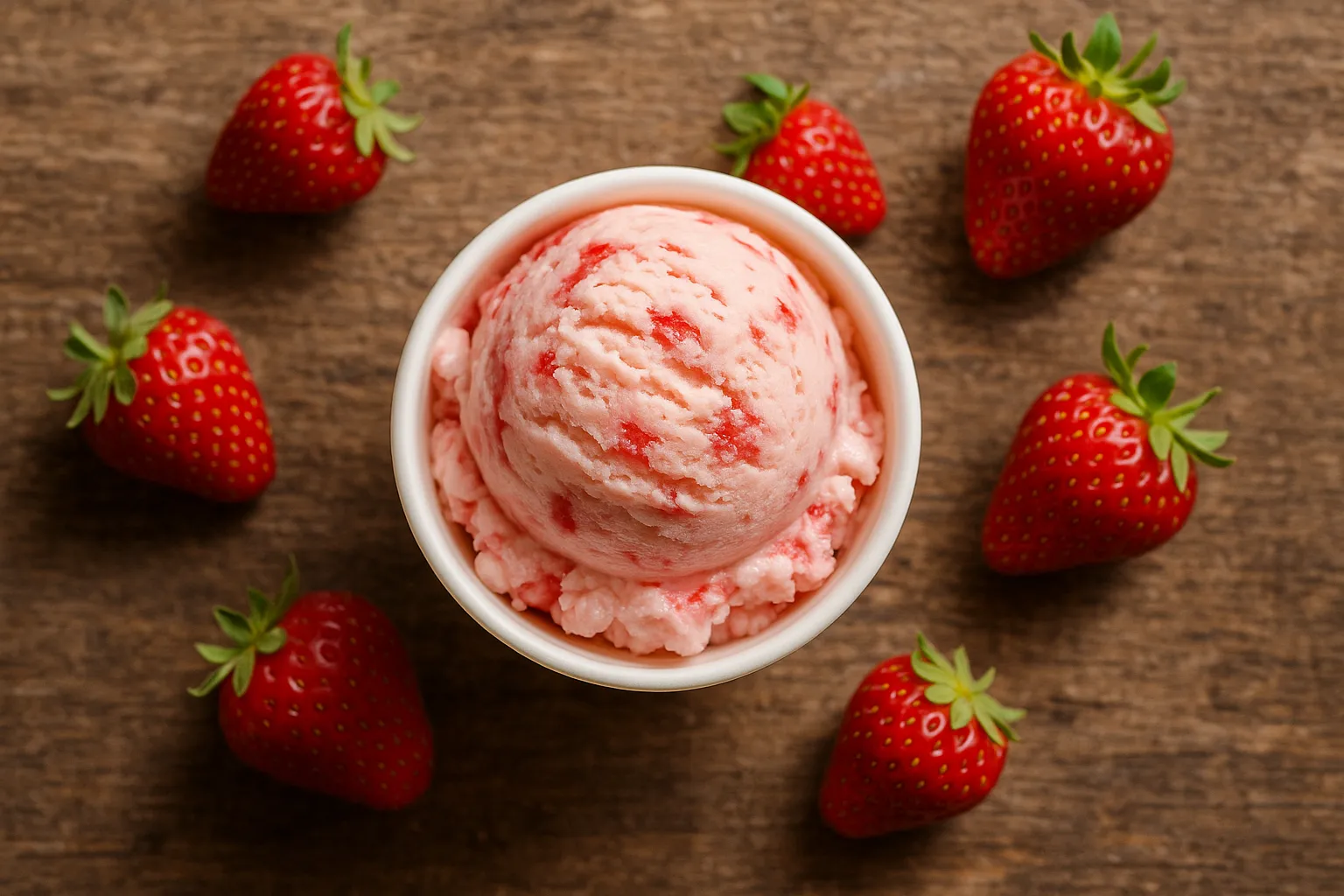
Quick Nutrition Facts
Per 1/2 Cup (66g)
| Nutrient | Amount |
|---|---|
| Calories | 127 kcal |
| Protein | 2.1g |
| Carbohydrates | 18.2g |
| Fiber | 0.6g |
| Sugars | ~12g |
| Fat | 5.5g |
| Saturated Fat | 3.4g |
| Calcium | 79mg |
| Potassium | 124mg |
| Vitamin C | 5mg |
Macronutrient Breakdown
 ChatGPT
  Claude
  AI Mode
  Perplexity
NUTRITIONIST INSIGHT
Strawberry ice cream has a surprisingly low glycemic index of 36 due to its fat content, which slows sugar absorption. Premium brands with higher fat content provide better satiety and blood sugar control than low-fat versions.
Myth Busters
MYTH #1: Ice Cream Always Spikes Blood Sugar
TRUTH: Ice cream has a low glycemic index (GI ~36) due to its fat and protein content, which slows digestion. It causes a smaller blood sugar spike than white bread or white rice. However, portion control remains essential due to high calories and sugar.
MYTH #2: Low-Fat Ice Cream Is Healthier
TRUTH: Low-fat ice cream often contains more sugar to compensate for taste. The fat in regular ice cream actually helps slow sugar absorption, leading to better blood sugar control. Full-fat versions also provide better satiety, potentially reducing overall calorie intake.
MYTH #3: Ice Cream Has No Nutritional Value
TRUTH: Ice cream provides calcium (8% DV per 1/2 cup), protein, and vitamin D. Strawberry varieties add vitamin C and antioxidants from real fruit. While not a health food, it offers more nutrition than many other desserts like candy or cookies.
MYTH #4: Pregnant Women Should Avoid Ice Cream
TRUTH: Commercially-made ice cream is safe during pregnancy as it uses pasteurized milk. However, limit intake due to high sugar content; excessive sugar during pregnancy increases risk of gestational diabetes and excessive weight gain.
MYTH #5: Strawberry Ice Cream Is Just Artificial Flavoring
TRUTH: Quality brands use real strawberries, providing natural vitamin C, antioxidants, and fiber. Check ingredient lists; premium options list strawberries as the second or third ingredient rather than just artificial flavors and colors.
MYTH #6: Ice Cream Always Causes Weight Gain
TRUTH: Weight gain happens from excess calories, not specific foods. A controlled 1/2 cup serving (127 calories) can fit into weight loss plans when accounted for. The key is portion control and frequency, not complete avoidance.
NutriScore by Health Goals
| Health Goal | NutriScore | Why This Score? |
|---|---|---|
| Weight Loss |  | 127 calories per 1/2 cup adds up quickly; high sugar (12g) and fat. Occasional treat only (1-2x weekly). |
| Muscle Gain |  | Low protein (2.1g) for muscle building. Post-workout carbs acceptable, but better options exist. Calcium supports bone health during training. |
| Diabetes Management | | Low GI (36) is positive, but 12g sugar per serving requires careful monitoring. Choose full-fat versions, limit to 1/4 cup portions. |
| PCOS Management | | High sugar affects insulin sensitivity. If consuming, choose full-fat versions (lower GI), limit to 1/4 cup, and pair with protein. |
| Pregnancy Nutrition | | Provides calcium (8% DV) but high sugar intake during pregnancy increases GDM risk. Occasional treat, not daily. |
| Viral/Flu Recovery | | Soothing for sore throat, easy to digest, provides quick energy and calcium. However, better protein sources exist for immune support. |
PERSONALIZED NUTRITION
Track your meals with NutriScan for personalized NutriScores based on your specific health goals!
Blood Sugar Response to Strawberry Ice Cream
Understanding how strawberry ice cream affects your blood glucose helps you make informed dessert choices.
Typical Glucose Response Curve
This chart shows typical blood glucose response for healthy individuals. Ice cream's fat content slows sugar absorption. Individual responses vary. Not medical advice.
How to Minimize Blood Sugar Impact
Pairing ice cream with protein further slows glucose absorption:
- 🥜 A handful of almonds or walnuts - Adds healthy fats, protein, and fiber
- 🥛 Greek yogurt on the side - Provides protein and probiotics
- 🍓 Fresh strawberries - Adds fiber without excessive calories
- ⏰ Timing matters - Eat after a balanced meal rather than on empty stomach
This combination reduces the glucose spike and extends satiety.
Cultural Significance
Strawberry ice cream emerged as one of America's first flavored ice creams in the 18th century, alongside vanilla and chocolate.
In American Culture:
- Third most popular ice cream flavor in the US (after vanilla and chocolate)
- Traditional summer dessert at picnics, fairs, and celebrations
- Neapolitan ice cream features strawberry as one of three classic flavors
- National Strawberry Ice Cream Day celebrated January 15th
Global Variations:
- Japan: Fresh strawberry chunks mixed into premium soft-serve
- Italy: Gelato alla fragola using fresh, local strawberries
- Middle East: Rose water and cardamom additions
- Commercial production uses 2.3 billion pounds of strawberries annually
Compare & Substitute
Strawberry Ice Cream vs Similar Frozen Desserts (Per 100g)
| Nutrient | 🍓 Strawberry Ice Cream | 🍦 Vanilla Ice Cream | 🍦 Strawberry Sorbet | 🍦 Frozen Yogurt | 🍦 Vanilla Gelato |
|---|---|---|---|---|---|
| Calories | 192 kcal | 201 kcal | 120 kcal | 159 kcal | 220 kcal |
| Carbs | 27.6g | 23.6g | 30g | 24g | 29g |
| Fiber | 0.9g | 0.5g | 1g | 0.5g | 0g |
| Protein | 3.2g | 3.5g | 0.5g | 4.5g | 4.5g |
| Fat | 8.4g | 11g | 0g | 5g | 10g |
| Saturated Fat | 5.2g | 6.8g | 0g | 3g | 6g |
| Calcium | 120mg | 128mg | 8mg | 150mg | 130mg |
| Sugar | 18g | 21g | 26g | 18g | 25g |
| Best For | Balanced indulgence | Classic dessert | Fat-free option | Higher protein | Creamiest texture |
Frequently Asked Questions
Is strawberry ice cream healthy?
Strawberry ice cream is a treat, not a health food. A 1/2 cup has 127 calories, 12g sugar, and 5.5g saturated fat.
Nutritional positives: Provides 8% of daily calcium needs; real strawberries add vitamin C and antioxidants; low glycemic index of 36.
Best approach: Enjoy occasionally (1-2x weekly), control portions (1/2 cup max), choose premium brands with real strawberries and higher fat content for better satiety.
Can diabetics eat strawberry ice cream?
Diabetics can eat strawberry ice cream in moderation. Ice cream has a surprisingly low glycemic index of 36 due to its fat content, which slows sugar absorption.
Tips for diabetics: Limit to 1/4 cup portions (6g carbs); choose full-fat versions over low-fat (better blood sugar control); eat after meals, not alone; pair with protein like nuts; monitor blood sugar 2 hours after eating.
Consult your healthcare provider about incorporating treats into your meal plan.
How many calories are in strawberry ice cream?
Standard servings: 1/2 cup (66g) = 127 calories; 1 cup (132g) = 254 calories; 100g = 192 calories.
Calories vary by brand: Premium brands (14-16% fat) = 200-270 cal per 1/2 cup; Regular brands (10-12% fat) = 120-150 cal per 1/2 cup; Low-fat versions (3-5% fat) = 90-120 cal per 1/2 cup.
Actual portions consumed are often 1-2 cups, delivering 250-500 calories. Use measuring cups to control intake.
Is strawberry ice cream better than vanilla for health?
Strawberry ice cream has slightly fewer calories (192 vs 201 per 100g) and less fat (8.4g vs 11g) than vanilla. Real strawberries add vitamin C, antioxidants, and small amounts of fiber.
Differences are minimal. Both should be consumed in moderation. Choose based on preference; the health impact is similar. Premium brands with real fruit offer more nutritional value than artificially-flavored options.
How much sugar is in strawberry ice cream?
A 1/2 cup serving contains approximately 12g of sugar, combining natural lactose from milk and added sugars.
Context: 12g is 24% of the recommended daily added sugar limit (50g for 2000-calorie diet); 1 full cup delivers 24g sugar (48% of daily limit).
Sugar varies by brand: Premium brands may have less added sugar (8-10g per serving); budget brands often have more (15-18g per serving). Check nutrition labels and ingredient lists.
Is strawberry ice cream safe during pregnancy?
Commercially-made strawberry ice cream is safe during pregnancy as it uses pasteurized milk. Avoid homemade ice cream with raw eggs.
Benefits: Provides calcium for fetal bone development (8% DV per serving); easy to digest.
Cautions: High sugar intake during pregnancy increases risk of gestational diabetes and excessive weight gain. Limit to occasional treat (1-2x weekly), control portions (1/2 cup max), pair with protein.
What's the best portion size for weight loss?
For weight loss, limit to 1/2 cup (127 calories) 1-2 times per week maximum.
Strategies: Use a measuring cup, not estimate; eat from a small bowl to control portions; have it after a balanced meal to reduce cravings; pair with fresh berries to add volume and fiber.
Better alternatives for frequent desserts: Greek yogurt with berries (80-100 cal); frozen banana "nice cream" (90 cal per serving); fruit sorbet (60-80 cal per 1/2 cup).
Should I choose full-fat or low-fat ice cream?
Choose full-fat ice cream for better satiety and blood sugar control. Low-fat versions often contain more sugar to compensate for taste, and the lack of fat causes faster sugar absorption.
Full-fat advantages: Lower glycemic response; better satiety (may eat less overall); richer taste with smaller portions.
When to choose low-fat: Following a low-saturated fat diet for heart health; severe calorie restrictions (but frozen yogurt may be better).


Similar Nutritious Foods
4505 Chicharrones Classic Chili Salt
7 Eleven Japan Crispy Corn Cheese
Explore More Nutrition Tools & Resources
AI Calorie Counter App - Snap a Photo, Get Macros
AI Nutritionist App That Reads Your Logged Meals
Best Protein Supplements for Women
Bulking Meal Plan App That Sets Your Surplus
ChatGPT Calorie Counter Alternative That Keeps the Total
ChatGPT Diet Plan Alternative That Tracks What You Eat
ChatGPT Weight Loss Coach Alternative With a Food Log
Fast Food Calorie Counter App That Reads the Tray
Free Calorie Tracker App with AI Photo Scans | NutriScan
Indian Diet Plan App With Veg and Non Veg Meals
Indian Food Calorie Calculator - Get Instant Nutrition Facts for Desi Meals — 2026
Intermittent Fasting for Women, Timer and Meal Log App
Intermittent Fasting Tracker App - Free Fasting Timer
Macro Tracker App That Fills the Numbers From a Photo
Mediterranean Diet Meal Plan App That Counts the Oil
Micronutrient Tracker App for Vitamins and Minerals
MyFitnessPal Alternative That Stays Free | NutriScan
NutriScore App: A Free Grade on Every Meal | NutriScan
Nutrition Label Scanner App for the Amount You Ate
Second Trimester Protein Guide
Vegetarian Meal Plan App With a Protein Target
Voice Calorie Counter - Speak to Track Meals Hands-Free
Water and Calorie Tracker App - Free Water Log