Sweet Potato: Calories, Nutrition and Health Benefits
Nature's vitamin A powerhouse packed with fiber, complex carbs, and essential nutrients for every health goal.
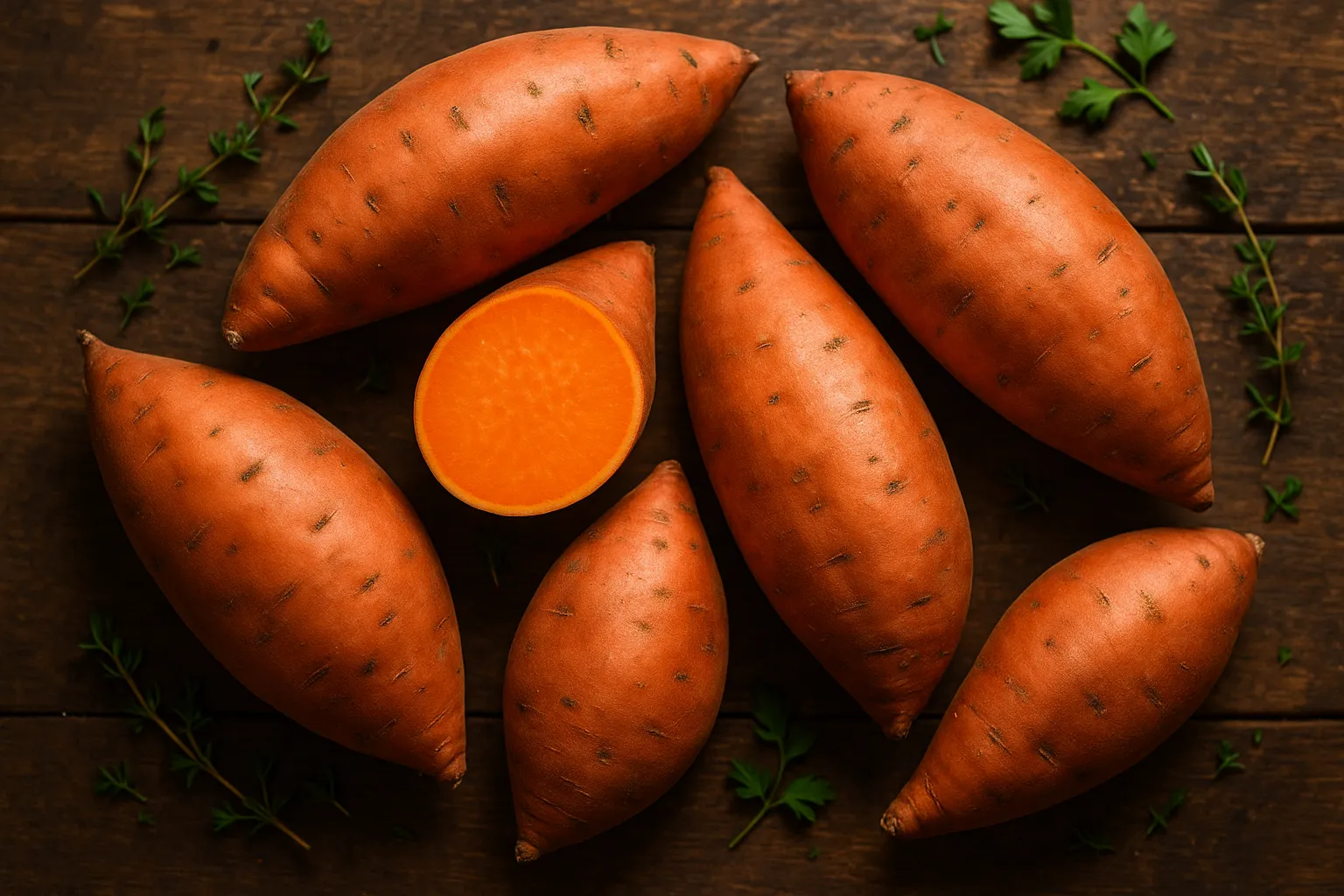
Quick Nutrition Facts
Per 1 Medium Sweet Potato (130g, Baked)
| Nutrient | Amount |
|---|---|
| Calories | 112 kcal |
| Protein | 2.1g |
| Carbohydrates | 26g |
| Fiber | 3.9g |
| Sugars | 5.4g |
| Fat | 0.1g |
| Vitamin A | 1096mcg (122% DV) |
| Vitamin C | 22mg (24% DV) |
| Potassium | 475mg |
| Manganese | 0.5mg (22% DV) |
Macronutrient Breakdown
 ChatGPT
  Claude
  AI Mode
  Perplexity
NUTRITIONIST INSIGHT
Sweet potatoes provide over 400% of your daily vitamin A needs in just one medium potato. Boiling instead of baking reduces the glycemic index by up to 50%, making them ideal for blood sugar control.
Myth Busters
MYTH #1: Sweet Potatoes Are Too High in Carbs for Weight Loss
TRUTH: A medium sweet potato has only 112 calories with 3.9g fiber that promotes fullness. The resistant starch content increases when cooled, improving fat burning and appetite control. Limit to 1 small-medium potato per day for weight loss.
MYTH #2: Diabetics Should Avoid Sweet Potatoes
TRUTH: Cooking method dramatically affects glycemic index: boiled sweet potatoes have GI 44-61 (low-medium), while baked/roasted reach GI 82-94 (high). Diabetics can eat boiled sweet potatoes in half portions, paired with protein or healthy fat.
MYTH #3: Sweet Potatoes and Yams Are the Same
TRUTH: Sweet potatoes (Ipomoea batatas) and yams (Dioscorea) are completely different species. Sweet potatoes have orange or purple flesh with more vitamin A and fiber. True yams are starchier, less sweet, and have white/yellow flesh. Most "yams" sold in the US are actually sweet potatoes.
MYTH #4: You Need to Peel Sweet Potatoes
TRUTH: Sweet potato skin is edible and nutritious, containing additional fiber, antioxidants, and vitamins. Always wash thoroughly and eat the skin for maximum nutrition benefits, especially when organic.
MYTH #5: Purple Sweet Potatoes Are Just for Color
TRUTH: Purple sweet potatoes contain anthocyanins with powerful antioxidant and anti-inflammatory properties. Studies show these compounds may protect against colorectal cancer, reduce oxidative stress, and support cardiovascular health.
MYTH #6: Sweet Potatoes Lack Protein
TRUTH: While not a high-protein food, sweet potatoes provide 2.1g protein per medium potato plus all essential amino acids. The protein quality is surprisingly good for a starchy vegetable. Pair with beans, lentils, or lean meat for complete protein meals.
NutriScore by Health Goals
| Health Goal | NutriScore | Why This Score? |
|---|---|---|
| Weight Loss |  | 112 calories, 3.9g fiber promotes fullness, resistant starch aids fat burning. Choose boiled, limit to 1 small-medium per day. |
| Muscle Gain |  | Excellent post-workout carbs (26g) for glycogen replenishment, 475mg potassium prevents cramps, vitamin A supports muscle recovery. |
| Diabetes Management | | Boiled sweet potatoes have low-medium GI (44-61). Choose boiled over baked, eat half portions, pair with protein/fat for blood sugar control. |
| PCOS Management | | Complex carbs with fiber help regulate insulin. Limit to 1/2 medium potato daily, choose boiled preparation, combine with protein. |
| Pregnancy Nutrition | | Exceptional vitamin A source (1096mcg) supports fetal development, folate, fiber prevents constipation, potassium reduces leg cramps. |
| Viral/Flu Recovery | | Easy to digest, vitamin A strengthens immunity, vitamin C fights infection, complex carbs provide sustained energy, antioxidants reduce inflammation. |
PERSONALIZED NUTRITION
Track your meals with NutriScan for personalized NutriScores based on your specific health goals!
Blood Sugar Response to Sweet Potato
Understanding how cooking methods affect sweet potato glycemic response helps you optimize blood sugar control.
Typical Glucose Response Curve (Boiled)
This chart shows typical blood glucose response for boiled sweet potato (GI ~50). Baked/roasted sweet potatoes produce higher and faster spikes. Individual responses may vary. Not medical advice.
How to Flatten the Spike
Cooking method and food pairing significantly affect glucose absorption:
Preparation Tips:
- 🥘 Boil instead of bake - Reduces GI from 94 to 44-61
- ❄️ Cool and reheat - Increases resistant starch content
- 🍽️ Eat with skin - Extra fiber slows glucose absorption
Pairing Strategies:
- 🥜 Nut butter or tahini - Healthy fats slow carb absorption
- 🥛 Greek yogurt or paneer - Protein buffers blood sugar response
- 🥗 Leafy green salad - Fiber reduces overall glycemic impact
- 🥑 Avocado or olive oil - Healthy fats extend energy release
This combination not only reduces the glucose spike but also provides complete nutrition and sustained satiety.
Cultural Significance
Sweet potatoes originated in Central and South America over 5,000 years ago, spreading globally through Spanish and Portuguese explorers.
In India:
- Known as "shakarkand" (शकरकंद) in Hindi, popular in North India during winter
- Used in traditional desserts, halwa, and chaat preparations
- Roasted sweet potatoes are a common street food in winter months
- Ayurveda values sweet potatoes for grounding vata dosha and building ojas (vitality)
Global Impact:
- Sixth most important food crop globally (over 100 million tons annually)
- Staple food in sub-Saharan Africa, preventing vitamin A deficiency
- Over 7,000 varieties worldwide: orange, purple, white, and yellow-fleshed
- NASA selected sweet potatoes as potential space food due to nutrition density
- Both tuber and leaves are edible (leaves used in Asian cuisines)
Compare & Substitute
Sweet Potato vs Similar Vegetables (Per 100g, Cooked)
| Nutrient | 🍠 Sweet Potato (Boiled) | 🥔 White Potato (Boiled) | 🎃 Butternut Squash | 🥕 Carrots (Boiled) |
|---|---|---|---|---|
| Calories | 86 kcal | 87 kcal | 45 kcal | 35 kcal |
| Carbs | 20g | 20g | 12g | 8g |
| Fiber | 3g | 2.2g | 2g | 3g |
| Protein | 1.6g | 1.9g | 1g | 0.8g |
| Fat | 0.1g | 0.1g | 0.1g | 0.2g |
| Vitamin A | 709mcg (79% DV) | 0mcg | 532mcg (59% DV) | 852mcg (95% DV) |
| Vitamin C | 12.8mg | 13mg | 21mg | 3.6mg |
| Potassium | 337mg | 379mg | 284mg | 235mg |
| GI | 44-61 (Low-Medium) | 82-111 (High) | 51 (Low) | 35-92 (Low-High) |
| Best For | Vitamin A needs, pregnancy, balanced energy | Potassium, budget-friendly | Weight loss, low-calorie | Vision, beta-carotene variety |
Frequently Asked Questions
Are sweet potatoes good for weight loss?
Yes, sweet potatoes support weight loss when prepared correctly. A medium sweet potato has only 112 calories but provides 3.9g fiber that promotes lasting fullness. The resistant starch (especially when cooled) improves fat metabolism and reduces appetite.
Best practices: Boil instead of bake; eat 1 small-medium potato per day; choose as pre-workout fuel; pair with protein (Greek yogurt, chicken, beans); avoid butter, marshmallows, or heavy toppings.
Can diabetics eat sweet potatoes?
Yes, diabetics can eat sweet potatoes with proper preparation. Boiled sweet potatoes have a low-medium glycemic index (44-61), while baked/roasted varieties spike to 82-94.
Tips for diabetics:
- Always boil, never bake or roast; eat half portions (65g = 13g carbs); pair with protein or healthy fat; best timing is lunch or early dinner; monitor blood sugar 2 hours after eating; cool and reheat to increase resistant starch.
Studies show boiled sweet potatoes paired with protein cause minimal blood sugar elevation. Always consult your healthcare provider.
How much vitamin A is in a sweet potato?
A medium orange-fleshed sweet potato contains 1096mcg of vitamin A (122% of daily value) in the form of beta-carotene. This makes sweet potatoes one of the richest dietary sources of vitamin A, essential for vision, immune function, skin health, and fetal development during pregnancy.
Orange varieties have the highest beta-carotene; purple varieties have less vitamin A but contain unique anthocyanin antioxidants.
What are the main health benefits of sweet potatoes?
Key Benefits:
- Vision & Immunity: 400%+ vitamin A supports eye health and immune function
- Blood Sugar Control: Low GI (when boiled) with fiber regulates glucose
- Digestive Health: 3.9g fiber and resistant starch support gut microbiome
- Heart Health: Potassium, fiber, and antioxidants protect cardiovascular function
- Anti-Inflammatory: Anthocyanins (purple varieties) reduce chronic inflammation
- Pregnancy Nutrition: Vitamin A, folate, and fiber support fetal development
Which is healthier: sweet potato or white potato?
Both are nutritious; choose based on your needs:
Sweet Potato Wins For:
- Vitamin A (1096mcg vs 0mcg); more fiber (3.9g vs 2.2g); lower glycemic index when boiled (44-61 vs 82-111); more antioxidants; better for pregnancy, vision, immunity
White Potato Wins For:
- More potassium (544mg vs 475mg); more vitamin C (19.7mg vs 22mg); higher protein (2.5g vs 2.1g); better for athletic recovery, muscle function
Recommendation: Sweet potatoes for weight loss, diabetes, pregnancy, vitamin A needs; white potatoes for athletes, potassium, budget meals. Both are healthy when boiled without heavy toppings.
Are purple sweet potatoes healthier than orange?
Both offer unique benefits - choose based on your health priorities:
Purple Sweet Potatoes:
- High in anthocyanins (powerful antioxidants); anti-inflammatory properties; may protect against cancer; support cardiovascular health; lower vitamin A than orange varieties
Orange Sweet Potatoes:
- Extremely high in beta-carotene (vitamin A); better for vision, immunity, pregnancy; slightly sweeter taste; more widely available
Recommendation: Purple for antioxidant needs, disease prevention, anti-aging; orange for vitamin A needs, pregnancy, immune support. Alternate between both for maximum nutrition diversity.
How should I cook sweet potatoes for maximum nutrition?
Best Cooking Methods:
- Boiling: Lowest GI (44-61), preserves nutrients, best for diabetes/weight loss
- Steaming: Retains vitamin C, medium GI, gentle on nutrients
- Baking: Higher GI (82-94), concentrates sweetness, loses some vitamin C
- Roasting: Highest GI, caramelizes sugars, best for flavor (not blood sugar control)
Pro Tips:
- Always eat the skin for maximum fiber; cool after cooking to increase resistant starch (can reheat); avoid high-heat methods for diabetes/PCOS; add cinnamon to enhance blood sugar control; pair with healthy fats (olive oil, tahini) to slow glucose absorption.
Track your sweet potato meals with NutriScan app to see how different preparations affect your personal nutrition goals.
Can I eat sweet potato on an empty stomach?
Generally safe for most people - provides gentle, sustained energy and is easy to digest.
May want to avoid if you have:
- Kidney stones or high oxalate sensitivity (sweet potatoes contain moderate oxalates); IBS or sensitive digestion (may cause bloating); very strict low-carb diet (26g carbs may break ketosis)
Better approach: Pair with protein (eggs, Greek yogurt, nut butter) or healthy fat for balanced nutrition and extended energy release. Boil instead of bake to minimize blood sugar impact.


Similar Nutritious Foods
4505 Chicharrones Classic Chili Salt
7 Eleven Japan Crispy Corn Cheese
Explore More Nutrition Tools & Resources
AI Calorie Counter App - Snap a Photo, Get Macros
AI Nutritionist App That Reads Your Logged Meals
Best Protein Supplements for Women
Bulking Meal Plan App That Sets Your Surplus
ChatGPT Calorie Counter Alternative That Keeps the Total
ChatGPT Diet Plan Alternative That Tracks What You Eat
ChatGPT Weight Loss Coach Alternative With a Food Log
Fast Food Calorie Counter App That Reads the Tray
Free Calorie Tracker App with AI Photo Scans | NutriScan
Indian Diet Plan App With Veg and Non Veg Meals
Indian Food Calorie Calculator - Get Instant Nutrition Facts for Desi Meals — 2026
Intermittent Fasting for Women, Timer and Meal Log App
Intermittent Fasting Tracker App - Free Fasting Timer
Macro Tracker App That Fills the Numbers From a Photo
Mediterranean Diet Meal Plan App That Counts the Oil
Micronutrient Tracker App for Vitamins and Minerals
MyFitnessPal Alternative That Stays Free | NutriScan
NutriScore App: A Free Grade on Every Meal | NutriScan
Nutrition Label Scanner App for the Amount You Ate
Second Trimester Protein Guide
Vegetarian Meal Plan App With a Protein Target
Voice Calorie Counter - Speak to Track Meals Hands-Free
Water and Calorie Tracker App - Free Water Log