Tabbouleh: Calories, Nutrition and Health Benefits
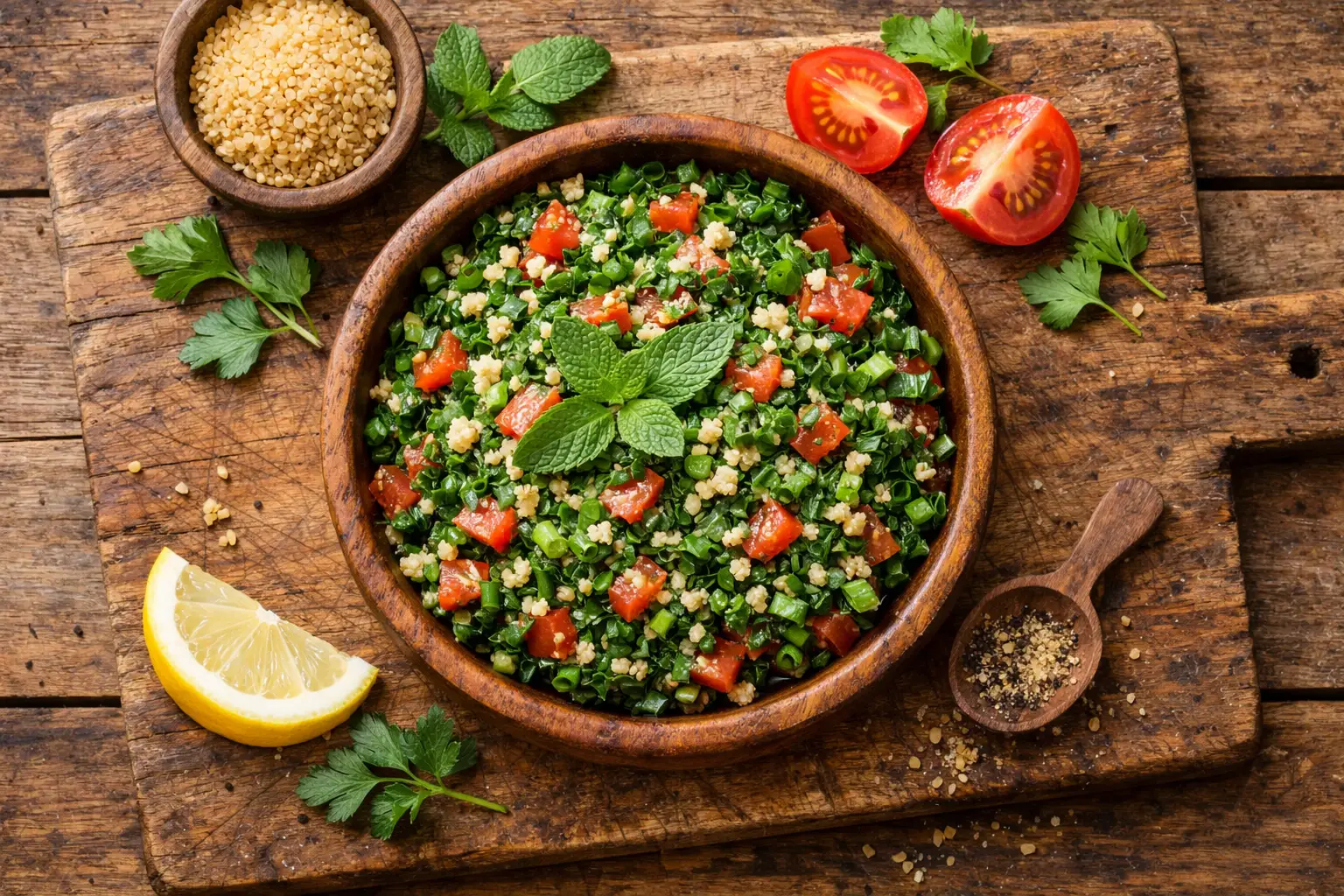
Fresh Lebanese parsley salad with bulgur wheat, lemon, and olive oil - a Mediterranean superfood packed with vitamins, fiber, and heart-healthy fats.
Quick Nutrition Facts
Per 1 Cup (100g)
| Nutrient | Amount |
|---|---|
| Calories | 120 kcal |
| Protein | 3g |
| Carbohydrates | 14g |
| Fiber | 3.5g |
| Sugars | 1.5g |
| Fat | 7g |
| Vitamin K | 820mcg |
| Vitamin C | 24mg |
| Vitamin A | 1680 IU |
| Folate | 38mcg |
| Iron | 2.8mg |
Macronutrient Breakdown
 ChatGPT
  Claude
  AI Mode
  Perplexity
NUTRITIONIST INSIGHT
Tabbouleh delivers over 900% daily value of vitamin K for bone health and blood clotting from fresh parsley. The combination of bulgur fiber and olive oil provides sustained energy and heart-healthy monounsaturated fats.
Myth Busters
MYTH #1: Tabbouleh Is Just Another Lettuce Salad
TRUTH: Tabbouleh is primarily fresh parsley (not lettuce) providing 820mcg vitamin K, iron, and powerful antioxidants. The parsley-to-bulgur ratio should be 3:1, making it nutrient-dense far beyond typical salads.
MYTH #2: All the Calories Come from Olive Oil
TRUTH: While olive oil adds healthy fats, one cup of tabbouleh has only 120 calories total. The 7g of fat includes heart-healthy monounsaturated fats that improve satiety and nutrient absorption without excessive calories.
MYTH #3: Tabbouleh Has Too Many Carbs for Low-Carb Diets
TRUTH: Tabbouleh contains 14g carbs with 3.5g fiber (net carbs: 10.5g). The bulgur wheat provides lower glycemic index and sustained energy. Adjust bulgur amount to fit your carb goals while keeping parsley high.
MYTH #4: You Need to Eat It Fresh or Nutrients Are Lost
TRUTH: While fresh is best for texture, parsley retains antioxidants for 24-48 hours when refrigerated. Vitamin K is stable; vitamin C decreases slightly. Make in advance for meal prep convenience.
MYTH #5: Tabbouleh Interferes with Blood Thinners
TRUTH: The high vitamin K content can affect warfarin effectiveness. If on blood thinners, consult your doctor and maintain consistent tabbouleh intake rather than avoiding it completely. Vitamin K consistency is key, not elimination.
NutriScore by Health Goals
| Health Goal | NutriScore | Why This Score? |
|---|---|---|
| Weight Loss |  | Only 120 calories per cup, 3.5g fiber promotes fullness, high water content, healthy fats increase satiety. Perfect for volume eating. |
| Muscle Gain |  | Moderate protein (3g), complex carbs for energy, vitamin K supports muscle recovery. Pair with grilled chicken or fish for complete protein. |
| Diabetes Management | | Low glycemic index, 3.5g fiber slows glucose absorption, minimal natural sugars (1.5g), antioxidants support insulin sensitivity. |
| PCOS Management | | Low-calorie, anti-inflammatory parsley compounds, fiber aids hormone balance, no added sugars. |
| Pregnancy Nutrition | | Vitamin K (820mcg) for fetal bone development, folate (38mcg), iron (2.8mg), vitamin C for nutrient absorption. |
| Viral/Flu Recovery | | Vitamin C (24mg) boosts immunity, antioxidants fight inflammation, easy to digest, hydrating with fresh vegetables. |
PERSONALIZED NUTRITION
Track your meals with NutriScan for personalized NutriScores based on your specific health goals!
Blood Sugar Response to Tabbouleh
Understanding how tabbouleh affects your blood glucose can help you make informed decisions about portion sizes and meal timing.
Typical Glucose Response Curve
This chart shows typical blood glucose response for general healthy individuals. Individual responses may vary. Not medical advice.
How to Flatten the Spike
Pairing tabbouleh with protein enhances satiety and minimizes any glucose response:
- 🐟 Grilled salmon or white fish - Omega-3 fats and complete protein
- 🍗 Grilled chicken breast - Lean protein for sustained energy
- 🧀 Feta cheese or labneh - Mediterranean protein and calcium
- 🥚 Hard-boiled eggs - Complete protein and healthy fats
This combination creates a complete Mediterranean meal with balanced macros and stable blood sugar for 4-5 hours.
Cultural Significance
Tabbouleh originated in the mountains of Lebanon and Syria, dating back to medieval times as a staple of Levantine cuisine.
In Lebanese Culture:
- Considered the king of mezze (appetizer) spreads
- Traditional ratio: 3 parts parsley to 1 part bulgur
- Served at every family gathering and celebration
- Sign of hospitality and culinary skill
- Each family has secret spice and lemon ratios
- Traditionally eaten with romaine lettuce leaves as scoops
Global Impact:
- Recognized as part of Mediterranean diet by UNESCO
- Adapted in Turkish, Armenian, and Greek cuisines
- Modern variations include quinoa, cauliflower rice, or grain-free versions
- Growing popularity in health-food and vegan communities worldwide
- Featured in restaurant mezze platters globally
Compare & Substitute
Tabbouleh vs Similar Salads (Per 100g)
| Nutrient | 🥗 Tabbouleh | 🥙 Fattoush | 🥗 Greek Salad | 🥬 Caesar Salad |
|---|---|---|---|---|
| Calories | 120 kcal | 85 kcal | 110 kcal | 180 kcal |
| Carbs | 14g | 10g | 5g | 8g |
| Fiber | 3.5g | 2.5g | 2g | 1.5g |
| Protein | 3g | 2g | 4g | 6g |
| Fat | 7g | 5g | 9g | 15g |
| Vitamin K | 820mcg | 95mcg | 68mcg | 120mcg |
| Vitamin C | 24mg | 18mg | 15mg | 4mg |
| Best For | Vitamin K & fiber | Low-calorie Mediterranean | Protein & healthy fats | High protein indulgence |
Frequently Asked Questions
Is tabbouleh good for weight loss?
Tabbouleh is excellent for weight loss with only 120 calories per cup and high satiety. The 3.5g fiber promotes fullness; high water content from tomatoes and cucumber adds volume without calories; fresh parsley contains compounds that may boost metabolism.
Best practices: Eat 1-2 cups as main salad or side; use minimal olive oil (reduces to 80-90 calories); add grilled protein for complete meal; prepare in bulk for easy meal prep throughout the week.
Can diabetics eat tabbouleh?
Diabetics can safely eat tabbouleh. Bulgur wheat has lower glycemic index than refined grains; 3.5g fiber slows glucose absorption; minimal natural sugars (1.5g); parsley antioxidants support insulin sensitivity.
Tips for diabetics: Use less bulgur, more parsley (increases fiber-to-carb ratio); limit to 1 cup per meal; pair with lean protein; monitor blood sugar 2 hours after eating; avoid versions with added sugar or honey.
How much vitamin K is in tabbouleh?
One cup of tabbouleh contains 820mcg of vitamin K (over 900% DV), primarily from fresh parsley. Vitamin K is essential for bone health, blood clotting, and cardiovascular function.
Important note: If taking warfarin or blood thinners, consult your doctor before consuming tabbouleh. Maintain consistent intake rather than avoiding it; vitamin K consistency is crucial for medication effectiveness.
What are the main health benefits of tabbouleh?
Key Benefits:
- Bone Health: 820mcg vitamin K (900% DV) supports bone density and calcium absorption
- Immune Support: 24mg vitamin C boosts immunity and collagen production
- Digestive Health: 3.5g fiber promotes regular bowel movements and gut health
- Antioxidant Power: Parsley polyphenols fight oxidative stress and inflammation
- Heart Health: Olive oil provides monounsaturated fats; parsley supports cardiovascular function
- Blood Health: Iron (2.8mg) plus vitamin C enhances iron absorption
- Low Calorie Density: 120 calories per cup allows larger portions for satiety
Is tabbouleh healthier than regular green salad?
Tabbouleh offers unique nutritional advantages: 10x more vitamin K than lettuce salads; powerful antioxidants from fresh parsley; complex carbs from bulgur for sustained energy; Mediterranean healthy fats from olive oil.
Comparison: Lettuce salads are lower in calories and carbs but lack the vitamin density. Tabbouleh provides more vitamins, minerals, and fiber per serving. Both are excellent choices; tabbouleh delivers more nutrients while remaining low-calorie.
How should I store tabbouleh?
Store tabbouleh in airtight container in refrigerator for up to 3 days. Make 24-48 hours in advance for best flavor (allows bulgur to absorb lemon and spices).
Storage tips: Keep dressing separate if preparing more than 2 days ahead; add fresh tomatoes just before serving to prevent sogginess; parsley stays crisp when refrigerated; bring to room temperature 15 minutes before eating for best taste.
Meal prep: Prepare large batches on Sunday; divide into single-serving containers; pack with grilled protein for complete grab-and-go lunches throughout the week.
Should I eat tabbouleh if on blood thinners?
Consult your doctor before eating tabbouleh if taking warfarin or blood thinners. The extremely high vitamin K content (820mcg per cup) can reduce medication effectiveness.
If approved by doctor: Maintain consistent tabbouleh intake (same portion, same frequency); track vitamin K-rich foods daily; monitor INR levels regularly; inform healthcare team of dietary patterns.
Many patients successfully include tabbouleh by maintaining consistency rather than avoiding it completely.


Similar Nutritious Foods
4505 Chicharrones Classic Chili Salt
7 Eleven Japan Crispy Corn Cheese
Explore More Nutrition Tools & Resources
AI Calorie Counter App - Snap a Photo, Get Macros
AI Nutritionist App That Reads Your Logged Meals
Best Protein Supplements for Women
Bulking Meal Plan App That Sets Your Surplus
ChatGPT Calorie Counter Alternative That Keeps the Total
ChatGPT Diet Plan Alternative That Tracks What You Eat
ChatGPT Weight Loss Coach Alternative With a Food Log
Fast Food Calorie Counter App That Reads the Tray
Free Calorie Tracker App with AI Photo Scans | NutriScan
Indian Diet Plan App With Veg and Non Veg Meals
Indian Food Calorie Calculator - Get Instant Nutrition Facts for Desi Meals — 2026
Intermittent Fasting for Women, Timer and Meal Log App
Intermittent Fasting Tracker App - Free Fasting Timer
Macro Tracker App That Fills the Numbers From a Photo
Mediterranean Diet Meal Plan App That Counts the Oil
Micronutrient Tracker App for Vitamins and Minerals
MyFitnessPal Alternative That Stays Free | NutriScan
NutriScore App: A Free Grade on Every Meal | NutriScan
Nutrition Label Scanner App for the Amount You Ate
Second Trimester Protein Guide
Vegetarian Meal Plan App With a Protein Target
Voice Calorie Counter - Speak to Track Meals Hands-Free
Water and Calorie Tracker App - Free Water Log