Tagine (Moroccan Stew): Calories, Nutrition and Health Benefits
A slow-cooked Moroccan masterpiece blending tender meat, vibrant vegetables, and aromatic spices in one nourishing pot.
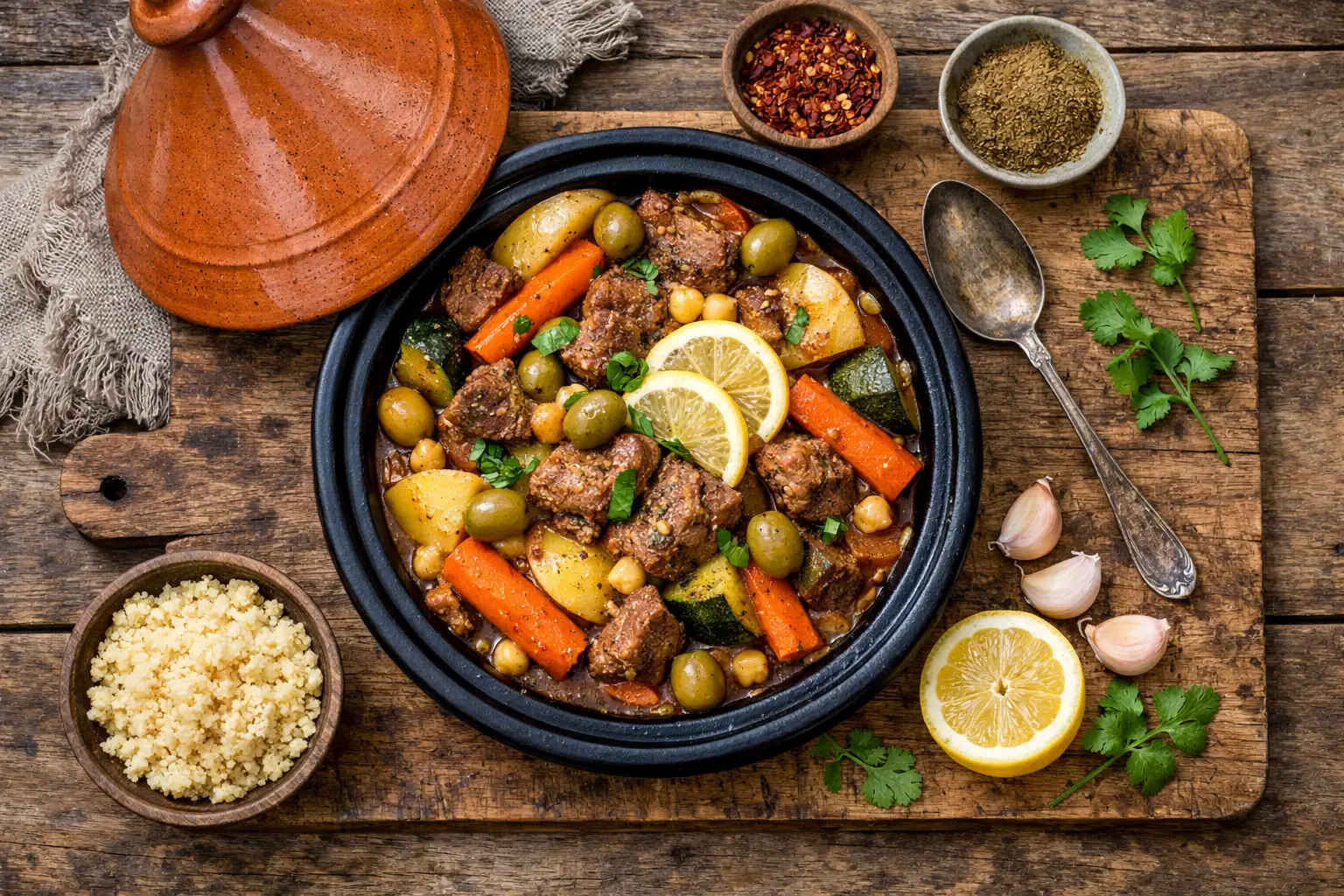
Quick Nutrition Facts
Per 1 Serving (350g, meat & vegetable tagine)
| Nutrient | Amount |
|---|---|
| Calories | 350 kcal |
| Protein | 20g |
| Carbohydrates | 45g |
| Fiber | 8g |
| Sugars | 12g |
| Fat | 15g |
| Iron | 3.5mg |
| Vitamin C | 25mg |
| Vitamin A | 800mcg |
| Potassium | 650mg |
Macronutrient Breakdown
 ChatGPT
  Claude
  AI Mode
  Perplexity
NUTRITIONIST INSIGHT
Tagine's slow-cooking method preserves heat-sensitive nutrients while breaking down tough fibers, making vegetables and proteins easier to digest. The combination of protein, fiber, and healthy spices creates a balanced meal that sustains energy for hours.
Myth Busters
MYTH #1: Tagine Is Too High in Calories for Weight Loss
TRUTH: While tagine contains 350 calories per serving, it's a complete meal with 20g protein and 8g fiber that promote fullness for hours. Choose chicken or chickpea versions and load up on vegetables to reduce calories while maintaining nutrition.
MYTH #2: Diabetics Should Avoid Tagine Due to Dried Fruits
TRUTH: The fiber content (8g) helps moderate blood sugar response even with small amounts of dried fruit. Choose vegetable-heavy versions, limit sweet fruits, skip sugary couscous, and pair with protein to minimize spikes.
MYTH #3: All Tagines Are Unhealthy Because They're Rich
TRUTH: Traditional tagine is a Mediterranean diet staple known for health benefits. The key is preparation - use lean meats, plenty of vegetables, moderate oil, and aromatic spices instead of excess fat. Homemade versions are far healthier than restaurant preparations.
MYTH #4: You Need Special Equipment to Make Tagine
TRUTH: While a clay tagine pot is traditional, you can make equally nutritious tagine in a regular Dutch oven or slow cooker. The health benefits come from the ingredients and slow-cooking method, not the vessel.
MYTH #5: Tagine Is Only for Dinner
TRUTH: Tagine makes an excellent lunch option that provides sustained energy throughout the afternoon. The protein and fiber combination prevents mid-afternoon energy crashes better than typical lunch options.
MYTH #6: Spices in Tagine Are Just for Flavor
TRUTH: Cumin, turmeric, cinnamon, and ginger in tagine provide powerful antioxidants and anti-inflammatory compounds. These spices support digestion, immune function, and overall health beyond just taste.
NutriScore by Health Goals
| Health Goal | NutriScore | Why This Score? |
|---|---|---|
| Weight Loss |  | 350 calories with 20g protein, 8g fiber promotes satiety. Choose chicken or vegetable versions, control portions. |
| Muscle Gain |  | Excellent protein (20g) for muscle repair, iron for oxygen transport, balanced carbs for energy recovery. |
| Diabetes Management | | Moderate carbs (45g), high fiber (8g) helps control blood sugar. Choose vegetable-heavy versions, limit dried fruits. |
| PCOS Management | | Balanced protein and fiber support insulin sensitivity. Anti-inflammatory spices beneficial for PCOS symptoms. |
| Pregnancy Nutrition | | Rich in iron (3.5mg), vitamin A for fetal development, protein for growth. Ensure meat is thoroughly cooked. |
| Viral/Flu Recovery | | Easy to digest, immune-boosting spices, vitamin C (25mg), protein for recovery, warm and comforting. |
PERSONALIZED NUTRITION
Track your meals with NutriScan for personalized NutriScores based on your specific health goals!
Blood Sugar Response to Tagine
Understanding how tagine affects blood glucose helps you make informed meal planning decisions.
Typical Glucose Response Curve
This chart shows typical blood glucose response for general healthy individuals. Individual responses may vary. Not medical advice.
How to Flatten the Spike
Tagine already contains protein and fiber, but you can further optimize blood sugar control:
- 🥗 Extra vegetables - Add more zucchini, eggplant, or bell peppers
- 🥜 Nuts and seeds - Garnish with almonds or sesame seeds
- 🫒 Healthy fats - Use olive oil moderately instead of excess butter
- 🌾 Whole grain pairing - Choose quinoa or bulgur over white couscous
This combination extends energy release and keeps you fuller longer while minimizing glucose spikes.
Cultural Significance
Tagine has been a cornerstone of Moroccan cuisine for over a thousand years, named after the distinctive cone-shaped clay pot used for cooking.
In Morocco:
- Symbol of hospitality - always prepared for guests and celebrations
- Slow-cooked over charcoal, creating communal cooking experiences
- Regional varieties: coastal (fish), mountain (lamb), desert (dried fruits and nuts)
- Essential for Ramadan breaking-fast meals and wedding feasts
- Berber origins dating back to North African tribal cooking
Global Impact:
- Mediterranean diet staple recognized for health benefits
- Popularized worldwide through Moroccan diaspora communities
- Featured in UNESCO's recognition of Moroccan cuisine
- Adapted globally with local ingredients while maintaining core principles
- Sustainable one-pot cooking method gaining modern appreciation
Compare & Substitute
Tagine vs Similar Stews (Per 100g)
| Nutrient | 🍲 Tagine | 🥘 Chicken Curry | 🍛 Beef Stew | 🫕 Ratatouille |
|---|---|---|---|---|
| Calories | 100 kcal | 120 kcal | 115 kcal | 50 kcal |
| Carbs | 13g | 8g | 6g | 8g |
| Fiber | 2.3g | 1.5g | 1.2g | 2.8g |
| Protein | 5.7g | 8.5g | 9.2g | 1.5g |
| Fat | 4.3g | 6.5g | 5.8g | 2.5g |
| Iron | 1mg | 0.8mg | 1.5mg | 0.6mg |
| Vitamin C | 7mg | 5mg | 3mg | 12mg |
| Vitamin A | 230mcg | 150mcg | 180mcg | 320mcg |
| Best For | Balanced nutrition, fiber | High protein, post-workout | High protein, muscle building | Weight loss, vegetables |
Frequently Asked Questions
Is tagine good for weight loss?
Yes, tagine can support weight loss when prepared with lean meats and plenty of vegetables. A typical serving provides 350 calories with 20g protein and 8g fiber that promote fullness for hours.
Best practices: Choose chicken or chickpea tagine, increase vegetable proportion, limit added oils, control portion sizes (1 serving = 350g), skip high-calorie couscous or use cauliflower rice instead.
Can diabetics eat tagine?
Yes, diabetics can enjoy tagine in moderation. The high fiber content (8g) helps moderate blood sugar response.
Tips for diabetics:
- Choose vegetable-heavy versions with lean protein
- Limit or omit dried fruits (apricots, dates, raisins)
- Pair with small portions of whole grains instead of white couscous
- Monitor portion sizes (keep to 1 serving)
- The protein and fiber combination helps stabilize blood sugar
Always consult your healthcare provider about incorporating new dishes into your meal plan.
How much protein is in tagine?
A typical serving of meat tagine contains 20g of protein. Chicken and lamb tagines provide complete protein with all essential amino acids, while chickpea tagine offers plant-based protein with additional fiber benefits.
For muscle gain, tagine makes an excellent post-workout meal combining protein for recovery with complex carbs for glycogen replenishment.
What are the main health benefits of tagine?
Key Benefits:
- Muscle Maintenance: 20g complete protein supports muscle repair and growth
- Digestive Health: 8g fiber promotes regular bowel movements and gut health
- Immune Support: Vitamin C, vitamin A, and antioxidant spices boost immunity
- Iron-Rich: 3.5mg iron prevents anemia and supports oxygen transport
- Anti-Inflammatory: Turmeric, ginger, and cumin reduce inflammation
- Heart Health: Vegetables, lean protein, and healthy fats support cardiovascular function
When is the best time to eat tagine?
Depends on your goal:
- Weight Loss: Lunch (provides sustained energy, prevents afternoon cravings). Avoid late dinners.
- Muscle Gain: Post-workout dinner (protein for recovery, carbs for glycogen).
- Diabetes: Any meal with controlled portions, best paired with small serving of whole grains.
- General Health: Lunch or dinner year-round - it's a complete, balanced meal.
IMPORTANT NOTE
Ensure meat is thoroughly cooked to safe internal temperatures, especially important during pregnancy.
Is vegetable or meat tagine healthier?
Both have unique benefits - choose based on your health goals:
Vegetable/Chickpea Tagine:
- Lower calories (250-300 vs 350-400)
- Higher fiber (10-12g)
- Plant-based protein
- Better for weight loss and digestive health
- More vitamins and antioxidants from variety of vegetables
Meat Tagine (Chicken/Lamb):
- Higher complete protein (20-25g)
- More iron and B12
- Better for muscle gain and athletic performance
- Higher satiety factor
Recommendation: Weight loss/vegetarian = vegetable tagine. Muscle gain/high protein needs = lean meat tagine. Both are nutritious Mediterranean diet staples.
How many servings of tagine should I eat?
General Guidelines:
- 1 serving (350g) - Most people for a complete meal
- 1.5 servings - Athletes, muscle gain, high energy needs
- Smaller portions (200-250g) - Weight loss, diabetes management, served with side salad
Avoid excess: More than 2 servings can provide too many calories and carbohydrates. Tagine is nutrient-dense and satisfying - one proper serving should keep you full for 4-6 hours.
Track your meals with NutriScan app to see how tagine fits your personal nutrition goals.
Can I eat tagine on a low-carb diet?
Yes, with modifications. Traditional tagine has 45g carbs per serving, but you can make it low-carb:
Low-Carb Modifications:
- Skip dried fruits completely
- Use more vegetables (zucchini, cauliflower, eggplant)
- Increase protein portion
- Avoid couscous/bread - serve over cauliflower rice or alone
- Focus on chicken, lamb, or fish versions
Result: Modified tagine can have 15-20g net carbs while maintaining the delicious flavor profile and health benefits.


Similar Nutritious Foods
4505 Chicharrones Classic Chili Salt
7 Eleven Japan Crispy Corn Cheese
Explore More Nutrition Tools & Resources
AI Calorie Counter App - Snap a Photo, Get Macros
AI Nutritionist App That Reads Your Logged Meals
Best Protein Supplements for Women
Bulking Meal Plan App That Sets Your Surplus
ChatGPT Calorie Counter Alternative That Keeps the Total
ChatGPT Diet Plan Alternative That Tracks What You Eat
ChatGPT Weight Loss Coach Alternative With a Food Log
Fast Food Calorie Counter App That Reads the Tray
Free Calorie Tracker App with AI Photo Scans | NutriScan
Indian Diet Plan App With Veg and Non Veg Meals
Indian Food Calorie Calculator - Get Instant Nutrition Facts for Desi Meals — 2026
Intermittent Fasting for Women, Timer and Meal Log App
Intermittent Fasting Tracker App - Free Fasting Timer
Macro Tracker App That Fills the Numbers From a Photo
Mediterranean Diet Meal Plan App That Counts the Oil
Micronutrient Tracker App for Vitamins and Minerals
MyFitnessPal Alternative That Stays Free | NutriScan
NutriScore App: A Free Grade on Every Meal | NutriScan
Nutrition Label Scanner App for the Amount You Ate
Second Trimester Protein Guide
Vegetarian Meal Plan App With a Protein Target
Voice Calorie Counter - Speak to Track Meals Hands-Free
Water and Calorie Tracker App - Free Water Log