Tahdig: Calories, Nutrition and Health Benefits
Iran's beloved golden crispy rice bottom, a symbol of Persian culinary mastery prized for its satisfying crunch and rich flavor.
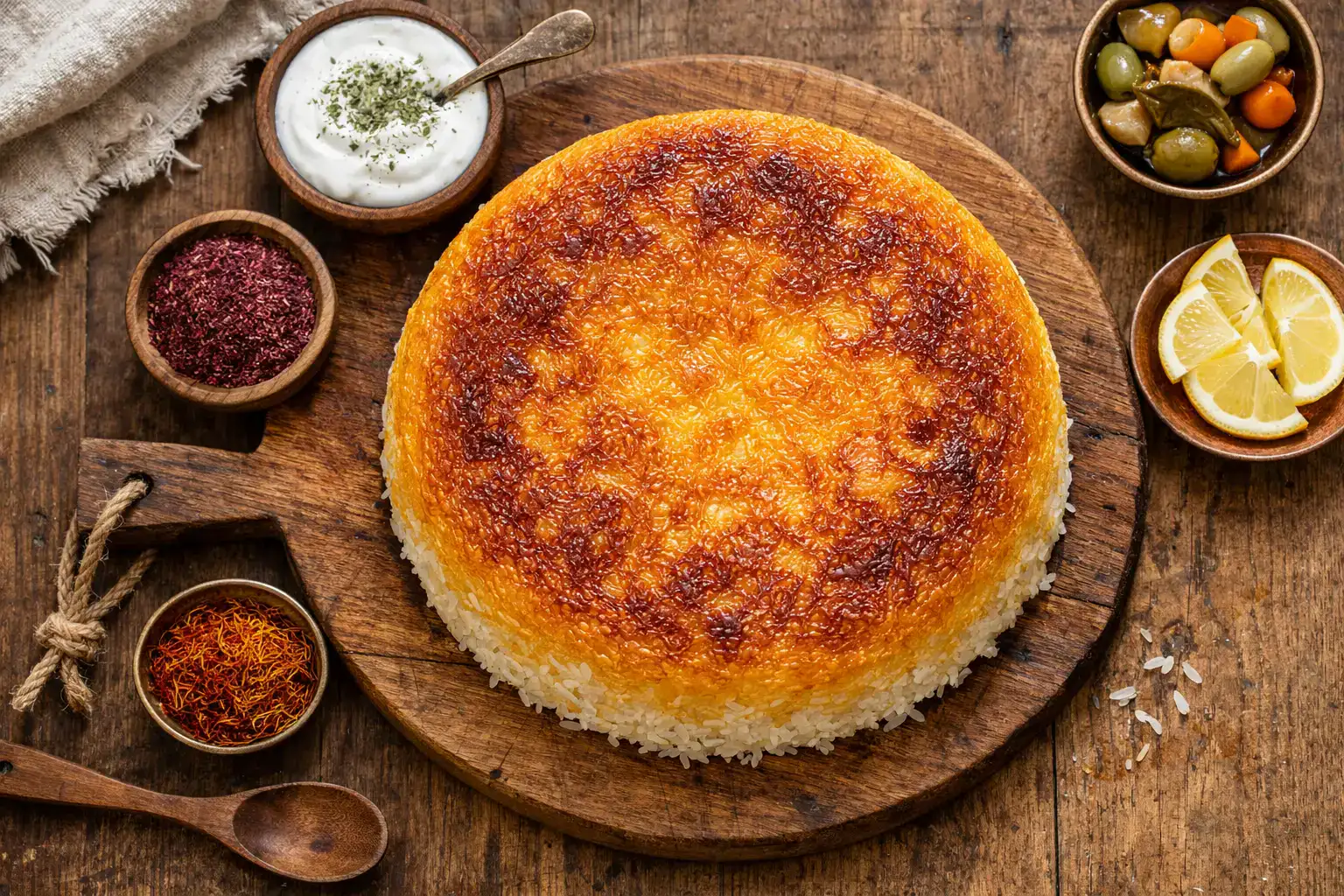
Quick Nutrition Facts
Per 1 Serving Tahdig (~150g)
| Nutrient | Amount |
|---|---|
| Calories | 280 kcal |
| Protein | 5g |
| Carbohydrates | 42g |
| Fiber | 1g |
| Sugars | 0.5g |
| Fat | 10g |
| Saturated Fat | 3g |
| Sodium | 180mg |
| Potassium | 55mg |
| Iron | 1.2mg |
Macronutrient Breakdown
 ChatGPT
  Claude
  AI Mode
  Perplexity
NUTRITIONIST INSIGHT
Tahdig's fat content actually helps slow glucose absorption compared to plain rice. When made with basmati rice and cooled before reheating, it develops resistant starch that supports gut health and improves blood sugar response.
Myth Busters
MYTH #1: Tahdig Is Just Burnt Rice
TRUTH: Tahdig is intentionally crisped, not burnt. The golden crust results from the Maillard reaction at controlled temperatures, creating complex flavors and a satisfying crunch without the harmful compounds found in charred food.
MYTH #2: All Tahdig Is Unhealthy
TRUTH: While traditional tahdig uses oil or butter, the fat actually slows glucose absorption, providing more stable energy. Portion control is key—a small serving offers enjoyment without excess calories.
MYTH #3: Crispy Rice Has No Nutritional Value
TRUTH: Tahdig retains rice's nutrients including B vitamins and iron. When cooled and reheated, rice develops resistant starch that acts like fiber, feeding beneficial gut bacteria and improving blood sugar control.
MYTH #4: You Should Never Eat Tahdig If You Have Diabetes
TRUTH: Diabetics can enjoy small portions of tahdig. Basmati rice has a lower glycemic index (50-55) than other white rice varieties. The added fat further reduces glycemic impact. Pair with protein and vegetables for best results.
MYTH #5: Tahdig Must Be Made With Butter to Taste Good
TRUTH: Traditional Persian tahdig uses oil, not butter. You can make delicious tahdig with olive oil or other healthy fats, reducing saturated fat while maintaining the crispy texture.
NutriScore by Health Goals
| Health Goal | NutriScore | Why This Score? |
|---|---|---|
| Weight Loss |  | 280 calories per serving with 10g fat. Limit to small portions (50-75g) as an occasional treat, not a staple. |
| Muscle Gain |  | Good carb source (42g) for glycogen replenishment. Pair with protein-rich stews like ghormeh sabzi for complete nutrition. |
| Diabetes Management | | Basmati rice GI is 50-55; fat slows glucose absorption. Keep portions small and pair with protein. |
| PCOS Management | | High carb content affects insulin. Limit to occasional small portions and choose basmati rice version. |
| Pregnancy Nutrition |  | Provides energy and B vitamins. Iron content supports blood health. Enjoy in moderation as part of balanced meals. |
| Viral/Flu Recovery | | Easy-to-digest carbs provide quick energy. Gentle on the stomach when appetite is low. |
PERSONALIZED NUTRITION
Track your meals with NutriScan for personalized NutriScores based on your specific health goals!
Blood Sugar Response to Tahdig
Understanding how tahdig affects your blood glucose can help you make informed decisions about portions and pairings.
Typical Glucose Response Curve
This chart shows typical blood glucose response for general healthy individuals. Individual responses may vary. Not medical advice.
How to Flatten the Spike
Adding fat to rice during cooking can help attenuate postprandial glycemic response. Pair tahdig with these foods to further moderate blood sugar:
- 🥩 Grilled kebab or lamb - Protein slows digestion
- 🥗 Fresh herb salad (sabzi) - Fiber and nutrients
- 🥒 Yogurt with cucumber (mast-o-khiar) - Protein and probiotics
- 🫘 Bean or lentil stew - Fiber and plant protein
This combination not only reduces the glucose spike but also provides a nutritionally complete Persian meal.
Cultural Significance
Tahdig (meaning "bottom of the pot") is the crown jewel of Persian cuisine, representing culinary skill passed through generations.
In Iran:
- Served at weddings, Nowruz (Persian New Year), and family gatherings
- The crispy portion is considered the best part—often served to honored guests
- Variations include potato tahdig, bread tahdig, and saffron tahdig
- A test of cooking skill—perfect tahdig requires precise heat control
Global Impact:
- Recognized by food critics as one of the world's great rice dishes
- Influences similar dishes: Korean nurungji, Spanish socarrat, Senegalese xoon
- Growing popularity in international restaurants and food media
- Symbol of Persian hospitality and culinary heritage
Compare & Substitute
Tahdig vs Similar Rice Dishes (Per 100g)
| Nutrient | 🍚 Tahdig | 🍚 Plain White Rice | 🍚 Fried Rice | 🥔 Potato Tahdig |
|---|---|---|---|---|
| Calories | 187 kcal | 130 kcal | 163 kcal | 195 kcal |
| Carbs | 28g | 28g | 24g | 30g |
| Fiber | 0.7g | 0.4g | 1g | 1.5g |
| Protein | 3.3g | 2.7g | 4g | 3g |
| Fat | 6.7g | 0.3g | 6g | 7g |
| Sodium | 120mg | 1mg | 350mg | 130mg |
| GI | Medium (55-65) | High (70-80) | Medium (60-70) | Medium (55-65) |
| Best For | Special occasions, flavor | Daily staple, low cal | Quick meals, protein | Lower GI, more fiber |
Frequently Asked Questions
Is tahdig good for weight loss?
Tahdig is calorie-dense at 280 calories per 150g serving due to the oil used for crisping. For weight loss, limit portions to 50-75g and treat it as an occasional indulgence rather than a daily staple. Pair with vegetables and lean protein.
Can diabetics eat tahdig?
Diabetics can enjoy small portions of tahdig. The fat content helps slow glucose absorption compared to plain rice. Choose basmati rice versions (GI 50-55) and always pair with protein and fiber-rich vegetables. Monitor blood sugar response.
How many calories are in tahdig?
A typical serving of tahdig (150g) contains approximately 280 calories. Per 100g, tahdig provides about 187 calories, 28g carbohydrates, 6.7g fat, and 3.3g protein. Calorie content varies based on oil or butter quantity.
What makes tahdig crispy?
The signature golden crust forms through the Maillard reaction when rice cooks in oil or butter at the pot's bottom. Temperature control is crucial—too low yields no crust, too high burns it. Some recipes add yogurt or egg to enhance crispiness.
Is tahdig healthier than regular rice?
Tahdig has more calories and fat than plain rice. However, the fat provides some benefits: it slows glucose absorption and adds satiety. Rice that's cooled and reheated (common in tahdig preparation) develops resistant starch that supports gut health.
What is the best rice for tahdig?
Basmati rice is traditional and ideal—its long grains stay separate and it has a lower glycemic index. Persian varieties like Sadri or Tarom are premium choices. The rice should be parboiled first, then steamed with oil to create the crispy layer.
How do I store leftover tahdig?
Store tahdig in an airtight container in the refrigerator for up to 3 days. Reheat in a pan with a small amount of oil to restore crispiness, or in the oven at 350°F (175°C) for 10-15 minutes. Microwave reheating makes it soft.
Can I make tahdig without oil?
While traditional tahdig requires oil or butter for the crispy texture, you can reduce the amount to 1-2 tablespoons. Some recipes use non-stick pans with minimal fat, though the result differs from traditional versions.
IMPORTANT NOTE
If you have kidney disease or are on a potassium-restricted diet, consult your healthcare provider about rice intake.


Similar Nutritious Foods
4505 Chicharrones Classic Chili Salt
7 Eleven Japan Crispy Corn Cheese
Explore More Nutrition Tools & Resources
AI Calorie Counter App - Snap a Photo, Get Macros
AI Nutritionist App That Reads Your Logged Meals
Best Protein Supplements for Women
Bulking Meal Plan App That Sets Your Surplus
ChatGPT Calorie Counter Alternative That Keeps the Total
ChatGPT Diet Plan Alternative That Tracks What You Eat
ChatGPT Weight Loss Coach Alternative With a Food Log
Fast Food Calorie Counter App That Reads the Tray
Free Calorie Tracker App with AI Photo Scans | NutriScan
Indian Diet Plan App With Veg and Non Veg Meals
Indian Food Calorie Calculator - Get Instant Nutrition Facts for Desi Meals — 2026
Intermittent Fasting for Women, Timer and Meal Log App
Intermittent Fasting Tracker App - Free Fasting Timer
Macro Tracker App That Fills the Numbers From a Photo
Mediterranean Diet Meal Plan App That Counts the Oil
Micronutrient Tracker App for Vitamins and Minerals
MyFitnessPal Alternative That Stays Free | NutriScan
NutriScore App: A Free Grade on Every Meal | NutriScan
Nutrition Label Scanner App for the Amount You Ate
Second Trimester Protein Guide
Vegetarian Meal Plan App With a Protein Target
Voice Calorie Counter - Speak to Track Meals Hands-Free
Water and Calorie Tracker App - Free Water Log